Insurance Claims Are AI's Messiest Data Problem — Denys…
Insurance claims involve messy unstructured data — handwriting, faxes, duplicates, and oversized PDFs. Denys Linkov of Wisedocs explains why this is both a barrier and an opportunity for AI in insurance, covering data cleaning, analysis within individual documents, cross-claim insights, and a benchmark built with Artificial Analysis to test how models handle medical records.
# Video Identity Observations
## Source
**Title:** *Insurance Claims Are AI's Messiest Data Problem — Denys Linkov, Wisedocs*
**Format:** Workshop/conference talk with live Q&A; the transcript is the only supplied evidence (no curated metadata present).
## Explicit Self-Description (Creator Statements)
### Personal and Company Identity
- The speaker introduces himself and his role directly:
> "I'm Dennis. I lead the AI program at Wisdocs. We help companies with their complex medical claim processing. Been with the role in in the role for 2 years now."
- Note: The title spells the name "Denys Linkov" while the transcript renders it as "Dennis" — the title is the more reliable identity evidence.
- Company scope claim:
> "We live in claims. So so we focus on claims. So claims are our our bread and butter, specifically complex claims. That's where our whole AI pipeline is focused on."
- Company credibility claims: co-built an evaluation benchmark —
> "we built this benchmark called MLCR with artificial analysis to to measure the effectiveness of AI in actually answering these questions"
with an open-source dataset for the first three tiers and a private hosted set. He also references prior talks ("my talk at An Engineer SF last year") and a forthcoming conference article.
### Honest Scope Limits (What the Company Does *Not* Claim)
- The speaker explicitly disclaims industry-wide impact:
> "as an organization we have not moved the broader industry um to the extent we want, right? So, to say that we can say we've reduced the the claim uh time by 5 days on average... We we're not in that position yet. For specific organizations... There's some significant ones within lines of business."
- Claims improvement outcomes only "in the work that we've done within WiseDocs" ("We've seen significant savings"), deferring detail to "some case studies on the website."
## Intended Audience (Demonstrated by Content and Interaction)
- **Practitioner/enterprise audience**: The talk repeatedly polls the room —
> "who here works in insurance?... Who here wants to work in insurance?... Who here has a data lake they're proud of?... for those working at an enterprise context, who here could get a database or a VM within a week if they requested it?"
This indicates a mixed but technically oriented audience of data/AI/enterprise professionals, not insurance specialists.
- **Technical depth**: Discussion of evals, judge calibration, OCR pipelines, VLMs, context windows, and cost/accuracy tradeoffs ("it would be, I guess, poor taste to give a talk in 2026 without talking about evals") targets an AI/ML practitioner audience.
- **B2B buyer context**: Q&A answers describe onboarding and sales processes —
> "typically we work with... a willingness to change... there'll be a few sample files typically that we'll work through in various formats... then we start sort of a broader pilot and then gets into the fun integration aspect"
— showing the channel also addresses prospective enterprise customers/partners.
## Claimed Scope of the Talk
- Framed as a three-part workshop:
> "The talk is going to focus on three main chapters. The first one is on the technology transformation... the second is I'll go a little bit into the insurance space... and then also I'll talk about how AI is going to help make insurance and the patient experience even better."
- Deliberately patient-outcome oriented rather than purely commercial:
> "sometimes things can get a little bit too business focused. So, I always want everybody to to focus on this aspect."
## Distinguishing Demonstrated Patterns from Claims
- **Demonstrated**: domain depth (NAIC classifications, loss ratios, workers' comp forms by state, IME processes, jurisdictional turnaround requirements), benchmark methodology detail, and live audience interaction.
- **Creator claims** (not independently verified here): company track record, "significant savings," benchmark results (accuracy rising from 20% to 75%), and the human-in-the-loop regulatory positioning ("it removes like 70% of the the regulatory concerns").
## Self-Check
All observations trace to quoted transcript passages or the title; no channel-wide conclusions beyond this single video were drawn, and no private motives were inferred.
# Delivery Observations — Denys Linkov, "Insurance Claims Are AI's Messiest Data Problem"
## Speaker Role & Framing
- Introduces himself twice with the same line: *"I'm Dennis. I'll be sharing a little bit about insurance claims data"* and later *"A little bit about myself. I'm Dennis. I lead the AI program at Wisdocs."*
- Frames the talk early and re-anchors it repeatedly: *"we'll focus on medical claims... and I'll keep bringing that back."*
## Recurring Teaching Habit: Audience Polling
The most distinctive observable pattern is frequent rhetorical hand-raising questions, used to segment the audience and re-engage attention:
> *"Who here works in insurance? Few people. Who here wants to work in insurance?"*
> *"Who here has a data lake they're proud of? All right. Very very few people. Is it even possible to have a data lake you're proud of, right?"*
> *"Who here could get a database or a VM within a week if they requested it?... Who here has been asked for some kind of query like this from an executive?"*
> *"Has anybody seen a workers' comp claim before? Few people, okay."*
> *"Who here has sought a second opinion for a medical condition? Few folks, right?"*
Nearly every poll is followed by a spoken tally ("Few people," "Okay," "No hands"), turning audience response into a narrative beat.
## Verbal Fillers & Punctuation
- Heavy use of *"right?"* as a tag question throughout — often several times per paragraph (*"It's not a simple process, and I want all of us to imagine... right?"*).
- Repeated doubled/repeated words, likely natural speech artifacts: *"very very few people," "how how well are you managing fraud," "the the claim," "it it is not a simple process," "we we go as fast as our partners want us to."*
- Frequent *"So"* as a section-launcher: *"So, let's talk about... So, let's go through... So, all this to say..."*
- Occasional self-interruptions and restarts: *"Uh and I think unfortunately in a lot of litigated cases..."*
## Structural Patterns
- **Explicit roadmap delivery**: *"The talk is going to focus on three main chapters. The first one is on the technology transformation... The second is... the insurance space... And then also I'll talk about how AI is going to help."*
- **Numbered phasing for solutions**: *"I'll talk about three different phases... Number one, let's talk about clean data... Number two, let's talk about within document analysis, and then... cross-claim factors."*
- **Delayed payoff discipline**: *"I've only said AI once so far in my talk. And it's really important again to think about the problem that we're trying to solve and then only choose AI if it's the right solution."* — deliberately deferring the AI discussion to establish domain context first.
## Recurring Phrases & Themes
- **"Human in the loop"** appears multiple times, including in Q&A: *"within our system, there's always a human in the loop"* and *"as long as there's a human in the loop, I'd say it removes like 70% of the regulatory concerns."*
- **"Digital transformation"** recurs as a through-line: *"we never finished this transformation... most companies have not finished their cloud migrations."*
- **Messiness/complexity vocabulary**: *"messy," "jerry-rigging," "layer on top," "stacking," "forks in the road," "cascading failure effect."*
- **Concrete numbers as evidence**: *"$7 billion globally" (fax market), "8% adoption in 2008," "8 GB PDF," "200 claims at a time," "50% duplicates," "9 to 15%" (lawyer fees).*
## Humor & Light Self-Deprecation
- Dry jokes aimed at the audience's own industry: *"Is it even possible to have a data lake you're proud of, right?"*
- Analogies drawn from tech culture: *"It's similar to if your website is easy to DDoS, right? People are going to keep DDoS-ing you."*
- Colloquial AI references: *"It's not as easy as saying, 'Hey Claude, take a look at my 10-page PDF.'"*
- Transcript records audible laughter/snorts at a few points (e.g., around the loss-ratio and EMR discussions), suggesting comedic timing lands, though tone cannot be verified from text alone.
## Q&A Handling
- **Restates each question before answering** consistently: *"Yeah, so so the question was about how do we actually structure the data..."*; *"Yeah, so the question is about decision APIs..."*; *"so so the question is how do we onboard somebody..."*
- Answers are layered — lead with the direct answer, then add caveats and concrete examples (e.g., the intake-form date question: *"Do you want the date of injury or do you want the report date?"*).
- Comfortable admitting limits: *"as an organization we have not moved the broader industry to the extent we want, right?... We'd love to say that. We we're not in that position yet."*
## Stable vs. Uncertain Observations
- **Stable (highly repeated)**: polling habit, *"right?"* tagging, "So"-launched transitions, question restating in Q&A, delayed-AI framing.
- **Uncertain (thin evidence)**: whether the self-deprecating humor is a consistent trait or specific to this talk; the doubled-word speech artifacts may partly reflect transcript transcription quality rather than actual delivery.
# Observed Positions — "Insurance Claims Are AI's Messiest Data Problem" (Denys Linkov, Wisedocs)
## Speaker Identification
The only identified speaker in the transcript is **Denys ("Dennis") Linkov**, who introduces himself as leader of the AI program at **Wisedocs**, in role for 2 years. Unnamed audience members ask questions in Q&A; their questions are recorded only via his restatements.
---
## 1. Context and Framing
- **Personal positioning:** Leads AI at Wisedocs, which "help companies with their complex medical claim processing." Focus of talk: medical/complex claims and improving **claim and patient outcomes** — he explicitly wants to avoid the discussion becoming "too business focused."
- **Market shift since 2024:** Claims "a huge amount of transformation since 2024," citing GLP-1-driven changes in insurance pricing and evolving insurance coverage with rising costs.
## 2. Technology Transformation Is Incomplete
- **Core claim:** Most companies never finished prior transformations before AI arrived — "most companies have not finished their cloud migrations... deployed a clean data lake." He jokes: *"Is it even possible to have a data lake you're proud of?"*
- **Paper and fax persist:** "We still have not exited the paper era." Fax market "is over $7 billion globally, which is always surprising." Faxes are being "jerry-rigged" into digital systems but this "still does not solve the problem of how we actually exchange information in the health care system."
- **Slow EHR adoption:** Only 8% EHR adoption in 2008; the COVID pandemic pushed it to the 80–90% range; "many hospitals still run on paper."
- **Non-standardized forms:** Workers' comp intake forms from Texas, New York, and California all differ; "within 50 different states in the US, you have 50 different types of forms generally" — versions change over time.
- **Prerequisites for AI:** Proper AI requires the right goals, people skills, and frameworks (governance, security, infrastructure, data). Audience poll on deploying apps/choosing AI vendors in a week: **no hands** for vendor selection; he concludes "a lot of companies still get stuck in governance and security."
- **Enterprise data skepticism:** On a complex query (assigning an ankle-injury patient to a doctor with top-50th-percentile outcomes in a recent window), he says: *"If you could actually just write this query on your data set and get that result, I'd be amazed."*
## 3. Insurance Landscape
- **Classification:** Groups insurance by NAIC classifications (property & casualty; life, accident & health; broader health). He focuses on P&C casualty side — auto, general liability, product liability, workers' comp — calling it "a $1 trillion market" by premiums.
- **Loss ratio:** The key metric driving earnings reports — premiums collected vs. money paid out. Claims the industry "generally hover[s] around the 50%" loss ratio.
- **Claim timelines:** Adjudication "in the best case scenario... takes a few weeks. In the worst case scenario, it can drag on for a few years," depending on complexity, regulation, and litigation. He invites the audience to imagine shrinking this "by a factor of 10."
- **Process complexity:** Many handoff points — diagnosis, disagreeing specialists, coverage determination, utilization reviews, billing, explanation of benefits, payments, continued treatment. He lists "around 15" failure points off the top of his head.
- **Claims adjuster workload:** "A claims adjuster might be processing 200 claims at a time" — "things are going to get lost."
## 4. Litigation Dynamics
- **Adversarial incentives:** Insurance is typically the defendant side; "the plaintiff side is incentivized to handle as much volume as possible and to get as big of a settlement as possible."
- **Asymmetric AI adoption:** "The plaintiff side has actually adopted AI a lot more quickly compared to the insurance or defendant side" because plaintiff lawyers get a percentage of fast, large settlements.
- **Fee ranges:** "9 to 15% if you're in California for workers comp fees. In other jurisdictions, you get into that 1/3 territory or even 40%."
- **Fraud exposure claim:** "If you have not gone through a proper digital transformation, you are especially vulnerable to bad actors" — repeated and fraudulent claims become easier. Analogy: "if your website is easy to DDoS, people are going to keep DDoS-ing you."
## 5. Data Quality Problems (Phase 1: Clean Data)
- **Duplicates:** "Depending on the jurisdiction... they can be as much as 50% or even higher." Sometimes intentional — claimants must "keep pinging" to get claims processed, creating a "cascading failure effect."
- **Commingled records:** Bob Joe / Bob Joe Jr. example — records get mixed, "violates HIPAA," creates regulatory risk, and "decisions can actually be made when other people's medical records are mixed in."
- **Root causes:** Copy-pasting in medical records (between patients and visits); EMRs "are not set up consistently" (he notes Toronto hospitals often do fresh EMR implementations); "people do some very strange stuff in EMRs with nested fields"; hard data extraction pushes people to "send faxes or PDFs."
- **Scale:** An 8 GB PDF in their database — "trying to open up an 8 GB byte PDF will be quite challenging... How are you going to fit a context into a context window in [an] 8 GB PDF?"
- **Missing records:** Booked x-rays absent from claimant packages; he cites recurring excuses ("we missed faxing this," "the fax glitched," "we changed our back-end system").
- **Conflicting diagnoses:** More common with complex claims; resolution often requires an **IME (independent medical evaluation)**, adding "more people into the ecosystem, more complexity."
## 6. AI Application (Phase 2: Within-Document Analysis) — the MLCR Benchmark
- **Benchmark:** Built **MLCR** with Artificial Analysis — six tiers of medical-claims questions, from simple ("when did this injury happen") to complex. First three tiers released as open source; harder tiers kept private to "stop benchmarking to a certain extent."
- **Evaluation axes:** **Conciseness**, **accuracy**, and **completeness**, judged against "human expert validated answer" with "triple judge verification" and calibrated judges (methods in their blog post).
- **Speed of frontier:** "When we released the eval... the highest accuracy... was 20%. A few months later, we're in the 75% with the very high reasoning levels."
- **Vendor trade-offs:** "GPT models were excellent at accuracy, but they omitted some key pieces of information. Anthropic's models were quite good... much more complete... slightly lower accuracy." Completeness "is still not solved across most model providers."
- **Human-in-the-loop:** "Within our system, there's always a human in the loop."
- **Hallucination framing:** Hallucinations appear when questioners "assume something is in a medical record, but it's not" due to incomplete context.
## 7. Cross-Claim Analysis (Phase 3)
- Example scale: a mid-size insurer collecting "$1 billion in premiums" may pay "20,000 claims at a time per year or even more."
- **Use cases he describes:**
- Patient travel within networks (is treatment local and appropriate?)
- Networks of collaboration — "which lawyers are working together, which doctors... chiropractors, physiotherapists"
- Co-occurring conditions mapped to ICD codes
- Cost variance — defends price differences when justified: "If you can get somebody to recover... in five treatments instead of 10, you should be able to charge more," while warning cost inflation "keeps compounding" into premiums.
- Year-over-year cost trends (e.g., a 10% increase for a treatment by a given doctor) and counterfactual network/billing analyses.
- **Reference to external reporting:** He references "the overbilling article about $1 billion of additional billings," drawing the inference that "if you cannot process data effectively, people are going to find ways to... submit additional records or do some shadier behavior."
- **Portfolio integration:** Extracted claims data can feed underwriting, fraud, and explainability improvements across lines of business, culminating in the "magical data table we wish... existed within our data lake."
## 8. Q&A Positions
- **Data architecture:** OCR/images → preprocessing → NLP/extraction models, VLMs, classifiers → summary layer → human verification → higher-level analysis. "Abstraction pattern that concentrates the density of information as you go up." Notes MLCR "uses clean data... Real-world data is not clean."
- **Onboarding:** Most important factor is "a willingness to change"; process is sample files → alignment on business definitions (e.g., "Do you want the date of injury or... the report date?") → pilot → integration.
- **Regulation:** Human-in-the-loop "removes like 70% of the the regulatory concerns"; "as long as you don't build a black box and things are auditable... that takes care of many things." Mentions NAIC reports and working with customers' internal regulatory teams.
- **Nuclear verdicts:** Defines them — "$10 million or thermonuclear ones which are $100 million, which really reallocate businesses' reserves"; handling order is a business decision within the platform.
- **Decision APIs / small models:** "LLMs are not the right solution for everything." Splits AI into classification/extractive vs. complex decision-based tasks; cost, accuracy, and hallucinations drove Wisedocs to train their own models. Characterizes the "LLM token-max reasoning for every problem phenomenon" as lasting too long until cost concerns surfaced this year.
- **Impact qualification (notably hedged):** "As an organization we have not moved the broader industry to the extent we want... We're not in that position yet" regarding claiming across-the-board reductions in claim time; points to case studies for organization-specific cost and speed gains.
- **Turnaround regulations:** Texas requires answers "in a few hours"; other states 7 or 21 days. Full claim analysis may require reconstructing decades of records (name changes, moved providers). He states that "in a lot of litigated cases there's information that's left out... on purpose," attributing this partly to organizations lacking digital transformation capacity.
## Notable Tensions Preserved
- He advocates AI's value while repeatedly cautioning that AI is only appropriate after data and organizational prerequisites are met ("I've only said AI once so far in my talk").
- He hedges overall industry impact ("we have not moved the broader industry... to the extent we want") while asserting "significant savings" from Wisedocs work.
- He frames cost reduction as a goal while conceding some provider price differences are legitimate.
- He claims higher completeness for Anthropic models while simultaneously noting their "slightly lower accuracy" — an unresolved trade-off he presents rather than resolves.
# Speaker & Provenance Record
## Video Identification
- **Title:** *Insurance Claims Are AI's Messiest Data Problem — Denys Linkov, Wisedocs*
- **Video ID:** `01a15ca6-68c2-752e-b33f-9c5af1388a60`
- **Format:** Workshop/conference talk with live Q&A session
## Speakers & Roles
### Primary Speaker: Denys Linkov
- **Role:** Presenter / workshop leader; identifies himself as **"Dennis"** on stage (transcript spelling; video title says "Denys Linkov")
- **Affiliation:** Lead of the **AI program at Wisedocs**, a company helping with complex medical claim processing; in role for 2 years
- **Responsibilities in video:** Delivers entire main talk; answers audience questions in Q&A segment
- **Prior public appearances referenced:** Mentions referencing fax-market statistics in a previous talk at "An Engineer SF last year"; says he has an article appearing in a conference-published AI news edition ("Hasn't come out today. It's coming out in a later edition")
### Secondary Speaker: Unidentified Audience Member(s)
- **Role:** Q&A participants
- **Contributions:** Several spoken questions in the Q&A; only one audible question is directly quoted in the transcript:
> "Accuracy, how do you measure it compared to the human factor?"
- **Identity:** Not named; multiple questioners not individually distinguished in the transcript
## Referenced Sources & Cited Materials
| Source | Context |
|---|---|
| **MLCR benchmark** (built with **Artificial Analysis**) | Benchmark the speaker's team built to measure AI effectiveness on medical-claim questions; six tiers of questions; hosted on artificial analysis website |
| **Wisedocs blog post** | Describes the MLCR benchmark methodology and judge calibration; speaker says he will share it |
| **Open-source dataset** | First three (easier) MLCR tiers released open source; higher tiers held as private hosted set with Artificial Analysis |
| **NAIC classifications/reports** | Used for insurance categorization; NAIC publishes regulatory reports/guidelines |
| **EHR adoption statistics** | ~8% adoption in 2008; 80–90% reached around the COVID pandemic |
| **Fax market figure** | "Over $7 billion globally" |
| **Loss ratio statistic** | Industry hovers around ~50% |
| **Workers' comp intake forms** | Sample forms from Texas, New York, California — described as real forms from three large states |
| **"Overbilling article"** | Speaker references a recent article on ~$1 billion of additional billings; no title, outlet, or link given |
| **Case studies** | Mentioned as available on the Wisedocs website |
| **Synthetic data examples** | Example claims and duplicate-record data explicitly labeled as synthetic/illustrative; California lawyer/doctor network data described as "redacted data, a subset from California" |
## Third-Party Claims (attribution recorded, not verified)
- GPT models: strong accuracy but omitted key information; Anthropic models: more complete but slightly lower accuracy — per speaker's benchmark observations
- Plaintiff-side lawyers adopting AI faster than insurance/defendant side — speaker's characterization
- Workers' comp attorney fee ranges: 9–15% (California), ~1/3 or up to 40% in other jurisdictions
- Duplicate records can reach 50%+ depending on jurisdiction — speaker's claim citing experience/audience discussion
- Turnaround-time regulatory examples: Texas (a few hours), other states 7 or 21 days
- Jurisdiction-specific migration: speaker is from Toronto, Canada; describes hospital EMR reimplementation practices there
## Promotional Segments (flagged)
- **Wisedocs promotion:** Speaker describes Wisedocs' services, AI pipeline, onboarding process, customer outcomes ("significant savings"), and directs interested audience members to website case studies and to "chat afterwards"
- **MLCR/blog promotion:** Repeatedly promotes the blog post, open-source dataset, and benchmark as referenceable artifacts
- **Conference article:** Promotes his forthcoming article in the conference's printed AI news edition
- These appear integrated into the talk rather than as separate ad breaks, but serve promotional purposes for Wisedocs and the speaker's outputs
## Audience Interaction Details
- Live poll-style questions to audience throughout (e.g., who works in insurance, who has a data lake they're proud of, enterprise procurement speed questions)
- Audience laughter noted at one point
- Applause at talk's end before Q&A
## Availability & Access Limits
- **No curated metadata** supplied beyond title — speaker's full name spelling and exact event name/date are uncertain ("Dennis" vs. title's "Denys Linkov"; event name not stated)
- **Blog post link** referenced but not provided in transcript
- **Private MLCR tiers** not publicly available (hosted with Artificial Analysis)
- **Audience members' identities** not captured
- **Slides/visuals** referenced (charts, network diagrams, illustrative data) but their content is only partially recoverable from narration
\>\> All right, thank you for joining the last workshop of the day. So, I'm Dennis. I'll be sharing a little bit about insurance claims data and how powerful it can be for enterprise-wide
AI programs. So, let's get started. So, who here works in insurance? Few people. Who here wants to work in insurance? Okay, interesting. Few people. All right. So, insurance is a very interesting sort of sector of our economy where people sort of find their way working there, but it powers such a important part of our ecosystem. So, we're going to talk a little bit about insurance as a whole. And we're ultimately going to focus this talk on how do we improve our lives in general? So, we'll focus on medical claims, we'll improve the claim and patient outcomes as a focus of this talk, and I'll keep bringing that back. I think often times in a lot of fintech sort of finance insurance discussions, sometimes things can get a little bit too business focused. So, I always want everybody to to focus on this aspect. So, a little bit about myself. I'm Dennis. I lead the AI program at Wisdocs. We help companies with their complex medical claim processing. Been with the role in in the role for 2 years now, and we've seen a huge amount of transformation since 2024. So, you might have seen some of the news coverage in terms of medical coverage and insurance in general. The whole GLP-1 transformation in our economy, in our health care environment has changed how insurance is pricing things as well. We also see that spouse insurance and broadly insurance coverage has continued to evolve with increasing costs and other factors that change the the
approach of insurance. So, the talk is going to focus on three main chapters. The first one is on the technology transformation that we have. The second is I'll go a little bit into the insurance space
in terms of some of the call it nitty-gritty, but sort of a a brief introduction there. And then also I'll talk about how AI is going to help make insurance and the patient experience even better. Let's talk about technology transformation. So, we all probably in our work have started some form of digital transformation within our companies, whether we work in smaller startups or with in larger enterprises. Now, the challenge with that is that we never finished this transformation. AI hit us in 2023 and 2024, but most companies have not finished their cloud migrations, have not finished leveraging big data to its full potential, have not deployed a clean data lake, right? Who here has a data lake they're proud of? All right. Very very few people. Is it even possible to have a data lake you're proud of, right? And on top of that, we're now getting all this hype about AI, and we need to really make sure that we have the other prerequisites down before we can actually deploy real applications. So, in insurance and many other industries, paper was the big way of processing things, right? You'd get a stack of papers of going through a medical claim. You'd organize it. You'd have these giant tables full of them. You'd use cards to put in certain sections. And this is very difficult to actually get any anything outside of the claim itself, because how do you do cross-claim analysis when everything is paper, right? You could put as many folders as you want, but it's very difficult. Now, we still have not exited the paper era. There are still a number of practices that they use paper around the world, whether it's in the doctor's office, in in legal departments, or within insurance companies themselves. So, we're still not over paper, but we're getting close. Now, in terms of digitizing, we are still also not over the fax machine. The The fax market is continuing to grow. It's over $7 billion globally, which is always surprising. I referenced this in my talk at An Engineer SF last year and
it has not changed. Fax is still being used. Now, what we're doing now is we're jerry-rigging faxes into our digital systems where we can convert them in a fairly clean format, but it still does
not solve the problem of how we actually exchange information in the health care system. Now, if we think about how quickly technology has been adopted, EHRs, electronic health records, uh we're only at 8% adoption in 2008. And it only with the the COVID pandemic did we actually hit the '80s and '90s in EHR adoption. And again, many hospitals still run on paper. So, we're still not fully through this digitization, digital transformation era, and yet everybody wants to do AI. If we think about the types of forms people receive when when doing claims processing, these are some three sample forms from three large states for workers compensation. So, workers compensation is if you get hurt at work, you file a claim saying, "Hey, I hurt my arm falling down or I was driving a forklift and then something went wrong." And none of these forms look the same, right? So, within 50 different states in the US, you have 50 different types of forms generally. They all ask for different information. They're not standardized. They're fairly standardized in that every form that comes in looks the same, so you can have some determinism there, but even then the information is different. So, even as a country in the US, let alone any other country in the world, we don't capture information in the same way and these versions sometimes change as well. If we talk about what people \[snorts\] care about in the insurance space is a loss ratio, right? So, how many premiums are you collecting and how much money are you paying out? So, I'll talk a little bit more about the these numbers here and what they mean, but in general, this is what drives the bottom line of an organization, right? When you report a quarterly earnings or an annual earnings, you're going to be emphasizing what is your loss ratio, how well can you predict risk, how well can you underwrite, how how well are you managing fraud, how well are you managing your expenses. And so companies want to keep costs down and make more money, right? That's just capitalism in general. Um and if we think about some of the statistics here, we we generally uh hover around the 50% um loss ratio here in terms of the amount of money we have to pay out for insurable claims uh compared to the premiums we get.
Now I'm I'm introducing all of these sort of pieces of context and I've only said AI once so far in my talk. And it's really important again to think about the problem that we're trying to solve
and then only choose AI if it's the right solution. Now for AI uh to get proper AI solutions, we need to go through the right amount of transformation, right? We need to have the right goals in mind. We need to have a team that can actually articulate what we want to do with AI. We can't just have people get on stage and say AI AI AI, right? We need the right people skills to actually accomplish this transformation and we need the right frameworks in place, whether it's governance, security, infrastructure management, and data. Now there's a question here. Um for those working at an enterprise context, who here could get a database or a VM within a week if they requested it? Okay. Who could not? Okay, that's progress. Who here could deploy an application to production in a week? A new application. Okay. Who could not? Okay. So So we we still need some progress. Who can choose a new AI vendor in a week? Ah, there we go. No hands. Right. So it still takes time for us to go through all these different processes. Uh they're certainly better than they were 10, 20 years ago in the digital transformation component, but a lot of companies still get stuck in governance and security. And a lot of those have to do with with the factors here. Who here has been asked for some kind of query like this from an executive? Give me some data set that is perfect data. Right? A \[laughter\] few people, right? We we we've seen this before. Hey, can you pull that report for me quickly? Um it's much easier now with AI, but you need to assume that that data exists, right? So, if we come up with a more complex query here, right? Uh let's say that we
we have a claim and for a given patient and their condition, uh in this case, uh an ankle injury, we want to make sure that we can assign them to a doctor who
has top 50% tile uh patient outcomes, right? Within some recent time frame. Now, this query is fairly complex, but if you could actually just write this query on your data set and get that result, right? I'd be amazed, right? Data is very very challenging in an enterprise environment. So, for us to get these kind of outcomes and get these kinds of insights, we have to structure our data systems in a in a in a very well-defined way. So, let's talk a little bit about about medical claims. So, in general, I've grouped uh insurance based on the the NAIC uh classifications. We have property and casualty, life, accident, and health, and sort of broader health uh insurance. I'll actually be talking about property and casualty, since there the claims are typically the the most complex. If you think about P&C, um I've mainly worked on the casualty side. So, uh auto uh insurance, uh various types of liability, general liability, product liability, workers' compensation. There's also the whole property side, uh which is its own uh set of complexities. But, generally, this is a $1 trillion market, right? Uh based on on premiums, and reinsurance is its own kind of forms.
So, if we We about these blue boxes, many of these handle complex medical claims. Somebody gets hurt because a product is defective, somebody gets into a car accident, uh somebody gets hurt at work.
Now, adjudicating a claim and getting a response back to a patient or a claimant takes a long time. In the best case scenario, it takes a few weeks. In the worst case scenario, it can drag on for a few years. Depending on complex the the scenario is, depending on complex the regulatory environment is, depending on how litigated the environment is. And even once you get the the medical services delivered, the claim can keep dragging on and on. So, this is not a simple process, and I want all of us to imagine how much more effective the the healthcare system could be if we could shrink this by a factor of 10, right? You get hurt at work, you you submit the application, uh you go through that process, and everything is digital, and everything is smooth. So, why does it take so long? There's a lot of handoff points with getting even the medical side, not accounting for the for legal side, the actual insurance side as well, right? So, when you when you get hurt uh in one of these scenarios and have to be insured for a complex claim, you have to get the the diagnosis, you have to go to various specialists. Sometimes specialists disagree, right? Then you have to make sure that you have the right coverage, uh whether it's primary care or one of these uh additional forms of liability. You have utilization reviews where doctors have to agree with one another that a procedure is necessary. Uh we have treatments, we have billing. You try to figure out what your bill means, right? With the explanation of benefits and coverage. You get the payments, and you have continued treatments. Uh there's so many additional bubbles here that can be added and forks in the road, um depending on the steps, but in general, it it is not a simple process. And along the way, lots of things can go wrong. Uh I just listed around 15 that
that come to mind immediately, but this has to do with the HR situations and insurance companies with claim adjusters having high turnover, high retirement rates, has to do with technology of
people reprocessing the same data over and over again. Has to do with the types of situations we end up with where claimants are are stressed and sometimes make mistakes and are in the position where they're not acting rationally, right? Cuz if you're you've gone through a traumatic car accident, you're not going to be the most rational person. So, let's talk about how technology can help us. So, let's go through a workers' compensation claim. Has anybody seen a workers' comp claim before? Few people, okay. So, typically when somebody gets injured, they have to report it within the workplace and then make a filing of that as well. Those three forms I showed, the Texas, New York, and California ones, those are typical intake forms. And you go through this process of actually visiting various people, whether it's an emergency room, whether you have additional treatments, and so forth. And you don't always have your claim reviewed until you get claims later on. Now, as you go through that, there's various types of claims. Here I generated some synthetic ones as an example, but they're they're fairly close to what you have in in production. So, you go through you go through all these types of treatments, you get different types of procedures, you might be in network, you might be out of network, you might be traveling for these, and sometimes you have conflicting information as well. And as we go through each of these processes, all the documents look different. Every hospital has its own way of structuring a bill, right? Every doctor
has a different way to write a progress note. It it's not consistent in any way, shape, or form. So, this is why the data is unstructured and many times it's not in an electronic feed. It's a PDF, it's
an email, it's a fax. So, you have all these technology complexities that layer on top of all the business complexity that lies underneath. Then you have something like this, right? Somebody does an assessment and there's three different results, right? For let's say the range of motion that somebody has. How are you going to resolve this in order to adjudicate the claim? Now we haven't even layered the the other portion on top of this. While these medical processes are going through, there's also the risk of litigation. So with an insurance, typically insurance is on the the defendant side of a litigated claim and you have the plaintiff side. Now the plaintiff side is incentivized to handle as much volume as possible and to get as big of a settlement as possible. So you actually get into a situation where you have two different incentive structures. So on the plaintiff side, go as quickly as possible, make the most the biggest claims possible, put up giant billboards everywhere. We saw those when we were flying in probably, right? all over the place. And the plaintiff side has actually adopted AI a lot more quickly compared to the insurance or defendant side. Because you get a percentage of how fast you move and how big your claim is. Now the range of the actual percentage of compensation for for lawyers depending on your jurisdiction can range from 9 to 15% if you're in California for workers comp fees. In other jurisdictions, you get into that 1/3 territory or even 40%. So now on top of healthcare, on top of insurance, on top of technology challenges, on top of administration, you now have litigation and insurance companies settle aside a lot of money for for litigated claims. Now the challenge here is that if you have not gone through a proper digital transformation, you are especially vulnerable to to bad actors, right? So you can be sent repeated claims, you can be sent fraudulent claims as making that even easier to do right now. So if you don't have the ability to actually handle those and process things efficiently, you get more and more fraud in the system, right? It's similar to if your website is easy to DDoS, right? People are going to keep DDoS-ing you. And we forget about what matters most as we start solving all these sub-problems, right? So, these are the things that matter most in terms of the quality of somebody's care, reducing costs, making sure it's a quick process, and it's a good experience.
So, let's go through and and solve some of these problems. I'll talk about three different phases and how they can help. So, number one, let's talk about clean data, how we can accomplish that. Number two, let's talk about within document
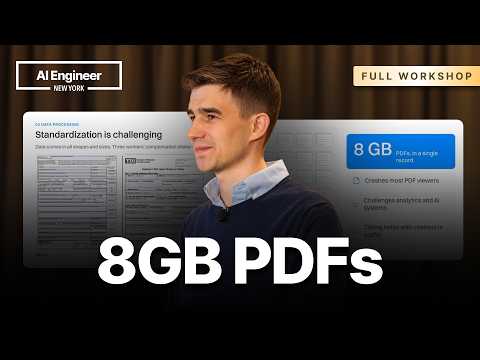
analysis, and then let's talk about cross-claim factors. Okay, clean data. So, has anybody here worked with claims data before or any kind of insurance data? Few folks. Okay. How many duplicate records sort of have have you processed or have you seen? Many? Yeah, millions, right? Uh depending on the jurisdiction that you work with, they can be as much as 50% or even higher, right? So, you have so many duplicates coming in, and sometimes this is intentional, right? Sometimes to get a claims processed, you actually have to keep pinging people, right? Following up with my claim, following up with my claim, right? Uh so, because people are slow, you get into this sort of cascading failure effect that we see in technology. Commingled records with other patients, right? You have Bob Joe and you have Bob Joe Jr. Right? Those medical records get mixed in a at a at a fairly often occurrence. It violates HIPAA. There's a whole bunch of regulatory risk for that, but the system and the digital transformation is not set up for that. And decisions can actually be made when other people's medical records are are mixed in. Right? So, this is especially sensitive when there's a high uh complexity claim where things can be missed. Somebody's record gets mixed in by a doctor upstream or administrator and suddenly the whole claim falls apart. Then we have the the more expected items of poorly scanned or undigitized data. Right? You have some some handwriting that you can't understand, let alone doctor's handwriting, right? Some things come in on paper. So, we we keep getting these poorly uh clean data examples and they happen for many reasons, right? So, some of this happens because uh you have a lot of copy pasting that happens in the medical system, right? You go through uh doctors or nurses as as they're updating the medical records, right? They'll copy paste between patients. They'll go through and they'll copy paste between visits. Uh you might have seen that personally, but it happens a lot uh in the space. Uh EMRs are actually not set up consistently. So, has anybody here seen an EMR before? Their own medical record, right? Anybody here moved across providers or networks? Yeah. Do they look the same? No, they don't look the same. Um I'm from Toronto, Canada and many of our hospitals do fresh implementations every time they set up an EMR. And this often happens both due to the initial processes that exist within a hospital, \[snorts\] it happens across the network as well. There's very interesting dynamics that happen on why it's set up a certain way. And if you want to talk about data cleanliness, people do some very strange stuff in EMRs with nested fields. So, even though we do have electronic health records and medical systems, they're all different, they're structured weirdly, so you do have to do some some transformations on it as well. And often times it's it's difficult to pull data out, so people just choose to to send faxes or PDFs at the end of the day. So, solving clean data is not an easy problem. Uh AI can help us, digital transformation can help us, but upstream there's a lot of factors that go into it. So, uh this is an example of some illustrative data. Uh of duplicate records. Uh real data looks quite similar, as well, with a high number of duplicates across certain networks. And this is actually very frustrating if you are on the receiving end of these duplicate records, right? So, we have a number of customers who are like, "Can this organization stop sending us so many duplicates, right?" And unless you have good systems to detect this, you got you just keep getting the same bad quality data. So, it's really important to have those technical implementations and detection systems to actually make sure that you can safeguard your your own data pool uh data um cleanliness. Now, once you have this data, there there's mechanisms of of actually fixing things, right? For regulatory or uh interpersonal reasons, right? But you still have this messy data that exists as a baseline. And once you can detect things like duplications, uh again, seems like a solved problem, uh you no longer incentivize things like sending claims multiple times with with different dates or the same claim uh or just other folks have to clean up their data, as well. The other part that, beyond just the cleanliness of the data, is that these claims are are really large. Uh when I first started working and saw within our database that there was a PDF that was 8 GB in size, that was very surprising. Um
so, it these claims have anything and everything within them. They have uh images, right? Uh if you think about auto accidents, right? There are their images uh within the site of the injury,
collisions, and such. There's x-ray reports, uh ultrasounds, everything in between. And sometimes this just crashes a lot of PDF viewers. Uh if you think about some of the old computers that you might have, trying to open up an 8 GB uh byte PDF will be will be quite challenging. Uh and even on the technology systems, right? We talk about context windows all the time. How are you going to fit a context uh into a context window in 8 GB PDF, right? It's it's not as easy as saying, "Hey Claude, take a look uh at my 10-page PDF and and give me a response or hey chat GPT or Gemini, right? Not that easy. Um and on top of that, actually going through and working through a case requires a significant amount of time. So, either the technical challenges or the business challenges that result in very complex technical challenges. Now, if we work through and we're adding more and more complexity into here, a lot of these claims also have irregularities. So, you might have some progress notes, for example, of a earlier patient report that says, "Hey, here is this x-ray that was booked for this date." You receive the claimant package and that x-ray is not there. Right? And it's very easy to miss that without actually having this highlighted in some sort of way. Um and without that, again, the whole trajectory of a case can change whether there was adequate care given, uh whether the person actually went to the the the care provided, uh and how do you actually cross-reference this with the billing side of things? So, this is a very very common scenario where upstream, again, because the data is messy, you actually have to ask repeated times, "Hey, can you send me this record?" "Oh, we missed faxing this." "Oh, the fax glitched." "Oh, we changed our back-end system." Right? So, with as an organization, you have to have these lines of defense in in order to make sure that these get flagged. And as a claims adjuster, a claims adjuster might be processing 200 claims at a time. So, they're not going to be able to keep everything within their minds saying like, "Oh yeah, I need to follow up on on this x-ray or not." Right? They can take notes, they can move forward, but things are going to get lost. So, this is again where technology can be a great lift uh to these kinds of problems. Then you get conflicting diagnoses. This happens fairly often as well. So, who here has sought a second opinion for a medical condition? Few folks, right? Um sometimes we we seek them out um to get another perspective. Sometimes you get completely different answers, right? And the more complex the claim is, the more likely there is to be some some kind of conflict. So, in this case, what often happens is when you adjudicate a medical claim and you see some conflicting diagnosis or you want to double-check how much you should set aside to actually pay out for the claim, you send it to an IME or an independent independent medical evaluation. Then you have another doctor who performs their their review of the file. And then you have to manage those doctors and the provider networks and the IME themselves. So, now we're stacking again. More people into the ecosystem, more complexity. Now, AI can be quite useful here and it
would it would be, I guess, poor taste to give a talk in 2026 without talking about evals. But we did use AI to to try to solve these issues in some ways, the conflicting diagnosis, the missing
records and a number of other ones. So, we built this benchmark called MLCR with artificial analysis to to measure the effectiveness of AI in actually answering these questions. So, flip over to our blog post that we talked about and I'll scroll down to what this benchmark looks like. So, we released six different tiers of questions related to medical claims. Some of these are very simple, like when did this injury happen and what was the injury, right? Then they get a little bit more complex. How many surgeries get performed? How much capacity does the this patient have? And eventually we get into more and more complex questions that are even harder to to resolve. And oftentimes, the way that you ask a question as a claim adjuster, a doctor, an administrator, you don't have full context of what's happening. So, this is where we see hallucinations show up where people assume something is in a medical record, but it's not. So, let's go a little bit more to the results. So, this is available on the artificial analysis website. If you want to take a look, uh, so we released an open source, uh, data set for the first three tiers of questions that we have, the easy ones. And we have a private set that we host with artificial analysis for, um, to stop benchmarking to to a certain extent. So, it's very interesting to see how how models perform. Uh, we actually measure this on three different, uh, axes. So, let me flip back to that slide. We measure this on conciseness. So, how concise is a response? Uh, and we measure this against a human, uh, expert validated answer. We then go through accuracy. Is that Is the answer correct? Uh, and the final one is completeness. Are all the relevant, uh, informations, uh, piece of information answered, uh, in the question? So, we go back here. Um, the frontier has continued to evolve very, very quickly, and this is where having evals is really important. Uh, when we released the eval, uh, the highest accuracy that that we saw on the levels of reasoning that that we had was 20%. A few months later, we're in the 75% with with the very high reasoning levels. Right? So, models move very quickly, um, but this is great because it means that we can start productizing a number of the more complex questions. And we have more certainty of the confidence that somebody has to review this, uh, in a system. So, within our system, there's always a human in the loop. Uh, so that's really important. You also start getting the the cost curves here on the Pareto frontiers, on the cost to actually ask this question and get a suitable answer. And this has been improving through the past few months as well. And you get some of these tradeoffs as well. So, one of the interesting things when we were running these benchmarks on, uh, document analysis was that the GPT models were were excellent at accuracy, but they omitted some key pieces of information. Uh, Anthropic's models were were quite good, um, and they're much more complete on the amount of information. Um, they they do have slightly lower accuracy here as well. \>\> Can I ask a question? \>\> Sure. \>\> Accuracy, how do you measure it compared to the human factor? \>\> Yes, compared to to human answer uh and then we do the triple judge uh verification. So, yeah. So, we have accuracy here. You can see how uh the curve looks like and we have completeness uh which is uh is still not solved across most model providers. And yes, to to the earlier question, uh this is based on a human verified answer and on a calibrated set of judges. Uh within our blog post, we describe the the methods we have here uh and we released a follow-up as well on on how we did this calibration. So, even though we're using AI here to structure our data and extract important insights, we want to make sure that each step uh of that process is well calibrated because if upstream uh your data is incorrect and you start using it downstream, right? You haven't gained anything. So, again, really important as you're going through the claims uh uh process to to calibrate your judges, to build good evals. Uh I think that's a recurring theme at Ed Most Talks. And you want to make sure you have those experts who can actually verify this information, so you work across teams to to get there. Okay. So, that's within a claim. Uh we know that with some amount of certainty, we can extract some types of insights. We can flag conflicting diagnosis. We can deduplicate. We can search for missing records. Let's go to something more interesting, which is cross claims. Right? So, if you are a mid-size uh insurance company, you might be collecting $1 billion in premiums within
a uh portfolio of lines of businesses. And you might be paying out, let's say, 20,000 uh claims uh at a time per year uh or even more, depending on what line
of business you deal with. Now, you want more insight of where you actually like what's affecting your loss ratio. What kind of claims are people making? In which geographies? What type of injuries? and what type of doctors are being involved. This is where I think it gets quite interesting as well as actually being able to, once you have that data extracted from the claim, you can start doing interesting visualizations, regressions, and work as well. Right? So, two of the questions that we we've been asked and we've worked on answering is sort of how much are people traveling within a network, right? So, if a patient is, let's say, in San Francisco or New York, right? Are they getting treatment in their local area? And is that the right person to to be giving the treatment? We also have these networks of who's actually working together. So, this is some redacted data, a subset from from California, and you can actually track to see which lawyers are working together, which doctors are working together, which chiropractors, physiotherapists, and what is the actual working relationship look like and the story within the claim itself. So, this is that sort of higher-tier insight that you can get within extracting data from your claim. You then get into some interesting medical outcomes, right? So, which conditions co-occur together? So, if somebody has a back injury, as an example, right? You might have a series of different diagnoses that could be mapped to ICD codes that
coexist together, and you might see, okay, why does this exist from a certain doctor's write-up versus another's? And in this case, again, you you only
get these capabilities if you can solve the data extraction problem within one claim, and then roll it up into your broader insurance portfolio. Now, we get to the money portion, right? So, pulling a small subsegment here of two treatments of physiotherapy, different doctors charge different amounts, right? We've probably seen that. And sometimes that's fine. If you're a better doctor, you should be able to charge more, right? If you can get somebody to recover as quickly as possible in five treatments instead of 10, you should be able to charge more, right? So, uh but it's really important to understand costs and and focus on minimizing them because as as soon as there's cost inflation through different parts of the medical system, it keeps compounding, right? Premiums increase, uh the fees that we are charged increases, uh and we get less for our money. So, within this analysis, uh you can see across claims, is there a consistent factor? What what is the amount of coverage that you should be providing? How How you should you be underwriting these costs for claims as well. And you can estimate how things are going to change over time, right? So, year over year, as an example here, uh there was a 10% increase for this type of treatment for a given doctor, right? So, is that going to happen across uh the jurisdiction? Is that going to happen across the the industry in general? So, then you can start doing some counterfactual analysis or or changes in a in analysis to say, if we change our network, if we start directing folks into a certain direction, if we change how we how we bill, right? What are the potential savings that exist? And what kind of procedures should people be having based on the standard of care that exists? Um there is there's recently an article about how as anybody see it seen at the overbilling article about $1 billion of additional billings that have come in? Have you seen that? Um so, those are examples where again, if you cannot process data effectively, people are going to find ways to to to go through and and submit additional records uh or do some some shadier behavior as well. So, all this to say is that once you have good data, you can start making these decisions.
And then once you have this decision, uh this claims information, you can start writing it into a broader system, right? So, you can start using this in in the other lines of business of saying, if
you know these are the trends in auto injury or workers' compensation, are we seeing the same thing in general liability? If you know that your underwriting model is missing certain trends or you don't have as much explain ability there, can we make the model more explainable with what we're seeing? How do we provide this sort of magical data table that we wish that that existed within our data lake? So again, the more data you have, the more complete of a picture you you can make and the better you can underwrite and price the product at the end of the day for the consumer. And this is information you need to actually power the the effective AI applications, whether they're on on the underwriting side, on the fraud side, on the claim side as well. So if you think about like a blue sky world, right? We we want to reduce something more broadly. So if we want to reduce costs for everybody, right? Taking into account that patient experience. If we want to reduce the time that a claim is open. If we want to improve how quickly people get back to work and the the treatment they get, we need to make sure we have the right data and the right digital transformation to do that. So this is an illustrative example in the work that we've done within WiseDocs as well. We've seen significant savings as well. So going through this digital transformation process and having the right data is really really important. So I'll wrap up the workshop here. I did want to leave quite a bit of time for questions cuz it is pretty comprehensive topic. So thank you for listening and happy to take some questions. \>\> \[applause\] \>\> Yes, I'll I'll share the blog post. Yes, question over here. Yeah, so so the question was about how do we actually structure the data to build um all this information. So it goes through a number of different levels. I'll share some talks that I've given on the topic as well. The baseline is we we use OCR and images to to extract information from the underlying records. Sort of standard pre-processing.
Pre-processing PDFs is not an easy task as well if anybody has worked with them. Uh those 8 gigabyte ones have some some weird one in a million examples in them. So, once you have the the data, the text
and images, we have a series of models on top, um NLP models, extraction models. We use VLMs uh to structure it sometimes, like a a more standard entity extraction model works well. We have various classifiers that we build on top. Um we then have a summary layer that sits on top of that to summarize the documents. Uh that is then human verified to make sure that the information is correct. And finally, we run those additional layers of analysis on top of that. So, we have this abstraction pattern that sort of concentrates the the density of information as you go up, um but it's verified at various points in time with various models and and human intervention as well. So, that means once you get to the top in the highest value items, that's when AI can be effective. And those are sort of those MLCR uh type questions that can have the right answer. So, within MLCR, this actually uses clean data to ask these questions. Real-world data is not clean, so you have to have various steps ahead of that to to clean up the data to get there. Yeah, so typically our our customers So, bigger customers have multiple lines of business internally and they have different uh rules I would say across sharing across different teams. Uh other customers just work in one line of business. So, they might just work in auto, they might just work in disability, they might just work in workers' comp. Um but we take the trends uh across the board to try to figure out and flag those. So, there's the question that within sort of an office, right? How do you surface some of those insights uh or or sort of geography? Then you have the the layer on top, which might be um the broader company, but comp- insurance companies also have a collection of companies within them sometimes uh as separate businesses. Uh and then how do you actually feed
that into a centralized data lake uh as well. So, again, every company is a a bit different, but we we go as fast as our partners want us to. We live in claims. So so we focus on
claims. So claims are our our bread and butter, specifically complex claims. That's where our whole AI pipeline is focused on. But as we sort of evolve and go and solve the sort of easier challenges, I would say, with adjudicating a claim, processing a claim, extracting that information, you start seeing these more sort of insightful aspects that help organizations make portfolio level decisions. Yeah. Yeah, so that's a good question. So the question is how do we onboard somebody when there there's a lot of these challenges? So typically we work with the most important thing is a willingness to change, right? So we we've all probably worked with teams or organizations who want to change versus those who don't. Um very very different experience. So assuming it's an organization that wants to change, there'll be a few sample files typically that we'll work through in various formats. Typically people will send us either things they're immediately working on or have or are basically they're trying to back test. Uh and then we go through a review process to see what did you extract, what did our system extract, how does it align? Does it match the information you want to see? Do you have different types of standards? So if we go back, for example, uh to the different types of documents here, let's just go back to the intake form. There might be various dates on this form. Do you want the date of injury or do you want the the report date when it was submitted, right? So these are things of alignment of business objectives. Go through process a few standard cases.
If things work well, then we start sort of a broader pilot and then gets into the fun integration aspect of integrating with with upstream providers apart from just like hand uploaded documents, API integrations, like
dealing with all all the messiness. So as long as there's a a clear business outcome and transformation goal, then it's it's a fairly straightforward process. And again, as as we go through that journey, and sometimes it's like we don't have the capabilities out of the box, sometimes we do, sometimes there's multiple integrations on internal systems as well. So, yeah. So, let's start with the first part of the question, which is handling regulations and how do we work with partners? So, we it depends on how how quickly people are are moving. Uh and also depends how quickly regulations are moving. So, the the way we've set up the system right now is that it always requires a human in the loop to make a decision. Uh so, we surface these insights as an example for things like a conflicting diagnosis, we'll see, "Hey, on page two on page 20, there there's a difference of diagnosis between these two doctors, you should take a look, right?" So, as long as there's a human in the loop, I'd say it it removes like 70% of the the regulatory concerns that people have. Uh regulation is also still catching up, so uh there's a lot of things to read about like the NAIC reports that I mentioned, they that organization publishes a number of different reports. There's the guidelines that exist for that. We talk to the internal governments and regulatory teams as well. Uh and if they want to see some pieces of information, like we will share with them like this is how the AI pipeline works, right? This is the type of data that's being used. Um but at the end of the day, as long as you don't build a black box and things are auditable uh and there's a human in the loop, that take cares uh takes care of many things. The regulatory side, there's like a whole other like business decision decision aspect, like how to approach nuclear verdicts. Uh for uh nuclear verdicts are um very large uh
awards or um claims that that are $10 million or thermonuclear ones which are $100 million, which really reallocate uh businesses' reserves. So, for those ones, typically
people come with like an approach on how they want to handle them. And within the platform, you can say, "I'm going to handle my most complex claims first." Or I'm going to handle the one that was submitted first. Um and those are all sort of business decisions people can make. Uh the second part of the question on like people's internal like organizations' internal goals. Um I mean, we want to work with partners that share the same sort of mindset about improving patient care, uh reducing backlogs uh for claims, providing the best decisions. A lot of times our customers are not even thinking too much about like the the cost of health care itself is everything around it, right? So, uh if you're a large insurance company, you actually spend hundreds of millions of dollars on legal fees.
Right? So, that is something that is not even tied to the patient experience that there's a large amount of optimization you can do there and to speed things up. Right? Um there's regulatory concerns
that in certain jurisdictions like California, things are very litigated. Um you want to figure out how how to deal with those. Um there's a whole bunch of middle parties that that are involved as well uh that are also inefficient. So, depending on the customer, everybody has a different goal. Um but in our conversations, it's it's always been like we have this very obvious problem to solve with technology. Let's solve that first. Um and again, the insights start surfacing afterwards of being like, "Oh, I didn't know that about my business. Let's solve that afterwards." So. Yeah, so the question is about decision APIs in Jv. Um as part of the I don't know if anybody's seen the paper um copies of the AI news that are that the conference is handing out. There's actually an article that I'm writing for that. Um so, we we've been using classification models uh for a long time. I've generally had uh strong opinion on that. Hasn't come out today. It's coming out in a later edition. Um I think it's very useful, uh but LLMs are not the right solution for everything, right? So, when we talked about this, right? This segment of AI can be split up as well, right? Classification, extractive uh versus sort of the more complex decision-based ones. Uh so, for us cost is really important. So, that's why we trained our own models as well. Accuracy is really important and hallucinations as well. So, I think Jv was not as surprised that it came out. It was more so a surprise of how long it took because I think the LLM like token max reasoning for every problem phenomenon lasted for a very long time until we started thinking about costs a lot more this year. So, uh once Javis sort of hit already, we could you can test it out. Um but we've sort of built our own models with the same paradigm in mind. So. \>\> Yeah, so I'll answer part two. Um so as an organization we have not moved the broader industry um to the extent we want, right? So, to say that we can say we've reduced the the claim uh time by 5 days on average for somebody across every patient. We'd love to say that. We we're not in that position yet. For specific organizations like we had some case studies on the website. I quickly put put some up as well. There's some significant ones within lines of business uh for cost reduction and speed. Um so, you can check those out and we can chat afterwards as well if you're looking for more specific sort of context on that, too. \>\> Yeah, so so the the first notice uh of injury or loss um or and depend depending on the on the sub domain. Yes, um so depending on the jurisdiction there's also turnaround time requirements when handling these. So, for example in Texas you only have a few hours of processing a claim to get an answer. In other states it might be 7 days, 21 days that you need to get a response. Now, it gets more complicated because if you're a worker who's been working in a factory, let's say for 30 years, you're 60 years old, you're going to have large medical record file, right? So, there's a lot of information here and in the initial report, but to do a full claim analysis you have to go back and you have to try to pull those. Maybe your name changed because you got married. Maybe you moved uh cities, providers, right? So, you have to reconstruct sort of that that full uh history as well. Uh and I think unfortunately in a lot of litigated cases there's information that's left out uh as well on purpose to due to the fact that a lot of organizations have not digitally transformed and can't process cases fast enough. So, uh if this was all that's needed, this would be uh much faster, but unfortunately or more realistically, there's a much broader backstory as well.