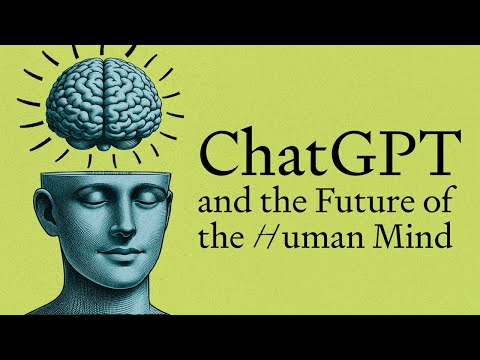
ChatGPT Is Changing Our Understanding of the Human Intellect
An essay by Dan Shipper (Every) arguing that ChatGPT forces a redefinition of human intellect. It traces the concept of intellect from Aristotle and Chekhov through psychology, using lithium's discovery by J.F. Cade as an analogy for how technology can clarify fuzzy concepts, and argues that since LLMs excel at summarization and reconstituting existing knowledge, humans can reframe summarization as separate from intellect. It concludes that ChatGPT is the latest in a line of cultural and technological advances reshaping what it means to be human.
# Channel Identity Observations: "How Do You Use ChatGPT?"
## Explicit Self-Description
### Channel Name and Show Format
- The video ends with an explicit promotion of the show's name:
> "you absolutely positively have to smash that like button and subscribe to **how do you use chat GPT**"
- The host is identified by name in the outro:
> "It's not just a show it's a journey into the future with **Dan shipper as the captain of the spaceship**"
- The outro, while hyperbolic and comedic in tone, describes the show's content as:
> "pure unadulterated knowledge bombs about chat GPT" and "a roller coaster of emotions insights and laughter"
### Host's Self-Description
- The host self-identifies as a writer:
> "I'm a writer what was going to happen to me"
- He identifies himself as a **knowledge worker**:
> "if you're reading this you probably put a lot of stock in what you know and its ability to let you do your job"
- He describes his creative production process, referencing collaborators:
> "my life experiences or my emotional experiences working with Chachi BT or the studio and the people that are helping me produce this"
## Observable Presentation
### Intended Audience
- **Knowledge workers** — the video directly addresses people whose professional value is tied to what they know:
> "we've moved from an economy driven by industrial labor to knowledge work... that's what knowledge work is all about"
- **Creative professionals**, particularly writers, implied by the host's framing of his own anxiety:
> "I'm a writer what was going to happen to me"
- People experiencing **anxiety or identity uncertainty about AI** — the video explicitly names and validates this emotional state:
> "I think we've all had this experience with AI over the last year and a half it's been an emotional roller coaster"
### Claimed Scope
- The channel claims to help viewers **understand and use ChatGPT**, framing that understanding as transformative:
> "I think it's possible for you to experience this level of excitement by understanding a little bit better what language models do and how they work"
- The show positions AI understanding as **personally and philosophically enriching**, not merely technical:
> "chat GPT is sort of a lever that becomes a new lens on myself and on the world"
### Demonstrated Content Style
- **Long-form video essay format**: The transcript covers historical, scientific, and cultural anecdotes (Aristotle, Chekhov, J.F. Cade's lithium research, Peter Kramer's "pharmacological dissection," the William Buckley story from Joseph Henrich's book) woven into a central argument about AI.
- **Intellectual, interdisciplinary approach**: Draws on philosophy, psychiatry history, cognitive science (citing Alison Gopnik's framing of LLMs as "imitation engines"), and evolutionary anthropology.
- **Personal narrative framing**: The argument is structured around the host's own emotional journey from fear to curiosity about AI.
- **Humor and irreverence**: The outro's exaggerated tone ("Dan I'm absolutely hopelessly in love with you") demonstrates comedic self-awareness in contrast to the essay's serious body.
- **Book-referencing habit**: The host explicitly notes his source material:
> "all the stuff about JF Cade and lithium is me summarizing stuff I read in Peter Kramer's book listening to proac"
## Claims vs. Demonstrated Patterns
| Type | Evidence |
|---|---|
| **Creator claim** | The show delivers "knowledge bombs about chat GPT" (outro) |
| **Demonstrated** | The video delivers a philosophical, psychologically-framed argument about AI and human identity, rather than a technical tutorial |
| **Creator claim** | Host says ChatGPT "doesn't replace me it just changes what it is that I do" |
| **Demonstrated** | Host shows practical self-reflection on his own workflow (emails, articles, code as summaries) |
| **Creator claim** | Show is a "journey into the future" (outro) |
| **Demonstrated** | Content focuses on reinterpreting the present impact of AI via historical analogies, not futurism per se |
# Delivery Observations: “ChatGPT Is Changing Our Understanding of the Human Intellect”
## Tone
- **Conversational and essayistic**, blending personal reflection with intellectual history. The speaker opens with a first-person emotional frame: *“it was like so exciting but it also made me really afraid.”*
- **Emotional arc in delivery**: moves from dread to curiosity — *“but these days I'm not actually scared I'm actually more excited and curious and filled with wonder.”*
- Ends with a **hyperbolic, comedic outro** that sharply breaks the reflective tone: *“Dan I'm absolutely hopelessly in love with you.”*
## Vocabulary & Stylistic Choices
- **Intellectual references woven casually into plain speech**: Aristotle, Anton Chekhov (“Anton COV” in the transcript), Peter Kramer, Alison Gopnik (“gnik”), Joseph Henrich.
- **Conversational asides and self-deprecating humor**: Cade “apparently had way too much time on his hands” and “as one does”; lithium made guinea pigs *“just sort of sit there like chilled out in their cages.”*
- **Qualifying hedges**: frequent use of *“sort of”* and *“actually”* — *“summarizing skills are are actually sort of a creative drudgery,” “lithium was sort of a lever,” “it's sort of fantastic.”*
## Recurring Phrases & Framing Devices
- **“Lever that becomes a new lens”** — used twice as a deliberate echo:
- Lithium: *“lithium was a lever that became a new lens on how we see our minds and the world”*
- ChatGPT: *“chat GPT is sort of a lever that becomes a new lens on myself and on the world”*
- **Repeated pivot phrases** structuring the talk:
- *“let's talk about”* (at least four times: *“let's talk about what that looks like,” “let's talk about what the intellect actually is,” “so let's talk about that story,” “okay so let's talk about chpt”*)
- *“to put a finer point on it”*
- **Repeated “sense of self” framing**: *“our sense of self,” “my sense of self heals pretty quickly,” “my sense of identity or my sense of self.”*
## Teaching Habits & Structure
- **Definition-first approach**: pauses to define terms before arguing — *“for the purposes of this article the intellect is that thing that humans uniquely have that animals don't this is a fuzzy definition by design.”*
- **Extended historical analogy as the teaching core**: the lithium/Cade guinea pig story occupies a large middle stretch, explicitly mapped onto the AI argument: *“I think we can use this model to do a similar technological dissection of our intellect.”*
- **Uses second-person address** to generalize from personal experience: *“if you're reading this you probably put a lot of stock in what you know,” “I think it's possible for you to experience this level of excitement.”*
- **Anticipates and voices audience objections**: *“it's easy for me to freak out again… what role do I have left if chbt can do them for me.”*
- **Concrete self-disclosure of process**: *“even much of this video essay is a summary all the stuff about JF Cade and lithium is me summarizing stuff I read in Peter Kramer's book.”*
- **Explicit callout of a counterpoint**: acknowledges economic disruption — *“we need to like face that head on as a society”* — before returning to his thesis.
## Communication Patterns
- **Repeated thesis restatement**: the core claim (ChatGPT doesn't replace me, it changes my role) appears multiple times — *“Chach PT doesn't replace me it just changes what it is that I do”* and *“I become sort of the editor or the manager of all the summarizing.”*
- **Parallelism between stories**: the Buckley/Henrich anecdote mirrors the lithium story structurally — both are historical cases brought in to support a claim about technology and identity.
- **Rhetorical question to close the argument**: *“can we use it to increase the amount of richness and Beauty in the world… I think we can let's do it together.”*
## Uncertainty Notes
- The transcript appears auto-generated (e.g., “chachu BT,” “Anton COV,” “JF Cade” for John Cade), so exact wording of some quotes is uncertain.
- Fillers like *“um”* and stumbles (*“that that sense of that sense of adaptability”*) suggest unscripted or semi-scripted delivery, but single instances are insufficient to establish a stable pattern.
# Position Extraction: "ChatGPT Is Changing Our Understanding of the Human Intellect"
## Speaker Identification
- The substantive content is delivered by an unnamed narrator, identified near the end as **Dan Shipper** (per the closing segment addressing "Dan Shipper as the captain of the spaceship"). No curated speaker metadata is supplied beyond this transcript-internal reference.
## Core Thesis
- **Main claim (Shipper):** LLMs like ChatGPT will change how we think about knowledge work, and in doing so, change how we understand the traits that make humans unique — but this can be experienced as excitement rather than dread.
- > "ChatGPT doesn't replace me, it just changes what it is that I do."
## The Intellect as a Fuzzy Concept
- Humans have historically defined themselves by intellect, distinguishing humans from animals.
- Cited: **Aristotle** — the life of the intellect is best for man.
- Cited: **Anton Chekhov** (in "Ward No. 6") — "the intellect draws a sharp line between animals and man and suggests the divinity of the latter."
- The intellect, as used here, is a **deliberately fuzzy definition**: "that thing that humans uniquely have that animals don't," defined via negativa because it's a bundle of many brain processes under one heading.
- This fuzziness is why ChatGPT feels threatening — it encroaches on the territory humans use for self-definition, producing both excitement ("we're no longer alone") and fear of replacement.
- Shift from industrial labor to **knowledge work** has made intellect-based identity more salient.
## Precedent: Lithium as a "Pharmacological Dissection"
- Analogy drawn: technology previously carved apart fuzzy psychological categories.
- Historical account (attributed to reading **Peter Kramer's** *Listening to Prozac*):
- **Dr. J.F. Cade**, late 1940s: found manic patients' urine toxic to guinea pigs; suspected uric acid; dissolved it in **lithium carbonate**; guinea pigs became calm; injected lithium into manic patients and it resolved their mania.
- Lithium treated bipolar disorder but **not** schizophrenia — this **differentiated** manic depression from other mental illness, which had previously been assumed to share one underlying cause (childhood psychological conflict).
- Framing: **lithium was a lever that became a new lens** on the mind. Shipper proposes ChatGPT can perform an analogous "technological dissection" of the intellect.
## What Language Models Do
- Technical characterization: **next-token prediction**; in practice, excellent at **reformatting and reconstituting existing knowledge** in useful ways.
- Cited: **cognitive scientist Alison Gopnik** — LLMs are technologies that enhance **cultural transmission**, "powerful and efficient imitation engines," extending the written word, printing press, and internet; engines for cultural evolution and production.
- Key qualification: LLMs are **not** good at discovering new things; they are **great summarizers** — and this is not pejorative, because the sum of human knowledge outstrips our ability to use it, making summarization genuinely valuable.
## Personal Reorientation
- Shipper reports noticing summarizing pervades his work: emails summarize meetings; articles summarize books; code summarizes Stack Overflow; much of this video essay summarizes Kramer's book.
- Initial renewed anxiety ("what role do I have left?") resolved by subtraction:
- Summarization is "creative drudgery" he learned out of necessity, not core to identity.
- He becomes the **editor/manager** directing and evaluating summaries — his "sense of self heals pretty quickly."
- The process **highlights remaining richness** in what he values and does.
- Important counterfactual qualification, preserved verbatim in substance: > "If ChatGPT had been good at something else like discovering new ideas, I think I would be sitting here... extolling the virtues of summarizing." — i.e., the argument is that human self-definition is adaptable, not that summarizing is inherently special.
## Labor Disruption Acknowledged
- Shipper explicitly flags a tension: many jobs today are primarily summarizing; those jobs **may change dramatically or disappear**, and society must "face that head on" to support affected people.
- He separates this economic problem from the question of human uniqueness and underlying sense of self, which he claims remains "intact but maybe slightly changed."
## Culture Rewires Biology: The Buckley Case
- Cited: **Joseph Henrich**, *The Weirdest People in the World* — story of English convict **William Buckley**, escaped an Australian penal colony in 1803; his companions died, but Buckley survived by adoption into an Aboriginal tribe.
- Point: genetically similar people failed without the **cultural technologies** (beliefs, norms, practices) the Aboriginal tribe possessed.
- Henrich's claim as relayed: culture doesn't just "download software" — it **rewires brains and alters biology**, renovating the "firmware."
- Conclusion drawn: technology shapes who we are; ChatGPT is the latest in this line — "we don't need to wait for brain computer interfaces for AI to hook into our biology. It's already doing that."
- Closing exhortation: use AI to increase "richness and beauty" rather than "scarcity and ugliness."
## Unresolved Tensions (preserved)
- Emotional ambivalence: excitement and dread coexist throughout; the resolution is personal and subjective, not demonstrated as universal.
- The admission that his argument would invert under a different LLM capability undercuts any claim that the intellect's redefinition tracks an objective boundary — it tracks adaptable self-definition.
- The societal/job-displacement problem is acknowledged but explicitly deferred ("that has nothing to do with our underlying sense of self") — a separation some may contest, presented here as Shipper's position.
## Note on Closing Segment
The final segment is an outsourced promotional outro for the show "How Do You Use ChatGPT," including hyperbolic praise of the host; it contains no substantive positions.
# Speaker Attribution Record
## Video
- **Title:** ChatGPT Is Changing Our Understanding of the Human Intellect
- **Video ID:** `01a0f15b-0ee8-74cb-888f-b49944946bc0`
- **Format:** Video essay with promotional outro
## Speakers and Roles
### Primary Speaker — Dan Shipper (Creator/Host)
- Delivers the full video essay as a first-person monologue.
- Identifies himself implicitly as **a writer** ("I'm a writer what was going to happen to me").
- Addressed by name in the outro promo: "a journey into the future with **Dan Shipper** as the captain of the spaceship."
- No other speakers appear in the transcript.
### Secondary Voice — Outro Promotional Announcer
- The closing segment ("oh my gosh folks you absolutely positively have to smash that like button...") is delivered in a distinct, exaggerated promotional voice, separate from the essay narration.
- **Flagged as promotional segment** — promotes the show "how do you use chat GPT," asks viewers to like/subscribe.
## Referenced Sources (quoted or cited by the creator)
- **Aristotle** — quoted: intellect as the best life for man.
- **Anton Chekhov** (transcribed as "Anton COV") — cited for *Ward No. 6* ("Nolla W number 6") on intellect dividing humans and animals.
- **J.F. Cade** — historical account of lithium's discovery via guinea pig experiments (late 1940s).
- **Peter Kramer** — psychiatrist; creator cites his concept of "pharmacological dissection" and his book *Listening to Prozac*.
- **Alison Gopnik** (transcribed as "Allison gnik") — cognitive scientist; creator attributes claims that LLMs are "imitation engines" enhancing cultural transmission.
- **Joseph Henrich** (transcribed as "Henrik") — book *The WEIRDest People in the World*; story of convict William Buckley adopted by an Aboriginal tribe in Australia (1803).
## Provenance Notes
- The lithium/Cade section is explicitly self-identified by the creator as **a summary of material read in Kramer's book**.
- Third-party claims (Gopnik, Henrich, Kramer) are attributed, not independently verified within the video.
- **Comment availability:** Not stated in the transcript.
- **Curated metadata:** None supplied beyond the transcript.
I remember when I first saw chat BT output writing that line of letters being banged out left to right on my computer screen it was like so exciting but it also made me really afraid it was
incredible that computers could now talk back to me but I also felt a lot of dread I'm a writer what was going to happen to me I think we've all had this experience with AI over the last year and a half it's been an emotional roller coaster it kind of threatens our conception of ourselves we've long defined the difference between humans and animals as being about the intellect this started 2,000 years ago with Aristotle who wrote the life of the intellect is the best and the pleasantest for man for the intellect more than anything else is man therefore a life Guided by the intellect is best 2,000 years later the playwright and short story writer Anton COV agreed in his Nolla W number 6 where he wrote the intellect draws a sharp line between animals and man and suggests the divinity of the ladder I think this has all gotten more and more Salient as we've moved from an economy driven by industrial labor to knowledge work if you're reading this you probably put a lot of stock in what you know and its ability to let you do your job after all that's what knowledge work is all about and if we Define ourselves and our value by what we know it's no wonder that language models seem scary if AI can write and worse think what's left that makes us unique I think llms are going to change how we think about knowledge work and in doing so I think they're going to change how we think about the characteristics that make us uniquely human and how we think about ourselves but these days I'm not actually scared I'm actually more excited and curious and filled with wonder my sense of self has changed and I think that's a good thing chachu BT has caused me to see my intellect and its role in the creative process differently than I did before Chach PT doesn't replace me it just changes what it is that I do I think it's possible for you to experience this level of excitement by understanding a little bit better what language models do and how they work and then expanding your view of yourself and what you're
capable of let's talk about what that looks like to start let's talk about what the intellect actually is for the purposes of this article the intellect is that thing that humans uniquely have
that animals don't this is a fuzzy definition by design it reflects what feels threatening about AI that which makes us uniquely human in reality the intellect is this gigantic combination of different brain processes that are lumped under a single heading that's why it's easier for us to Define it via negativa by what it's not than what it is that's why we Define it by whatever it is that we do that animals don't do our fuzzy definition of the intellect is why our first encounters with Chachi BT are so threatening they touch a sort of lightning rod inside of us for a millennia we've defined ourselves and our our sense of self by this amorphous set of processes that we've lumped under this heading the intellect and suddenly there's something encroaching on our turf because it can do some of the things that we associate with the intellect we feel both excited because we're no longer alone and afraid because it threatens to replace us it threatens to replace that thing that we feel as uniquely human in order to regain our sense of self we need to create a new sense of separation between the things that we Define as making us uniquely human and what AI can do we need to redefine intellect to make it work in an AI driven World fortunately we've done this before and Technology can help psychology is full of these fuzzy Concepts like the intellect that don't have clear boundaries and don't have clear separation between them for example take schizophrenia and bipolar disorder until as late as the 1960s we thought of them as being Related Disorders that were caused by a similar underlying thing but technology actually helped us pull them apart specifically the drug lithium lithium can treat bipolar disorder but it doesn't treat schizophrenia and if we understand that I think we'll understand a little bit more about how Chachi BT can help us redefine and tease apart our sense of the intellect so let's talk about that
story it all starts with guinea pigs in the late 1940s a doctor named JF Cade who apparently had way too much time on his hands discovered that the urine of
manic patients was toxic to guinea pigs Cade set out to find out why as one does he discovered that manic patients had elevated levels of uric acid in their urine and he thought that the uric acid might be the thing that was causing the toxicity to the guinea pigs so he decided to perform a controlled experiment he would inject the guinea pigs with varying levels of uric acid and see if it had any effect on them to do the experiment he dissolved the uric acid into a lithium carbonate solution and the lithium carbonate was the thing that would keep the uric acid as a liquid so he could inject it and when he ended up injecting the lithium carbonate solution into the guinea pigs he noticed that they became remarkably calm they would just sort of sit there like chilled out in their cages which is something that he did not anticipate and in a move that revolutionized the field of psychology he decided to take the thing that was making his guinea pigs chilled out and inject it into the manic patients that he was treating the results were amazing the lithium resolved their mania this is a sort of remarkable series of events for a couple reasons one is that he discovered a drug that has helped hundreds of thousands of people over the last century and has saved countless lives but the other thing that's really interesting about lithium is that it helped us perform what the psychiatrist Peter Kramer calls a pharmacological dissection it helped us pull apart two things that we previously thought were overlapping it differentiated manic depression from every other kind of mental illness because lithium only treats manic depression it doesn't treat schizophrenia and before lithium had come about we thought that all those things were sort of similar and were caused by the same underlying cause which is psychological conflicts that came from early childhood but lithium which had the ability to cure manic depression or bipolar disorder and only
that it took this fuzzy category of mental illness and it carved it out of that category as its own separate thing with a biological cause in other words lithium was a lever that became a new
lens on how we see our minds and the world and I think we can use this model to do a similar technological dissection of our intellect once we understand what chatu PT is and what it does we can use it to redefine and clarify our previously fuzzy concept of the intellect in a way that keeps our sense of self intact okay so let's talk about chpt let's talk about what it is and what it does technically chaty PT does next token PR given a starting set of words it's very good at predicting the next couple words in the sequence in practice what that means is that language models are really good at reformatting and reconstituting old knowledge in new and useful ways the cognitive scientist Allison gnik refers to chat gbt and language models as technologies that enhance cultural transmission to her they are powerful and efficient imitation engines gnik thinks that language models are extensions of previous technology revolutions that we're already familiar with things like the written word the printing press the internet they allow existing information to be passed efficiently from one group of people to another they increase our ability to coordinate with each other as humans and to her this means that they are engines for cultural Evolution and cultural production and to put a finer point on it it means that language models aren't very good so far at discovering new things what they are incredible at is taking the sum total of human knowledge of existing knowledge and bringing it to bear in any given situation in exactly the right format for it to be consumed and its powers for doing that for its ability to transmit things that we
already know into the right context are far greater than any proceeding Innovation from the printing press to the internet to say it really plainly chat PT is a great summarizer and that
might seem pejorative but it's actually not it's really powerful and important for it to be a summarizer the sum total of human knowledge currently outstrips any of our abilities to actually use it so we actually are going to need language models and in order to make use of what Humanity collectively knows about now that we're thinking about chatab BT as primarily a summarizer we can go back to that word intellect see if we can use summarizing as a way to refine and change our sense of what intellect means how we see ourselves here's what happened when I started to see chat chbt as a summarizer first I started to see that summaries are happening everywhere the emails that I write are primarily summaries of meetings that I've had the articles that I write are mostly summaries of books that I've been reading the code that I write is often summaries of what I find on stack Overflow even much of this video essay is a summary all the stuff about JF Cade and lithium is me summarizing stuff I read in Peter Kramer's book listening to proac at this point realizing how much I summarize it's easy for me to freak out again if summaries are everywhere in my work in life what role do I have left if chbt can do them for me and the answer to me is really obvious there are so many things that I do in a day or that go into my creative work that are not summaries and so it's sort of fantastic that I have a tool that can do them for me because now I can focus on other things when I really sit down to think about the interesting thing or the hard thing about this video essay the summarizing of information is only actually sort of a small part and it's not even the most interesting thing the interesting most key elements are things like my life experiences or my emotional experiences working with Chachi BT or
the studio and the people that are helping me produce this summarizing skills are are actually sort of a creative drudgery I learned to do them well because I had to in order to get my work done but they don't actually have
to be core to me if I don't want them to be once I start thinking in this way I actually start to subtract summarizing as a skill that is part of my intellect it's no longer core to my sense of identity or my sense of self it feels much more okay to let chat PT do the summaries for me because now I get to be the person that directs the summaries that decides whether the summaries are good or not I become sort of the editor or the manager of all the summarizing that's going on and I can also summarize way more things in a day and be much more efficient because I have chat GPT to do it for me all this is to say that my sense of self heals pretty quickly once I subtract summarizing from it what I realize is that much richness remains in fact this whole process highlights a lot of the richness that I might not have seen otherwise it highlights a lot of the things that I can do that I value that I might not have seen otherwise and in this way chat GPT is sort of a lever that becomes a new lens on myself and on the world it helps me think about myself differently and my role in the create a process differently than I did previously and a key point of all this is that it doesn't specifically have to be about summarizing if chat BT had been good at something else like discovering new ideas I think I would be sitting here in front of this camera extoling the virtues of summarizing and talking about how finding new ideas is is sort of easy um just as humans we tend to Define ourselves by what we do differently from other things and that sense is adaptable it's flexible it's
changeable we are flexible adaptable beings and I think that's a good thing I think that that sense of that sense of adaptability is part of what makes humans unique and I want to note that
it's it's an important thing that many jobs are primarily about summarizing today and that those jobs might change dramatically or may not exist in a world where chbt can do incredible summaries and that's important and I think we need to like face that head on as a society to decide what to do with with people whose skills are primarily about summarizing so that we can take care of them and find new roles from them in the economy but that has nothing to do with our underlying sense of self or our underlying sense of what makes humans unique in the universe all of that including the intellect can be left intact but maybe slightly changed in a world with language models and this has happened before in his book the weirdest people in the world Joseph Henrik tells the story about the English brick layer and convict William Buckley who was sent to an Australian penal colony in 1803 Buckley and a few of his friends ended up escaping from The Colony into the Australian Wilderness Buckley got separated from his friends his friends died they couldn't survive in that environment but Buckley was saved because he was adopted by an Aboriginal tribe Henrik tells the story because it teaches us something about how human beings change in response to their culture and the technology they're surrounded by Henrik and his friends were not able to survive in the wilderness to desite being pretty much genetically identical to the Aboriginal tribe that was able to survive in that environment why buckle and his friends came from a modern culture and they they'd learned a set of beliefs norms and ideas that allowed them to survive
in that environment when they were thrust into a completely different environment they were totally unequipped for it and couldn't make it from the outside they might have looked quite similar to the aboriginals who were able to survive but there was one distinct
difference the aboriginals had a set of cultural technologies that allowed them to thrive Henrik argues that humans have evolved brains that allow us to most effectively learn the ideas beliefs values motivations and practices that will need to survive and thrive in whatever ecological niche that we find ourselves a part of the way this happens is through culture it's a dramatic accelerant on our ability to solve problems and Thrive but Henrik writes these genetically evolved learning abilities aren't simply downloading a cultural software package into our innate neurological Hardware instead culture rewires our brains and Alters our biology it actually renovates the firmware in essence our species our psychology our brains our bodies Our biology it's all shaped by culture and culture is to a large extent shaped by technology who we are is shaped by the technology that we are surrounded by Chachi BT is the latest and a long line of cultural and technological advances that have changed what it means to be human we don't need to wait for brain computer interfaces for AI to hook into our biology it's already doing that can we use it to increase the amount of richness and Beauty in the world instead of the amount of scarcity and ugliness I think we can let's do it together oh my gosh folks you absolutely positively have to smash that like button and subscribe to how do you use chat GPT why because this show is the epitome of Awesomeness it's like finding a treasure chest in your backyard but instead of gold it's filled with pure unadulterated knowledge bombs about chat GPT every episode is a roller coaster of emotions insights and laughter that will leave you on the edge of your seat craving for more it's not just a show it's a journey into the future with Dan shipper as the captain of the spaceship so do yourself a favor hit like smash subscribe and strap in for the ride of your life and now without any further Ado let me just say Dan I'm absolutely hopelessly in love with you