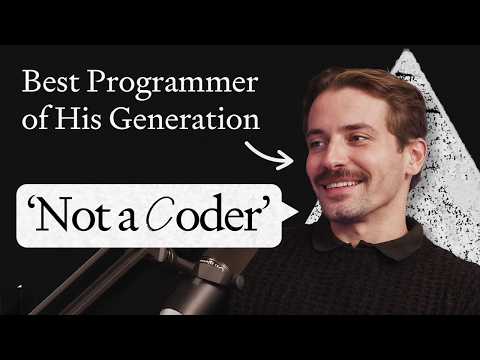
Vercel's Guillermo Rauch on AI and the Future of Coding -…
Interview with Guillermo Rauch, founder and CEO of Vercel and creator of Next.js and Socket.IO, on the future of software development in an AI world. Rauch argues that coding is a specific skill AI is mastering, and that the future belongs to holistic full-stack engineers who can ideate, design, and execute together. The hour-long conversation covers spotting trends early, being your own customer, building an ecosystem of talent, why Rauch no longer identifies as a coder, the "allocation economy," how Vercel's v0 copilot compares with other coding agents, developing taste, the specialization of AI agents, and how AI startups can compete with big tech.
# Channel Presentation Observations — "Vercel's Guillermo Rauch on AI and the Future of Coding - Ep. 47"
## Explicit Self-Description (Creator Claims)
### Show Name and Host
- The closing segment names the show and host directly:
> "hit like smash subscribe and strap in for the ride of your life... it's a journey into the future with Dan shipper as the captain of the spaceship"
- The show is identified as **"AI and I"**:
> "you absolutely positively have to smash that like button and subscribe to Ai and I"
- Episode numbering is embedded in the title: **"Ep. 47"** — indicating a long-running, serialized interview format.
### Guest-Focused Interview Format
- The host frames the episode explicitly as an interview with a notable tech figure:
> "GMA welcome to the show thanks for having me so for people who don't know you are the co-founder and CEO of verell uh you're also the creator of next and sakao"
- The host states his agenda for the conversation:
> "we have a lot to talk about I really like in general in this conversation want to talk about the um the future of programming with AI I want to talk about vzero and and what you're doing with forell"
## Intended Audience
- **Developers and technical founders** are the primary audience, evidenced by host remarks like:
> "you're also the creator of next and sakao um which is very close to my heart... sakio is the reason I could build my last company so I appreciate all you've done for the developer ecosystem"
- **Entrepreneurs and startup builders**, implied by discussion of startup strategy, Y Combinator, "founder mode," and pricing/business-model topics:
> "very exciting time for especially small teams like yours to thinking about what are my pains that AI can answer"
- **AI-curious builders** worried about career relevance:
> "a lot of developers are probably thinking okay is it even worth it to be able to code right now"
## Claimed Scope
- **AI's impact on software development and careers** — the central thread, from the opening monologue:
> "I don't think I would identify today even as a coder even though that's what I obsessed about for years"
- **Product and tooling deep-dives** — substantial discussion of v0, Next.js, Socket.IO, and the AI SDK.
- **Business/strategy commentary** — platform shifts, SaaS disruption, and pricing models:
> "AI is a new platform and when a new platform emerges there's kind of hard to even estimate how many new applications will emerge"
## Observable Presentation Patterns (Not Claims)
### Interview Structure with Monologue Teaser
- The episode opens with a teaser-style clip of the guest before the intro, then re-begins with the welcome — a promotional/editing pattern common to podcast channels:
> (opening excerpt) ... "GMA welcome to the show thanks for having me"
### The Host Runs an AI-Software Company Himself
- The host references his own products and team (Kora, a writing-plus-software business), showing the host is a practitioner, not just an interviewer:
> "Kieran who built Kora he didn't write like 80% of that code... 80 to 90% of it was like written by 0 or Claud"
> "we have the writing and then we build software products"
- The host discloses AI use in production of the show:
> "01 was involved a little bit in this... 01 was involved in the preproduction"
### Conversational, Admiring Interview Style
- The host frequently validates and builds on guest points ("I love that concept," "100%," "totally"), demonstrating an affirming, collaborative tone rather than adversarial interviewing.
### Energetic, Humorous Outro
- The closing call-to-action is exaggerated and comedic in register:
> "it's like finding a treasure chest in your backyard but instead of gold it's filled with pure unadulterated knowledge bombs about chat GPT"
- The outro explicitly centers the channel topic on **ChatGPT/AI knowledge**:
> "knowledge bombs about chat GPT every episode is a roller coaster of emotions insights and laughter"
## Summary of Evidence-Backed Identity Signals
| Signal | Evidence Type |
|---|---|
| Show name "AI and I," hosted by Dan Shipper | Explicit claim (outro) |
| Interview series, Ep. 47 | Title + transcript |
| Topic: AI + coding/product future | Title + host's stated agenda |
| Audience: developers, founders, AI-curious builders | Host framing throughout |
| Host is a founder building with AI tools | Transcript (Kora, "01 in preproduction") |
| Tone: warm, enthusiastic, hype-driven promotion | Outro rhetoric |
# Delivery Observation: Guillermo Rauch on AI and the Future of Coding (Ep. 47)
## Overall Tone and Register
- **Conversational and idea-driven**: Rauch speaks in a relaxed, exploratory register, frequently building on the host's framing ("totally and I'm like…" / "100%").
- **Enthusiastic but measured**: He expresses strong conviction with softened qualifiers — e.g., > "my guess is probably Millions" — pairing bold claims with hedging language like "I think," "I would say," "it's going to take a while to get there."
## Vocabulary and Signature Terms
- **Distinctive coinages and hybrid phrases** recur throughout:
- **"meta skills"** — > "what are the meta skills that are not as easily replicated by machines that you should still nurture"
- **"recursive thunder mode"** (a play on "founder mode") — > "there's founder mode I believe founder mode fundamentally doesn't scale"
- **"token breath"** — > "they have extreme what I would call like token breath I'm using token in the sense of LLM"
- **"code last rather than code first"** — his positioning phrase for v0: > "we look at vzer as code last rather than code first"
- **"customer zero" / "patient zero"** — > "we're always customer zero we dog food our tools"
- **Metaphor-heavy style**: He repeatedly explains technical concepts through analogy:
- Interior design: > "it's like you hired an interior designer and like they're checking for your Vibes"
- Self-driving cars: > "very much like a way most self-driving car needs to interoperate with the real world"
- iPhone home screen: > "you can think of AI as almost like another new… it's a new home screen"
## Recurring Rhetorical Moves
- **First-person disclosure as a framing device**: He several times introduces information as previously unshared:
- > "well I'll tell you something I don't think I've shared before"
- > "I'll tell you a concrete example"
- > "I'll give you another concrete example"
- **Concrete anecdote to support abstractions**: Nearly every abstract claim is grounded in a named or specific example (Socket.IO, Prettier, Go's formatter, Project Zero, OpenSSL's memcpy bug, DeepSeek R1, the cardiac surgeon using Open Evidence).
- **Historical analogy as teaching method**: He teaches AI-era shifts by citing past platform transitions:
- > "I remember the early days of the iPhone it wasn't clear to people that it was the new platform"
- Code formatting debates: > "people used to care a lot about what their code look like on the screen"
## Communication Patterns
- **Building on the interlocutor's concepts**: He frequently adopts and extends the host's terms rather than replacing them — e.g., endorsing "every refusal is my opportunity" with > "exactly yeah I love that" — then elaborating.
- **Cyclical callback structure**: He returns to earlier motifs, closing the loop on "vibes" and "taste" near the end: > "I want to enable you to live in that world of like Vibes almost." The opening cold-open excerpt reappears nearly verbatim mid-interview, suggesting a deliberate framing device.
- **Vivid, informal intensifiers**: > "it's so overwhelming it's nauseating it's almost like peaking into the mind of a mad person" — emotional language used to make a UX point memorable.
## Teaching Habits
- **Contrast pairs** to structure ideas: coder vs. product engineer/design engineer; written culture vs. prototype culture; short leash vs. long leash; startup vs. scaleup.
- **Question-posing as pedagogy**: > "the question you should be asking yourself is like how many more of those are there going to be"
- **Self-deprecating humor about identity**: > "I don't think I would identify today even as a coder even though that's what I obsessed about for years since I'm like since I was like 10 years old"
## Stability vs. Isolated Moments
- **Stable patterns** (multiple instances): concrete-anecdote grounding, metaphor use, contrast pairs, "I'll tell you…" disclosure framing, hedged conviction ("I think," "my guess").
- **Isolated / low-repetition moments**: "token breath" and "recursive thunder mode" each appear once — treat as signature coinages, not established habits. The OpenSSL/Project Zero security discussion is a single extended passage, not a recurring theme.
## Uncertainty Notes
- Transcript timestamps are sparse and unevenly spaced; frequency counts of phrases rely on the supplied text only.
- The closing segment ("> smash that like button…") is clearly a distinct outro voice, not Rauch's delivery, and is excluded from the analysis.
# Position Record: Guillermo Rauch on AI and the Future of Coding (Ep. 47)
## Identity Shift: From Coder to Product Builder
**Rauch's core position:** He no longer identifies as a coder, despite coding being his obsession since age 10.
- > "I don't think I would identify today even as a coder even though that's what I obsessed about for years since I'm like 10 years old."
- He notes his **ego and identity became tied up with "I code"**, but says his luck was having the *aspiration to build products* — Socket.io came from wanting "to make the web more real time," not from code for its own sake.
- **Claim:** The trend is "away from the implementation detail which is the code and towards the end goal which is to deliver a great product or a great experience."
## The "Specific Skills" Thesis
**Rauch's reasoning:** When a skill is specific, machines tend to take it over.
- Analogy: doing math in your head as a kid — a great asset, but a machine does it "even better than you."
- What to nurture instead: **meta skills** — "very high level conceptual thinking," understanding how things relate (he invokes the concept of **symbolic systems**, which "transcends language runtime framework").
## Evidence: v0 Enterprise Customer That "Doesn't Do Code"
Rauch reports (with qualifications — "without giving away too many details"):
- An enterprise customer "in the cloud space since the cloud was born... literally in the room where the cloud was invented."
- > "They told me we have it as a rule that we don't do code."
- Their Slack is "just them sending v0s back and forth" — no GitHub, no infra — including shared channels with clients.
## Emerging Roles and Skills
- Rauch endorses the roles **product engineer** and **design engineer** as emerging replacements for "coder."
- People at Vercel are becoming "more full stack" via v0 — doing design, data, copyrighting that previously required crowdsourcing ideas from others.
### Host's framing (Dan Shipper, per transcript flow)
- **Knowledge economy → allocation economy**: compensated for "how you allocate the resources of intelligence"; valuable skills resemble human management — knowing when to be in the details vs. delegate.
- Rauch's response: he "loves" the concept; connects it to **consumption-based building**: v0 users burning GPU tokens ("AI powered engineers") vs. casual users. These are "the first category of apps... that have a consumption building model attached to them."
- Rauch extends to **risk thinking**: "am I going to burn... lots of inference time compute... and actually don't know if the AI will perform." Users must think like cloud infrastructure users / capital allocators.
- Both agree pricing per **task with risk-adjusted pricing** makes sense; Shipper proposes a marketplace where specialized agents bid for tasks; Rauch agrees specialization in agents (context, taste, post-training) will drive competition.
## Pattern Recognition: Riding Early Waves
**Rauch's method:** identify the wave "when it's just a few drops of water" but messy.
- **Socket.io**: WebSocket was a draft spec when he started; gap between "I want to do something with real time" and building an app.
- **v0**: even at GPT-3, models "could barely be coherent in outputting code, but there was that promise."
- Company originally named **Zeit**: capturing the *Zeitgeist* of developers; *Zeit* = "time" in German, tied to his real-time obsession.
## Product-First / Dogfooding Principle
- "We're always customer zero."
- **AI SDK** emerged from building AI products internally, not from AI enthusiasm: "a framework in isolation without having that initial patient zero is never going to be a good tool."
- He reverse-engineered his admiration of React from Facebook's product feel (real-time comments, chat, notifications) — "when you see something good you ask yourself how did they build that."
- Start with the product: "you almost don't need to promote the tool."
## Scaleup as Recursive Product Machine
- **Claim:** "founder mode fundamentally doesn't scale" — creative output can't be limited to the founder.
- He thinks about "**recursive founder mode**": creating an environment "that creates Socket.ios and Next.jses" — selecting for people who would start companies on their own.
- Principles are "product specifications of your company" — onboarding, values, ethos treated as product design.
- Framework: startups live/die by product-market fit; scaleups become "a machine that outputs products."
## v0's Positioning
- **Code-last, not code-first**: prompt with an idea or import Figma; a "product development environment" vs. IDE-first competitors (Replit, Cursor, Claude artifacts).
- Analogy: child of VS Code and Figma.
- Focus on output quality because "AI has become a little synonymous with... slop."
### Leash length (responding to host's framing)
- Depends on the task; future is "classification of an estimation of the difficulty of the task."
- Taste-making prompts → immediate feedback (interior designer metaphor).
- Optimization → long leash. Example: he told v0 "make it faster" twice for an animation; "it was all vibes from my side... I didn't care how."
- Technical distinction: one-shot knowledge+RAG vs. arbitrary-length **feedback loop of thinking**; v0 runs hidden error-correction loops.
- **Balance:** don't overwhelm users with thinking tokens — describing DeepSeek R1's visible reasoning as "nauseating... almost like peaking into the mind of a mad person."
## AI + Infrastructure Interdependence
- **Claim:** "AIs need to sit on top of significant infrastructure" — economics argument: re-emitting a framework takes millions of tokens vs. ~100 lines using Next.js.
- Analogy: self-driving cars couldn't rebuild streets; they interoperate with existing roads.
- He raises (tentatively, as a question) whether AI will do low-level optimization (e.g., Rust): "everything seems to indicate that... it's going to take a while."
- **Project Zero / OpenSSL anecdote**: one-line `memcpy` bug made "the entire universe vulnerable"; his bet: "yes," AI agents will help rewrite C in Rust and uncover vulnerabilities, since Google "has maxed out" on expert humans able to read the world's code.
## Taste as the Differentiator
- **Host's framing:** tasks with well-defined fitness functions get automated; high-dimensional "taste" remains human — "you need to be the Vibes guy above the machine."
- Rauch: taste comes from "a lot of practice" — cites engineer/designer TJ who "just trained my taste... I look at what people like, I seek a lot of feedback."
- Partially rule-based (spacing distribution affects pleasantness — what v0 tries to encode); can be worked on.
- Being "terminally online" serves both consuming the design avant-garde and spotting **what's about to become possible** to "start cooking on" early.
## Domain-Specific Agents & Startup vs. Incumbent
- AI as a new "iPhone home screen" — his guess: "probably millions" of new icons/apps.
- Anecdote: a cardiac surgeon using **Open Evidence** (healthcare data, ~250,000 US medical professionals) rather than general ChatGPT.
- **Host's principle:** "every refusal of ChatGPT can be turned into a tool that doesn't have to refuse"; startups take risks general-purpose tools can't.
- Rauch's disruption thesis: SaaS maturity correlates with UI bloat (buttons, nested dropdowns) — "all of that UI can vanish without a trade-off of functionality" with AI-first design. Startups "underdo" incumbents and win.
- Software 1.0 (if/else, per Karpathy) vs. Software 2.0 (searching the space of possible programs).
- **Nuance he adds:** eventually you do need breadth — enterprises "want to buy only a handful of software platforms"; the model is "eventually better at every checkbox, but in the meantime overwhelmingly better and simpler."
## Abstraction Layers & Vercel Strategy
- v0 as "the AI native interface into the Vercel world"; expects "the next billion developers" to enter through it, with an "eject button" to Vercel, as Vercel did to AWS.
- Layered model: hyperscaler bedrock → developer infrastructure → agents. "Most people are going to want to interact with these agents."
- Spectrum of customers: regulated markets saying "please don't say the AI word in my office" vs. the "we don't do code" v0 enterprise.
- Open question he flags: "perhaps there's another level of abstraction coming where the result comes to you in a much more objective way and you're giving less feedback — yet to be seen."
## Written vs. Prototype Cultures (responding to host's Eugene Wei reference)
- Rauch accepts the distinction and defends written cultures for infrastructure: AWS's automatic reasoning team writes **TLA+ proofs of correctness** — "I can trust them with my clinical records."
- But creative tasks can't start with a mathematical proof.
- Vercel's blend: procure best components (like the iPhone's hardware) and "enable you to live in that world of vibes."
## Preserved Tensions & Qualifications
- Rauch repeatedly frames speculative claims as bets ("my bet is yes," "everything seems to indicate," "yet to be seen") — these are predictions, not settled claims.
- He does not claim coding becomes worthless; he claims it becomes "strictly less important" — the practitioner still needs conceptual understanding (his Kora example via Shipper: the engineer wrote ~10-20% of the code but understands 80-90% of how it works and prompts effectively).
- The "don't do code" customer is presented as one enterprise case, coexisting with regulated customers avoiding AI — Rauch preserves both rather than generalizing.
# Speaker Attribution Record
## Video Overview
- **Title:** Vercel's Guillermo Rauch on AI and the Future of Coding - Ep. 47
- **Format:** Interview/podcast episode (appears to be from "AI and I," hosted by Dan Shipper)
## Identified Speakers and Roles
### 1. Guillermo Rauch — **Guest**
- Co-founder and CEO of Vercel (stated in transcript)
- Creator of **Socket.IO** and **Next.js**
- Notes the company was originally named **Zeit** before renaming to Vercel
- Majority of substantive commentary on: AI and coding, v0, Vercel, AI SDK, platform shifts, product development philosophy
### 2. Dan Shipper — **Host / Interviewer** (identified via outro promotional segment)
- Conducts the interview; references "my last company" built with Socket.IO
- Discusses his company's product **Kora** (email product), built largely by an engineer named **Kieran** using v0/Claude (third-party claim from host)
- Mentions **"01 was involved a little bit in the preproduction"** of the interview (apparently an AI model assisting question preparation — speaker's own admission)
- References a prior episode guest: **Nabil from Spark** (paraphrased claim about "leash length" of agents)
### 3. Outro Narrator / Promotional Voice — **Other role**
- CTA voice at end: "smash that like button and subscribe to AI and I… Dan Shipper as the captain of the spaceship… I'm absolutely hopelessly in love with you"
## ⚠️ Promotional Segments (Flagged)
- **Closing outro:** Explicit channel promotion for "AI and I" — like/subscribe CTA with exaggerated praise; not substantive interview content.
- **Soft promotion throughout (guest):** Rauch discusses Vercel products — **v0, Next.js, Socket.IO, AI SDK, TurboRepo, Svelte (as "zelt"), Secure Compute** — in a promotional/dogfooding framing, though within normal interview context.
## Referenced Sources and Third-Party Claims
- **Open Evidence** — healthcare AI tool; cardiac surgeon anecdote (~250,000 US medical professionals claimed) — *unverified anecdote attributed to an unnamed surgeon*
- **Project Zero (Google)** — security vulnerability research team
- **OpenSSL / Heartbleed-style bug** — "one line of code" memcpy vulnerability claim
- **DeepSeek R1** — model added to AI SDK playground
- **Eugene Wei** — talk on written vs. prototype culture (delivered at the host's conference "Thesis")
- **AWS automatic reasoning team / TLA+ proofs** — third-party claim
- **Meta/Facebook** — React origins, real-time Facebook features
- **Kara Swisher** — implicitly referenced via "software 1.0 to software 2.0" framing ("Kathy software" appears to be a transcription error for Karpathy)
- **Named Vercel customers:** underarmour.com, open.com, Nintendo storefront (unverified)
## Provenance / Availability Notes
- No curated metadata supplied beyond transcript.
- Comment availability: **unknown / not stated**.
- Some transcript names appear garbled: "sakao/sakio/socko" = Socket.IO; "forell/verell/versel/for sale" = Vercel; "vzero/VZ/vzer/the zero" = v0; "zelt" likely = Svelte; "tinul" possibly = "Tinu" or mis-transcribed.
- The opening cold-open excerpt duplicates content appearing later in the interview (same speaker, Rauch).
I think a lot of developers are probably thinking okay is it even worth it to be able to code right now I don't think I would identify today even as a coder even though that's what I obsessed about
for years since I'm like 10 years old Trent has been away from the implementation detail which is the code and towards the end goal which is to deliver a great product or a great experience one of our Enterprise customers for vzero is a company that has been in the cloud space since the cloud was born literally like in the room where the cloud was invented and they told me we have it as a rule that we don't do code they showed me their slack conversations it's just them sending vzer back and forth there's no GitHub there's no infra there's no anything there's just Building Products when things are specific skills machines tend to take them over over time if your skill when you were a kid was like I can do math in my head really well awesome great asset to have I love it but also there's a specific machine that can do that skill also very well and even better than you and so what I try to separate is what are the meta skills that are not as easily replicated by machines that you should still nurture and I think those tend to be more around very high level conceptual thinking what's about to become possible yeah that I can start cooking on now
GMA welcome to the show thanks for having me so for people who don't know you are the co-founder and CEO of verell uh you're also the creator of next and sakao um which is very close to my heart I told you when we met that uh uh it was sakio is the reason I could build my last company so I appreciate all you've done for the developer ecosystem just met some folks last night that said the same it's it's nice to get recognition for open source and but I'm thankful to the people that maintain those projects yeah so yeah um so we have a lot to talk about I really like in general in this conversation want to talk about the um the future of programming with AI I want to talk about vzero and and what you're doing with forell um but where I want to start is I was like before this interview I was thinking about like the kinds of things that it seems like you're interested in building and the and the kind of like taste that you have and um and and then think about how that might apply in this sort of AI era and where I kind of came to and I'll admit 01 was involved a little bit in this1 was involved in the preproduction where what I kind of came to to is it seems like you're very good at um playing at the edges of what's possible technically um looking for where there's like um something that's new and valuable but like pragmatically valuable but still pretty messy and then coming up with like a very clean opinionated Z config solution to it so like I would put Sako in that bucket I put NEX in that bucket I think forel is that in that bucket so one is I'm curious if you feel like that's that's kind of I mean if1 came up with that it's it's over that's pretty good like I I'll tell you like it's funny I was having conversation with one of my co-workers the other day and I was giving them the example of socket AO as when I started the project websocket was which is the
underlying technology that they later become a part of web browsers yeah for context maybe everyone doesn't know about Socko it enables real-time chat real-time communication it Powers websites like perplexity and when I
created that developer tool websocket was in its infancy yeah so to your point you kind of want to identify the wave when it's just a little a few drops of water but you have that you see that potential and it's also extremely messy MH so being able to go from I want to do something with real time to I want to create an application I think that's the vacuum that or or the huge gap that too uh filled out and with v0 I think we saw the same thing so uh Co models became good at writing code specifically they were very good at writing like like being able to design with HTML and CSS and also writing react code yeah so even like when gpt3 was out we started thinking about well this could be used for revolutionizing how design and code gets emitted how the process of bringing an idea to life could be completely disrupted but it was really early so to your point there was there's almost like a parallel between like web socket was a draft of a specification when I started socket AO and when we first thought about vzer models could barely be coherent in outputting code but there was that promise and I think you know you kind of want to ride those waves when when they're early yeah yeah and I think one of one of the interesting thing is is like it feels like so everything that you've done so far has been like very developer focused and it feels like you have your finger on the like the vibe of like what what develop well I'll tell you something I don't think I've shared before which is the company was called Zite and then we renamed it a versel and the reason I called it zeit was a few things one I was obsessed with this idea that if you really want to capture developers you need to capture the zist right the zist is idea of you know the collective conscious and how people are thinking about the future and you need to really be on your toes because things change so quickly The Vibes change so quickly right like you see this with models like one day one model is popular for developers the next day it's another model and another another point was zeit means time in German and I was obsessed with this idea of real time with my background in socket AO and what I thought is that the best way to build software would be in real time and it it has two meanings one is real time in the sense of you're just typing and you're getting feedback instantaneously from the system I think vzer is almost like the culmination of that idea interesting because you're literally chatting with the system and getting feedback in real time but the other one was chatting with your customers right getting feedback from the world and adapting I sometimes joke that for early stage Founders their job is to you know chat on X with with their customers and Prospects get feedback fix things and put a ton of Quality Craft and taste into their products I want to stay with that idea of like Zeitgeist or like Paradigm or like um having your finger on on the pulse of something because I think one thing that's that's interesting is um you know to come up with sakao to come up with next like you have to be developing stuff yourself all the time to realize that this is possible and that you want to make something but like it's so it's too so you need like a tool to help you do that more easily and I'm curious how that has changed for you like I don't know how much programming you're doing it really hasn't changed surprisingly so like I mentioned earlier one of my goals is to like enable versel to do a lot of what I did as an individual like come up with those ideas being able to bring them to life and so one of the things that I mentioned is you know kind of inspiring our our employees with like well you could build an next socket AO if you think about this principles so I think a lot about principles that it can set for the company at large and one of them is we're always customer zero we dog food
our tools we put product experiences before tools as well I was just having a conversation with um our Tech lead for the AIS SDK so aisk is a really
interesting project is becoming the the number one framework in the JavaScript world for how you interact with AI models so it's almost like the socket AO or nexj of llms yeah but it didn't come out because I was excited about AI or I live in San Francisco I saw a lot of billboards about AI I was like hm we should have an AI framework what it came out of is US building AI products so we're building a lot of really cool demos of how to use NEX shs with AI we're building vzer and we realize there's an opportunity to extract out the infrastructure of those AI products and then share them with the world yeah and so the the operating principle here is you want to always put the product first not the framework first a framework in isolation without having that initial sort of patient zero is never going to be a good tool yeah and this actually came out of my fascination with how meta put out react so nextjs Builds on the open source UI infrastructure that that U meta open sourced and what I noticed is that I kind of reverse engineer why I liked react and why I was impressed impress with it and I remember it first started with their product I would go to the Facebook news feed and all of the things that they were doing that were very real time like the chat thing and the notifications badge and it just felt Snappy I I should remember a specific moment when they announced that comments were going to start trickling in in real time and I was like that's hard because I I build so I was like that's really hard at that scale it's very impressive and uh and then I realized okay you ask
yourself okay how do they build that and this is actually something that a lot of people do unconsciously and is really good to tap into that sort of it's almost like a primal Instinct yeah when
you see something good you ask yourself how did they build that it's like when you walk in into a studio and you're like oh I really like the vibe here well the next thing you do I I mean maybe not everybody but like I guess it's a very found the creative people whatever like we can call them like um I wonder whether they got that chair and wonder what fabric is this curtain totally and so developers do this all the time and so start with the product you almost don't need to promote the tool yeah because people are G ask themselves like all right I want a product like that yeah yeah yeah yeah and uh and that's how I still do it like I I try to use our products but I also am always on the lookout for like really good things and then reverse engineer how how you get there yeah I've definitely found there's so much there to talk about like I've definitely found with every so we have the writing and then we build software productss and a lot of the writing is about building new technologies new businesses it's like a marketing strategy in its own right yeah like the honestly like the best marketing for our articles has been building great products because people are like well I want to know how they think about it totally um which has been really really cool and the other interesting thing that I think is is sort of um it's your ethos and it's also I think uniquely valuable right now is like the sort of dog fooding ethos we do that too because I feel like AI sort of um it changes the landscape where there's still there's now a ton of lwh hanging fruit of things to build because like there's a new technology parad um and so
you can just like wave a stick around and just think about like okay what are all the things I want and probably someone has not built that in a good way yet whereas like I don't know three years ago at the apex of the B2B SAS
wave like all the there was a saturation and that's what you see when there's a platform shift yeah AI is a new platform and when a new platform emerges it's it's kind of hard to even estimate how many new applications will emerge I remember the early days of the iPhone it wasn't clear to people that it was the new platform yeah in fact it launched and and there was kind of a hint that there could be apps of your own in that home screen but it actually took quite a few years for people to be like yeah this is the platform we have to we have to claim a square in that home screen grid yeah not obvious at all and I think you can think of AI as almost like another new it's a new home screen and right now there's a handful of icons on that home screen there is chbd uh you could you know you could have like Google AI overviews perplexity and the question you should be asking yourself is like how many more of those are there going to be in it and my guess is probably Millions yeah and so very exciting time for especially small teams like yours to thinking about what are my pains that AI can answer yeah I want to go back to the the thing you said earlier about sort of transitioning from um maybe like in the soaka iio days you have your finger on the pulse and you're the one who's solving your own problem to um thinking about how do I enable an
entire organization of people to think that way so you're more like thinking about the principles underneath like that that mode of thinking and then trying to infuse that in the culture yeah um tell me about how that process
has been for you person person like do you like that versus like actually coding a lot or like yeah tell me about that transition yeah it's awesome so I believe that there is seasons of a startup's life yeah and in the early days you need to be obsessed with getting a high quality product out into the world and you live and die by a product Market fit I think at some point you start realizing that you have it and there's other things to build to operationalize that product Market fit to make it into a machine right and I would say say like that's a transition between a startup and a scaleup and think I think when you're a scaleup whatever that term means but I guess like a large moreat startup you realize that you no longer live or die by one individual product Market fit you're probably thinking about becoming a platform or you are a platform and you're thinking about multiple products and so you start becoming more of a machine that outputs products you're like essentially a y combinator in in the initial like recursive sense yeah uh and when you're creating a machine you still apply a lot of the thinking that you apply when you design products it's only that the company itself is the product right and you're still worried about all the things that you worry about when you want to create excellent products for example on boarding if you're going to be hiring a ton of people what do you want to have you want to have an excellent onboarding experience right just like when you first start using a new app mhm when people join for sale they need to be equipped with everything they need to succeed so you start thinking about other aspects of the company I think principles are kind of like the sort of like product specifications of your company and so thinking about what are values what are ethos what is our mission what are the right people to pursue this mission in terms of like that recursive product generation machine I think a lot about what I call recursive Thunder mode so there's founder mode I believe founder mode fundamentally doesn't scale in the sense
of if your aspirations are very large the total output and creative output of a company cannot just be limited to the founder right and so especially when you start having those Ambitions of like
being a a company that can nurture new Founders within it and so I think a lot about what is the DNA that we can incorporate into the company that is almost like the people that would start a company on their own but they can actually kind of do that within versel and so we we select for specific trades we offer very unique things so we build a lot of cool open source Technologies people know us for nextjs but we also contribute to zelt which is a very popular web framework uh we created a or we we acquired initially but we support a tool called turbo repo that helps companies to scale huge code basis to the size of like Google and Facebook so people can come to versel to f fill their dreams to reach millions of developers through open source and so those are kind of the things I think a lot about like you know how could I find not just the next socket AO but how could I create the environment that creates socket AOS and next JZ is and and the ecosystems around it I think that's really interesting and the reason I'm kind of like keying on that Journey from like doing it yourself to making the machine that builds the builds the products is it's sort of this journey of like moving up the layer moving up layers of abstraction in in in an organization and totally and I'm like what I want to talk to you about is sort of the um the future of developers uh in an AI world and I think that there's something similar happening in in some aspects of of being a developer where um you know Kora for example we have this email product that I demoed for you and Kieran who built Kora he didn't write like 80% of that code right he knows how it works like 80 to 90% of it was like written by 0 or Claud and and and I think that's a very similar um upleveling Journey right where um uh the AI is actually typing the stuff and you're and you're thinking about what are the principles and what are what's the architecture that you want it to to write yeah talk to me about that yeah one thing I immediately comes to mind is that it does seem like people are becoming full stack product Builders m
I don't think I would I would identify today even as a coder even though that's what I obsessed about for years since I'm like since I was like 10 years old
my ego and my identity became tied up with I code yeah that's my thing and yet I think what I was lucky to have is also that aspiration to build products and that's what allowed for things like Sako to happen because I was like I just want to make the web more real time and more Interactive it had like a product idea in mind that wasn't just like only in the code I think that's an important asset to have and when I look at people at versel today I've been noticing that they're just more full stack they with vzero for example they can do design they can bring context data copyrighting into their Creations that otherwise would have required chatting with other people and and crowdsourcing ideas so we are going into a world where coding is a specific skill and when things are specific skills machines tend to take them over over time if you're skill when you were a kid was like I can do math in my head really well awesome great asset to have I love it but also there's a specific machine that can do that skill also very well and even better than you yeah and so what I try to separate is what are the meta skills that are not as easily replicated by machines that you should still nurture and I think those tend to be more around very high level conceptual thinking your engineer who you know automated the production of that product to like an 80% degree he still has a very good understanding of how all the concepts relate yeah he can prompt the right things to the AI it's not that he just was like okay 06 please build me this thing and then you just like checked out and like went on vacation yeah so the concept of symbolic systems comes to mind a lot for me because it transcends language runtime framework coding and that's extremely important to have how things work and relate to one another interestingly enough it's a skill that VCS kind of nurture a lot because like I've been with I've been in rooms with a lot of venture capitalists that play by ear and you can tell that they play by ear because they have and by the way this is a skill in zone right and it's very impressive like they have extreme what I would call like token breath I'm using token in the sense of LM like they know 30 companies for the space of like continuous testing and they know 50 for llm pre-training models and that skill actually is super helpful when you're prompting yeah because you understand how the con Concepts relate to one another you can point the agent to use a specific technology that might be the right soltion but you're not actually doing the coding and so that's I think the biggest step that's that's going to play out in the in the ecosystem yeah I think that I love the idea of meta skills um and and sort of one of those being like okay how do things fit fit together how can I be a little bit more full stack how do I think about things from end to end another thing that I've been playing around with is like um I have this whole idea of uh us moving from a knowledge
economy to an allocation economy where you're in a knowledge economy you're compensated based on on what you know in an allocation economy you're compensated based on how you allocate the resources of intelligence and that the skills in
that economy that are valuable are the skills of human managers today yeah so like an example um which which I think is kind of interesting because I think a lot of developers um are probably thinking okay is it even worth it to be able to code right now and and I think um like when you think about being a manager let's say being a technical manager uh you always have to there's there's this line between okay am I going to um be in the details and know everything in micromanage or am I going to completely check out and like just let them do whatever they want basically um and both options are bad and you have to be able to know okay when is it important to be in the details and when is it important to just delegate um but in order to do that you kind of have to know the underlying like skill uh it's very hard to to know that if you're not not technical I I love this concept by the way the idea that you're allocating resources and delegating to these agents is already happening one of the things I think is really really interesting so versel has two parts broadly one is our manage infrastructure we basically host websites we deliver them through a global CDN Network we make it so easy for developers to to deploy and build Etc and that has a usage based model so for example we host underarmour.com and open.com if they have more traffic uh vers cost more for them and if they have zero traffic cost nothing which is awesome on the other hand we have vzer which is more like a design engineer tool in the in the sense almost as like VSS code or figma would be and almost like if they had a child and those products you typically pay by subscription not by usage I think AI is actually disrupting that and it's it it goes back to that idea of alloc so I'll tell you a concrete example you have users that are draining AI tokens and running these gpus super hot day in and day out they're like AI powered
engineers and there's users who use it in a more casual way they're like oh I'm on my phone I want to create a personal app I'm going to use vzer and what happens is that at the end of the day
we're seeing the first category of apps I think that are tools that have a consumption building model attached to them because what you're doing is not you're not simply using it as a system of record it's not like Salesforce you're actually setting machines in motion to perform tasks yeah and I like that metaphor is it's almost like you're doing Management in capital allocation okay how much computation am I going to allocate to perform this given task and you even have to think about risk right because some it's true that AI is really exciting and capable but sometimes it's not that capable right so you have to think about like am I going to burn you know like lots of inference time compute am I going to set this entire like 500 billion data center on fire to try to solve this task and actually don't know if the AI will perform is this a on the customer side or on the like it's on the customer side so like the user of AI will have to think almost as if they were a cloud infrastructure user I think it's a leap that is maybe the closest thing to that in today in today's like sort of product development world would be cicd mhm where a given engineer can say okay I'm going to run 100 machines to test my program but it's a lot it's a lot less fluid it's a lot less elastic than this kind of thing where like you can sit down and say okay five agents go at it yeah and it might or might not give you the right result and so you have to think like a capital allocator and you have to think like a manager of these agents yeah what that makes me think of is like yeah in this world you're much more likely to it makes much more sense to pay for tasks to be done yes and and for the price that you pay to reflect the level of risk that the task will get done well 100% um which is
like hiring any other human for that matter like I go to upw work and I'm like I don't know if this is the person right I don't know if this is the agent or is this the task for this agent exactly and then what that makes me
think of is like well at that point like if if you have a market where like different agents can bid from different companies to like do any particular task that's like an actually really interesting Market yeah because I think also that we're going to see specialization in in agents that some will have better context some will have better taste a lot of that deals with like the post-training pro process and so there is definitely a PL a Marketplace and a competition that happens in what who is the right agent for this problem yeah I want to go back though to um just you saying I don't I don't think of my myself as a coder um I think that's so interesting and um and also you serve developers right so where do you think that term goes over the next like five or 10 years yeah you know what's interesting coder as a word used to be more popular in my community yeah and I think even before AI people were starting to realize that their job was not just to introduce keystrokes into an IDE there's a history of this one examp that I like to give is before automatic code formatting tools became popular people used to care a lot about what their code look like on the screen how many columns uh is are the words neatly aligned people would have discussions about this it was actually considered to be a productivity drain but it was a huge subject of debate within companies now we look back and it's like of course people should not be discussing the if the athe arrangement of the code is right or not and so people introduced this tool called the formatter M I think I don't know who the exact project that popularized the most but I remember when go Lang came out out of Google it came with very simple code
for automatic code formatting and then in our community in JavaScript and typescript prettier came out it's called prettier because it makes your code pretty with no discussion like objectively prettier
and then that whole category of quote unquote problem disappeared and I would say look for M how your code is formatted that that felt appropriate to the word coder it's just a person that like makes their entire purpose to like write code and then we kind of I think developer engineer then product design which is a role that sort of came out of Facebook became more important so the trend has been away from the implementation detail which is the code and towards the end goal which is to deliver a great product or a great experience and it's in that context that our company has become has become popular because one of the things that we came to Market was like start focusing more on the front end right start focusing more on the customer experience on the site speed M we've demonstrated a companies that you make your website faster and you just sell more things you make more money so we started trying to like divorce ourselves from the code and and put the focus on the experience okay yeah that makes sense how do you talk to me about how you see vzer fitting into that and just
generally where you see VZ vzer sitting in the whole ecosystem of there's like repid agent there's like claw artifacts there's all these different um there's cursor composer there's all these
different tools um talk talk to me about that yeah it's exactly in the context of that idea right we look at vzer as code last rather than code first when you come to vzer you prompt with your idea or your intention you can import a figma file so it can bring your designs alive that's for companies that already kind of relate to that mode of working it VZ will make a lot of sense that way but you can also just come with an idea build me this thing yeah you can we're about to introduce templates you can already kind of start with for example an AI chatbot like you can use AI to like produce AI products and so the biggest difference with those is that those started with the code they look at themselves more like idees and we look at this more as a product development environment that merges what you would expect from a design tool because the things that VZ produces we aim to make them great it should work great it should be accessible it should be mobile ready all the things that I've been trying to teach our customers in a less scalable Way by means of customer support I would say or Professional Services you could call it or Enterprise agreements where a big company will come to us and say look you're the experts in building storefronts help me have a killer storefront for Nintendo and a lot of that process is just manual like ultimately we would have to of course we had the framework next tries to set up the right foundation but on top of that right foundation there's a ton of business logic that needs to live so the idea of VZ is could I partner you with an agent that is an expert in web development has taste and produces things that were legitimately proud of which is hard to do in the AI world because AI has become a little synonymous with well you can get a lot of slop from different products so we're very focused on the outputs have to be
great one of the things that uh so I had uh Nabil from spark on the show uh last week and one of the things that he said that I thought was really interesting is when he looks at these sort of agent pro
products um there's every agent has to make a decision about how long the leash is between the user prompt and when when the agent like gives a response back yeah so like co-pilot is a very short leash right Devon is like a very very long leash uh totally cursor is like sort of somewhere in the middle maybe yeah um how did you think about that and how do you think about uh yeah like what when when I put something into vzer right like what my experience with it is it tries to build something like immediately and like give me the result um how do you think about that versus other ways that you can you know maybe check in like halfway through or whatever yeah it very much depends on the task I believe that the future of AI will be sort of the classification of an estimation of the difficulty of the task and then taking different strategies but also getting feedback from The Real World so a concrete one is when you give us a prompt we have to give you feedback right away because you're almost in the taste making part of the part of the job it's it's like you hired an interior designer and like they're checking for your Vibes of like okay what what do you like let's get deeper into this but then you have very specific functional requirements I've sometimes told the zero make this faster yeah and it does and sometimes actually it's taking me a few problems no no no make it faster
again like it's amazing how good it is at optimizing react code so I had an very intensive animation that it rendered and it was just expensive in how much it was recomputing so I
literally just told it make it faster M and then I told it make it faster again it did what and it was all vibes from my side this is why I was telling you like the coder thing is is interesting it's like it's strictly less important because I didn't care how it just made it faster and so I would expect that for that type of task we can give vzer a longer leash and I think there's a precise technical distinction is one feels like more in the one shot world where you're getting knowledge plus rack data out of the llm and the other one is more the feedback loop of thinking yeah that can have an arbitrary length yeah and that that to me is one the thing that has allowed us to increase the quality of the product the zero actually fixes a huge amount of error that comes out of the models it has error correction Loops because it looks at feedback behind the scenes another careful balance that we need to strike is how much do we expose of that process to the end user you kind of want to learn but you don't want to be overwhelmed by everything that the agent is trying so we just um we have an u a mentioned earlier we have a product called AISD K which is kind of like the infrastructure underneath vzer and it's open source and companies can use it to build their own agents and their own products and we have a playground for it and we just added the uh deep seek R1 model which people are raving about right now and you can see when you use that model that you can see every thinking token and it's actually completely overwhelming it's so overwhelming that it's and the in the classic demo that people are doing is like count the number of RS in a strawberry and then you see it think through that process
and it's overwhelming it's nauseating it's almost like peaking into the mind of a mad person yeah and so that and now extrapolate and bring that into your product like you don't want to emit
every thinking token into the user but you kind of want to give them an overview of why the leash is longer yeah and how the agent is using your time and resources yeah one of the things you made me think of in this in this sort of like uh transition from coder to something else I don't know what the what what word would you use I like to use product engineer product developer uh another role that has immersed a lot is design engineer I love design engineer because I care a lot about design and I I want to make things work in the real medium so those are the two roles that sort of emerging okay so let's say like product engineer design engineer from coder to product engineer design engineer um one of the things that I think that transition reflects is if you have machines that can build things really cheaply um in a world where that was really expensive you care a lot about how all of that works and you want to do that by hand because you want to like optimize that really really well um but in a world where that's really cheap you go from caring about how like how it's done to how the end result feels yes um which is why you kind of want that rapid prototyping Loop yes and it sort of occurs to me that that's actually also like a really long running process like um I don't like I don't code an assembly or like I don't do garbage collection you know um tot and so like it can be it can even it's so finding gar collection is such a good example because when people naively try to do m mem allocation to make things faster sometimes they actually underperform garbage collection it's it
takes a lot of skill and knowledge in a domain a specific task to get the right Roi out of manual memory management yeah and like sometimes that's that's useful but like more of more often than not
it's not yeah um today and I mean but 10 years ago if you use python or JavaScript people were like I don't know that's not that's not real programming yeah um and I think today probably something similar is happening with some of these underlying like JavaScript or you know python I have a lot of thoughts in this one is AIS need to today let's call like this product development AIS need to sit on top of significant infrastructure for them to be useful and productive they need to be on top of a platform that's why it makes sense for vzer to sit on top of versel and nexj because think of it just from an economics point of view the AI either re-emits all of the code necessary to like render the thing or it says I'm I'm going to use an xjs and I'm going to render the thing with it right one would take you millions of lines of code of tokens to Output if you need to reinvent the framework the other one might take you like 100 lines of code to produce a really good result and so you have to think about AIS as a collaboration with infrastructure and platforms that already exist most of which are human-made very much like a way most self-driving car needs to interoperate with the real world we couldn't modify the streets and say like we're going to build new streets for self-driving no we needed to put the cars on top of that infrastructure and so another thing that your comment made me think of is it is true that there's certain skills that will yield for example
better performance or better safety such as using rust instead of using JavaScript now my question is is
optimizing something in those languages something that AIS will be able to do in the future everything seems to indicate that that would be the case because when you use this languages you're also respecting very well-defined rules like in the case of Ras the borrow Checker lifetimes and I think it's going to be the case that AIS can do a lot of that optimization work for us better than a human could do it's going to take a while to get there but I'll give you another concrete example there's a project out of Google called project zero that seeks to unveil security vulnerabilities in the entire world not just Google's products and it's some of the most cracked security Engineers on the planet and there's a category of bug that they always find that is in C code there's memory corruption bugs that lead to catastrophic security vulnerability sometimes it's one line of code that you get wrong in in our Global encryption infrastructure open ASL such a line of code was found that did a very unsuspecting MC cpy one line of code that basically made the entire universe vulnerable to a really really really bad vulnerability and now the problem is we know that c is not the right language for that kind of infrastructure it's just so easy for human beings to sneak in those vulnerabilities either by mistake or tinul had on some like dark secret agent it's just 61 line to create a massive back door and so the problem that we have is how do we rewrite all of that c code in Rust and I know that this is a meme of like rewrite everything in rust or like any other memory safe language for that matter will AI agents do it my bet is yes will AI agents help us uncover those vulnerabilities because Google has maxed out on how many crack Engineers that can sort of like read all of this world code and identify those specific bugs so it's going to be exciting to see that AI will also have a very profound impact on the underlying infra but it'll be a different kind of task I think another way I think to say what you're saying and you tell me if you think this is right is for any task where you can quantify whether the task
is done well along one diens a fitness function um a one like well-defined Fitness function um where uh the steps are verifiable yes that is going to be
like very easy to automate um and then anything else that's Much More Much Higher dimensional which we usually call like taste um and sort of like this aesthetic thing that's like this actually just feels good and it has social effects right um that's going to be a little bit more um yeah you just need to you just need to figure that out you need to be the Vib guy above the
machine yeah um how how do you cultivate that in yourself a lot of practice I think I remember one of the best Engineers I ever worked with he was also a very good
designer that's this how I kind of became infatuated with the idea of like we can do more common wisdom in Silicon Valley was like you're either like an like a knee deep in in the data center room and writing back in code or you're the designer like super polish like mustache you know like you can do both and um uh this guy TJ kind of taught me that and I remember having a conversation with him and he was like well look I just train my taste a lot I look at a lot of things I look at what people like I seek a lot of feedback so I do think that you can work on your ability to discern what people are going to like there's obviously some rules underneath and this is what we're trying to sort of uncover with vzer it does turn out that you know how you distribute spacing on a page does lead for more pleasant outcomes on the viewer's eyes and we try to sort of like yield those out of the box but I do think taste can can be worked on in sort of like the higher dimensional I like I like the metaphor you use of like bringing in inspiration from multiple sources and multiple things I thinking like radically outside the box can be super helpful and then the art of understanding what's possible and what you can sort of like start to push the boundaries on so it's it's kind of funny but like being terminally online kind of like answers for this for these two things one is you want to consume this stream of consciousness of like what good design looks like and what the Avant guard is but you also want to be at the Forefront of like what's about to become possible that it can start cooking on now kind of goes back to like the beginning of the conversation with Sak I became aware that a realtime Communication channel API was about to become possible in every single web browser on the planet and I could start cooking on it before it was real right like tell me about that now like what are you what are you what's buzzing in your ear right now that's about to be com yeah we kind of touched in a few like this idea of like domain specific agents that are infused
with taste and tools and knowledge for even even tasks that you would you would think okay maybe I could solve that with Chad GPT but it's a ton of work and maybe the result is not that great and it can like Infuse a lot of
quality into that vertical this idea of agents that have the long Horizon like work but also can give you rapid feedback when necessary I think there's a big opportunity there broadly I continue to think of AI as this like iPhone home screen on top of which we can deliver lots and lots of applications and yeah I think the the idea of chat GPT for X continues to surprise me I I just heard from a I believe it was a cardiac surgeon that said I basically spend a lot of time during my professional life using not chbt but this called open evidence which is infused with all the health care data used by 2 50,000 medical professionals in the US and it kind of makes you think right like if you're a medical professional are you going to go to the general purpose AI that is sort of like the lowest common denominator for everything yeah or are you going to go to the thing that is constantly improving for your domain and field yeah so encourage entrepreneurs to think about it that way and also find the opportunities to bring creativity into tools that are otherwise pretty plain of course co-pilot could autocomplete codeing your IDE but vzer took that way further as you mentioned earlier like it's not just about the little bit of autoc completion but bring a lot more ambition and creativity into what the AI agent can do yeah I think there's all this talk right now or it's probably a little bit less so now but especially like a year ago where everyone was like well incumbents are just going to win like every if if you have access to AGI like distribution is all that matters and blah blah blah blah and I don't think that that has panned out and I don't think that will that will pan continue to pan out because like part of what you're saying is like for example the doctor um issue is like it's not just that maybe o o1 or chbt is like not tailored for doctors it's that it has to be a general purpose tool so it has to say like I'm not a medical professional right and like you Pro and I and it has to have guards against like what it says there's almost like a principle there like every refusal of chbd can be turned into a tool that doesn't have to refuse because it's actually going the extra mile whether it's with better data with you know maybe even human in the loop whatever it is every refusal is my opportunity exactly yeah I love that um and and and and I think another another way to say that is um startups get to take risk and the intelligence uh that is available is not necessarily a technical limitation anymore it's often like a risk calculus by a particular kind of company serving a particular kind of user um and big companies have to serve every and to take lower risks and in terms of disruption there's a a very concrete one that I think a lot about the history of SAS has been I started out creating a product that's really good in its category and then I expand its feature set to beat out my competitors in Enterprise boffs and so you become a competition of checklists and there's a precise correlation between product maturity Enterprise maturity in amount of of UI M like you can actually quantify the number of buttons the number of drop downs the number of nested drop downs and so all of that UI can vanish without a tradeit of INF functionality if you're thinking from first AI principles and that gives the startup a very concrete wedge to attack the incumbent I'm I'm going to underdo you I'm going to underwork you I'm I'm going to under you why you m right it's like and I actually will beat you on functionality yeah because if you're solving problems with classical engineering alone and if else branches this is I love the Kathy software 1.0 to software 2.0 software 1.0 is if L's um invert binary tree uh and Al algorithms and data structures and AI is like well maybe that computation end ends up happening but we don't know why and so we have that agility that search the space of possible programs to solve the problem instead of like having a recipe and that's a that's a concrete way of underdoing the competition yeah because you're just having the AI produce better or equal outcomes with a lot less manual code yeah and I think that that's such a it's also an important like thing that I think startups sometimes get wrong in this era which is like trying to do let's say like an email product or like I don't know any any any classic like productivity software or maybe like
PowerPoint or something like that where um what you're trying what what you end up some products end up doing is um doing the classic version plus AI um
like plus plus a chatbot or whatever um which is exactly what incumbents do to where I think like what's what you actually want to do is figure out okay what's the totally new form factor and how do I be worse on all of the checkbox dimensions um but so good on the thing that matters that 100% that there actually I would say there's two models that I think a lot about one is actually you can be better at eventually every checkbox but in the meantime you're overwhelmingly better and simpler exactly I think eventually you do need to do more because companies just want to S like another thing I've learned with versell and when you go to Enterprises and larger companies they want to buy only a handful of software platforms this is why Microsoft and and and Amazon and others are so prolific is like they provide like Broad solution spaces yeah So eventually you need to get there but I like your idea of like in the meantime like you're just like a killer at a specific Dimension you're way simpler and perhaps you'll never have to have the UI complexity of those incumbents H how does that sit with you because you're just stylistically like a minimalist Simplicity guy um and versell like kind of has to be a little if you want to be Enterprise you have to have all the checkboxes or something like that like how are you thinking about that yeah you can think of vzer is almost like the AI native interface into the versel world and I expect the next billion developers to sort of come in through that door and then there is the eject button into versel very much like versel would kind of did that to AWS and and people still need AWS and we have great Integrations and many more coming where we create a bridge to the lower level I like your concept of like you're basically like raising the exraction bar
very much like we did with manual memory management and garbage collection we're saying look at the very very bottom there is the rock solid foundation there's a Bedrock literally of hyperscaler clouds like AWS and then you
have the developer infrastructure on top I believe most of the world will want to interact with developer infrastructure because you don't want to go to the raw materials and do like Alchemy there most and this this successive vercel speaks to that but now there's another level it's almost like a self- disruption that we're doing with vzer which is like look most people are going to want to interact with these agents they're going to make it more accessible More Design oriented less infrastructure oriented and what's nice for us is that you still have the two sort of like levers to pull some more mature organizations say like look I we're not ready for AI I've talked to folks in like super regulated uh markets where we're running a lot of their Web projects and they were like please don't say the AI word in my office like literally like during an on-site uh uh and then there is the people that are like don't say the code I actually fascinating one of our Enterprise customers for vzero is a company that without giving away too many details has been in the cloud space since the cloud was born like literally like in the room where the cloud was invented and they told me our new organization is just a vzer organization we have it as a rule that we don't do code most I they showed me their slack
conversations it's just them sending vzer back and forth there's no GitHub there's no infra there's no anything there's just Building Products going back and forth and having share Channels
with their clients where they also send them V zeros and so they're trying to even innovate in how the company all together works and so there's people that are going to live in that level of abstraction just like there's so many companies that only use for sale there's companies that combine both a lot of Enterprises use versel it can connect into AWS through a product called secure compute and they kind of live in Two Worlds most startups live only in the verell world yeah and so it's going to be interesting to see like and and perhaps is there another level of attraction coming where like the result comes to you in in a much more sort of objective way and and you're giving less feedback yet to be seen that's interesting yeah one of the things that that Sparks for me is um I I I watched I I watched a talk by Eugene we um that he did at we ran a conference called thesis and he uh he spoke at it it was an amazing talk and he was talking about um the different kinds of company cultures and how that affects the kinds of products you can build and he made a distinction between a written culture and um a like prototype or demo culture and in a written culture which she would say like um Amazon is a WR written culture I think stripe is a written culture how interesting um you're uh like you're Building Products
that can be expressed um cleanly in in writing right yeah and what that lends itself to is if you look at like AWS for example it has all the specs like all of
the all of the like logic and rigor is there but like the Amazon phone like just feels like because it like like it has the like specs but like it doesn't feel good right I think people don't even appreciate the extent that they're so good at writing correct highly available secure infrastructure and what goes into making that sausage exactly and that's an output of like being able to have everything written down versus he he makes the uh the example of um Apple where like the early iPhone like apple is a prototype culture like every time you do something you go and give a demo to Steve Steve like rips you and then you like make it better right yeah um and and I think vzer and this company you just you just mentioned like it allows us to like move to live in that Apple World 100% it's so interesting I think to each their own right like for each each role that you play in the ecosystem you need to like lean more towards one or the other so for example AWS not only do they have a written culture they have an automatic reasoning team that WR that writes TLA plus proofs of correctness of all their cryptography and durability I can trust them with my clinical records I can trust them with like anything and I know that those people have like written mathematical proofs of the certainty of that code and the distributed system that supports it and then on the other hand you need tasks that are so creative that imagine writing a mathematical proof before you sit down to like cook on a product yeah and so what I what I like about versel is that I think we've Blended both we have so much respect for that work that sometimes a lot of people ask me like do you want to build your own data center I said like do you even realize what it goes into getting to that level of quality my job is to procure the best possible compon components just like the iPhone bundles a lot of incredible Hardware that you don't know about but you know that it's the best at doing that task and then I want to enable you to live in that world of like Vibes almost right like
prototyping creativity velocity performance Etc yeah that's great um I think that's a that's a good place to leave it um this is an incredible conversation thanks so much for doing it um would love to have you back we'll do cool oh my gosh folks you absolutely positively have to smash that like button and subscribe to Ai and I why because this show is the epitome of Awesomeness it's like finding a treasure chest in your backyard but instead of gold it's filled with pure unadulterated knowledge bombs about chat GPT every episode is a roller coaster of emotions insights and laughter that will leave you on the edge of your seat craving for more it's not just a show it's a journey into the future with Dan shipper as the captain of the spaceship so do yourself a favor hit like smash subscribe and strap in for the ride of your life and now without any further Ado let me just say Dan I'm absolutely hopelessly in love with you