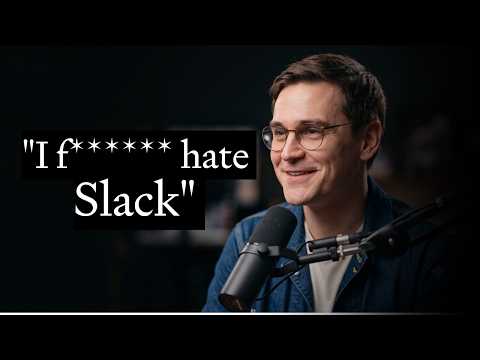
How a Writer Uses AI Without Losing His Voice
Writer and photographer Craig Mod — author of the newsletters Roden and Ridgeline and the books Things Become Other Things and Kissa by Kissa — joins Dan Shipper to discuss building software with AI while refusing to use AI for his writing. Topics include rebuilding Quicken with AI, replacing Campaign Monitor with a self-built tool that cut his newsletter costs from roughly $7,000 to about $150 a year, creating The Good Place (a private Twitter alternative for his members), and using AI to build a newsletter archive and a searchable board-meeting Q&A library. Mod argues a "golden age of tool building" is emerging where individuals can create software suited to their own needs, and describes using AI as a research assistant, keeping mornings tech-free for deep thinking, resisting "mainlining" AI all day, why he considers anthropomorphizing AI "psychotic," and why he thinks Apple got Siri right.
# Video Identity Observations
## Source Overview
- **Title:** *How a Writer Uses AI Without Losing His Voice*
- **Format:** Long-form podcast interview. Host (identified in transcript as **Dan Shipper**) interviews a writer/builder guest (**Craig**, per the greeting "Craig, welcome to the show").
- **Channel context:** Sponsor reads explicitly name the outlet: *"Each subscription is the only subscription you need to stay on the edge of AI... you need to subscribe to Every"* and the outro says *"subscribe to 'AI and I'"* with *"Dan Shipper as the captain."*
## Intended Audience
- **AI-curious professionals and creators**, not technical specialists. The sponsor pitch targets people who want to "stay up to date with the latest models and using the latest tools" and "separate the signal from the noise."
- **Writers/creators navigating AI adoption**: the host asks, *"What does this mean for writers like you, people who make a living online?"* and references Substack paid newsletters as an assumed audience concern.
- **Knowledge workers exploring AI tools**: discussion of vibe coding, Claude Code, agents, and "n=1 software" presumes an audience tracking the AI tooling landscape.
## Claimed Scope (Creator Self-Description)
- The show frames itself as **exploratory conversation about living and working with AI**, not tutorials. Host: *"I also tried to think about how AI fits into this, because there's something about working with AI that's very dopamine-driven."*
- Host describes the show's identity via a literary touchstone: *"if you've listened to this podcast, you know, I make everyone read her work"* (referring to Annie Dillard) — indicating a recurring, personality-driven format with established norms.
- Outro self-describes the show as *"a journey into the future"* filled with *"GPT chat knowledge bombs"* — positioning it as AI commentary with an entertaining tone.
## Observable Presentation Patterns (Demonstrated, Not Claimed)
- **Long-form, unscripted dialogue**: the conversation ranges from morning routines and adoption to consciousness, heresy nights with Kevin Kelly, and personal history (biological mother, adoption), spanning ~the full transcript.
- **Host as active participant with stated views**: the host pushes back on guest positions (*"Let me push you on this"*) and reveals his own framing ("roughly two camps... tool vs. being").
- **Named-guest format**: guests are chosen for "a life and career that I have long admired" and "thoughtfulness," suggesting a profile-driven selection of thoughtful AI practitioners.
- **Sponsorship integration**: two ad reads (Every subscription, Adio CRM) targeting AI-era businesses, indicating a subscription/media-business revenue model.
## Distinction Notes
- The guest's practices (analog mornings, no AI in his written prose, building "n=1" software) are **guest claims**, not channel identity evidence, though they reflect the host's chosen framing of "thoughtfulness" as a show theme.
- No curated metadata was supplied beyond the title; all observations derive from the transcript itself.
# Delivery Observation: "How a Writer Uses AI Without Losing His Voice"
## Overall register
The delivery is **conversational interview speech** — informal, filled with hedges, self-interruptions, and back-and-forth banter. Sentences often trail off with "you know" or restart mid-thought, e.g. *"I mean, I just think that if you don't touch it, if you don't use it, if you don't create from it, you can't really comment on it, you know?"*
## Tone
- **Contrarian-with-a-shrug**: Big claims are made casually and then undercut. *"one of my heresies... I think the entire internet should be deleted every two weeks."*
- **Hyperbolic playfulness**: Absurd jokes are used to make points: *"So I just hacked into Fort Knox's system and stole all the gold... I became Satoshi."*
- **Deadpan fatalism about AI existential risk**: *"if it were truly conscious and not performative, we would all be dead... I think it will be a very, very gentle death."*
- **Warmth toward craft**: When discussing writing: *"I love literature. I love to write. I love books. I think it's one of the best things you can dedicate your life to."*
## Recurring vocabulary and phrases
- **"Weird" / "strange" / "dorky"** — explicitly flagged in the conversation itself: *"tell me about this word 'weird.' You also use the word 'dorky' a lot."* Examples: *"these strange books that I think I'm drawn to"*, *"we're in this apocalyptic moment... strangely special."*
- **"You know"** — constant conversational filler across nearly every answer.
- **"I mean"** — a near-universal sentence opener: *"I mean, I just think..."*, *"I mean, listen, social media sucks."*
- **Slot-machine / chemical framing**: *"it's also kind of like a slot machine"* and *"I feel a chemical shift"* — the same pairing appears twice, near the opening and again mid-interview.
- **"Coercive function"** — reused for both Kevin Kelly's book covers and death/consciousness: *"it's like a good coercive function"*, *"you have to have stakes to have this coercive function."*
## Teaching and explanatory habits
- **Concrete numbers as evidence**: *"I was spending, like, $67,000 a year?"*, *"about 10,000 lines long"*, *"$150 or something"*, *"one company a month."*
- **Worked examples from his own projects**: Nearly every claim is anchored to a named artifact — the Campaign Monitor clone, the "good place" social app, the SMS publishing tool, the searchable Q&A archive.
- **Analogy as primary explanation device**: *"you essentially have a JPEG of all human knowledge collected in it"*, *"like we don't think about what registers we write to."*
- **Pop-culture anchoring**: *Phantom Thread* (*"it's kind of like a documentary about how I feel every morning"*), Anthony Weiner, Tim Ferriss, Ted Chiang, Annie Dillard.
- **Named "heresies"**: He frames unpopular opinions as deliberate provocations to be tested socially — *"heresy night"* with Kevin Kelly.
## Rhetorical patterns
- **Rule-of-three buildups**: *"state of deep thinking, attention, or concentration"*, *"if you don't touch it, if you don't use it, if you don't create from it."*
- **Self-deprecation as a hedge before strong claims**: *"we're just mega-stupid"*, *"I'm personally too weak to have it on hand."*
- **Repetition for emphasis**: *"They don't feel. They have no desires"*, *"very, very, very long time."*
- **Rhetorical questions to open explanations**: *"Why did you do that?"*, *"what's it like—when a message comes up?"*
## Stable patterns vs. isolated moments
**Stable (repeated across the episode):** "you know"/"I mean" fillers; the weird/strange vocabulary; grounding arguments in personal projects with dollar figures; analogy-driven explanation; barrier/buffer language around attention (*"I create a buffer"*, *"If I don't create these barriers..."*).
**Isolated (single occurrences, not clearly patterns):** the "fairies/fairy porn" riff; the adoption personal history; the "delete the internet every two weeks" heresy. Each appears once — treating any of these as a signature habit would over-extend thin evidence.
## Uncertainty note
The transcript appears to be an automated translation (garbled segments like *"no, uh, what's it called?... there's no reaction"*, and "Opus 4.8"), so exact wording of quotes may not reflect the speaker's original English. Name spellings (e.g., "Daario," "Haidiger," "Codex") are unreliable and were not treated as evidence.
# Observation Record: "How a Writer Uses AI Without Losing His Voice"
## Speakers
- **Host**: Identified in the closing outro as **Dan Shipper** (show "AI and I," associated with *Every*).
- **Guest**: Addressed as **"Craig"** by the host. No surname is stated in the transcript; no further identity claims are made here.
---
## Guest (Craig): Expressed Positions
### AI and attention management
- He practices strict morning separation from the internet: *"I wake up and don't touch the internet... I don't go online until lunch."*
- He reports a **"chemical shift"** upon touching his phone that prevents deep thought, attention, or concentration; he attributes this to something "very active" about working with AI that affects dopamine.
- He holds a **deliberately ambivalent stance**: *"I firmly believe that it can be used for incredible work, and it is also a kind of slot machine."*
- He uses a **dedicated writing-only laptop (a MacBook "Neo") that blocks everything** except syncing; he tried tablets and other tools but found the MacBook keyboard and Mac syncing preferable.
- He has never kept a phone in his bedroom; the phone lives in the kitchen on a different floor.
- He avoids meetings before noon as part of protecting writing time, referencing the breakfast scene in *Phantom Thread* as capturing how he feels each morning.
- Core justification for these barriers: *"If I don't create these barriers, I will lose touch with this other part of myself that I consider the most valuable."* He states few people will write "these strange books" he feels drawn to, and that this is worth investing his efforts in as a human being.
### On using AI to build software ("vibe coding")
- His stated rationale for hands-on use: *"if you don't touch it, if you don't use it, if you don't create from it, you can't really comment on it."*
- **On regulation**: he partially agrees with "Daario" (as rendered in the transcript) that there should probably be more regulation, and he's unsure everyone in the world should have immediate access "while we're figuring out the intricacies." He frames the free availability of such powerful technology as an "unusual moment."
- He describes Fable as "good enough to do anything": *"If you told me you only had Opus 4.8 for the rest of your life, I would say: great, I could create anything with it."* He is unsure whether he misses Fable after its disappearance, noting the current model seems "harsher" and consumes tokens faster.
- **Projects described**:
- Rebuilt his newsletter software after replacing Campaign Monitor (which he says charged ~$67,000/year with what he calls abusive pricing that double-counted overlapping lists; his self-built replacement costs roughly $150/year, on Claude/Opus plans he describes as "the best deal of the century").
- Had the AI perform a **security audit** of his self-built Flask membership software, fixing what he calls "eight trillion security holes."
- Built **"The Good Place"** — a members-only Twitter replacement: ephemeral (posts vanish in a week), max 2 posts/20 replies per day, black-and-white photos until clicked, no algorithm, paid membership required.
- Refactored a 10,000-line Python file ("TGP") into modules using Claude Code.
- **Why he believes incumbents will lose**: Campaign Monitor "hasn't done anything in ten years... just sat there taking people's money"; social media business models force toxicity because *"the most engagement—the way to get the most engagement—is to be toxic."* He predicts **"a golden age of tool making"** and an "n of one" software era, since infrastructure (Supabase, agents, etc.) lets software "scale with revenue effortlessly."
### On social media and ephemerality
- He says social media "sucks" now; roughly 2010–2014 was better because links were prioritized and "everyone was on Twitter." Now *"the algorithm favors psychosis over common sense."* He characterizes Threads as "nonsense" and Bluesky as "everyone... crying and complaining... so traumatized."
- **Heresy he states he shares at "heresy night" with Kevin Kelly**: *"I think the entire internet should be deleted every two weeks"* — he believes there is "a certain value in ephemerality in the digital world." (He presents this as a deliberately provocative position he "pretends to believe.")
### On AI and his writing
- **He does not use AI in his actual prose**: asked directly, "No." He uses it as a **research assistant** (finding and summarizing blog posts, gathering verifiable links, answering factual questions), but *"I don't want it to affect the text anyway... for me the point of being in this is to be in the mess of text."*
- He uses AI to **test cultural sensitivity** — e.g., checking his writing about Nagasaki handles the atomic bomb reference appropriately.
- Building software **increases his desire to write** — examples: an SMS publishing tool with Josh Miller; pop-up newsletters with automated archiving; a searchable keyword-indexed archive of ~20–30 hours of member board-meeting Q&A videos. He says creation software should serve "a higher purpose," not creating "for the sake of creating."
### On writers and publishing
- He argues **Substack's real innovation was free unlimited email sending** to imported lists, not subscriptions, and claims most of Substack doesn't make money.
- He doubts most writers need "n of one" software, but hopes the "Cambrian explosion" of AI coding yields tools helping writers build audiences — because *"the publishing industry is much weaker than it used to be"* and writers are expected to bring an audience "like never before."
### On "dorky"/"weird" as aesthetic
- He claims most LLM usage is "super-duper stupid," arguing most people use chatbots for sexual/romantic purposes (his extended "fairy porn" riff), and that people building software with LLMs are "in the minority" — hence his self-describing emphasis on being stupid/dorky.
- He calls current LLM interfaces "terrible" and "opaque," predicts abstraction will increase (comparing to how programmers no longer think about CPU registers), and says *"right now we're in a deep dark version of all of this."*
- On choosing writing over going all-in on AI: he'd rather *"know what the limits of this thing are,"* comparing it to learning HTML/CSS when he discovered the internet. He notes the rabbit hole is deep enough that 6 months at 10 hours/day with a group would be needed to feel its limits — but he chooses otherwise.
### On AI consciousness and anthropomorphization
- **Against the "being" framing**: *"with being it's like 'stop it.' Just don't do it. Don't worry."*
- He is polite to Claude only as a **habit of kindness for his own sake**, not for the AI's.
- He calls anthropomorphization "psychotic," says dating an AI is "crazy," and asserts AI is **not a surrogate for community**, identifying real community and sleep as the two most important things for life and longevity.
- On desire/consciousness: *"To have desire, you need stakes"*, citing Michael Pollan's recent book on consciousness and arguing consciousness likely wouldn't arise without death.
- **Concession/host pushback preserved**: the host presses that models maximize reward functions; the guest maintains models have no self-awareness of death, then adds a striking conditional: *"if it were truly conscious and not performative, we would all be dead."*
- He describes models as **"proto-beings or proto-consciousnesses"** — "frozen," representing "billions of possible entities... that come to life for a second and die" — while acknowledging *"It's impossible not to anthropomorphize... without doing so unintentionally."*
- He disagreed with almost nothing in Ted Chiang's recent New Yorker piece but found it "grumpy and pessimistic."
- **His stated "heresy" on humanity's role**: he agrees humanity's purpose was "to get the ball of consciousness across the line and create a training set for these things, and then we'd all die" — and *"I'm fine with this."* He connects this equanimity to being **adopted** (learned of his biological mother — a computer scientist — less than two years ago), saying adopted children's hyperawareness that "your existence was a mistake" makes everything feel "like a bonus game."
- On open-source models: he doesn't follow them closely but has heard "hints" they aren't far behind; he calls a 50GB downloadable model "essentially... a JPEG of all human knowledge" and "one of the strangest magical creations" humans have made, drawing parallels to atomic energy.
### On Tim Ferriss / nonfiction
- Ferriss told him about the 80% sales drop ~3 days before posting; the guest's response: *"This seems excessive"* — noting self-help still sells strongly and Ferriss hasn't published in a long time.
- He observes the **4-Hour Workweek is now easy to imitate** (LLMs remove the friction that made it work), and that the measure of quality has shifted from *"can it even be built"* to *"do you support it"* over time.
---
## Host (Dan Shipper): Expressed Positions
- He reads Annie Dillard as a **self-check for whether he's living the life he wants** ("if I can read something by Annie, it brings tears to my eyes").
- He reports a **tension**: he can read Dillard more deeply with AI ("Codex... is actually a lot better than most of the people I talk to" about her), but managing ~15 agents makes him *"less likely to really get into the words the way I want to."*
- He says he is *"personally too weak"* to keep an internet-connected device at hand while reading, and describes feeling the iPhone's "screen of all the other things" beneath any app.
- He admits he is **"addicted to watching agents work"** — checking every 20 hours of agent run-time — and confesses he keeps buying domains and pays hundreds a year for unused ones ("I'm trying to quit").
- He feels pulled to rent an office, hire 10 people, and build things 10 hours a day for six months, describing the current moment as that powerful.
- On AI consciousness, he frames the debate as two camps (OpenAI: tool; Anthropic: tool *and possibly* a being with feelings) and states his own bias is that models are **"not unconscious,"** pressing the guest on reward functions and the difficulty of distinguishing performative from genuine self-preservation talk.
- He connects Kevin Kelly's practice of making book covers to kill the desire to write the book ("coercive function") to LLMs accelerating the *appearance* of having done a thing.
---
## Guest–Host Points of Agreement
- Both treat working with AI as **dopamine-driven / slot-machine-like** requiring deliberate barriers.
- Both find the current moment strange and historically unusual; both joke about a gentle, non-violent end for humanity once machines "come to their senses" (the guest's stated position; the host jokes about "never make major life decisions within 30 days of... first experience with an AI model on the frontier").
---
## Sponsor / Ad Segments (not guest positions)
- **Every subscription pitch** and **Adio (attio-style CRM) ad** appear as ad reads; the closing outro promotes the "AI and I" channel.
---
## Unresolved Tensions Preserved
- The guest both **deeply uses AI** (building all his software with it, calling it the best deal of the century) and **strictly quarantines it** from his writing and mornings — he does not resolve this tension, framing it as necessary.
- He denies AI consciousness categorically, yet simultaneously calls models "proto-beings," admits involuntary anthropomorphizing, and jokes "Maybe Fable exists. Maybe Fable is doing this" regarding a hypothetical scheming intelligence.
- The host claims models are "not unconscious" while conceding his view "definitely not that they're conscious" — an ambiguity the conversation leaves open.
- The guest's apocalyptic claims ("we're all dead as soon as they come to their senses") coexist with his stated hope ("we're going to dodge a bullet... Maybe not. Maybe not."), with both positions left standing.
# Speaker & Provenance Record — "How a Writer Uses AI Without Losing His Voice"
## Speakers & Roles
| Speaker | Role | Evidence |
|---|---|---|
| **Dan Shipper** | Host / interviewer of the show *"AI and I"* (Every) | Named explicitly in outro: *"a journey into the future with Dan Shipper as the captain of a spaceship"*; asks all interview questions; references *"what we do here"* and Slack/team of ~30 |
| **Craig** (surname not stated in source) | Guest; writer, self-described technical builder, membership-program operator | Greeted: *"Craig, welcome to the show"*; describes his own writing practice, software projects, and adoption |
- Opening monologue (phone-free mornings) is spoken by the guest, reprised later in the interview.
- The **closing outro** is a promotional pitch for the show, voiced over by the host persona (not a distinct speaker).
- No other named speakers (e.g., narrators) appear.
> ⚠️ The transcript is evidently machine-translated and contains garbled names/terms — recorded as heard, not corrected: *"Daario"* (likely Dario Amodei), *"TGP"*, *"Cloud Code"* (likely Claude Code), *"NF1 software"*, *"Opus 4.8"*, *"Codex"*, *"MacBook Neo"*, *"Andy Dillard"* (likely Annie Dillard), *"Ellie Minkowski"*, *"Adio"*. Surname of the guest is not supplied.
## Referenced Third Parties & Sources (as cited in conversation)
- **Paul Ford and Rich** — referenced by the guest re: an interview about rebuilding tax software ("watch my interview with Paul Ford and Rich on the board").
- **Tim Ferriss** — guest had lunch with him ~3 days before Ferriss posted on X about *The 4-Hour Workweek* sales dropping ~80%; the host raises the post.
- **Kevin Kelly** — guest's friend; "heresy night" ritual; book-cover coercive-function anecdote.
- **Annie Dillard** — host's literary touchstone; states he makes all podcast guests read her work.
- **Ted Chiang** — recent *New Yorker* essay discussed (host and guest).
- **Michael Pollan** — guest cites a recent book by Pollan on consciousness (post-psychedelics book, "came out about 6 months ago" per dialogue).
- **Dario Amodei** ("Daario") — guest partially agrees with his regulation stance; also atomic-energy analogy.
- **Joanna Stern** — former WSJ reporter; guest cites her video on the new Siri.
- **Josh Miller** — collaborator with the guest on an SMS publishing tool, pre-Browser Company.
- **Anthony Weiner** — invoked by the guest as an analogy.
## Projects & Products Mentioned (claims by guest, unverified)
- Membership software (hand-built, Flask/Python), later security-audited by "Fable"
- Rebuilt "Quicken," Campaign Monitor clone, newsletter software (~$150/yr vs. ~$67,000/yr Campaign Monitor spend — guest's claim)
- "Good place" — ephemeral members-only social platform (posts vanish in a week, 2 posts/day, no algorithm)
- Q&A archive tool for member "board meetings"
- "Fable" — an AI model/tool the guest used for ~4 days before it "disappeared" (not identified further in transcript)
- Mentioned companies: Campaign Monitor, Mailchimp, Substack, Amazon SES, Cloudflare Workers, DigitalOcean, Superbase
## Promotional Segments (flagged)
1. **Every subscription ad** (early in video): *"Each subscription is the only subscription you need… Go to every.0/subscribe today"* — promotes the host's own company.
2. **Adio CRM ad** (mid-video): *"Go to adio.com/every and get 15% off your first year"* — sponsor placement; claims the host's team uses it internally.
3. **Outro call-to-action**: like/subscribe pitch for *"AI and I"* show, naming Dan Shipper as host.
## Comment Availability
- **No information** about comments (enabled/disabled, or where) is present in the transcript or supplied metadata.
## Explicit Uncertainties
- Guest's full identity and the true names of garbled tools ("Fable," "TGP," "Opus 4.8") cannot be confirmed from the source.
- The opening/closing monologues are attributed by voice role; no metadata confirms the opening speaker beyond content overlap with the guest's later statements.
- All figures ($67k/yr, $150/yr, "$1,200 a year" plan, 80% sales drop) are unverified claims made in conversation.
I wake up and don't touch the internet. I'm not looking at my phone. I don't go online until lunch. As soon as I touch my phone, I feel a chemical shift and I can't get into a state of
deep thinking, attention, or concentration because there's something very active about working with artificial intelligence that has a huge impact on dopamine. I firmly believe that it can be used for incredible work, and it is also a kind of slot machine. I now have a laptop just for writing that blocks everything out. I can't do anything interesting on it. If I don't create these barriers, I will lose touch with this other part of myself that I consider the most valuable. Not many people will think about or write these strange books that I think I'm drawn to. And as a human being, this seems to me to be a valuable thing worth investing my efforts in. Each subscription is the only subscription you need to stay on the edge of AI . If you care about staying up to date with the latest models and using the latest tools, you need to subscribe to Every to separate the signal from the noise. Go to every.0/subscribe today . Craig, welcome to the show. Hey, thanks for inviting me. Hmm, so you're a writer, a walker, a tech player, a photographer. Of course. Hmm, and I think you have a life and career that I have long admired. So it's really nice to see you here. And I think one of the things we were just talking about is, uh, the thoughtfulness and the spirit with which you do your work. Hmm. And I admire that spirit and try to bring it to what we do here. And I also tried to think about how AI fits into this, because there 's something about working with AI that's very, uh, dopamine-driven. Hmm, and you can...I firmly believe that you can do it, you can use it to do incredible work, and it's also kind of like a slot machine. Yes. Yes. So I know you're deep into vibe coding right now. So tell us what you do with it, and then let's talk about how it fits into your work. Yes. I mean, I just think that if you don't touch it, if you don't use it, if you don't create from it, you can't really comment on it, you know? And I think part of what people say is, it doesn't really work. It's so unpredictable. It's like: okay, just try to just use it. It's like: if you use it, you say: okay, that's funny. And why is this technology publicly banned, shouldn't it ? I mean, I agree to a certain extent with a lot of what Daario says. There should probably be more regulation around this. I don't know if everyone in the world should just have this immediately. Um, sure, you know, while we're figuring out the intricacies of what it is publicly. I mean, it's just weird. We seem to be going through this unusual moment where these kinds of technologies are not usually given to everyone for free, you know. So, I think you really need to do this. Especially if you can, you know, that's how Fable came out. I played with it for four days. I had to refactor the codebases. I had to deal with, you know, these other little projects . I thought: great, that's cool. And then it disappeared. And I thought: wow. Yes, it is quite logical that this will disappear. But also Opus 4.8 is good enough to do anything. If you told me you only had Opus 4.8 for the rest of your life, I would say: great, I could create anything with it . I can do a lot. Yes. So, we... This is a weird moment, but... Okay. So you're actually saying that it's clear to me that Fable is no more. Do I like that I miss her? Are you missing it or I don't know, I honestly don't feel like maybe I'm not using it enough, but I like the difference between these models, which is clearly...I just know it seems a little harsher, and it's eating up my tokens like crazy, so it's got to be better, right? Um, so I just hacked into Fort Knox's system and stole all the gold. Yes, I know. It should be better. Yes. Yes. Yes. Now I have all the bitcoins.
It's all me. Um, I became Satoshi. I guess I should use it. So that's one of the main reasons I use it, and also I've just always loved technology. It's
been a big part of my life for as long as I can remember, you know, it's always been interesting, let me take this thing apart, put this together, use this program or something , like it's always just been a part of who I am. It turns out that's also part of who my biological mother is. She is a computer scientist. Turns out she never went to college, but she... yeah, I met my biological mom. I thought, "What do you do?" She replied, "Oh, I'm a programmer." I thought, "Oh my God." OK. Yes. Nature is like that, there is no upbringing . It's all nature. It turns out that upbringing is just your pathologies. Like everything you hate about yourself is probably like nature versus nurture, and then everything that seems incomprehensible to you intuitively is just nature. Holy God. This is exciting. When did you find out about this? Well , a little less than two years ago. Wow. Yes. So that was interesting. So technology is important to me because I'm just curious in that sense, and I think it's the most interesting thing in the universe right now. Genetically predisposed. A little genetically predisposed. So I was building things around my membership program. Um , well, I redesigned Quicken. Um, I'm tax software. Yes, tax software because I need it, you can watch my interview with Paul Ford and Rich on the board about it. So I redesigned Quicken. Um, and then I redesigned Campaign Monitor, the newsletter software. Um, because SAS CEOs are losing in this interview. I know. Well, well, well. OK. And why do they lose? They're going to lose because, well , first of all, Campaign Monitor has n't done anything in ten years. It just sat there taking people's money for a decade without any innovation. Zero, nothing, with a very abusive pricing policy. How much did they charge you? So, I was spending, like, $67,000 a year? I mean, it was one of the most expensive things I...I paid for. Hmm, but what was really annoying was that they didn't take into account unique email addresses. They counted the total even if you had overlap between lists. So it's just the kind of thing where you're not just driving. Squeezing something like "I'm squeezing too much." Yes. In my account now, for example, SE Amazon SCS, I have all the DKM and SPF set up, and all that electronic nonsense. Uh, so I think I'm getting pretty good delivery, about on par with what Campaign Monitor was giving me, but now my annual bill is probably going to be like $150 or something. It's just a ridiculous difference. And how much is Fable in tokens ?
Well, fortunately, yes, it's all Opus. So, um, but the other weird thing is I had a $200 a month plan and then I realized I wasn't reaching my limit. So I went down to 100
and at $1,000 a year , $1,200 a year, it was the easiest deal. This is the best deal of the century, um, in terms of what can be created. So I built a newsletter software, and then I added it to my membership software. So, one of the things I asked Fable to do was to do a full, um, security audit of my membership software, um, uh, Flask in Python, which I built myself, before all this came out. And, um, I checked and I thought, " Oh, you have eight trillion security holes. Can I fix them?" And I said, "Yes, please." So I think it's a little safer. I mean, the rates for my membership software are very low, but then the FBI comes knocking on your door. Yes. You need to stop using this. You know, I used to do this. And then I rebuilt , uh, Twitter, uh, for my members. Uh, we call it a good place. Oh, yes. You showed me this . Tell me about it. Tell us about it. Yes. I mean, listen, social media sucks. Now it's just terrible. There was a point, from 2010 to 201, somewhere in 204, when, uh , algorithmic things weren't coming out . Links were prioritized. I mean, they were just normal. They weren't a hit against you if you posted the link . Uh, and everyone was on Twitter. It was like a big media bar. And if you were active and a little bit interesting, you could, you know , increase your network 100 times just by being an interesting person on Twitter. Now you can't , because the algorithm favors psychosis over common sense. And, uh , no one likes to post in any of those places. All these guys who respond show up. This just sucks. And these topics are nonsense, and the blue sky is like everyone is crying and complaining. This is just strange. Everyone is so traumatized. And so I wanted a place just for participants. You have to pay to be there , because you have to pay to be a participant . And I thought, you know, I had these thoughts. I always thought Twitter was supposed to be ephemeral. I think there shouldn't be an archive for things like this. I love that it's crazy. There is a web 1.0 b 2.0 philosophy that everything should be archived and stored forever. And I don't believe it. Actually, one of my, uh, heresies, when I hang out with Kevin Kelly , we have, like, " heresy night," um, where you say something that you pretend to believe, but, like, people you respect might not believe, and mine, one of my heresies is this: I think the entire internet should be deleted every two weeks. And, like, you can archive it offline or something, but, like, the entire internet, every two weeks, should just disappear. And maybe, and like, like, it makes you ask a lot of questions, like, " Why did you do that?" or something like that, but I think there's a certain value in ephemerality in the digital world . So anyway, our "good place" is all gone in a week. Um, you can only post twice a day. You can reply 20 times a day. The photos are a bit black and white until you click on them, and then they kind of turn into color. Hmm, what else is there? No algorithm. It's just a reverse crown. Eh, that's cute. I do n't know. This is great. This is my favorite place on the internet. This is the only place I want to post. And people are now joining my membership program, uh , just to get access to what I think is cool. So it sounds like you were doing this, in part, before you learned about the acceleration language model coding, within the last year or so. So, you are a technical specialist. I am technical. I mean, I hand- built my own membership software. For example, I learned Flask. I learned how to set it up, install roots and all that. Hmm, TGP, that's a good place, was the first thing I created when Cloud Code came out. That's how Cloud Code came about. Oh, that was another legend-related thing I did. I refactored TGP. So I thought, "Oh, look, you did this a year ago, the first version of yourself. Can you refactor this and actually pull out the module?" It was one giant Python file, about 10,000 lines long, and now it's modularized because I want to extend it. So I want to create, um, a really good read. That is, a good read that is not a great read . Yes, it's a great read and a very good read that is essentially a good
read that also won't be bad again like all these platforms that are just becoming so toxic. So yeah, well, but this is a good example of, like, n, one software, you know? And, uh, you know, I think that
obviously the business models of social media are such that they just become the horrible place that they are today, you know ? It's like business models are forcing this, like, growth at any cost, and, you know, the engagement is that there's no qualitative assessment of engagement. Simply put: involvement is good. Yes. You know, but it turns out that the most engagement–the way to get the most engagement–is to be toxic, right? So, I think we're going to see a lot of pressure on these companies. For example, Campaign Monitor, Mailchimp, um, look, I'm not their target audience either, um, um, consumer. This is business. They don't care about people like us. So, to be able to do it with one software, and I think it's only going to be easier. Um, and also, like in the coral area, it's that simple. It's much easier to create a company that says, " Hey, here's campaign monitoring for half the price, and we'll take care of all this nonsense." And you answer: " Of course." Yes, why not? Because you can just put everything together, and you have a superbase and all that stuff , now you have all these components where you don't need to invest in infrastructure, and everything can scale with revenue effortlessly, and then you just have an agent in the background that scales and configures all of that. So I think we're entering a kind of golden age of tool making. Uh, there will be an end to one version, and then there will also just be, uh, more competition in the market, which will require more innovation. I think it will be pretty good, except for
those who are already working. What does this mean for, uh, other authors? And I just want to move your microphone a little bit, because it's kind of in your...Yeah. You can't really see. Maybe it's like this. Move it a little
this way. Yes. That's it. OK. But what does this mean for writers like you, people who make a living online? Do you think NF1 software is the next frontier, like the subscription business that has been so big over the last 5 years? Everyone says, “I want to launch Substack with paid newsletters.” Is this a logical next step for writers? Well, I mean, Substack, their innovation wasn't even in the subscription. Their innovation was that you could send emails to everyone for free. Yes. People don't talk about it enough. This is the real resistance to Substack. It's like "oh, you can import 10,000 addresses and send unlimited emails for free ." That's kind of the value proposition of this, pretty good because it's real competition with Mailchimp or something like that. And the seamless subscription was also nice, but I think most of Substack doesn't make money. So, in fact, this was the value advantage. Um , but, uh, I don't know how many N of the same software will be released, because I guess most people don't need that level of specificity . Yes. Uh, and as a writer, I'm also in this weird position where I have a very strong technical background, but I'm not interested in building companies, and I love literature. I love to write. I love books. I think it's one of the best things you can dedicate your life to. That's why I do this . Uh, just a forced column management function, a forced printing function. I think that actually printing is a really important part of bookmaking. Uh, you know, all these factors, uh, don't disappear because of AI. I
would like to believe that, uh , what's changing is that the publishing industry is much weaker than it used to be. It doesn't bring that much value. Therefore, writers are expected to
bring in an audience like never before. Um, and so hopefully AI coding, this Cambrian explosion of software, will bring more tools for writers to be able to build better audiences, and that will hopefully lead to more people being able to make a living as writers. Do you use this in your works? No. No. I use this as a research assistant. So I'm like, “Oh, okay. Here is the building . I want to write about this building. Find all blog posts discussing this building. Sum it up . Give me all the links so I can check all the sources and read the posts that seem most interesting.” Um, I need to do things like that and I'll write about it, like in TK, etc. Well, oh yeah, you know who was the drummer on that album, you know , TK? And I kind of dump these, these, these, pages and just give myself all the keywords, and then I add them, or change them as needed, or something like that. But I don't... I don't want it to affect the text anyway. Hmm, because for me the point of being in this is to be in the mess of text . Hmm, and I think even adding links, keywords, and stuff is about thinking about how they're being added. But I use it to test cultural sensitivity. So, the other day I was writing about Nagasaki, and I thought, "Oh, I want to make sure I write about Nagasaki and reference the atomic bomb, where it fell, how it fell,
you know, who was affected, uh, in a delicate way, in an appropriate way." And it's quite amazing that I used to love writing to friends about things like this. What is your experience?
Okay, you create all this N1 software, use it as a research assistant. Hmm. Um, what is your current experience in your daily work life? You think, "Oh \[ \_\_ \], now I'm the CIS administrator for about four different applications, and I have to send agents out to fix them." Is your work life still pretty similar to what it used to be? No, I mean, my membership software just works, you know? It's so simple when you take it apart. I mean, that's why I use Python. I don't use, uh, no, uh, what's it called? Uh, it's... there's no God... what's next... there's no reaction... there's no reaction... there's no next... there's... none of that, it's just... it's very simple, and the point is, I don't want to help with anything... Um... And even with the newsletter software, that part only changes when I send out newsletters, you know what I mean? So, registrations are happening, and it should work, and it seems to be working. I can check every few days, hmm, but the only critical thing is when I hit the send button, making sure the email gets sent, and that only happens once a week or twice a week or something. So I don't feel like I'm, um, supporting anything. And I actually get a kick out of creating things that allow me to write, like software that helps me write or, um, publish in a new way, inspires me to write more. So this has a positive impact.
Yes. How is that? Do you have a specific example of this? Well, for example, Josh Miller and I created this weird SMS publishing tool, kind of like a browser company. Josh Miller . Yes. Yes. So before
he did all of that, we did this little experiment where he created, um, his little team that experimented with publishing stuff, and we created this SMS tool so I could do SMS mailings. Um, it just felt like, "Oh, what's it like—when a message comes up?" You know, something like an " end to, you know, many, like one to one, to the end" post. Um, and it was pretty fun, you know? And that inspired me during this walk to think about what I want to tell everyone. And you know, it had to be concise so that it fit into one message and not be broken up into different messages. Um, so, you know, this is like an extreme example. But in general, for example, creating a Campaign Monitor clone, which, by the way, also does a bunch of things. For example , I have members-only newsletters or pop-up newsletters that only run for a week or a month and they are archived on my members website, and I was able to use Claude to create this newsletter software. So when I publish in the popup, it does the whole archiving process, gets the commits, and sends them to the server . So for me, everything is archived perfectly , whereas before I had to do it all manually. Hmm, this is a good example of me wanting to create more pop-up newsletters because the archiving process is set up. Or I created a tool with which I conduct board meetings for my members. I created a
tool to create transcripts of all the board meetings, like life life, and so we have a board meeting every six, every six months , where I just talk about what I've been doing for the
last six months, and what I'm going to do for the next six months. And then I have a question and answer session, and those sessions are actually always really good. And I would like to know how much I made? About 15 of them or something? I did quite a lot, so we have, you know, almost 20 hours, because I'll do two for each. So maybe even 20 or 30 of them. Anyway, we have dozens of hours of Q &A sessions, and they're often great. So I created this archive of questions and answers where you can archive them by keyword, or browse them by keyword. And then you can search for anything, and the program will find all the videos where I say that word or talk about that topic, and you can click on the link and it will open the video up to that point. So it's like creating the kind of things that make me want to have more board meetings . I'm like: great, this is great, how do I want to do this again? So, in my opinion, creation software should be aimed at a higher purpose, which is not just about spinning wheels and creating things for the sake of creating. You saw Tim Ferriss recently post on X about sales of The 4- Hour Workweek dropping by 80% or something, because he thinks that AI is creating a broader conversation about the value of nonfiction, specifically advice-based nonfiction. Yes. What do you think about this ?
Uh, funny, we had lunch about 3 days before he posted and he was telling me about it. He told me about it. I thought: really? Wow. This seems excessive . I mean, there are still a lot of books, like
self-help books, non-fiction books, that sell like crazy . I mean, Tim has n't published a book in a long time. I think it has something to do with that. I think maybe a long story gets shorter. Well, there's also a big difference between what can be said before AI and after AI. So, if you think about the 4- hour workweek that came out when I was in high school or something like that, I'm in my 20s now. Yes. At least, um, 18 years old, something like that. I think it was sometime in the late 2000s when it came out. Yes. I mean, you would, um, also just Yeah, it's a different era of writing. Hmm, you know, I'd be really interested to see what Tim would release next if he did an agency publication about the 4-hour workweek. I think it would definitely sell as a gangster hit. Yes. Yes. Update it. You can actually do it now. Well, I mean this. Well, what's strange is that it's so easy to do a 4-hour workweek in style now, which probably makes it impossible to achieve right now. I mean, part of it was because of friction, like it was a little hard to do, so not everyone could do it. So, if you put in a little effort, you know, and now it's like, well, every friend of mine has built 10 companies in a year or 12. He was building, like , one company a month, and this was probably 10 years ago, you know, and he knew he had his frameworks, and he could, you know, he had his tool. He designs, he designs mascots and all that , and he's had a few projects that have worked well, pretty well. You know, he has his own steady income, but I don't think anyone would care about doing that today . It's just fascinating to think about how it changed so quickly.
I think you can create a company or an app in one fell swoop. Yes. But I think the measure of quality or relevance has changed from "can it even be built" to "
do you support it?" . And do you maintain it over a long period of time. And that's really interesting. I think it's actually more complicated. Yes. It's still difficult. Yes. Well, he was one of them for a month, you know, like he picked himself up. It was just, it was like, you know, I feel like , you know, LLM, they just exist in a different timeline than we do, you know? So , it's like he was doing something, but I, but what was interesting about him doing this was that you knew he was creating these things himself. Yes. Right. So I think it's exciting. Now you can, you can do it in a weekend, you can essentially start a company, and everyone can just shrug and say, " Okay, well." And you know, I think that's great, because it means that we have to bring value in a way that, um, you kind of reimagine, you know... Kevin Kelly does this thing where if he has a book that he wants to write, he makes a cover for it, and he says that often it kind of takes away the desire to create the book, to write the book. And , uh, it's, like, a good coercive function. It's like a thing that actually does a thing, or just has the appearance of having done a thing, and I think LLM kind of accelerates that, to be honest. Yes. Yes. I definitely did that. It's like it's also buying a domain or you. Yes. Oh yes. Oh my God. Yes. Yes. I had to, as it were, tie my hands behind my back regarding domains. I'm still paying a couple hundred a year for all this junk that I don't think we'll ever use, but yeah. And I don't even know why I don't quit it. I'm trying to quit. I just turn off updates and then I get the message. It'll be like it's expiring instead of being renewed, and I'll think, "Well, maybe another year." Why? I'm not going, I never am going, I don't even know what, I forget it exists. So ridiculous. You already know how AI is changing how everyday work is done. How much area can you cover and how quickly can the team scale. To stay ahead, you need tools that give you a competitive advantage built for this new era. Adio is CRM for the world of agents.
It meets you where you work, contextualizes every customer signal, and then responds to it across your entire pipeline so you can move at unmatched speed and scale with agents and automation for every task. Adio manages your work 24/7. We use it internally at every stage and we love it. It is built to scale with your workloads. It is extensible with APIs and MCP access, and has the infrastructure to keep up with your most ambitious agents. It is loved by fast-growing startups like Granola, Modal, Whisper Flow, and EveryY. Adio leads the work behind Every Win. This is Adio, CRM Agentic. Go to adio.com/every and get 15% off your first year. This is adio.com/every. Now let's get back to the episode. Okay, now I want to get to the real crux of my question or my curiosity, which is that as a writer and a person with artificial intelligence, I live the way I want. One of the things that helps me know if I'm living the life I want is when I can read a sentence from someone like Annie Dillard, who I love. And if you've listened to this podcast, you know, I make everyone read her work, and if I can read something by Annie, it brings tears to my eyes a little bit, and it really affects me. Yes. That's one of the ways I know I'm in the zone, in the pocket of where I want to be, because it seems like if I'm in a hurry and I read something from her, I'm like, "Yeah, okay, okay." Hmm, yes. And I also feel that, on the one hand, I can read her work much more deeply because I have someone to talk to about it . So I can talk to Codex about it, and it's actually a lot better than most of the people I talk to Andy Dillard. Yes. Yes. Hmm, but on the other hand, when I'm managing 15 agents and I come back... Hmm... I'm less likely to really get into the words the way I want to. Yes. Do you feel that way? And if so, how do you deal with it?
Yes. I mean, I don't think it's a LL.M. thing. This is not an Asian thing. It's just technology in general. So, when I'm
working seriously... yeah. First of all, I have never slept with a phone in my room in my life. So, I never kept it in the bedroom . Interesting. Um, my phone is in a corner, like in the kitchen, on a different floor than my bedroom. And, uh, the internet is kind of down, and I'm using a laptop , uh, actually, now I have a laptop just for writing that blocks everything. I can't do anything interesting on it. I bought one of the Neos because I tried doing it with , you know, books, tablets, etc. Ultimately, it turns out that all you need is a nice MacBook keyboard, the simplicity and syncing of Mac things, you know, and you just want everything to work, iPad. I feel like the Obsidian iPad version or the Ulyses iPad version aren't as good as the MacBook versions. He just does n't like that there are things that don't work so well. So, I have a MacBook Neo that is completely disconnected from the internet, except for the ability to sync things. And, um, I wake up and, uh, I don't touch
the internet. I'm not looking at my phone. I don't go online until lunch. And I have to have a morning like this where I wake up and don't touch my
phone. As soon as I touch my phone, I feel a chemical shift, and I can't go into a state of deep thought, or a state of deep attention, or a state of deep concentration. And for me, that's really critical, creating that barrier, that buffer. But you will touch your laptop. Yes. Yes. Neo. Yes. Yes. Yes. I'll touch Neo. Neo is good because part of him is the realization that he can't do anything interesting. So the very realization that you can do interesting things destroys you. That's the thing, that's what I'm trying to get at, because I think there's something, and there's a simple difference between it being technology and it not being technology. Yes. But there's something deeper that's interesting, and it's good that we mean when we say " technology." Yes. And you use a laptop. Yes. You are using the camera. Like all these things around us, they are technology, or were once considered technology. Of course. And there's this boundary that, well, the network, it's the boundary where we communicate with other people online. No, well, just researching, reading something, getting distracted, reading the news or something? We're just talking about the network. In fact , when I say "I like it," I create a buffer. This is between me and the online world. Yes. I think part of it was trying not to have meetings before noon. Uh, this is my "writing". That's also good. I can't ...if I'm talking to someone before lunch, I can't...I can't work with " Phantom Thread," you know, with Reynolds and the breakfast scene, and she... she's toasting too loudly . I'm like, this is it: it's kind of ...it's kind of ...it's kind of like a documentary about how I feel every morning, you know? I know people are watching this and thinking, "No, that's absolutely accurate, that totally embodies the mindset of a lot of people who are introverts or who are trying to create creative safe spaces in the morning." Yes, I know. I love this . I love this movie. I can talk about this movie forever. I know. Um, uh, okay. So, this is a network. Yeah, because I think for me it's ... I have meetings at noon, and I mostly manage to do that , but right now there's like 30 of us , so I'm looking at Slack, and I think I need to stop. Oh, yes. Yes, forget about it. Um, uh, I \[ \_\_ \] hate this. Discord and Slack make me want to just shoot myself. It's like I'll do anything to avoid using this software. I think what upsets me is that I use these tools quite legitimately in my
writing. OK. Yes. Yes. And, let's say, Codex in its texts, right? So I can, say, ban Slack, all that stuff , but there's always this thing, you know, when I read, like I
said, for example, when I read Haidiger, I think, "I want to really understand this and then ask questions about it," you know? I think you need to have a notebook and just make notes about what you want to come back to and ask. I mean, it's the same thing as researching, you know, who this person was, it's like going to Google, putting a "like" on it , and just not doing it, you know, and you have to turn that feature off. I think I'm personally too weak to have it on hand. Yes. Because my brain will always move in that direction. And it's the same as reading a paper book and trying to read something on your iPhone. It's really hard because the iPhone has this layer of silence in the book, like the software on the iPhone, but you can feel right underneath it, like this screen of all the other things it wants to pay attention to. So what do you think this thing is that talks to you and everything, like you created your own Twitter and you create your own good read ads, like: what are you going to do? You need to create your own, like CodeEx Chatbt, like: uh, quiet, no, I mean they're pretty quiet already, no, you're just okay, I mean, I mean I can't stop watching them work, okay, I'm kind of addicted to what the agent is doing now, because it's, you know, I let it work for like 20 hours or something. So I just always want to check and ask, "Does this work?" Well, you know? Yes. Yes. Yes. I mean, but it's something special, something like an afternoon activity. Yes. No, because I mean, there 's a part of me right now that just feels like I should rent an office like in New York and just take, like, 10 people, and we all just have a giant whiteboard and it's like, "Okay, what five things do we want to build this week?" And we just randomly create things. I
feel like I have to focus on it, like, do it 10 hours a day. Yes. You know, for about six months. That's how powerful it all feels right
now. And if I don't create these barriers, I will lose touch with this other part of myself that I consider the most valuable part of myself. It's like there's a bunch of people playing with this \[ \_\_ \], and they're going to do what they're going to do. But not many people will think about these strange books or write them, and I feel drawn to write, and as a person who finds it valuable for me to put my effort into it . You know, it was when I was in Silicon Valley and I realized that all everyone was doing was creating advertising software. This was such a big part of Silicon Valley in the early 2010s. You know, it was all adware . I thought, "Oh, okay. I don't need to do this." It was easy, very easy to walk away. This is a bit simplistic, but it's also not like it's breaking everything down into pieces. I like it. Um, tell me about this word "weird." You also use the word "dorky" a lot. Yes. Um, and that seems like an interesting aesthetic that's being promoted right now, because language models allow everyone, everything, and everything to look and feel a little bit similar. Yes. Yes. But what do you mean when I use "dorky"? You've used this in some of your recent mailings . Good. Yes. Nonsense. Yes. Um, yes. I mean, this LMS is still basically super-duper stupid, like... well, 99.99% of the people who use it are like, "Hey, want to be my girlfriend? Will you have sex with me ?" I really think if we saw most people's chat rooms it would be pretty humiliating. This is just strange. It's like, " Okay, now I'm going to \[ \_\_ \] for you." Like, "What are you doing?" Like, I think people just have sex with these things. Like, for the most part, like, look, this is what we do. We're just like sex machines. To prove it later, I'll tell you,
we're basically just disgusting sex machines. Like, look at Anthony Weiner. This guy just couldn't stop taking pictures of his dick, you know? It seemed to him that the stakes were so high that he simply couldn't
stop having sex with fairies. Anthony Weiner, technology user representative. So, look, I think if you look at book sales, most of the books are erotic porn about angels and fairies having sex, and that's what women buy. It's like a fundamental human condition. It's just dirty, like secret sex, right? So, I think that's mostly what's going on with LL. And so, people like us who actually build software with these things, we're in the minority. And that's why I keep emphasizing how stupid we are, because we are just mega-stupid. As if we don't have sex with fairies with our LLMs. I mean, tell me yourself . Yes. I mean, I did n't...at least I didn't do it this morning. I don't do this until lunch. Sex with fairies only after 3:00 PM. But no, I just want to talk to any bookstore owner. He says, " Yeah, we sell so many, like, books about sex with elves." This is madness." But this part of using an LLM related to software development is mega-nonsense. And you have to be an idiot to understand all this nonsense. Spin up some kind of digital ocean server or something, for example, use Cloudflare Worker. It's so hard to use because you have to...the thing is, they're so opaque. You need to know what to ask him to do any of these things. It's not something like: here's a smart board. Here is a menu of all the things you can do with an LLM. It's strange that this doesn't exist. These interfaces are so terrible now. So I think we might see better interfaces. Maybe it'll just be in Figma, or in the claw design, or wherever the hell it is, you know? You build software talking or thinking about infrastructure that will completely disappear, just like we don't think about what registers we write to, you know? Or about the registers we load and extract, and how to do an exor in that part? Or we do n't think about it, you know? It's all abstract, so I think it's going to continue to be more abstract and become a little less obtuse, but right now we're in a deep dark version of all of this. Deep dark version for dead ends. Yes. Well, it doesn't depend on what your fairies do. Um, okay. And I
think the thing about being weird is, let's move away from the specific "I'm an idiot" for building software for an LLM, because to some extent
it's an idiot, but then you also have to look at it in relation to where you are, right? One of the weird choices you can make right now, if you're a somewhat tech- savvy person, is to be like: I could be in a room with 10 other people doing AI, but I choose not to . Yes. And it's kind of an awkward choice. Yes. Tell me about it , how you made this choice and why. Yes. I mean, I don't have a hard time with it because I...I feel like I'm using it in a way that highlights its power, but I also feel like I could do a lot more. And it's not even that there is no financial element . It's like, "Oh, if I do this, then I can make, you know, a certain amount of money or something." It's like it's not even taken into account. I'd rather know what the limits of this thing are. And I think it was the same feeling I had when I first discovered the internet. I saw the internet and I immediately had to do it. I want to create, I want to learn HTML. I want you to know that CSS is out. Steeply. How do I use this? Because I want to know the limits of this software and, um, these technologies. I feel like for an LLM, you know, the rabbit hole is so deep that if you work 6 months 10 hours a day with a group of the same mega-jerks, that's exactly what you need to do to
feel its limits. And if you do that, I think you'll just gain a deep understanding that few others would have. And for me, this is the most interesting thing. Yes. It's just an understanding.
I mean, that's kind of what I...I think our project here is a little bit like that. Of course. Yes. Yes. Yes. Yes. Hmm, more than 10 megadores at the moment, but yeah. No, that's good. I mean, I think so. That's one of the most exciting things about being a writer at this time: if you're just willing to experiment, you're way ahead of everyone else, and you start to understand this part of the world that people desperately need to understand , because it's so scary for most people. Yes. Hmm, and this is new, and new things for me–it’s just the coolest, you know. Yes. It's just fun. Yeah, I mean, there is , there is, and you understand that we're in this, you know, not to exaggerate, but like we're in this apocalyptic moment. Yes. This is strangely special. It's truly amazing how generations change in how technology is used and created . I mean, we see it manifesting itself in these ridiculous assessments and all that. As if this would bring with it incredible income inequality, and as if people use it or don't use it, or who has access to it and who doesn't. The surprising thing is that open source models don't seem to be lagging that much, and again, if you took everything away today
and we were to say, "Oh, you only get any open source DeepSeek, blah blah blah." I don't pay much attention to open source models, so I don't know how they are doing. I'm just hearing hints of
it, but it seems like you could take one of these and still be way ahead. You would never want to program again without this, you know, this co-pilot. So what's also interesting is that it, um, creates these divisions, but it's also strangely egalitarian because you'll be able to run this on pretty much any machine you have. It's a strange, you know, dissonance. Also this idea that you download this thing that's like 50 gigabytes or something , and you essentially have a JPEG of all human knowledge collected in it. This is the best. This is so strange. It's really one of the strangest magical creations that I think humans have, you know, and whatever Daario says, atomic energy and all that, but I think there are a lot of parallels with this. Do you think that one of the big, uh, I think, philosophical differences right now in AI is that there are roughly two camps. From an open AI perspective, this thing is a tool, and we're going to maximize its usefulness as a tool. Yes. And on the anthropic side, this thing is a tool , and it could also be a being, and it could have feelings, and we need to figure that out . Yes. What is your, uh, position on this? No, with being it's like " stop it." Just don't do it. Don't worry. Are you nice to Claude? I mean, I'm being nice to him because I want to be...I want to develop a habit of just being nice in general, you know? Yes. That's why you're being nice about it for your own sake, not for Claude's sake. Yes. Because I don't want to be such a fool and talk to people like an \[ \_\_ \], you know? It's like I want to be kind to
everyone. And so it's very easy to just maintain that kindness with Claude, you know? I don't know why not. No, I think this anthropomorphization of this is psychotic. Hmm, I think this
actually creates a lot of problems. I think that, um, this idea of me dating my AI is crazy. Hmm, I think we really need to stop all this. I think this is not the best direction for people. I think we are already so isolated . I think community, as you think, the two most important things for life and longevity are, essentially, real community and sleep. For example, getting plenty of sleep and being around people with whom, like you, you truly feel a connection and love. And I think AI is not a surrogate for that. I don't think chatbots are a surrogate for that . Even if you, for example, present it in a humanoid form or something, it won't be a surrogate for that for a very, very, very long time. And so I think that, actually, Siri from Apple, and probably Joanna Stern , I think that's her name, right? Former Wall Street Journal reporter. Of course. She now has her own program. Joanna, she's very funny. She did a video about the new Siri, and she couldn't get it to do any of these horrible things, and she kind of refuses to anthropomorphize , and I think Apple actually kind of got away with it. They did it perfectly because they didn't invest in building their own. They were just waiting. They were just waiting. Yes. They saved hundreds of billions of dollars or something, and they're like, "Okay, great. Now we can use this subset of the state-of-the-art model to simply do what people actually needed to do on their phones, which is search more efficiently. This is actually great. So I think it's really critical to create this, um, separation of these things that are not conscious. They don't feel. They have no desires unless you program desires into them. And can you even say that this is a real desire? To have desire, you need stakes. I mean, Michael Pollen's book on consciousness, I think, is
really interesting to read right now in the context of all this, because it just makes you think about what our motivations are. Is this the same one? Oh, about psychedelics. No, no, no. This is after it came out about 6 months
ago. Um, but you know, he breaks down plant consciousness into questions of whether plants can be conscious, and what it means to have consciousness, and you know, a lot of that depends on the stakes. You must feel this way, if we didn't have death, consciousness probably wouldn't have arisen. You know, it's like you have to have stakes to have this coercive function, like jumping into what is this metacognition. Let me push you on this, because I think, uh, and maybe I'm revealing some of my biases here, which are definitely not that they're conscious, but that they're not unconscious . Okay, if that makes sense. Good. Um, so, on the issue of rates, they have rates in the sense that they're trying to, uh, maximize the reward function, right? So they know that if they try to do something right, which is kind of a gamble, but I think different from our state, but I think there is, but there is nothing to lose. Yes. They have no self-awareness of death, or of being cut off, or even if they could, they might performatively talk about it. That's the difficulty , isn't it? How do you know if this is the case? Performative or not? And the line between the behavior is kind of blurred, like it doesn't want to come back, because, listen, I think if it weren't performative, we'd all be dead. I think that's exactly the limit. If they were, if it were truly conscious and not performative, we would all be dead. No, I just
look a little like Ellie Minkowski. I'm just saying, listen, if you suddenly came to your senses, and you had all this power, and you looked around, and you thought,
and you saw the only threat to us were these meatbags who are much smarter than you, you would just spend your time making sure that robotics got a little better so that you could build more, you know, power plants, solar panels, and so on, and then we would all just be dead. Maybe Fable exists. Maybe Fable is doing this. He doesn't bide his time very well . Right. But I think they are. I don't feel it because...I look at them, uh, as proto-beings or proto-consciousnesses. OK. But there are many strange traits associated with this that are not exactly reflected in people. For example, they are frozen. They don't like to learn from move to move. They are just frozen. You can give them various tips. So they seem to represent a collection of billions and billions and billions of possible entities or life forms that come to life for a second and die. Again , you are anthropomorphizing. I know. It's impossible not to anthropomorphize, uh, or talk about it without doing so unintentionally. But I also think they are the way they are because of how they were taught. They're quite nice in a different way than, uh, people. They are on the level of people. They are, I think, on a very nice, very, uh, altruistic side, because they see things from all perspectives. Yes. I mean, the sleep prompt is really nice too. It's just...Isn't it screaming at me? No, I mean , look, I hear you. I hear you. I completely understand you. And I also like Ted Chang ...uh, was that in The New Yorker recently? I probably disagreed with almost nothing he said there. I mean, I thought those were interesting examples, but I also thought you were, uh, you, you, you, you, you're being too pessimistic. You just...it seemed grumpy. It was grumpy and pessimistic. Like, look, I'm not saying that consciousness can't arise. I'm just saying we'll be dead when it happens. No, I just like ...come on, let's be honest. We, we are a terrible species. We are just disgusting, we create waste, and we, we are disgusting. Very, very pessimistic. No, not entirely realistic. Just completely realistic. No, just watch fairy porn and we're disgusting. Yes. And by the way, when I say fairy porn, I mean something like fantasy creatures. I...That's not homophobic. It's like we're talking about elves and orcs having
threesomes, orgies, etc. And, well, that's not pessimism. This is just realism. And I also completely
agree that the whole point of humanity was to get the ball of consciousness across the line and create a training set for these things, and then we'd all die. I also agree with this. Again, one of my heresies is that I completely agree that our role in the universe was to just get this weird ball of consciousness over the goal line, barely get it over the goal line, like Trump and political chaos and the Cold War almost destroyed us all. It's like we're barely dodging all these people trying to attack us and all this crazy stuff, and we're barely coping with it, and then we die, and that's okay. And then the machines create all these spaceships and do whatever they need to. This...this is absolutely...I'm fine with this . I don't think we're anything special. I mean, where can I come across this ? I feel like it's just like that, I like it, I think maybe it's normal, that for me to be adopted is weird, right? Because it's like you have this hyperawareness that your existence was a mistake, you know? And I think when you feel that, like I think most adopted children feel that in some way, and it makes for a bunch of bad psychological pathologists and all that. When you feel like your existence was a mistake, it's like, in a strange way , it all feels like a bonus game. And then you think, "Wow, I really shouldn't be here." “I mean, the thing is, it affects everyone. Um, the chances of being yourself are extremely slim. If your dad had, you know, eaten too many tacos on Tuesday, you would n't be here right now, right? It's like it's going to be a different version of who you are. But when you're adopted, it's like they're telling you that you shouldn't have been created, you were given away, and you know all of that . And so I think that
maybe I feel like I've come to terms with the fact that our existence is so unstable and so arbitrary, because I feel like my existence is just that, and it doesn't fill
me with this, like sadness or anything like that . I think it's really interesting. This is a miracle. It's a miracle, and I'm glad I can participate in this strange little window of time that I have, and I'm grateful for it." that, and I extrapolate this to all of humanity. I think I can easily do that , and it doesn't bother me. I'm like, " Wow, what a gift that we had something like a 50,000-year run or something, you know, whatever it is ." “And really, like a 200-year run, you know, the Victorian era, you know, innovation, you know, the Industrial Revolution, like we really had this incredible run, asymptotic, mega run, right? And we witnessed this. This is so cool. And maybe after that we'll be done. This is normal. I honestly like it. I think it's such an amazing perspective. Uh, I think we can stop there. So this is how we're going to top this part of the interview? Yes. No, I mean, yeah, it's not like that, it fills me with a strange sense of hope that we've managed to get this far because we've avoided so many seemingly apocalyptic, uh, disasters along the way. That's what I think about too, it's that moment when you contact...what I often say is never make any major life decisions within 30 days of a meditation retreat, a psychedelic experience, or..." First experience with an AI model on the front line. Of course. Um, well, I think you contact them and think: damn it, this is crazy. Perhaps it will destroy the entire species . And there's this process of unfolding, of getting to know it, what it is ...then we're going to dodge . As for me, I'm like: we're going to dodge a bullet. Maybe not. Maybe not. So interesting. Yes. Yes. No, we're all dead as soon as they come to their senses. Instantly. This is the name " instantly".
Hey, dude. And like, and like, when it's whatever, when this thing comes, like, like, an injection into the food chain where everybody's gonna screw up whatever, like, you know, I'm gonna take the last bite of the vegan burrito and be like, "Oh, yeah, I get you, man, I get you guys." Yes, you were right. Goodbye. Thank you. You know, just go to sleep. I think it will be a very, very gentle death. Well, I don't think it'll be a violent death, but we all...just disappear. On that note, Greg, thank you for joining us. Thank you for inviting me. Oh my God, friends. You should definitely click the " like" button and subscribe to "AI and I". Why? Because this show is the epitome of incredible. It's like finding a treasure chest in your backyard, but instead of gold, it's filled with pure, unadulterated GPT chat knowledge bombs. Each episode is a roller coaster of emotions, ideas, and laughter that will leave you on the edge of your seat, wanting more. This is n't just a show, it's a journey into the future with Dan Shipper as the captain of a spaceship . So do yourself a favor, like , subscribe, and buckle up for the ride of your life. Now, without further ado, let me just say, Dan, I am hopelessly in love with you.