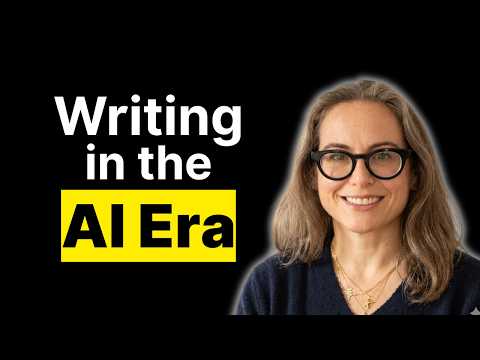
How Every Edits in the Age of AI
Interview with Kate Lee, editor in chief of Every, covering her career path from literary agent to roles at Medium, WeWork, and Stripe Press, and how she began integrating AI tools into her editorial work. Topics include running a newsletter as a small team in the age of AI, using AI to manage job applicants and enforce editorial standards, training taste on a small team, publishing reviews of two major model releases within 24 hours, what automating copyediting requires, and using an AI-powered browser to assist with hiring.
# Observation Document: "How Every Edits in the Age of AI"
## Video Format & Presentation
- **Interview/conversation format**: A two-person dialogue between **Dan Shipper** (host, "welcome to the show") and **Kate**, Every's editor-in-chief, discussing her career and AI adoption.
- The video appears to belong to a show referred to as **"AI and I"**, per the closing segment: "smash that like button and subscribe to AI and I... It's a journey into the future with Dan Shipper as the captain of the spaceship."
- The closing call-to-action is notably hyperbolic and comedic, possibly AI-generated itself: "It's like finding a treasure chest in your backyard. But, instead of gold, it's filled with pure, unadulterated knowledge bombs."
## Channel / Publisher Identity Evidence
- The content centers on **Every**, described as a newsletter company: "We were really just known for being a newsletter," with "sponsorships and events and courses and stuff like that."
- Claims of company scale: "there was like three people full-time including me. Yeah. Now there's 20, um, and it'll be probably 23 or something soon."
- The channel frames itself as covering **AI for knowledge workers**: "we sort of represent the two sides of our audience where like you're the early adopter... and I'm really that like knowledge worker who works in tech or is savvy about tech, who wants to use AI, knows I need to use AI."
## Claimed Scope & Output Types
- **Daily publishing**: "We publish a newsletter daily and we are a pretty small team."
- **"Vibe checks" as a signature format**: "vibe checks are our version of breaking news... Model is coming. We know the embargo. We've got a plan for it."
- **AI-built interactive experiences**: "we have been really investing a lot in our bot checks and want them to feel like a special experience... feel like a really different website experience and much more interactive."
- Products mentioned as incubated/spun out: **Lex** ("an AI app that we incubated... it went super viral").
- Internal tools: a markdown editor called **proof**, and a 400-rule style guide.
## Intended Audience
- Explicitly stated dual audience:
- **Early adopters / builders**: "very much on the edge, pushing forward to the nth degree of what these tools can do."
- **Skeptical-but-curious knowledge workers**: "if you're not from our world... you might look at a lot of what we do or a lot of the AI stuff is like, holy \_\_\_, this is like crazy. I don't know if I like this."
- Also addressed to **writers/editors and media professionals**: "someone is listening to this... they are maybe they're an IC and they're like, 'I need to apply this to my writing and editing.'"
## Editorial Philosophy Demonstrated
- **AI as taste-capture, not replacement**: "It's not about accepting what AI says blindly at all... It's trained on our stuff and it's trained on what's worked. And so, your job as a writer or editor is to consider it."
- **Structured workflow**: writers must run drafts through an AI editor before the editor-in-chief sees them: "before it came to me, if it was an internal writer, they would need to just like run it through our editor."
- **Weekly retrospective feedback loop**: "we would go through every piece we publish that week... head, deck, and lead... and basically feed fed all of that feedback into our cloud project."
## Claims vs. Demonstrated Patterns
- **Creator claims about the channel**: quality-focused ("high quality writing has always been at like the beating heart of the company"), fast-moving ("we as a company have been sprinting from January 2nd").
- **Demonstrated by the material**: an insider, collegial conversation style; heavy internal references (Nathan, Lex, Strunk the claw, vibe checks) assuming audience familiarity or interest in Every's operations; practical AI workflow detail (Notion hiring automation, headline testing, Claude projects).
- **Unverified self-claims**: subscriber counts, traffic impact of Twitter changes ("Elon Musk took over Twitter... Traffic cratered"), and 24-hour turnaround on the double vibe check are stated by participants but not independently evidenced in the material.
## Notable Outlier Content
- The final line of the transcript is anomalous relative to the rest of the conversation's tone: "Dan, I'm absolutely, hopelessly, in love with you" — consistent with an AI-generated outro segment, given the surrounding parodic subscribe appeal.
# Delivery Observation: "How Every Edits in the Age of AI"
## Format & Structure
- **Two-person conversational interview**: A host (Dan) interviews Kate (editor-in-chief) about her career and AI adoption. Delivery is unscripted, heavily interactive.
- **Cold-open teaser**: The episode opens with a clip of Kate before the intro music and welcome:
> "Kate, welcome to the show. Thank you. Thanks for having me."
## Tone
- **Warm and familiar throughout**: Both speakers reference shared history ("we've been working together on Every for like three and a half years"), producing a collegial, inside-joke tone.
- **Playfully teasing**: A recurring bit is Dan "trying to automate Kate's job":
> "Dan has been trying to automate my job for for like 3 plus years, and you're getting closer."
- **Self-deprecating humor**, e.g., Kate on joining WeWork: "one can question my judgment but um"
## Vocabulary & Recurring Phrases
- **"Light bulb / aha moment"**: Used repeatedly for AI breakthroughs — "Can you say one or two like specific concrete like big light bulbs for you?" and "it has felt like a real aha moment."
- **"Vibe check"**: Established internal jargon, used repeatedly without definition ("vibe checks are our version of breaking news").
- **"Worked / working"**: Kate's closing summary hinges on repetition: "Is this working?... It's working. It's working."
- **Brand/company names as shorthand**: Every, Lex, Stripe, Medium, WeWork, Notion, Google Docs, Atlas, Claude, Codex, Opus — dense proper-noun usage assumes audience familiarity.
## Communication Patterns
- **Frequent false starts and self-repairs**, especially under enthusiasm:
> "I think I think your career is incredibly interesting. I want to talk about how things have progressed for you in in and how you've seen every"
> "with with with software and consulting"
- **Hedging and softening**: Kate qualifies strong statements — "I shouldn't sound that categorical but" — and uses "I think," "you know," "sort of," "like" constantly.
- **Long turn-taking with interjections**: Short listener responses ("Yeah.", "Mhm.", laughter) punctuate long monologues.
- **Concrete anecdote when prompted**: When asked for specifics, Kate delivers a detailed hiring/Notion story rather than abstractions.
## Teaching / Explanatory Habits
- **Definition-by-contrast**: Explanations rely on oppositions — "it's not about accepting what AI says blindly at all, but it's not generic and it's not random"; IC vs. manager; "do you have a barber shop or do you have like a venture-backed company?"
- **Repeated numbered/structured framing**: "the challenge is sort of twofold. One is like just consistency... And then the other is the judgement."
- **Quoting internal rules back**: Kate articulates norms as quasi-maxims: "You have to be the one to teach the AI and you have to be the one to enforce it with AI."
## Isolated Moments (Not Stable Patterns)
- **Outro voice-shift**: The closing is a dramatic register break — hyperbolic marketing parody ("smash that like button... pure, unadulterated knowledge bombs") ending with "Dan, I'm absolutely, hopelessly in love with you." This is a one-time outro bit, not representative of the interview tone.
- **Direct-to-camera asides**: "Sorry about that. If you're If you're listening, I will not say who it was" — a single moment of audience address.
## Uncertainty Notes
- Speaker attribution in the transcript is sometimes ambiguous (overlapping turns), so a few quotes could belong to either speaker; I have only attributed quotes where the surrounding context makes it clear.
- The transcript lacks visual cues; observations about physical delivery (gestures, expressions) are not possible from this source.
# Observation Document: "How Every Edits in the Age of AI"
## Speakers
- **Dan Shipper** — host, Every co-founder (identified via transcript context: "AI and I" show, references to his writing, building products)
- **Kate Lee** — guest, editor-in-chief at Every (identified by Dan's introduction)
## Positions and Claims
### Kate Lee on Using AI to Enforce Editorial Standards
- When she was the only editor, work from freelance editors "came back at a different level from each of them."
- Solution: a project (initially a chat, then a project/artifact) through which every internal writer's draft must pass before reaching her, based on Every's style guide (~400 rules when she wrote it).
- Goal: "hopefully by the time it gets to me, the sort of floor has been lifted."
- Qualification: "It's not about accepting what AI says blindly at all, but it's not generic and it's not random. It's trained on our stuff and it's trained on what's worked. And so, your job as a writer or editor is to consider it."
- AI output is "a stand-in for another editor... if you don't think this suggestion is good, that's your prerogative, but you need to wrestle with each other."
- Style guides must be restructured for AI consumption: "how Claude can read a style guide is... not like how I would normally write a style guide."
- Tools only matter if enforced: "you can set up these tools, but then you have to make sure people use them."
### Kate Lee's Career Narrative
- Background: literary agent for 10 years (subject of a New Yorker "Talk of the Town" piece at ~27, which she found "extremely overwhelming" and career-jump-starting); then Medium (~4.5 years, first NY employee/first content head); WeWork (global editorial program, "true madness," company grew 4,000→14,000 people); publisher of Stripe Press and overseer of Increment.
- On Stripe's publishing success: not replicable for most companies — she tells founders/VCs "no." Key ingredients: founders "genuinely voraciously excited about ideas and books," mission-driven, not a marketing initiative.
- Joined Every: consulted/freelance edited, took on guest contributors, then became full-time editor-in-chief around the Lex spin-off, roughly 3.5 years ago, as ~4th/5th employee (Dan: only ~3 full-time at the time; now ~20, soon ~23).
- Career pattern (stated): "every experience has been a sort of reaction to what has come before." She vowed never to join another startup or media company ("famous last words") but prefers small teams and "working on the thing that is the thing" — the company's core thrust, even if less remunerative than software.
### Kate Lee on Her AI Adoption Journey
- Frames herself as the "knowledge worker who works in tech... wants to use AI, knows I need to use AI" but whose established workflow didn't rely on it — contrasting with Dan as the early adopter.
- Initial reaction to GPT-3-era tools: not a sense of wonder; "wow, this is really interesting." Early view: AI "is just going to create more work" and "nothing is as perfect as what I have been able to do myself."
- Recent shift (past couple of months): AI on administrative/operational/research tasks "completely saved me" — e.g., hours in Notion/spreadsheets. "I can just tell an agent to do it."
- Concrete light bulb: hiring in Notion without HR — used OpenAI's browser (Atlas) to post jobs and filter hundreds of applications via ~10 flags. Qualification: "I did end up looking through all the applications myself" — AI was a first pass.
- Learning style: "I learn by doing and I also learn by modeling" — she needs to see how colleagues use it.
- Still not using her Claude ("Claw"); abandoned setup when it needed an integration she lacked: "I'm not going to focus on this right now." Her Claw is named Strunk.
### Kate Lee on Automation Limits (responding to Dan's copy-editing automation goal)
- Two challenges: **consistency** (repeatedly capturing edits without errors) and **judgment**.
- Her final read conflates first read with top edit: "I'm basically reading something for the first time and then doing a top edit at the same time... those steps are conflated for me."
- Acknowledges Dan targets only "the repeated little copy edits... that I think you shouldn't have to spend your time on," and that automation odds are "higher this year than at any point," models "closer than they have been before."
### Dan Shipper's Positions
- Running joke: editor-in-chief at Every was "defense against the dark arts at Hogwarts" — hard to staff; different editors "are just made differently"; finding writing taste for technical topics is rare because people are either "really into tech or really into writing," often skeptically.
- Wanted Kate full-time almost immediately upon meeting.
- On the Musk/Twitter era: link deprioritization cratered traffic; strategy became "emphasize bottom of funnel" — courses, software, consulting — which "directly led" to running 4–5 products with one engineer each, impossible a couple of years earlier.
- His framing of the editorial AI approach: "constantly pushing the best of your taste and your learnings into written artifacts that the AI can consume" — a "little helpful friend," not a "never think for yourself tool."
- Vibe checks: with Codex 5.3 and Opus 4.6 releasing simultaneously, he used Co-work to summarize a Discord channel into an updating Notion doc, vibe-coded a website in ~24 hours; sending a PDF to a model company "caused... havoc" (fact-checking scramble), which he apologized for on-air.
- References his Nov 2022 article "AI in the Age of the Individual" — skills needed: "vision, taste, ability to prioritize"; notes the four-armed typist image prompt was once novel, now "old hat."
- Claims small teams can now produce article + image + website + video in a short timeframe — raising standards vs. the Gawker high-volume era ("shitty stuff, basically").
- Goal: automate Kate's copy editing by "June of this year"; admits "the models are almost there."
- Tension with Kate: he wanted the double vibe check done without Google Docs; she refused ("Absolutely not. This is not the time"). His complaint: "Google Docs is not AI-friendly and I don't like that." Kate concedes: "That's fair. It's not."
- Confesses he hadn't realized HR is what recruits people at big companies.
### Kate Lee on the Current Moment
- The company felt a "step change" between late December and early January (Opus 4.5, Claude Code, Co-work) and has been "sprinting" since Jan 2.
- Vibe checks are Every's "version of breaking news"; the double model release was a "monumental cross-team effort" with hiccups.
- Final word: excited; recent period (6–9 months) confirms "It's working" — fulfilling after prior uncertainty; she now manages people, requiring her standards be "clear and articulated and instituted," and struggles to "just try to keep up" with new models.
## Unresolved Tensions
- Dan's automation goal vs. Kate's insistence on judgment, first-read conflation, and slow personal adoption (unused Claude Claw).
- Tooling disagreement over Google Docs vs. AI-native workflows.
- Kate's caution ("nothing is as perfect as what I have been able to do myself") coexists with her enthusiasm about operational uses — she explicitly limits the shift to administrative tasks, "not fully yet along the editing side."
## Note on Attribution
- Speaker identification relies on transcript context only (first names Dan and Kate; roles stated in dialogue). No private beliefs or motivations inferred beyond directly stated remarks.
# Speaker Attribution & Provenance Record
**Video:** "How Every Edits in the Age of AI" (id: 01a0f15a-8c18-71d9-801b-5b917a7c161c)
## Speakers
- **Dan Shipper** — Host / creator. Interviews Kate; co-founder of Every; identifies himself as an early AI adopter. Also referenced as author of "AI in the age of the individual" (Nov 2022) and driver of AI tooling at Every (Atlas/agent browser, Claude Code, Co-Work, "vibe checks").
- **Kate Lee** — Guest, identified in transcript as **editor-in-chief of Every**. Former literary agent (ICM-era career), first content head at Medium (4.5 years), led global editorial at WeWork (~2 years), publisher of Stripe Press, oversaw Increment, then joined Every (consulting ~1.5 years, full-time ~3.5 years ago).
- No narrator; no other voices.
## Referenced Sources & Third-Party Claims (as stated by speakers)
- **New Yorker** "Talk of the Town" piece calling Kate Lee "a star" (cited by Dan; confirmed by Kate).
- Companies/products discussed: Medium (Ev Williams), WeWork (SoftBank funding claim), Stripe / Stripe Press / Increment, Every, Substack (Hamish, co-founder), Lex (AI app incubated by Every, went viral ~3 years ago), GPT-3, ChatGPT, Claude, OpenAI's Atlas browser, Notion, Google Docs, models "Codex 5.3" and "Opus 4.6" (as named in transcript), Gawker-era publishing pace.
- Twitter/X claims: Elon Musk takeover led to deprioritized links and "traffic cratered" for Every.
- Named third parties: Nathan (Every co-founder), Hamish, Josh (with "Hersh," per transcript) of the browser company, "Stripe Orlando" (Increment lead, per transcript).
## Promotional Segment ⚠️
- **End-of-video promotional outro** ("smash that like button and subscribe to AI and I... I'm absolutely, hopelessly in love with you") — flagged as promotional; not attributable to a named speaker in transcript.
## Availability & Uncertainty
- No curated metadata supplied; no comment availability info.
- Speaker identities inferred from transcript self-identification and mutual address (host names guest "Kate," names himself "Dan Shipper" in outro); timestamps absent.
- Some third-party names appear garbled in transcript (e.g., "Josh and Hersh," "Stripe Orlando," "Ahrefs" in one passage apparently referring to Every's products) — recorded as-is without correction.
When I was the only editor working with our writers, I really used AI as a way to try to enforce our editorial standards. What I was finding is the
work just came back at a different level from each of them. We basically created a project where every draft before it came to me, if it was an internal writer, they would need to just like run it through our editor. We have a style guide. When I came here, it was just like 400 rules. Hopefully by the time it gets to me, the sort of floor has been lifted. It's not about accepting what AI says blindly at all, but it's not generic and it's not random. It's trained on our stuff and it's trained on what's worked. And so, your job as a writer or editor is to consider it. \>\> \[music\] \>\> Kate, welcome to the show. Thank you. Thanks for having me. I'm so excited to have you, um one because we've worked together for so long. You've been part of Every for so long. We've been working together on Every for like three and a half years. For you who don't know, Kate is our editor-in-chief. Um she does everything involving the newsletter and has been doing that for like a really really long time and the business surrounding it, so like sponsorships and events and courses and stuff like that. Um and you joined us when \>\> \[sighs and gasps\] \>\> Oh man, it You joined us at like quite an interesting time because it was like the I think your first day was the day that Lex launched. And so, it was like like everything was like uh it was Lex is a an AI app that we incubated like maybe I guess three and a half years ago. \>\> Yeah. Um or three years ago, something like that. And um it went super viral. Yeah. And at the time we were really just known for being a newsletter and then suddenly have this viral software app and then we spun that out and so, we went back to being a newsletter, and we had to kind of like look at each other and be like what are we doing here, and what do we want to be? And so, I want to talk about I want to talk about you. I think I think your career is incredibly interesting. I want to talk about how things have progressed for you in in and how you've seen every and what that journey has been cuz we've honestly never talked about that, I'm just curious about it. And then I think the the last like interesting thing on my mind is um uh I feel like you have had this a really interesting transition, which which you just said I think you framed it really well. Like I'm sort of like an early adopter, I try all this stuff, and you're sort of like an a a knowledge worker who's excited about this, but is not going to just going to use it cuz it's like cool. And I feel like you've had this like major transition in your workflow over the last like month or two that even though we've been working on this for like 3 and 1/2 years together, like and you have been obviously adopted AI in your workflow, like it really has like shifted for you. So, I really want to talk about that. You've had a really interesting career that I think I think the kind of career path you have is the kind of career path that a lot of people have at every, and it's it's the best. It's like you've done so many different things. Thank you. Um I So, my career is in media and technology. Um and um I think there's the version of like the how immediately did I get to every, which you know, you can kind of there's one version, and then I'm like how did my career maybe set me up for that. Um but my background is is actually in in in book publishing. So, initially as as a literary literary agent way back when, and \>\> Kate was like a star agent. Like there's a literally New Yorker article like from the the front of the New Yorker being like Kate Lee is a star. Um Very kind. Um I was a subject of a talk of the town piece when I was just starting out in publishing, and it really jump-started my career. Um it was extremely overwhelming at the time um and I will just never forget it. \>\> were you? 20 seven? Sounds right, I was 27. Something like that. Wow. Um I still have not been to talk about this. \>\> \[laughter\] \>\> Yeah, I mean I guess I would recommend it. I don't know. But um but really um wanted to ultimately after 10 years as a literary agent working among my colleagues were the best of the best of agents representing the best of uh journalists, novelists, literary fiction, big commercial non-fiction, politicians, businessmen, et cetera, Nobel Prize winners, Pulitzer Prize winners, um felt like um ultimately having done it for 10 years like I wanted to see what else was out there. It wasn't something that I necessarily wanted to do for the next 30. And really wanted to move into tech and my network at the time was just you
know people who were founding things in New York which was a much sort of smaller ecosystem than it is now and I just knew I wanted to be a part of that. I didn't not that I wanted to found a
company founding a company is the hardest thing anyone can do. Um Kids are harder. \>\> \[clears throat\] \>\> Fair. That's I can I can say that too. Yeah. Um \[laughter\] but yeah. \>\> I just I just seen it. Appreciate you you have a a good insight into that. \>\> \[laughter\] \>\> Um but knew I wanted to move into that world and through just like a whole series of um um sort of conversations and networking and meetings. Actually one of them with ultimately ended up being your Josh and Hersh, so one of your very good friends of mine. From the browser company? Yeah, this was a very long time ago. Um ended up meeting Williams when he had left Twitter um and was founding Medium and so I jumped to Medium and and um was there for four and a half years. And you led all of their I led I was their first person in New York and their first like sort of content head and it was just like the I just felt like such a a sort of seamlessness product market fit so to speak with the job because it was everything I loved about working with writers in just like a new way, a faster way, much faster feedback and and of course it was the first time I had worked with any real technology people. I mean the technology people I'd always worked with was an IT department. \>\> that. \>\> was you know product managers and things like that. Um and then um Medium went through a a number of changes as as as most companies have and most media businesses have. Um and from there I actually went to WeWork. \>\> Very nice way of saying
I don't know if you want me to go into more of it and you know like \[laughter\] to share what happened what I think we all know what happened in 2016 um in terms of to the to the sort of larger environment um but I actually
very specifically in my next move was like I'm really exhausted from media. I've just like I've been in it for a really long time and I was just in a really early stage company and I don't like I just need something \>\> to go to somewhere less crazy so I'll go to WeWork. \>\> \[laughter\] \>\> Literally you know one can question my judgment but um the company had just raised the I don't know however many billions from SoftBank and it was just they were just in huge expansion mode and I went there to lead their global editorial program and I ended up staying there for almost two years and it was like true madness. Um you know grew from 4,000 to 14,000 people just like a crazy crazy like three different people doing the same job because we were being hired so fast. So that was um that was a really you know different experience and and like I worked with amazing people of course all these companies have such talented people. Um but ultimately knew that like that was just not a place I was going to stay. Um, and then I saw a job opening a job opportunity which was to be the publisher of Stripe Press which is Stripe's um, publishing arm and I just was like this is such an incredible opportunity and so I applied for the job and talked to a bunch of people there and then started there actually about six weeks before the pandemic hit. So, um, it was a really Stripe is an incredible company and it was um, again just just such talented people. I think any any job in general that you're going to start right before a pandemic is just like that's just hard and I think they absolutely did uh, you know, everything you could want from from any company in that regard. So, I was a publisher of Stripe Press which had launched sometime before so I was I was taking over an existing list and then building a new list and then I also ended up becoming um, overseeing Increment which was their um, magazine
for developers. \>\> know that. You didn't know that? Um, Increment run by a woman named Stripe Orlando. Um, fantastic magazine print also print print and online publication devoted to developers which was Stripe's
really early and core audience. Um, and I learned so much at Stripe and just one of them being like you know, Stripe is a is is a payments and financial infrastructure company and so people would be like why publishing? You know, why have a publisher? And um, first of all I would say if I have had many people and you know, founders or VCs or other companies being like can we do a, you know, can we do a book publishing program like Stripe? And I'm like no. Um, and I shouldn't sound that categorical but I think what the among the unique ingredients for success at Stripe are um, founders who are genuinely um, genuinely voraciously you know, excited about ideas and books and that that being set from the very top really sets that up for success in a different way than if it was an initiative that came out of a different team. Um, and I think it was like a pure marketing Correct. It wasn't like, you know, coming up in a marketing brainstorm. This was like this was a genuine desire to both read great books, to rediscover books that have been, you know, potentially lost to history, to discover new ideas, and to really help entrepreneurs. Um, the the mission of Stripe Press is to um is called Ideas for Progress and it really connects to Stripe's largest mission, which is um enabling more global entrepreneurship. Um, and um and again that is done through various ways, through various products, but like that is that overall mission. And so um that
was that was certainly that was a fantastic experience and I should say Stripe is I probably anyone who's worked with me knows that I'm like can be really I don't know, like like
particular about certain things and \>\> have. copy and commas and all things like that. And Stripe is a place where the attention to detail was absolutely incredible and, you know, was what they're sort of known for and it was almost a little bit counterintuitive because, you know, if you think about it of like it's a financial infrastructure company, it's a payments company, why do they need to have a beautiful gradient on their homepage? But they do and they invest a a ton in making sure it is just right. And so even if it's not meant to be a household name necessarily or it wasn't at that moment in time, it didn't matter because the people who loved them loved them and that that relationship was really important. That's really interesting. So, yeah, and then while I was at Stripe I met you I basically was like I got to find writers. I got to find people to write some books and Every had just started. This was when I guess it was 2020. It was like early pandemic. Everyone was starting newsletters and I had met your co-founder Nathan a number of years ago when I was at Medium. Ev, I believe. I had met him probably with Ev and actually I think when I met him he came in with Hamish. That's so funny. Hamish is one of the co-founders of Substack. \>\> Yeah. And so I just reached out to Nathan and I was like I'm at Stripe now and would love to talk and he connected us and we had an initial phone call and just stayed in touch and then I ultimately decided after 2 years to leave Stripe
and go independent and get back to working with really early stage companies and so I reached out to I guess I reached out to both of you again and I was like do you need any help?
We were like boy do we need you. \>\> \[laughter\] \>\> I mean yes and we were like boy do we. There was like this running joke for basically from 2020 until when you joined so like three three years or two years of every year whatever that was like editor-in-chief at Every is like defense against the dark arts at Hogwarts. Like no one lasted very long. Glad I didn't know that beforehand. I feel like I must have told you this at some point. I \>\> \[laughter\] \>\> knew that exact framing. I knew that exact framing. I definitely knew there had been a number of people you tried different configurations of that role. It was just really hard. It was and it was not necessarily the fault of any of the people that we hired. It just was like we do a very particular kind of writing and I think early on I was like well if you have editing experience at a big company like New York Times like you must be able to do the kind of stuff that we do. I didn't realize different editors are just made differently and have different jobs. An editor is has a very wide-ranging title. That's the same thing as founder. You know it's like what kind of founder that if you're do you have a barber shop or do you have like a venture-backed company? Like they're very different. Um and finding someone who has the writing taste for technical stuff or stuff in and around technology is very hard. I think that you're either like really into tech or you're really into writing and you're It's not always but a lot of times you're like a little skeptical of tech and you're like and you're coming at it from that perspective which a lot of more mainstream media outlets come at it from which is an important perspective but is very different from our like kind of coming from the builders place and so uh like I'm pretty sure the minute like the the first time we we met like the first minute I was like do you want to come on full time? \>\> \[laughter\] \>\> Or if I didn't say it I was thinking it and I spent like a lot of time trying to get you to come full time and then you did. That's been really really really amazing. Yeah, it was the
right time. I mean I basically \>\> \[gasps\] \>\> I think I immediately started like you know just sort of advising you know you and and the company and the team and then ultimately started doing some
freelance editing because you you needed editing help and so I I started doing that and then I took on the the guest contributors. Right. And I was also really aware I basically had like three main clients at the time and I really loved having kind of like the ability to pick the projects I was working on the people I was working on set my own schedule and I just was very aware that like I always liked working with this team the most and so then after after I was spending time on you know guest pieces and making those great I you know sort of the last thing to touch was like you Nathan Evan so the the the main writers that were full time writers at the time who you all had a very seemed to have a very symbiotic like process of giving each other feedback and writing together but I was basically like look if going to do put all this work into these, we're also going to do a little bit more work on this." And that was sort of the last frontier of just like what I was actually editing. And then with as Dan alluded to, or as you alluded to with this um spin-off of Lax, um there's just a moment to, you know, not not only just an editor-in-chief, which you definitely needed, but like what are we doing in this company? There was an opportunity to come in and be like, "Let's figure out what this is."
Um which is when I came in full-time. Yeah. And I've always wondered this um because I have never actually worked at a great
company. \>\> \[snorts\] \>\> Um I I I have worked at companies and I'm not casting aspersions on those companies, but by great I mean a really high-performing startup or company that used to be really high-performing startup. Um I've only just like kind of tinkered around on my own stuff more or less um or worked at an acquiring company or whatever. But you've had a lot of experiences with some of the big-name companies of the last like 10 or 15 years, like Medium and WeWork and Stripe. And every \>\> \[laughter\] \>\> Um \[clears throat\] and it I I I'd feel honored to be, you know, that that's you added that to your resume after all those. Um but I'm curious um how your experience here compares or like what what what you've taken from all of those different things that and how that relates to every. Yeah. I think in some to some degree my own career experience has been like every every job or every every experience has been a sort of reaction to what has come before. \>\> \[clears throat\] \>\> And so, you know, when I left book publishing, I was like, "I want something fast and you know, nimble and and just immediate feedback just because that's the you know, the book business just works on much longer timelines." And I was really, you know, eager for that. Um and then, you know, I basically was like, "Oh, I need a much more established company when I were. And then leaving WeWork, which was a disaster as a company for many reasons, Stripe is an incredible company and operationally is incredible and um also grew enormously while I was there. Um that was that was a fantastic experience and then also set the scene for me wanting to come do a startup again. Everything has been a reaction and um you know, one of the things that I really uh knew that I wanted to get back to in in in Well, first of all, I should
say after I left uh you know, when I left Stripe and I was doing projects of my own and I was like, I love the sort of like control and I was like, I'm never joining another startup and I'm never joining another media company ever
again. \>\> \[laughter\] \>\> You know, famous last words. Um but I really felt that at the time that that's like I wanted to you know, that's how I wanted to do my career and I think ultimately what I find I get the most satisfaction out of is like I personally just like working in small teams better. Um uh or or just find that more personally satisfying and I also really like working as I like to say, it sort of sounds doesn't sound like much, but like I like to work on the thing that is the thing. Which basically means like I want to work on the thing that is the main thrust of the company. And even if for instance, media is not the most remunerative, let's say or you know, uh as as let's say as a software product or something. It's the thing that is the driving heart of the company and so what I am doing is what is contributing directly or not contributing to the success of the company um in a way that feels for me much more direct and satisfying than doing marketing um even very good content marketing in some other capacity for you know, for a much bigger company. I want to get into this moment that I feel you've had cuz I I think of you, I think that you can be a real um maybe an ambassador is the word for particularly people out there who maybe have some resonance in their career trajectories to you or they're like, I'm in book publishing, I was in book publishing, or I'm an editor, or I'm a writer, or um a lot of the a lot of the strands of experience
that you have that are incredibly important to everybody. If you're from not from our world or not working at Every, you might look at a lot of what we do or a lot of the AI stuff is like, holy this is like crazy. I don't
know if I like this, and I don't know how this might how I can really incorporate this into my work or whatever. So I I I just I kind of I'm curious about um I mean, we can talk about the the breakthrough that you had recently, but also maybe more generally how it has why you went in to do this at all, and how that has changed over the last couple years for you like incorporating AI into your work, and then where that is now for you. Yeah. Um so it's interesting. So when, you know, three three and a half years ago, whenever it was, when I joined the company full-time, I think I was the fourth fourth or fifth full-time employee. \>\> was like I mean, uh I mean, at the time that you joined full-time, it there was like three people full-time including me. Yeah. Now there's 20, um and it'll be probably 23 or something soon. So yeah, it's it's gotten \[laughter\] a lot bigger. It's it's grown a lot. It's certainly percentage-wise, um we have grown an enormous amount, and I think when I So when I was just starting here and thinking about, you know, what I wanted my career to be, um it's kind of a little maybe a little counterintuitive that I was like, oh, like joining the small startup. I sort of like I There was a There was an aspect of it that I was like, this is a world I really know. Um and also can sort of really it will really work with my life, which at the time I just had a a second kid and needed \>\> Startups known for great work-life balance. \>\> \[laughter\] \>\> It's sort of it's not that. It was like I'm going to start up now. Um a little bit a little bit strange timing potentially. Um But I was like, "Kate, whatever you want to do. I don't \[laughter\] care what a definite for sure a tremendous amount of flexibility and uh which which I'm which I am always grateful for. But um I I think I knew coming in I was like, I know I really know what my zone of expertise is and I really know that again there were only
three other people at the company. So it wasn't like, "Oh, there's 50 other people." I was like, "No one else can do what I'm doing." Yeah. I just knew it. And so I felt like I had just a really clear sense of like I'm going to come in and I know what it takes to get my work
done every day and it was very much going back to being an IC, an individual contributor. I I you know, I had managed large teams. I was like, "Nope, I'm just going to come in and do it all myself and like I can control what I can do." \>\> And I think you wanted that. You really wanted that. Yeah. Yeah, I was like very happy to be like this is what I'm doing every day. \>\> Which I think most people who have that they've like managed large managed large teams it's like a little bit of an ego hit to like go back to being an IC rather than being like this is a refreshing like way to just like get back into the basics of what I do, you know? Yes. It's really interesting. Yeah, it felt really satisfying. And I think because I'd had you know, I ended up I think I was sort of consulting for about a year and a half before I came here full-time. I basically through other clients as well was like, "Well, I guess it's just me to do the work." Like I have to figure it out. Yeah. Um so I feel like I I was really able to get inculcated that way. But um you know, when when coming into Every at the time and and again having started full-time right literally when we were launching Lex like it was both clear that there is a new technology happening, but also not at all clear what that was going to mean for us, which was you know, we were going back to being a news a newsletter company and um really having to figure out like what did that mean and what it what made us different and what differentiated us. \>\> Yeah. And I think there's always been, you know, the focus on high quality writing has always been at like the beating heart of the company and and was from the very beginning and that's been really really important, but it's been really interesting from the from the AI perspective to be here because you know, again, I don't know that anyone planned it. It's just I know that when GPT-3 came out, you were just really excited about it. \>\> like, "Kid, I can automate your job. Bye \[laughter\] now." Well, we can talk about how you've been trying to automate my job for the past 3
years and I don't yeah. But no, you just really wanted to write about it, right? You were like, I just really want to like I'm going to I'm just going to spend the next 3 months writing about ChatGPT now.
\>\> ChatGPT. Okay, and that was like the that fall and you did and that's when we ended up launching the podcast and it just was so clear that there was like such a richness there of things to talk about. I don't know if it was clear to you then what was going to happen to like actually building products and how AI would impact uh \>\> It was on my mind. \>\> Yeah. \>\> Definitely it was on my mind and like I have you know, an email to our investors like around the around the time when when Lex happened like being like, "This is the we're going to do more of this. This is the plan." \>\> Right. Um but also the practicalities of we're running a business. We have to publish every day. I'm writing a lot. Like it's moving super fast. It took a little bit for that to actually like play out. \>\> Right. One of the things that I think is I love about this business is I was just like, "I'm pretty happy doing that." Like that's actually great for me. I love writing, you know, so I wasn't like upset to be in the news in the in the just deep in the writing newsletter stage, you know. Right. Yeah. Right. And I I think one of the really important lessons of Lex was like uh yes, technology-wise, the ability for two people to build this product that who, you know, weren't necessarily hardcore engineers, was was was really meaningful. And the fact that we were able to distribute it to a list and get that was a huge deal. And sort of having that like distribution built in, which has just obviously, or not obviously, but like has it distribution is so so so important. And so really maintaining like we have to sort of cultivate this list. \>\> Yeah. Um but I think um you know, I can say when I started full-time, um we I we had very lofty goals. And I remember those goals and like metrics. And and then um let's see what happened. Um
Elon Musk took over Twitter. \>\> Oh my god, that was a big that was bad. Traffic cratered. And it was like, oh wow, we have to figure out what this is going to be. Do
you you Are you remembering that moment? \>\> all coming back to me. I'm like sweating a little bit. Um that that was so many crises ago. \>\> It was like \>\> \[laughter\] \>\> it's so funny. I remember being like, what What's going on here? This isn't the trend that we were seeing before. \>\> Yeah, the link sharing. It just like they did deprioritize links and it was like, oh, like that's our whole business. \>\> It was really really a tough \>\> you remember what our strategy was? It was um emphasize bottom of funnel. Yes. And that we started doing a lot of more courses. So it's like you have If we're not going to grow top of funnel as much, \>\> Yeah. we're going to um emphasize the relationships we have with our best subscribers. We started doing courses and and that was also a big impetus to start doing more software cuz it was like we can monetize even if we have a small number of people, we can monetize them better with with with software and consulting. Right. \>\> Yeah. Right. Now, it directly led I mean, that is what what directly led to the you know, the way that Ahrefs now, along with of course the changes in technology such that like now you can we can run, you know, four or five products with with one jam each, which just like would not have been possible a couple of years ago. So, it's been real So, so in terms of like your question about like how I've felt being both a part of this journey and AI, etc. I mean, I always like I
always have felt like media and technology has been like the real nexus of my career. Um you know, I AI is certainly it it has felt like a
huge sea change \>\> Yeah. um in a way that probably like people who were in early mobile, you know, or were experienced it as well. Um \>\> But what did you feel What did you feel the first time you saw like the words come out of GPT-3? What was your reaction? I'm trying to think if I remember. I think I was I I I don't I'm trying to remember where it was if I can, and I don't know if I remember the actual first time. Um You remember when I was trying to force you to make a spreadsheet of every copy edit change? \>\> Yes. You made it So, we could you make a prompt though into your copy edits like 3 years ago? What did you feel then? \>\> \[laughter\] \>\> So, right. So, So, Dan has been trying to automate my job for for like 3 plus years, and you're getting closer. I'm getting \[laughter\] closer. It's It's slowly but surely. You have you have really been like there is you know, because what an aspect of what I do of editing is like repeated patterns, things I'm sort of catching all the time, a certain standard we want to hit, and rules to follow that is like very well suited to AI. \>\> can't tell you how many times you deleted the um so word very from my drafts. And like I'm just trying to save you I'm just trying to save your brain. \>\> \[laughter\] \>\> That hurts. Um Correct. Um and so, I think like initially, I don't know that I felt I don't think I felt the sense of wonder that you felt. Um I think it was more like a wow, this is really interesting. And I think in general, the way that I have watched it has been like I feel like I get to have a front row seat to everything that's happening and I'm so grateful for that. I am \>\> \[clears throat\] \>\> riding along with it and you know, trying to I basically feel like I get to learn every day from you and from colleagues about what's happening because the attitude very much is, you know, as you said, it's not like you have to try these tools, it's you get to try these tools. Like you work at wherever you get to try these things. Um by the same token, I think you know, to what you said earlier, we sort of represent the the two sides of our audience where like you're the the early adopter, very much on the edge, pushing forward to to the nth degree of what these tools can do, and I'm really that like knowledge worker who works in tech or is savvy about tech, who wants to use AI, knows I need to use AI, but like I also have been doing a job a certain way that um has not been relying on AI, and so it's really been interesting with each time these new models come out and you know, you have built um you know, ever smarter versions of a copy editor. It's been like, well, I don't still fully don't have to use this cuz it's not nothing is as perfect as what I have been able to do myself. Um and it's just going to in the short term at least it's just going to create more work. And then in the past couple of months, again, I'm not about to say anything about affecting my job, but in the past couple of months, I have seen and I have been able to use AI to do aspects of my job that um again, maybe aren't fully yet along the editing side, but are in, you know, absolutely administrative, operational, research reports, um anything like that, and like it has completely saved me as as you know, like spending hours in Notion or hours in a spreadsheet, and it has felt like a real aha moment of like, oh my god, I don't have to I don't have to go into the settings and figure this out myself. I can just tell an agent to do it. And that you know, time is precious and I try to accomplish a lot every day and I don't want to be spending time wrestling with with the software. Can you Can you say one or two like specific concrete like big light bulbs for you? So I think one of the light bulbs was was around notion and hiring. We I had opened two or three head count positions
earlier this year and you know, we we don't have an HR department. We're doing all the hiring ourselves. And so I needed an efficient way to just manage the
manage the whole process. We use notion for our not just the job descriptions for but for the applications and then how do we filter them and how do we post them and how do we how do we do all these things? And I was really dreading it. I really was like this is just going to be such a manual process and and it was just going to be hours of of of sifting and going through things. And what we did was I think it was Atlas was the first was um OpenAI's browser. Basically you were like just have it tell notion to like Hey first of all post the job because notion is not my friend. I maybe I shouldn't say that actually because Notion \[laughter\] is our friend. Notion is is everyone's friend but not your Notion First of all you I mean maybe at some point in this in this conversation like Google Docs is just the thing that I have lived in for years and as as for you know, there's a reason that Google Docs is still has the primacy that it has. It's it is it is so easy and so good. But really found that like if I was going to be having to spend an afternoon figuring out how to replicate a notion page and get it up and get it in our database like this was just going to be a huge waste of time and you were like just tell Atlas to do it. I was like, "What do you mean?" And I like sat and I
am that person who needs to sit next to you and be you're like open the computer type it in and then and you're like just type the and you're very good. You don't do it for me. You you say like type in this and then I'll I know what I'm
doing. \>\> \[laughter\] \>\> You you lead me you lead me to water and and I did and it was like it like I mean you know I watched it think and I watched it like it needed it access to a few things but you were just like it you know and it and then if it doesn't work I sort of assume that if something isn't working that it's my fault always like oh I did something wrong with technology and you're like oh no just ask it again or say you did it wrong do it again and I was like oh my god. You could talk to it and just be like you were wrong try again and it really it made that process so much more seamless both like just getting the jobs up which again probably sounds super easy and mechanical but like was was just taking me a little bit of time and then you know very grateful to have hundreds of applicants and I you know needed some ways to start to filter and understand you know what what I what I wanted to be looking for. I will say I did end up going through almost all of I did actually end up looking through all the applications myself but it was very different being able to be like okay these are sort of 10 flags of things I should look for not just like okay I have to go through a hundred and and I'm really I'm going to spend time on each of them. It just gave me a first pass and then it gave me a way to sort of evaluate like here is everyone I'm looking at and I
can evaluate it against this and it it you know made it a possible to hire people while at the same time doing my job and I think that's that is a pain
point for startups where we all hire our own people but you have hiring is so important and you never really have the time to spend on it that you wish you did. \>\> show you something about like the the way my brain works and how much experience or lack thereof I had at big companies. Like I really had not thought about the fact that HR is the one that recruits people. Mhm. \>\> \[laughter\] \>\> And like I worked at a big enough company and hired a team with a big enough company that I probably I must have done that in the past, but I I I didn't really think I didn't just didn't think about that. \>\> Yeah. Um and yeah, there's always that thing where you're like I can either do the job or hire the person to do the job, which is a there's a very similar AI thing here where it's like I can either do it the way that I know how or I can like potentially waste time trying to figure out how to get some someone or something else to do it. Um and uh yeah, it's been it's been really interesting seeing that light bulb for you cuz I actually have a very similar light bulb with agent browsers in particular around just like settings panels. I'm just like not good at those. Interesting. \>\> And I'm get asked all the time for like, "Can you help me do this role?" or "Can you do this thing?" and I'm just like, "Really, I'm going to spend like 15 minutes of my day like transitioning from whatever else I was thinking about to like the this console dashboard thing and It's like not intuitive and like \>\> and it's like Alice just does it. I'm like, "Great, this is fun." Yeah. Yeah, and it's very actually freeing for me to see that like you're like, "I'm not going to I don't know what this settings thing does. I'm just asking it." and I'm like, "Oh, that's like I am someone who I I clearly I know myself. I obviously learn by by doing and I also learn by like modeling. So like it's important for me to I'm not necessarily going to be like, "I can think of the five use cases by myself right here." but I will be able to be like, "Oh, we're using it for editing and we're using it How's the company using it? We're using it for operations and we're using it for that." \>\> How do you use it for writing and editing currently? Great question. Um so um I should say that um as a team we
have ways of using it. Um, and then and then my usage has shifted as I have actually been able to have more of a team. So, when it was,
um, when I was the only editor, um, and working with our writers and and maybe freelance editors, um, I really used AI as a way to try to enforce our editorial standards, um, more more consistently across the board. What I was finding as I worked with, um, super talented freelance editors, but but like but sort of the the the work just came back at a different level from each of them just cuz they were different people and, you know, in very different backgrounds and not all sort of inculcated in the in the company and I was having to just spend a lot of time sort of get each draft to a certain level. And, um, it turns out that, again, AI, if you can you can tell it your your patterns and your rules, we basically created, um, I don't know if it was initially a chat, then it was a project, then then then it was an artifact, basically like as each as each, you know, new thing came out, but basically a project where we, um, we for for every draft before it came to me, if it was an internal writer, they would need to just like run it run it through our editor, which is, you know, we have a style guide. I'd written a style guide when when I came here it was it was like 400 rules. And, um, you know, have it have it essentially transferred to this to this, um, project and then basically before something comes to me, have, um, have the writers, uh, use use and and editors use this this
guide such that, hopefully by the time it gets to me, the sort of floor has been lifted. \>\> Yeah. Um, as we have, um,
been able to to build up a little bit more of a team and infrastructure. I actually do that very little now, but the editors who are on the team and the writers do that themselves. So, that's that is one key way um and then uh I mean and then there's lots of other ways, I guess. Well, I guess I'm curious if you know, someone is listening to this or watching this and they are maybe they're an IC and they're like, "I need to apply this to my writing and editing." Or maybe they want they're an IC now, but they want to manage like teams of writers and editors in the future or maybe they're currently managing teams of writers and and editors in the future. Like um what do you think are the skills required that might be different from what you might have learned in English class or journalism school and how how are you setting up the editorial arm of every differently now than you might have before and like what does that look like? What is a It's not really a newsroom, but what is a a writer's room um look like in this age that is different? Well, I think we you know, we publish a newsletter daily and we are a pretty small team. Um the team consists of myself, a managing editor um a senior editor writer and then um another writer who also does our um who does a lot with with AI. And so, um we all have to do a lot and I think one thing that has been, you know, really clear is that A, like we need to know what are the standards that we're trying to enforce and we have to the thing is
that if you were going to do that with AI, you have to sort of um you have to be the one to teach the AI and you have to be the one to enforce it with AI. And so, I think something that we've really learned over the past months is like, actually how let's say
Claude can read a style guide is maybe not in the is like not in like how I would normally write a style guide, but actually just needs to be like structured slightly differently to actually get the work done the way we want it to. There's been an incredible amount of trial and error of like, okay, it might not work this way the first time, it needs to work this way the second time. We expect our writers, again, the writers who are here, not necessarily freelance writers who who aren't involved in our day-to-day to also be using these systems themselves. They're going to work with an editor, but they should know that there are both things that we are looking for from the perspective of again, our style, but also like what makes a good every piece. And having a really good sense, we have we have guides to that to say what are what makes a good every piece, you know, is it from a you know, first-person perspective, is it from you know, sharing expertise that has been earned, all sorts of things, and um so they they I think there's been a lot of like in in in newsrooms or traditional newsrooms, it's like you're a reporter, you're an editor, and you're and the you know, a reporter is never writing their own headlines. Um we are testing headlines, we test them with AI, we use AI to generate lots of ideas and then riff on them from there. Um I again, not not necessarily for writers who are not full-time with us or or involved with us on a daily basis, but like that is something we work with with together as a team. Um and I think I think another thing that has been really important is like you can set up these tools, but then you have to make sure people use them. Yeah. They're different things. \>\> That's really different. \>\> Yeah. And sort of being the person who's
like, "Okay, you know, can you confirm that like you you use this tool before you send it to me cuz I don't want to you know, I don't want to be looking at the same sort of changes that I always want to make."
\>\> Um I think another thing that we have done is um each week at our editorial meeting and and we've actually done this a little bit less now more recently, but particularly when we just had you know, we're we're sort of getting up to speed with this and had newer people coming on board, we would go through every piece we publish that week. We would look at the this the head, the subject, the the you know, the headline, the deck, the subtitle, and the lead, the introduction, and be like, "Let's let's break it down." And you know, we you know, email is a primary delivery system for how we distribute our content. And so what that subject line is and you know, what that first paragraph is, that's going to keep you reading are just really really important. We want people to read our stuff. Um and so we basically would go through each week um you know, head, deck, and lead of each piece and be like, "Was this good? Could it have been better? Did it work? Did it not work?" And basically feed fed all of that feedback into our cloud project to be like, "This is what we're looking for going forward." \>\> \[snorts\] \>\> Um so we're really trying to train as I like to say like you don't have to it's not about accepting what AI says blindly at all, but it it's like this is not it's not generic and it's not random. It's trained on our stuff and it's trained on what's worked. And so your job as a writer or editor is to
consider it. Yeah. And to again, not that the expectation is you have to accept it, but it's basically a stand-in for another editor. And so you have to
consider it. And if you don't think this suggestion is good, that's your prerogative, but like you you need to wrestle with each other. Totally. Like a way to summarize some of that is um there is a way to use it where you're constantly pushing the best of your taste and your learnings into um written artifacts that the AI can consume and that that can be used by writers and editors at the moment when they might need it. Not as a um never think for yourself tool or as a like just push out spam tool, but like actually just as a here's the best of what we know from the past and what we what we've been able to write down. Like does this help? Cuz a lot of times you're making repeated mistakes that it's like really helpful to have a little helpful friend that's like, "Hey, like Kate would probably say this, you know?" Without you having to do it. Yeah. Um and I I I think that's really really cool and and watching that kind of like blossom internally inside of the editorial organization is really cool. One thing that one experience I had recently that I think is is cool that we haven't really had a chance to
talk to you, but we do these vibe checks. Mhm. Um and so new models come out and um uh we get them before they come out and we often have very little notice. And so
it's like a it's a scramble to do that. And recently we had two models come out at the same time, Codex 5.3 and Opus 4.6. And we were like testing them just super intensely for like a week and then had like a very short amount of notice for like we had to write the vibe checks. And one of the things that we do when we test these things is we just have a Discord channel where everyone's throwing their thoughts in. And I just had Co-Work like go in and summarize all that stuff into a Notion doc that it was like constantly updating. And then I was able to like kind of vibe code that into a web into a website for the vibe check. It was like the coolest thing. And then I sent the I sent a PDF of the Notion doc to one of these companies and it like caused it it To like fact check \>\> and wreaked havoc um unintentionally. It was like I was like at 2:00 a.m. here's like here's our initial testing. Like I just wanted to give you a heads up and it was just yeah, it was very funny. Sorry about that. If you're If you're listening, I will not say who it was, but sorry about that. Um Uh but yeah, I I think we can go a lot faster and there's a lot more there's a lot more like multimedia aspect of this. Like Um I you know I was you know what I was looking at? I was looking at the first article I ever published about AI, which is um AI in the age of the individual, 20 yeah, 2022, November 2022. And this was like a big deal. So first of all, I think this is actually a really great articulation of exactly what I feel like right now. Like I do feel like we have like I have like four computers at my disposal that are just like working all the time for me, especially with clause. So I'm very
happy about that the call. And like if you look at this, it's like I don't like uh you're going to need vision, taste, ability to prioritize. It's like
That's pretty That's pretty good. Um but the the more the more important part of this is like um uh having these kind of images was a big deal. And look, it has it has uh the prompt in it. A man with four arms typing on four typers at once hyperrealistic. Like that was like a whole thing for a long time. And now that's just like the sort of like old hat, but I think there's something about the new expectations for for publishing that is not just about the the like processes, but also what you can what you can produce with this small team. Yeah. And in what time frame? And I think there was a whole era, like the Gawker era, where it was like every writer has to like publish like once a day or whatever. Um and it was like kind of Once a day, my gosh, it was like \>\> Maybe over 20 a day, yeah. And it was like shitty stuff, basically. And I think that obviously we publish once a day, but um I think you can raise your standards for what is possible for a single person to do well um in a short amount of time, maybe not in like the Gawker sense, but just in a like you can if you're the right kind of person and you've you've spent time with this, you can like write the article, make a really great image to go with it, vibe code a website for it, and then like do a little video. Um and like that's all possible now in a way that it wasn't and the way and then the way that organizations support those kinds of people is different and that's also really interesting. Yeah, I think I think as a company we all really felt step change like between late December and then early January and um you know, we've written about this and we've talked about it with um Opus 45 and um and Cloud Code and and Co-work. Um but I will say that like I feel like we as a company have been sprinting from January 2nd or whatever day we came back and just like an absolute sprint where the amount that we are doing feels like we're just doing
more. Um you know, even this vibe check that you're talking about, you know, to be able to do all of that for two major models. So, vibe checks are our version of breaking
news. Like that's it. That's like, you know, breaking news, the newsroom is, you know, on fire so to speak. That's us. Model is coming. We know the embargo. We've got a plan for it. We know what we have to pull together. And it's not always easy. We have a far-flung team with really different perspectives and \>\> Most of whom are not professional writers and aren't and writing is not their full-time job. So, you're like pulling them away from their actual job to review it, which is like how we get good reviews cuz it's like people that use this stuff for their job, but also it's like you you're you have a job. \>\> You have a job. And now we're going to be like, tell us, you know, we need you to test it. And then not only do we need you to test it, we need to like go over how we phrased it and make sure it actually captures what you said, and all the rest. Um And it just is like it really is this like monumental sort of cross-team effort and cross-functional effort, and you know, we we have been really investing a lot in our bot checks and want them to feel like a special experience. So, feel, you know, not just be average, like our average post page, feel like a really different website experience and much more interactive. And we probably did that all in like 24 hours for two major models that released at exactly the same time. You know, normally we're just doing it for one. And so, you know, certainly had a hiccups along the way, and we we learned a lot for for what we can do going forward, but it was it was a huge huge it was a huge effort. Are you using your claw? I'm not using my claw. Did did you ever
use your claw? No. I have one though. What's his name? Strunk. Strunk? I think you told me that that's hilarious. That is the best. Um
Okay. We've got to find some I I I have some claw ideas for you, yeah. I can talk about it after you state that. I think that Strunk could actually be a good copy editor inside of proof, this markdown editor I've been building, along with along with your with the style guide, but anyway, that that probably come in a little while. \>\> Yeah, okay. But we got to get you to your your claw magic moment. \>\> I need my claw magic moment. I Yeah, I have one, and again, I it's like I have been taken by the hand, helped to set it up here. I have it. I know what to do. I know technically what to do with it. And as soon as I asked it to do something, and it needed to integrate with one of my apps, and it it need it was like needing something that I didn't have immediately, I was like, I'm not going to focus on this right now. \>\> What is your prediction for at what point I will finally succeed in automating your copy editor? \>\> \[laughter\] \>\> I
mean, I don't certainly the higher odds this year than at any point. I think the challenge is is both the challenge is sort of twofold. One is like just consistency, right? It's
always a trouble with just like is it consistently capturing and not just like making errors. \>\> Yeah. And then the other is the judgement. \>\> Yeah. Um you know I we haven't talked that much about taste and that's been obviously like such a such a a big word important word loaded word but often at least when I am reading a piece and I'm reading everything before it goes on the site like it's the first time I'm I'm seeing it which is by the way great. That's like I used to be like in involved in every piece of the in the heavy editing of it and that just wasn't sustainable for for after a while. And so if I'm seeing it for the first time after it's been edited like and it's it's basically been through our process that's a huge win. Um but I am reading it not just for oh how does it the copy correct I'm reading it like how is this piece? Does it fit? \>\> want to be super clear. It's I'm I'm talking very specifically about um this the repeated little copy edits that you do all the time that I think you shouldn't have to spend your time on. Right. Yeah. Right. No I appreciate that. You've long said like there are other things you could be doing. What I end up doing though is like I'm basically reading something for the first time and then doing a top edit at the same time. And so it's just like those steps are conflated for me. \>\> Yeah. Versus like if I have read the draft and then I'm like great just like have a mechanical copy editor copy edit. \>\> to say June. Hi it's what that means. \>\> June June of this year. Is that's my goal. Okay. \[snorts\] I think the models are almost there. \>\> \[laughter\] \>\> Um \>\> they're certainly closer than they have been before. \>\> than they ever have been absolutely yeah. I mean I will say you were hoping for this vibe check this double vibe check that we published. You were like we're not going to use Google Docs. We're going to do it." And I was like, "Absolutely not." I'm going to This is not the time. \>\> I'm going to get my I'm going to get what I want at some point. \[laughter\] Maybe not on something that My only problem is that Google Docs is not AI-friendly and I don't like that. Yeah. \>\> And that's fair. That's fair. It's not. Um any final words before we sign off? Any final words? Um gosh, I don't know. I'm just really excited about the future. Um you know, our the recent time the you know, more recent time and whether that's 6 months or 9 months, I don't know exactly what the time period is like um it's been really sort of fun and exciting because I haven't felt like from an early stage perspective. Now, my my previous companies were incredible companies, but like, you know, Stripe was extremely established. But like an early stage company of being like, "Is this working?" You know, um hi, is this working? And for a while, you know, you're just sort of like fumbling along trying to figure out what will and for the you know, this past moment in time it's been like, "Okay, like \>\> working. It's working." And so, you know, let's keep doing this cuz this is working and let's do this better. Um and that has been really really, you know, just really exciting and really and really fulfilling. And it and and I have had to learn a you know, whole different ways of doing my job. Um both because like I do now manage people, so I'm not the IC anymore. Um and I have a lot of opinions about how I want things to be and so I need that to be clear and articulated and instituted. And then also like you know, every time you're like, "There's a new model coming." I'm like, "Oh my gosh. Okay." Check the calendar. What do we have going on? You know, like just try to keep up. Just try to keep up with everything in everything that's happening. Well, it's been a pleasure doing this with you and uh excited for what comes next. Me, too. Oh my gosh, folks. You absolutely, positively have to smash that like button and subscribe to AI and I. Why? Because this show is the epitome of awesomeness. It's like finding a treasure chest in your backyard. But, instead of gold, it's filled with pure, unadulterated knowledge bombs about \[snorts\] Chat GPT. Every episode is a roller coaster of emotions, insights, and laughter that will leave you on the edge of your seat craving for more. It's not just a show. It's a journey into the future with Dan Shipper as the captain of the spaceship. So, do yourself a favor. Hit like, smash subscribe, and strap in for the ride of your life. And now, without any further ado, let me just say, Dan, I'm absolutely, hopelessly in love with you.