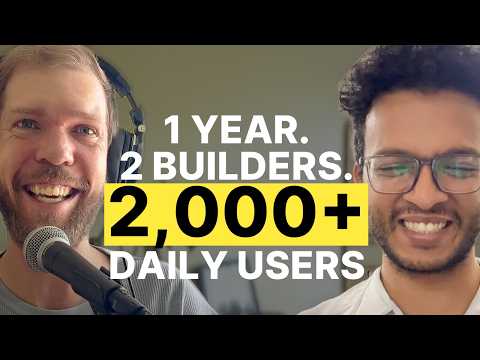
How We Built Our AI Email Assistant: A Behind-the-Scenes…
An episode of the AI & I podcast in which Dan Shipper interviews the team behind Cora, Every's AI email assistant: Brandon Gell (head of the product studio), Kieran Klaassen (Cora's general manager), and Nityesh Agarwal (engineer). The conversation covers how Cora screens inboxes, delivers twice-daily email briefs, drafts replies in the user's voice, and can be trained with custom instructions; the story of the team's first use of Cora at the Every retreat in Nice; the evolution of its categorization system from a four-hour prototype to a product serving thousands of users; the AI tools the team used while building it; and how Every builds AI workflows that compound. They also discuss roadmap plans, including a unified brief across multiple email accounts, an iOS app, and a more powerful assistant.
# Channel Presentation Observations: Cora Behind-the-Scenes Episode
## Observable Presentation Evidence
### Show Host and Format
- A host named **Dan** leads the episode, introducing guests and structuring the discussion: *"Welcome to the show everybody... Let's go around and everyone introduce themselves."*
- The format is a **panel/interview** with the product team (Brandon, Kieran, Nitesh) discussing product build history, learnings, and roadmap.
- Includes a mid-roll sponsor segment: *"This podcast is supported by Google... David here, one of the product leads for Google Gemini."*
- Ends with a (likely parodic/satirical) outro urging engagement: *"You absolutely positively have to smash that like button and subscribe to AI and I."*
### Stated Channel Name
- The outro names the show: **"AI and I"**, with *"Dan Shipper as the captain of the spaceship."* (Note: this outro is stylistically exaggerated and may be a comedic bit rather than a literal standard outro.)
## Creator Claims About the Channel (Self-Description)
- Explicit appeal to **returning listeners who track how the organization builds products**: *"for anyone who's been following along with the podcast like they actually don't build anything. Um, they just tell Claude to build stuff now."*
- Cross-references prior episodes: *"definitely go check out an episode we published like 3 weeks ago on cloud code"* and *"we did a whole uh one hour podcast about it."*
- Claims a **daily newsletter** connected to the show: *"we publish a daily newsletter... it's a it's an overview of of a previous episode in this podcast."*
## Demonstrated Scope
- Content centers on **building AI software products**, including AI-assisted engineering workflows (Claude Code, Cursor Composer, prompt refinement, embeddings, LLM cost management).
- Demonstrates an organization ("every") operating a **product studio, consultancy, and incubated products** (Kora, Monologue, Spiral) — evidenced by: *"I'm Brandon... I run the studio here at every uh and I help run the consultancy"* and *"we have another product we're incubating at every called monologue."*
## Intended Audience (Observable)
- Listeners interested in **AI product development and AI-assisted engineering**: frequent explanations pitched to audio listeners (*"for people who are listening, he clicked into Kora"*).
- Practitioners curious about **building with LLMs at scale** — cost limits, token caps, evaluation loops are discussed in practitioner-level detail.
- Potential customers of the product — repeated calls to action: *"Go check it out. kora.comput... Corora.computer."*
## Presentation Style Evidence
- Conversational, candid team dialogue including honest admission of missteps: *"we like released the initial version of standalone pricing to our beta group... and everyone freaked out."*
- Editorial/writer identity is emphasized: *"we have a writer sensibility inside of every... you're getting the best summary possible."*
- The transcript shows **name inconsistency** (Kora/Cora, Kieran/Karen, Nitesh/Natash/Nesh), likely transcription artifacts rather than channel presentation signals.
# Delivery Observation: "How We Built Our AI Email Assistant: A Behind-the-Scenes Look at Cora"
## Overall Format
- **Multi-speaker product-launch podcast/demo** with a primary host (Dan), a primary product demonstrator (Kieran), and supporting speakers (Brandon, Nitesh/Natash).
- The episode opens with **cold-open narration over a screen recording** ("This is my inbox. Normally before Kora, I was not an inbox zero person."), then a sponsor read, then the main conversation.
## Tone
- **Conversational and enthusiastic**, marked by frequent interjections and overlapping agreement:
> "Yeah, it was quiet. I remember I remember getting my first brief..."
- **Casual, first-person storytelling**, especially from Kieran when recounting the Nice offsite origin story:
> "We were sitting at a cafe drinking a wine like like you do in France."
- Playful banter appears repeatedly, e.g., after Kieran mentions a "daycare" category:
> "So some people have uh investors that they uh talk to a lot. I have kids. Um pretty similar honestly."
## Vocabulary and Recurring Phrases
- **"Opinionated"** as a signature product term, used multiple times:
> "it's kind of like this extremely opinionated way of using email"
> "it's so opinionated and you're just like not a good fit"
> "I just like the fact that it's so opinionated"
- **"Brief" / "briefs"** as the core product vocabulary throughout.
- **Informal coinages and slang**: "vibe coded," "vibe based rule," "AI slop," "jamming on," "compounding engineering," "unlocks."
- Repeated **filler-heavy spoken style** with "like," "uh," and "um" appearing densely in most speakers' turns, consistent with unscripted conversation.
- **Repetition for emphasis** is a common habit, e.g., "there there are two two two things here" (Kieran), "I remember I remember," "and and and."
## Teaching / Explaining Habits
- **Accessibility for audio listeners**: the host repeatedly narrates what is happening on screen:
> "And so for people who are listening, he clicked into Kora."
> "So for people who is listening basically like in the brief we had Kieran had a claude code um email..."
- **Numbered / structured explanations**: Dan explains Kora in a clear list format:
> "Kora does three things. One is it screens your emails... the second thing it does is it pre-drafts replies... And then twice a day, it sends you a brief..."
- **Analogy-driven framing**: the recurring "chief of staff" metaphor:
> "it's sort of like having a uh chief of staff in your inbox uh for 15 bucks a month instead of 150k a year."
- **Anticipating audience skepticism** and pre-empting it:
> "if you're listening to this or watching this, you might be like, 'Well, Gmail does some categorization for me.'"
> Kieran voices the critic directly: "Oh, great. You you spent like months building a email classifier. Isn't that very easy? I can vibe code that in a weekend."
- **Live demo with guided narration**: the host directs the demonstrator ("maybe you can show it," "go back up to the top, Kieran"), and speakers take turns explaining.
## Communication Patterns
- **Interview-style turn-taking**: the host routes questions by name ("Brandon, you want to start?", "Natash, do you have one?", "What about you, Brandon?").
- **Collaborative story completion**: speakers finish or reinforce each other's points ("Yeah, that's a big deal." / "That was a huge unlock.").
- **Self-deprecating and candid about failure**, e.g., the pricing mistake:
> "everyone freaked out which is a big lesson learned is like you never uh you never want to take something away from people."
- **Quantitative detail used to support claims**: "10,000 people on the wait list," "over a thousand daily active users," "60 people sign up last week," "84% of my emails today are handled."
- **Round-robin closing structure**: the host asks each guest for a desired next feature before wrapping up.
## Stable Patterns vs. Isolated Moments
- **Stable**: listener-oriented narration of visuals, the "opinionated product" vocabulary, casual storytelling with heavy fillers, structured three-part explanations.
- **Isolated**: the sponsor read (Google Gemini) and the exaggerated outro ("You absolutely positively have to smash that like button... Dan, I'm absolutely hopelessly in love with you.") — these use a deliberately hyperbolic register not seen elsewhere and likely scripted/satirical inserts, though the transcript alone can't confirm authorship intent.
- **Uncertain**: attribution of some lines is occasionally ambiguous because speakers aren't labeled; e.g., the cold-open narrator's identity and the "Dan was like, 'Yeah, yeah, I understand'" quoting pattern suggest a mix of narration and quoted dialogue that can't be fully disentangled from transcript alone.
# Position Record: "How We Built Our AI Email Assistant: A Behind-the-Scenes Look at Cora"
## Participants (self-identified)
- **Dan Shipper** — host; frames Kora as "chief of staff in your inbox"; worked on summaries/prompts
- **Brandon** — runs the studio at Every and co-runs the consultancy
- **Kieran** — GA/engineer; wrote all the code initially; does support and features
- **Nateesh** (transcript: "Nitesh"/"Natash") — engineer, newest team member, joined to help Kieran ship features
## Product Claims and Metrics
- Kora is **GA'ing today** after ~1 year of building; in beta for the last 6 months (Dan)
- ~**10,000-person waitlist**; **over 1,000 daily active users** (Dan)
- Dan calls it "one of the most sticky products that I've ever seen"
- **80% of users "absolutely love it"; 20% "absolutely hate it"** — Dan says the team is "totally okay with that" because the product is opinionated
- Pricing: $15/month standalone ("chief of staff... for 15 bucks a month instead of 150k a year" — Dan); $20/month total via Every bundle; ~60 paid signups the prior week with no promotion (Dan, Brandon)
## What Kora Does (as described by Dan and Kieran)
- **Screens emails** — decides what reaches the inbox; urgent/human-to-reply items stay in the inbox
- **Pre-drafts replies** based on the user's writing style
- **Twice-daily brief** summarizing read-only email; Kieran's brief showed "84% of my emails today are handled"
- Brief sections include *Important Info*, newsletters, payments; supports non-English summarization (e.g., Dutch)
- **Assistant feature**: emailable (e.g., forwarding a lawyer's email for a summary), forms **memories**, supports recategorization via chat, and can create "vibe-based rules" (Dan's example: prioritize cold emails about Every's product studio) vs. rule-based rules
## Origin Story and Reasoning
- First version was **draft generation only**; Kieran: "I still have hundreds of emails in my inbox so clearly there is more to it"
- **Key unlock (Kieran)**: only ~**10% of emails need responses**; the bigger problem is the other 90%
- First prototype vibe-coded in "a few hours" with Cursor Composer: scan → archive → summarize email
- **Nice, France offsite test**: 4 team members enabled it; next day at a cafe, inboxes felt "cleaner" and "quiet." Kieran: "We still had that urge to check and to refresh... but there was nothing." Dan recalls thinking the first brief "needs so much more work, but it's so much better than what my life was like before."
- Dan frames it as a **lifestyle change, not just a product change** and describes overcoming "anxious attachment" to the inbox: "I don't actually need to be looking at my inbox all the time. That was just like a lie."
## Design Philosophy
- Dan: the product is an "extremely opinionated way of using email" starting from "all of us hate email"; founding pitch: email is "a to-do list written by everybody but yourself"
- Brandon: opinionated-but-personalizable — "there should be also like room for your personality" (Kieran's example: a "daycare" category for photos of his daughter)
## Engineering Positions (Kieran, Nateesh)
- **Categorization is hard**: mix of rule-based algorithms and LLMs working "in harmony"; "the right thing is also different for everyone and is contextual" (Kieran)
- **Scale problem**: with thousands of users, manual fixes are impossible; system must learn from user feedback
- **Cost/limits**: was "on target to burn hundreds of thousands of dollars per year just in LLM costs"; hit Anthropic token-per-minute limits; mitigations include embeddings, pulling similar emails, multiple strategies
- Dan on the X criticism ("all this for an email summarizer"): the best products are simple to describe, complex behind the scenes
## AI-Building Practices
- **Nateesh**: two mind-blowing tools — **Monologue** (Every's voice dictation app; "context is the king," rambling via speech yields better LLM outputs) and **Claude Code**
- **Kieran/Nateesh pair-review pattern**: record code-review conversations, distill into slash-command SOPs — "compounding engineering: instead of doing the work you do the thing that does the work going forward" (Kieran's term, Dan's gloss)
- Kieran caveat: tools "are not perfect and sometimes AI slop comes out... we just need to jump in manually"
- **Brandon's contrast**: best version is capturing golden nuggets from conversations; worst version is people spending all time documenting and never building the muscle
- Dan applies the same pattern to editorial (recorded feedback → copy-editing prompt; also with Danny at Spiral)
- Kieran: evaluations loop; sometimes **cheaper models are better** — "we live in times like that which is ridiculous"; Dan: models get ~10x cheaper in ~3 months; "don't try to solve problems that... [will] be one-shotted by the model in three months" (Kieran)
## Lessons Learned
- **Pricing backlash**: introducing pricing to beta users who'd had it free — "everyone freaked out... you never want to take something away from people" (Dan)
## Future Roadmap (each speaker's wish)
- **Kieran**: iOS app ("I want it on my phone")
- **Nateesh**: assistant powerful enough to replace his other AI assistants
- **Brandon**: "I'm just done with Gmail" — wants Kora to be the whole email experience
- **Dan**: unified brief across multiple inboxes (missed credit-card payment anecdote)
- **Kieran** (additional): make categorization/summarization "100 times better"
- Dan's closing vision: an assistant that's known you for "10 years," has "a PhD in all of human knowledge," and access to your whole life
## Preserved Tensions / Qualifications
- The 80% love / 20% hate split is stated as fact without smoothed resolution
- LLMs are described as both powerful and expensive/flawed ("AI slop")
- Documentation-as-work vs. actual work tension Brandon describes remains unresolved
- Kieran notes the first brief "needed a lot of work" even at the emotional high point
# Speaker Attribution Record — "How We Built Our AI Email Assistant: A Behind-the-Scenes Look at Cora"
## Video Identifiers
- **Video ID:** `01a0f15a-dd8e-79f0-a5aa-0a36e88ed188`
- **Product discussed:** Cora (AI email assistant), built by the "Every" team
- **No curated metadata was supplied**; all attributions below derive from the transcript only.
## Identified Speakers and Roles
### Dan Shipper — Host / Creator
- Identified as **"Dan"** (named by guests: *"Thanks, Dan"*) and closing outro references **"Dan Shipper as the captain of the spaceship."**
- Acts as host/interviewer: *"Welcome to the show everybody… I wanted to bring the whole team on the show."*
- Frames product positioning: **chief-of-staff analogy**, pricing context, and future-roadmap moderation.
- Discusses his own writing workflow (summary prompt refinement, editorial feedback recording at Every).
### Kieran (also transcribed as "Karen"/"Kora" — likely "Kieran") — Guest / Lead Engineer building Cora
- Self-introduction: *"I am the GA. I'm building Kora. I'm writing the code. I started writing all the code by myself."*
- Demonstrates the product live (screen share of inbox, brief, assistant).
- Tells the origin story of the first version built with **Cursor Composer** during the Nice, France offsite.
### Brandon — Guest / Studio & Consultancy Lead at Every
- Self-introduction: *"I'm Brandon. I run the studio here at every and I help run the consultancy."*
- Joins product discussion; desired future feature: replacing Gmail entirely.
### Nitesh (transcribed as "Natash"/"Nesh") — Guest / Engineer at Cora
- Self-introduction: *"I'm Nesh and I'm an engineer at Kora helping Kieran. I'm the newest member of the team."*
- Discusses tooling: **Monologue** (voice dictation) and **Claude Code**, pair code-review practices.
### David — Promotional Segment Voice
- Pre-roll ad: *"Hey everyone, David here, one of the product leads for Google Gemini. Check out V3…"*
### Unattributed Outro Voice
- Closing subscribe prompt ("smash that like button and subscribe to AI and I") — speaker not identified in transcript.
## Promotional Segments — Flagged
> "This podcast is supported by Google. Hey everyone, David here, one of the product leads for Google Gemini…"
- **Type:** Sponsor read (Google Gemini, V3, AI Pro/Ultra plans, gemini.google).
- **Type:** Channel self-promotion — subscribe/like outro ("AI and I" show).
- **Type:** Product launch promotion — the episode itself promotes Cora's GA launch; repeated CTA: *"Go check it out. kora.comput[er]."*
## Referenced Sources and Third-Party Claims
- **Anthropic / Claude Code** — cited as core build tool; a prior dedicated episode referenced ("published like 3 weeks ago on claude code").
- **Cursor / Cursor Composer** — credited with the first Cora prototype.
- **Gmail / Google** — referenced as incumbent categorization comparison.
- **Superhuman** — referenced re: email "splits."
- **Zapier** — cited via a user's integration example.
- **X (Twitter)** — referenced debate ("all this for an email summarizer").
- **LLM cost/rate limits:** claim that Anthropic rate-limited them (~400–500k tokens/minute); claim of projected "hundreds of thousands of dollars per year" in LLM costs.
- **Internal Every products:** Monologue (dictation app), Spiral (short-form content tool, run by Danny); editor-in-chief **Kate** referenced.
- **Product metrics (speaker-claimed, unverified):** ~10,000 waitlist, 1,000+ DAU, beta 6 months, ~60 paid signups last week, $15–20/month pricing, 80/20 love/hate split.
## Availability and Provenance Limits
- **Comment availability:** Not stated in transcript or metadata — **unknown**.
- **No timestamps** available in the supplied transcript.
- **Transcript quality caveat:** names rendered inconsistently ("Kora/Karen" for Kieran; "Natash/Nesh" for Nitesh); attributions above use context to reconcile.
- **All metrics and user-satisfaction claims are first-party** (made by the product's own team) — no independent verification present in source.
This is my inbox. Normally before Kora, I was not an inbox zero person. I had just thousands of emails here in my inbox. And if you click into Kora, you
go here. And so for people who are listening, he clicked into Kora. And what you see is a bunch of different sections of this brief. And each section takes a bunch of emails that we think fit that section and then categorize it together and summarize it. We were in offsite in Nice in France. Let me just build this very basic. It took me like a few hours the day after. So, we're in Nice. We were sitting at a cafe drinking a wine like like you do in France. And we were checking our inboxes on our phone on the Gmail app and we were like, "Holy like like it feels cleaner. It's so quiet." Yeah, it was quiet. I remember I remember getting my first brief and thinking, "This is so much better than what my life was like before. This podcast is supported by Google. Hey everyone, David here, one of the product leads for Google Gemini. Check out V3, our state-of-the-art AI video generation model in the Gemini app, which lets you create highquality 8-second videos with native audio generation. Try it with the Google AI Pro plan or get the highest access with the Ultra plan. Sign up at
gemini.google to get started and show us what you create. Welcome to the show everybody. Thanks, Dan. Thank you. Glad to be here. Thanks
for having us. So today is a really big day. We are officially gaing Kora. Kora is the AI email assistant that we've been building for the last basically almost the last year. Um it's been uh in beta uh for the last 6 months. Uh it's had about it's had 10,000 people on the wait list. Uh now it has like over a thousand daily active users which is incredible. It's like one of the most sticky products that I've ever seen and it's something that everybody on the team uses every single day. It's like a total delight to use and it's so fun to finally have it out where anyone can use it. Um, and so I wanted to bring the whole team uh on the show to talk about uh what the product is, how we got here, um what it's been like to build it, what we've learned, and where we're going. Let's go around and everyone introduce themselves. Brandon, you want to start? Yes. I'm Brandon. Um I run the studio here at every uh and I help run the consultancy. Karen, I am the GA. I'm building Kora. I'm writing the code. I started writing all the code by myself. Um doing support, features, everything. And then got Natasha on board to join the the team to uh ship features because we felt there was something we needed to go quicker. Even with AI, you still need to have people. So that's when Nitesh joined. Yeah. And I'm Nesh and I'm the engineer an engineer at Kora helping Kieran. I'm the newest member of the team. Uh I'm having fun helping Karen build cool stuff in Kora. Basic basically we're just jamming on like how can we use AI the best way to build Kora which is really really cool. Yeah. Basically for anyone who's been following along with the podcast like they actually don't build anything. Um they just tell Claude to build stuff now. Um, so if you're interested in how core has gotten built, like all the details, uh, definitely go check out an episode we published like 3 weeks ago on cloud code. Um, but, uh, yeah, like I want to start with showing people the product because I think that's the best way to get to understand it and get excited about it. Um, so Kieran, maybe share your screen. And while you're doing that, um, I'll I'll tee it up a little bit. I think a good way to think
about what Kora is is it's sort of like having a uh chief of staff in your inbox uh for 15 bucks a month instead of 150k a year. And the thing that it does for
me is I just have that kind of like it's handled feeling where I'm just like someone is taking care of my emails so that I don't have to think about it and I can focus on stuff that actually matters to me. And Kora does three things. One is it screens your emails. So it decides what needs to be in your inbox. um and what what you don't actually need to see. So like anything urgent, anything you need to reply to from a human gets to your inbox. It also uh the second thing it does is it pre-drafts replies. So uh when an email comes in that you need to respond to, it will take a look at your your writing style and previous emails you've responded to like that and try to draft a reply for you. So it saves time that way. And then twice a day, it sends you a brief summarizing all of the stuff that comes into your inbox that you need to read but you don't need to respond to. So, you sort of just scroll through your email and in 30 seconds you've read through your email and it's done. Um, and that's what Kieran's looking at right now. So, Kieran, do you want to just go up to the top and and and talk about what we're looking at? Yeah. So, there there are two two two things here. This is the product Kora, but obviously you have your inbox as well. So, um this is my inbox. Normally before Kora it I I was not an inbox zero person. I had just thousands of emails here in my inbox. And now the ma mainly I was on on vacation last week. That's why I didn't read all my briefs. But mainly what I see here are briefs and everything else that's in here uh I should do something with. So uh and and this is funny like we were I was invited to core as well. Uh, so really the idea is to get to the most important things in my inbox and open the brief and look at my brief. Can you show us what that brief email looks like? I I that's actually so what I do is uh I can open my brief within Gmail and it will give me a number like 84% of my emails today are handled um and it will give an overview
of the stuff that's in the brief. So I can kind of see like hey I can scan over it and everything important will also be highlighted. So
you don't need to go into Kora, but you can. And if you click into Kora, you go here and you can dive deeper. And so for for people who are listening, like he clicked into Kora and and what you see is this um really beautiful like oil painting of a sky background. Like it's a very kind of different uh aesthetic for email software. Um, and then there's a bunch of different sections of this brief, and each section takes a bunch of emails that we think fit that section and then uh categorize it together and summarize it. So, if you go back up to the top, Kieran, so yeah, talk about um talk about each section. Okay, so yeah, I I jumped to Wednesday, the afternoon brief. You can see the background changed as well to afternoon. And the most important stuff is on the top. It's called important info. Uh it means you should know about it but it doesn't mean you have to take action like anything that needs your immediate attention or action uh will stay in your inbox uh that is like timesensitive. Uh but everything that's important to know um like for example uh Chase said something to me. So everything important is here. This is this is the one you always want to look at and everything else is kind of it will get the most important stuff for you uh summarized so you can actually
read uh everything else like newsletters if you receive 30 newsletters per day and this is an easier way to uh scan your newsletters for payments you just
see a summary of what happened like where where did the money flow who did you pay uh did you receive money and uh you can see here also like the uh this is in English this is in Dutch so if if things are in a specific language if you are not uh all receiving English it will uh summarize it in your in your language and it's really fun because what we try to do here is we we try to give you the highlights of what the newsletter says and like the most important points and give you enough information to say, "Hey, I want to learn more. I want to uh see more." So, let's see. Uh I want to learn more here. I can click into it and uh open this email or newsletter and read it in here or I can uh jump to Gmail and uh read it from there. And one of the really cool things about this, at least for me, is obviously like we publish a daily newsletter and you can even see every here. The man inside the minds of the people uh building AGI is one of the newsletters here and that's every it's a it's an overview of of a previous episode in this podcast, which is kind of fun. And what's really cool for me is like these summaries. Um, I spent a lot of time with Kieran just like refining the prompts to be like, how would I as a writer summarize these emails? Um, and it's it's a really interesting like different kind of writing task where you're not writing a specific piece, you're writing like many pieces. It's like it's meta writing. Um, and that's one of the things I think we can bring to emails is we have a writer sensibility inside of every and that that comes into how we summarize your emails for you. So you're getting the best summary possible of what's in your inbox. I think the other thing that I really like about what we did with Kora was it's kind of like this extremely opinionated way of using email. Starting from a place of all of us hate email. We
don't want to be doing email. Yeah. How can we? But like it wasn't like we were like let's make an assistant, you know? It wasn't it it didn't start there. It was just like very very first principle.
How do I want to be interacting with this thing that is a open door to anybody in the world? Um, and like I remember our first pitch was uh it's a to-do list written by everybody but yourself. Email email traditionally email is a to-do list written by everyone but yourself. Yeah. And uh so I feel like just over the past year like we all started we had like the initial hunch of an opinion of how we wanted to manage our inbox which was that we didn't want to be distracted and that has sort of like grown into this fully fetched pro product that is 100% opinionated which is why when we have people use it you know 80% of people that use it they absolutely love it and it like literally changes their relationship to email which is how I would describe my experience with it. And then there's another 20% that absolutely hate it and we're like totally okay with that because it's so opinionated and you're just like not a good fit. Um but that's made an amazing sticky product for them. Yeah. I think the thing that it reveals is how much we have this anxious attachment to our email inboxes. Yeah. And um and so it's actually very uncomfortable to use it for the first time. Um, but over time what I've learned is I don't actually need to be looking at my inbox all the time. That was just like a that was a lie. Yeah. Um, and my life is way better when when I'm not because I know Kora is handling it for me. And I know um Kieran, you have this this story of like the first time that we like realized this, the first time we tried having uh Kora handle our emails. Do you want to do you want to tell that story? Yeah, absolutely. So we started Kora first as
a like let's generate drafts for your emails because we thought that will solve all our problems but then we still felt like eh I still have hundreds of
emails in my inbox so clearly there is more to it and that was really important because we realized wait only like 10% of emails that we all receive we actually need to write responses to which means the bigger problem is this other 90% that you need to sift through. That was a huge unlock. Yeah. So, so we realized that and you were like, okay, how how are we going to do it? And we came up with this idea of a brief like like you get a brief once a day or twice a day. And we were in offsite in Nice in France and I was like, let me let me just build this. This was in the cursor uh composer times. So, it was very ancient AI uh times, but Cursor Composer helped me create a very rude version of um basically scanning an email, see if it's important or not, archiving it automatically uh in in your inbox and then sending you an email with a summary of it. Very basic. It took me like a few hours. It's It's not too hard to do that because it's Yeah, the first version was easy and I enabled it for my own account. I was like, "Dan, are you sure you you want to enable this on your account because like it will go hard. It
will archive maybe a lot of things." And and Dan was like, "Yeah, yeah, I understand. I'm like and and and Brandon said, I I I want to go." And then
Brandon jumped in. And Dan was still like, "Yeah, okay. If Brandon does it, I'll do it, too. So, so I like, okay, well, we'll add uh three people and I think one other uh So, we had four people. We will we were all there and the day after, so we didn't really understand what was going to happen, but the day after we were in Nice. We were sitting at a cafe drinking a wine like like you do in France. And we had like we were checking our inboxes on our phone on the Gmail app and we were like holy like there like it feels cleaner. We still had that urge to check and to refresh and to refresh but there was nothing. It was just it's so quiet. Yeah, it was quiet. I remember I remember getting my first brief and thinking this is so and needs so much more work, but it's so much better than what my life was like before. And for me personally, I feel like I've been on this crusade of like sort of trying to deny this like previous version of myself where I'm like super on top of my email and like I'm trying to like create these new habits where like doing great work is important versus just like doing fake work of like constantly maintaining inbox zero. And this was the first time where I was like, "Oh, I doing that on my own is impossible, but Kora just forces me to do that." And I feel like that was the first time that I was like, "This is just a better lifestyle." Like it was like a lifestyle change, not just like product change. It it felt emotional. It like we felt chill like we could feel it, which is really cool. If software makes you feel a certain way, clearly there is something like yes, it needed a lot of work. I have a direction that we could go which is we so we did this and then we like we invested in making it
prettier and refining the the summaries and building all this functionality and um it got really good at like it just
got to be a really smooth experience. We all had one problem and a lot of our customers had one problem which is it knows me but it doesn't know me like super super well and sometimes it just the context like the context thing and the anxiety. Yes, we sort of all still had this anxiety of like am I missing things and that was because like it was doing some personalization but it wasn't going like really really deep on that. So we decided to build assistant which is you know a tool that now lives inside of Kora and we decided to like go really hard at customizing your experience during onboarding. Um we have a beautiful onboarding that like you know people will now get to experience but maybe Kieran you can talk a little bit about what assistant does maybe we can even show it and then I think this is like a pretty unique product that exists. Maybe you can talk about how the two of you went about building it. Yeah, let's let's definitely show the assistant and and I think one of the one of the things I love about it is that it also is in my inbox. Like I can just email it and it will reply. And so like the reason we call it a chief of staff is because it does all the things you would expect an executive assistant type to to do. Like it it automatically categorizes emails correctly. It knows what you should see and what you shouldn't see. It writes the briefs, all that kind of stuff. But the thing it it can also do is it's it's an AI in your inbox. So, like for example, if I get a big long email from a lawyer, I just like forward it to uh Kora and I'm like, "Can you summarize this for me?" And I get something in line that like tells me what the lawyer is trying to say. It's really good at that. Um, and it even it forms memories and and it keeps track of who you are. So, it's it's um it's pretty powerful. So, uh take it away, Kieran. I'd love to maybe maybe show us the assistant. So, yeah. So we we built all uh we built the brief, we built the drafting, but we really realized the power lies with like it really understanding who you are because people
loved it. Um, but comments mostly were like like I needed to do something very specific to me and having software be very generalized and opinionated is
good, but there should be also like room for your personality and like for example I have a category here called daycare. I get photos of my daughter uh every day which is nice like it it's just me and not everyone has kids. So some people have uh investors that they uh talk to a lot. I have kids. Um pretty similar honestly. Yeah. I mean they want a lot of attention. So um so everyone wants to personalize things within the realm of our opinion of like this is how it should be and we realize that actually all of that context is already there. It's in your email like it like your email is the story of your life. That's kind of how we launched and that's very powerful and you lose track of pieces of that story if you just don't look at your email. And Kora can use AI to pick out things, create memories and learn about you. And that was the realization. So we just launched the assistant and like a simple interaction could be for example um here like this is about clo code new features is categorize an other and other is like a little bit weird category where like it doesn't really understand where it should be but like I I think it's important so make it important info. So for people who are listening basically like in the brief we had Kieran had a
claude code um email that he clicked a button and it automatically opened up the Kora assistant on the right side and basically in the Kora assistant it's like hey like I see you want to talk
about this email like what do you want me to do with it? Um and Kieran said like make an important make it categorize it as important. Um, and then it just automatically knows how to do that and it shows up in the brief and he can be confident next time an email like that comes in, it's going to go to the right place. He also equally could have just said, "This is an important email for me." And it would know, "Cool, that means it needs to be well, it might actually ask him, is it so important that you want to see it in your inbox or do you just want me to categorize it as important info?" And then you could respond and say, and it in fact did do that. It did ask him um uh if he wants to return this email to Yeah. uh do you do you want to return this to to my inbox because sometimes it's like hey this very important like that can mean different things. It can mean like I need to respond to it, never brief it. Uh I want always to get this in my inbox or it needs to be like there there are all these flavors and the the nice part is that the assistant will ask you these questions like we just launched the assistant and there this is version one and we're going to like go way further with this but this is a very easy way to interact with. One of my personal favorite use cases is like my my work changes over time like what I'm focusing on. And just the other day, you know, uh I realized that like pretty consistently Kora will um brief
cold emails from people who want to be ERS at every and I'm like I want to sort of see those right away because like that's important to the work that we do. So, but I can't define Dora. It's from
this domain. and it's from this email address. And I literally was just like, "Hey, you know, people who are cold emailing specifically about every product studio and want to be e, I want to see those emails right away." And it made like a vibe based rule for me about that. So, it's it's really the assistant is really dynamic and it allows you to fully customize what your experience is. By the time we launched this uh this this podcast, uh you do that during onboarding. Um, so like right out the gate, it's like this really personalized experience, which I feel like is a was a huge learning lesson for us. Yeah. One of the things I think I would love to hear Kieran and Natash, I'd love to hear you guys talk about is this kind of categorization. Sounds simple. Like if you're listening to this or watching this, you might be like, "Well, Gmail does some categorization for me. I can set up filters or whatever." Um, but it's actually a really hard problem to um put the right email in the right place at the right time. And what Kora can do is actually a lot different from what like a Gmail or a superhuman can do with splits where um it it can do the sort of like rule based like if it comes from this domain don't brief it. Um but it can also do what what Brandon referred to earlier which is vibe based which is like basically take a look at it and let me know what you think it is and then it will uh put it into the put it into the correct category based on its like glance at the email. Um, do you guys want to talk about that? Yes. Um, so what I hear sometimes is like, "Oh, great. You you spent like months building a email classifier. Isn't that very easy? I can vibe code that in a weekend." And yes, that's what I did with the first version. I vipcoded that in 4 hours. And uh and and there it
started. So it is really hard like there there are many moving parts. There are many kinds of systems working at play where we have like traditional
algorithms like that just rule based. We have uh more modern LLMs that are Englishbased and they all need to work in harmony and do the right thing. And what is the right thing? The right thing is also different for everyone. Everyone has their own right thing and is contextual. So, it's like, okay, great. How do I even know this works? Like, yes, when we were using it, it was great. Like, we were just complaining if something was wrong. We fixed it. But we're with thousands of users now. There's absolutely no way if if like even 10 people per day complain about something wrong that I manually go in and fix it. So it is about building a system that uh works where people can give feedback that learns that understands who you are what you find important listens to signals that you do like it's a pretty extensive complex system um and and that's important like like we need all these things to work together we cannot just use LMS because another obstacle is LMS are expensive and if you have thousands of users like we were on target to like burn hundreds of thousands of dollars per year just in LLM costs and then Bren was like pinging me in private like hey the the bills are in can you review the costs and there was like a subtle hint of like do we really need to spend all of this money and then I was like uh yeah okay let me spend a day let let me do do some work let me analyze things and like that's part of building LM apps. It's like you
run against all these and and then you have LM use limits like you can't like certain models have limits and we we were just using so many tokens that like
anthropic at some point just said no you're like you're over the the 500 or the 400,000 uh tokens per minute like every day I would get that and and and you're like oh we're not we didn't even start. So then you start like increasing limits, moving things around, red like there are so many things going on here that seems very easy on like a onetoone scale but if you scale to thousands of users suddenly becomes very different. Yeah. and and and yeah and there are many things like we do embeddings, we do like uh pulling in similar emails, we we have many strategies that work together to hopefully make the best decision and evaluate that uh as we go. My favorite sort of like way that this has uh presented itself recently is like in this little like debate that you got on X Karen where someone was like all this for an email summarizer and I just I love making products that are so complicated in the back end that they can be described as simple as simply as just an email summarizer. And it's so naive to be like the most beautiful products in the world are so simple that you can describe them
as you know in three words but what's actually happening in the back end is so complex and it's also indicative of like what you and Nateesh do to build this. I
feel like you guys are like truly at the tip of the spear in terms of how you're actually going about building this functionality. And I feel like every week you're you're not la you're not just launching new features for Kora, but like new ways of building those features or reviewing those features. Um I mean there's so many of them, but I wonder if like maybe Natasha like we haven't heard from you like is there like a single thing that single tool that you and that you and Kieran are using that like really blew your mind in terms of the capabilities of building with AI? Yeah, definitely. Um there were like two instances I would say. Um so both of those were uh you know Kieran led me into those tools and I was like okay my mind is blown. This completely changes how I'm working. So um the first time it happened was with uh the tool we're developing monologue and it's a simple like uh voice to dictation uh voice to speech uh uh thing and um but it massively changed the way I was interacting with uh AI models because uh you know like when I'm speaking I can give so much more context. So um that that was the first let me just uh jump in jump in there. I think that's just just for people who are listening that don't have context. So we we have another product we're incubating at every called monologue that does it's a smart dictation app. So you can talk into it and then it will turn what you're talking about into text. And so Natash I think what you're saying is um talking to your codebase was a thing that you maybe like hadn't considered doing but Kieran literally his hands don't even touch the keyboard. Um and so that's been a game changer for you. Like what is that? What is that? Like why is that so much better? Yeah, it's just better because you know when you're typing like I I I I can type like really fast. I can touch type. I all of those things and I've been typing like my whole life. But um when you're typing
like you get lazier and uh with these LLMs context is the king. So um with speech I can ramble on for a minute or two and um uh every time when I uh
ramble like I it just gives me a better output. like that is uh fundamentally a better way to uh uh work with uh LLMs whether it comes to code I feel or uh anything else. So that was the first time um it blew my mind. Sweet. And then the second one I assume is claude code but uh yeah yeah that's right of course. Yeah we did we did a whole uh one hour podcast about it but um yeah cloud code uh which is amazing. it has changed the way we're working. Um and um yeah, it's uh like the software development that um I started doing like when I joined versus what I'm doing like today, it's completely different. I'm not even uh you know opening the same apps or uh working with the same tools. So um yeah, that's great. Yeah. And what one really cool thing that we have going on between us that I really enjoy and like I would encourage everyone else to do is um like I I have I've run companies. I was VP for engineering of a few before as a co-founder and I managed teams and I have that experience of like managing doing code reviews and all of that and it's becoming more important again even
as an IC to have these skills and what we do Natash and I we just go do a pair code review Natash records everything I say I just ramble about my philosophy
when to make a method longer or shorter Like and then Natasha is like, "Oh, but why not here?" And I like, "Oh, yeah, good question." Like that's a feel, but like this is the feeling. And Nate records all of that and then feeds it into an LLM and says, "Okay, can you create a cloth command for this that I can run like key run review every time I do a certain feature or when there's like a high-risk feature, you want to like you look at code a different way, but how do you know when it's a high-risisk feature?" And like we try to distill all these thoughts from my head and from Natasha's head into like a rule set like like an operation SOP style uh thing that we can then automate and try out and that's really cool. We should totally put that on every and make that available for people. Like I want the Kieran code review. Um, and it it's actually interesting cuz I think there's a there's a common pattern here. Like what you're doing with code, I'm doing with writing. Yeah, absolutely. In the in the editorial organization, like every time I give feedback, we're starting to like record all the feedback on like the headlines and the intros and all that kind of stuff. And then another one of our uh and and we have a prompt that all of the writers now use that does the does that kind of editing or does copy editing which our our editor-in chief Kate is usually spending a lot of time on. um that Nesh also like automatically now runs in our codebase whenever we're doing copy so our editor doesn't have to look at it which is amazing. Um and I'm also doing this with um Danny who runs Spiral which is our um short form uh content automation tool and I've just been sitting with him every every day almost and talking about what good writing is and he's recording all that and putting that into the tool so that it can write with my taste basically. And I think that there's you
have a word for this Kieran that I think is actually uh it's it's we're applying it to engineering but I think it applies more broadly which is compounding engineering which is instead of doing the work you do the thing that that does
the work going forward. So instead of um always uh you know doing a code review with Nate um you're recording that so that it compounds and now you have a slash command that Nateesh can use and it takes less time for each successive code review. A agreed. Yes. Like we don't want to repeat ourselves. Natash and I like joke because clearly these tools are not perfect and sometimes AI slop comes out in a review and you're like what is this mess and we just need to jump in manually and do things. But that's the moment where we learn because we talk about why it is a mess and what is wrong to extract that and make it better next time. So, as long as you learn and improve and don't make the same mistakes and you can use tools like this to never have to repeat yourself, I feel like you guys embody like so I spend a lot of time obviously with with you all on the studio side but also on consulting projects. So, I'm seeing I feel like I'm simultaneously seeing like what is the best version of this in which case you're recording every conversation. there's like golden nuggets of information in every conversation and you turn those into like rules. You turn it into like operating procedures. Um, so I see like the best version of this which you guys do and then I see the absolute worst version of this where people spend so much time trying to identify every single issue but then not doing the actual work and building the muscle of of actually doing it. They're just spending time trying to like write it all out. And I feel like the thing that I've like loved watching the two of you do is um there's no it there's no like end goal. This is just a journey that you're on and it's going to constantly be getting better and you're going to be constantly um discovering
new things. But the through line between all of it is it's actually conversation. conversation with the tools you're using, but also conversation with one another, recording all those
conversations, and then using the AI to pull out the important pieces in those conversations so that you don't it's hard sometimes to identify I just spoke for an hour. What's the important thing that I just said? Like there's only if only one important thing comes out of a conversation, that conversation was worth it as long as it's captured and put into, you know, cursor rules or whatever, you know, you're you're whatever tool you're using. Um, so it's just been a pleasure to watch you guys do that. Yeah. And like basically this learning or this muscle applies to everything. It's also the prompts that generate the summaries. Like there is a loop like that the evaluations we run to see if something is good or not. like you can use all of these as feedback uh to improve the system, improve uh everything and like see see what it does when a new model drops. Is the new model better? Is the cheaper model better? Like it's very surprising because sometimes the cheaper model is also better like we live in times like that which is ridiculous. Yeah. Yeah. One of the things that um I think is is true about that too is like uh the models just get cheaper on their own. So like even if you don't do anything like you're it's like 10 times cheaper to run the same model in like 3 months. Um so we just get all these performance gains for free. Um but also don't try to solve problems that we think is going to be
solved soon that's going to be oneshotted by the by the model in in three months. Yeah. Um but I think one of the special things to bring it back to Kora I think one of the special things is like
We're we're g we're gaing it today. It's coming out today for everyone. And and as part of that process, I've gotten the opportunity to talk to a lot of users because we're trying to figure out, okay, like how does it fit into people's lives? How does it um how do they how do they talk about it so that we can use that on the landing page or on the launch video or and and also like what value do they get out of it? Yeah. And and so how do we price it? Uh which has been a big journey. We like released uh the initial version of standalone pricing to our beta group like 2 months ago and it was like a everyone freaked out which is a big lesson learned is like you never uh you never want to uh they had been using it for free and we put a price on it and you never want to like take something away from people like obviously that is upsetting but I we had not thought of that but now we know um and we're you know now now we have pricing which has been been difficult to figure out um but I I'm pretty confident in it. Um, but the thing I wanted to say is that it's just very special. I've worked on a lot of products. I think we've all here worked on a lot of different products and it's very special and rare to work on something that is not even publicly available that has a 10,000 person weight list and that has a thousand or more daily active users. Um, like and getting to talk to them. People love this. um or at least the people that I'm talking to because I'm talking to like the fans, but there are real fans that are like this has changed my life. Like it has completely transformed my relationship to email and um there's something so satisfying about it and I feel so like proud to get to like be a
small part of that. I wonder how how you guys feel. Yeah, it's it's really nice. Like I've I've worked on many uh products but this one especially like I've random people reach out say I love
Kora. I'm like, "Okay, great." Like that energy of like like super fans or like really really dedicated people even though in the beginning like it was kind of crap in places or there were bugs. There were like it was wasn't smooth everywhere like now now it is smooth but like people are there are people that are using this for so long and giving great feedback and growing with us. So it's it's really nice and I know that means that we're building something. There is something here like there is something important and um yeah it's the best thing like making people feel good or feel a certain way using software telling a story it's like the most fun thing to do. So I I love to to work on this. Yeah. I just like the fact that it's so opinionated and because of that people have come back and been like this has changed my life is very driving for me personally and I think it's because we all have the same kind of like wants and desires which is to like continue to do a great or this is one of them to do a great job with our work but be able to enjoy our lives to the fullest and email is just like death by a thousand cups. And I feel like we've really done a great job of like freeing people from that, I feel freed from it. And I think that's why when people tell us they love the product, um they like are obsessed with it. Um and that's alo why for some people like that's does it's not a good fit. Um it also has been like uh you
know you you do have to pay for it now. you have just have to like subscribe to every and uh when you know this gets released you'll be able to buy it standalone as well and it's been really
successful you know and and you know we have thousands of of users and they're actually already are paying for it too which like I almost feel like we don't give ourselves enough credit for the fact that like oh there actually is value already it's $20 a month total yeah we we had like I think 60 people sign up last week for the paid plan and we're not even promoting, we're not live. Like it's like a very hard way to even figure out where where to where to click uh until we go live. Now, I want to show one other way. So, like we're at the start. This is really the start of the vision we have for where this can go. Uh but there's another cool way is like I don't know, for some reason it thinks that uh solar is very important to me. Uh I can forward this to uh c at corora.computer and say this is promotion yo and and this will this will this is another way to interact with the assistant. So you can just email the assistant and I've seen other people use it very creatively like one one other uh person uh they have like investors that are added to a certain list and they created a Zapier integration that if uh something got added to a list they would forward that new email say hey Cora can you add this new investor to this category so it's kind of like an API integration and I've seen then also like get a like a a complex text document and say like hey uh like summarize this for me or say uh um or like can you can you draft a response a certain way like there is an interaction. So um
oh well then great this is this is an email that's older so it's it it gives me that but it will unsubscribe for for this email or give options and
uh and if you do this you can you go into here. So yeah. Okay. Uh so so yeah, it it will unsubscribe. It will do the same things and you can continue the conversation in Kora. Um you can see uh we're still prepping for for some last things for launch. But yeah, cool. Um so we're we're almost out of time. I think I want to just talk a little bit about the future. Like where where do we want to go with this? Uh, and one way to one way to think about this is like I'm curious, what's the next feature that everyone like wants that you're like, "Oh my god, it's going to be amazing when this happens." Um, I have one in mind. Uh, do you guys want to go around and say that your next feature? Uh, Kieran, maybe you start. I want the iOS app. I want it on my phone. Yeah, that's a big deal. Yeah. So, I secretly have like an app on my phone called Kora, but uh but it's not theirs. Yeah. Um Natash, do you have one? Um yeah, I just want the assistant to be like so powerful that it replaces u the AI assistance for me like cuz it can already do that. I I know that. So, uh I'm I'm just waiting for that. Yeah. What about you, Brandon? I think I'm
just done with Gmail. Like I want to start just I want to be in Kora at all times and I think that like uh we can do crazy things if we're responding from emails too. It's an amazing companion
right now, but I want it to be the whole thing. Yeah, I agree with that. Um I also re I agree with all these. Um, my other big one is I just want a true unified brief of all my inboxes because I have a couple of these inboxes where I'm just like I get so many emails but that are all basically like not important except every once in a while there's an email that's like you missed the credit card payment or whatever and I'm like oh my god. Um, and so uh like I really want you don't have autopay set up. I do. It was a new credit it was a new credit card. I thought I set up autofay and I was like, "Oh, Kora down then missed an email." Yeah. Yeah. So, uh, so I just want I want that unified unified brief, um, instead of having to click through different briefs. But, um, I think this is a great road map. I'm psyched for the next six months. Yeah, I want to add one more thing. I want to just make whatever we do with categorization and summarization, like just the basics that we do now just like 100 times better. always keep improving that because we can like we're we're really at the start and there's so much potential to make him like way better. Yeah. I feel like when I work with Cora I'm like okay I'm I'm working with an assistant that I've worked with for like a year and a half and knows me really well and I'm like what would it be like if I worked with them for 10 years? um where they just known me better than anyone else. And they have a PhD in all of human knowledge. And they have a PhD in all and access to my whole life. Yeah. Um cool. Well, the sky's is the limit. I'm psyched for this launch today. Uh I'm psyched to get to work with all you guys. Thank you for joining and uh we'll see you next time. Thank you so much. See you guys. Thank you. Go check it out. kora.comput. Corora.computer. Check it out.
Oh my gosh, folks. You absolutely positively have to smash that like button and subscribe to AI and I. Why? Because this show is the epitome of awesomeness. It's like finding a treasure chest in your backyard, but instead of gold, it's filled with pure unadulterated knowledge bombs about chat GPT. Every episode is a roller coaster of emotions, insights, and laughter that will leave you on the edge of your seat, craving for more. It's not just a show, it's a journey into the future with Dan Shipper as the captain of the spaceship. So, do yourself a favor, hit like, smash subscribe, and strap in for the ride of your life. And now, without any further ado, let me just say, Dan, I'm absolutely hopelessly in love with you.