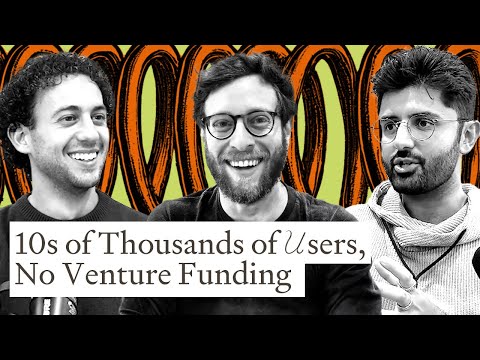
How We Incubate and Launch New Products With AI - Ep. 40…
Podcast episode with Danny Aziz and Brandon Gell of Every discussing how Every's Studio incubates and launches AI products while remaining a small, mostly bootstrapped media company. Topics include Spiral, the AI writing tool Danny Aziz joined as GM after leaving a $200K salary; Every's business model and flywheel; how the team differs from a VC-backed startup; and blending media, software, and AI under one roof. Timestamps and guest links included.
# Channel Identity Observations — Ep. 40 with Danny Aziz, Brandon Gell
## Explicit Self-Description Evidence
- **Show name:** The closing outro states the show is called **"AI and I"**: *"subscribe to AI and I… It's a journey into the future with Dan Shipper as the captain of the spaceship."*
- **Host identity:** Dan Shipper is named as host/captain in the outro, and the guests address him as the show's driver ("Danny, welcome to the show… Brandon, welcome back to the show").
- **Parent organization and business model:** The host explicitly describes Every's model:
> "have a core underlying media business. And we have a newsletter, we've got this YouTube channel, we do podcasts… and then build software out of the experiences and out of the ideas that we have running the media business."
- **Host's tenure and role:** "having run Every for 5 years, this is like without a doubt like my favorite era of the business" — the host identifies as Every's founder/operator since ~Thanksgiving 2019.
## Claimed Scope
- **Topics covered:** AI product development, startup-building philosophy, venture vs. bootstrapped models, AI-assisted workflows, and personal founder stories — all demonstrated across the transcript.
- **Product scope claimed by the channel's organization:** Three software products discussed — **Spiral** (content repurposing), **Sparkle** ("our AI file organizer"), and **Decora** ("the product that we haven't announced yet").
- **Studio/organization scope:** Brandon "run[s] our… studio, which produced or created Spiral"; EIR (entrepreneur-in-residence) program referenced: "when I saw that you guys were looking for… entrepreneurs-in-residence."
## Observable Presentation Patterns (Demonstrated, Not Claimed)
- **Interview/conversation format:** Multi-guest episodic podcast; host frames the episode structure explicitly: "We are doing a little bit of a different episode today… we're trying to like share a little bit about what we're learning."
- **Audience addressed:** Entrepreneurs, builders, and tech-curious knowledge workers; evidenced by deep discussion of venture dynamics, AI tooling (Claude, Cursor, "Win Surf"), and a media-plus-software business model. Host notes the audience overlaps with product users: "80% of the people that I've spoken to were… using Spiral because of Every."
- **Casual, long-form tone:** Extended tangents (rings, tattoos, burial preferences, childhood lightsaber experiments) demonstrate an informal, personality-driven conversational style.
- **"Time capsule" framing:** The host describes episodes as documentation: "I love the idea of having these conversations as like little time capsules."
- **Promotional outro (likely AI-generated parody):** The exaggerated outro ("smash that like button… pure unadulterated knowledge bombs about chat GPT") is a demonstrated presentation element, consistent with the show's AI theme.
## Audience & Positioning Summary
- **Intended audience:** Founders, engineers, writers, and "smart creative people" — mirrored by the described Discord community: "there's founders, there's writers, there's designers."
- **Positioning:** A show embedded within a media business (Every) that openly documents its own product-building experiments, blending AI tools discussion with founder culture and personal storytelling.
# Delivery Observations — Ep. 40 with Danny Aziz & Brandon Gell
## Overall Format & Structure
- **Conversational three-person podcast**: host (Dan) moderates, with two guests. The host explicitly frames the episode: > "we are doing a little bit of a different episode today"
- **Segmented arc**: product intro → origin story → business philosophy → personal backstory → future-looking "time capsule" close: > "this is sort of a time capsule of the very start of your spiral journey"
## Tone
- **Casual, laughing, and digressive**: the conversation detours into rings, tattoos, lightsabers, and burial preferences — e.g., > "I want to be buried with a ton of worms."
- **Warm and complimentary**: frequent praise between speakers, e.g., > "That was really good. I love I love listening to you talk." and > "Congratulations. Yeah."
- **Humor as connective tissue**: jokes recur throughout, like the running bit on Danny's voice: > "I mean, I was born with this voice, so I I can't take credit for it."
## Recurring Phrases & Vocabulary
- **"Guinea pig"** as a repeated metaphor for the experimental EIR arrangement: > "you're a little bit of a a little bit of a guinea pig for us" and later > "I'm being a guinea pig for every"
- **"Creative playground"** as an internal vocabulary word: > "a word that we often use internally is like building a little bit of a creative playground"
- **"Vibes"** as a recurring success metric near the end: > "it's going to be a it's going to a vibes thing" and the closing toast: > "May the vibes continue. May the vibes continue."
- **"Simple"** repeated when discussing product philosophy: > "it's so simple. Yeah. It's so simple and there's something really beautiful about that." and > "the product I want it to stay simple. Yeah. But simple doesn't mean stupid."
- **Physical-motion metaphors for business stress**: > "always sprinting to make sure that we didn't topple over ourselves" / "I was always running to keep my feet under me" / "get punched in the face with a smile on my face"
## Teaching / Explanatory Habits
- **Concrete-example anchoring**: abstract claims are followed with specifics. Danny explains Spiral as: > "maybe you've done a podcast and you want to turn that into a tweet"
- **Quantification for credibility**: numbers recur — > "automate 80% of the writing" / "250 plus public spirals" / "It gets 50 new customers per day" / "80% of the people that I've spoken to"
- **Self-checking questions**: speakers verify understanding: > "Did that answer your question?" and > "Wait, sorry. I I want I want help to I want to make sure I fully understand this."
- **Callbacks**: the host explicitly links back: > "I kind of want to do a callback to like your introduction" — a deliberate structural habit.
## Communication Patterns
- **Heavy filler and false starts**: the host especially uses "like," "um," and restarts: > "So, maybe um start uh start by telling us like what's new with Spiral like and and maybe like give us like a little bit of background"
- **Collaborative sentence completion**: speakers finish each other's thoughts: > "Yeah. And you have this this principle... which is [ __ ] around and find out. I thought you were going to say measure twice."
- **Storytelling with scene detail** (Danny): > "I was like 16 or 17 at the time where adults treated me like an adult. It might be because I had a beard at the time."
- **Rhetorical framing of the "big question"**: the host repeatedly poses the episode's central tension: > "does it work? Like does the model work?" and > "why is it working now?"
## Outro Note
The transcript ends with an unusual, hyperbolic AI-styled outro: > "smash that like button and subscribe... And now, without any further ado, let me just say Dan, I'm absolutely hopelessly in love with you." — consistent with the mid-episode joke > "this whole podcast AI generated." **Uncertainty:** it's unclear from the transcript alone whether this outro is genuinely AI-generated or a performed gag.
## Uncertainty Flags
- Speaker attribution is not marked in the transcript; some quotes are assigned by conversational context and could be misattributed.
- Patterns like "simple" and "vibes" recur enough to be stable; filler-word density varies by speaker and is harder to quantify without attribution labels.
# Position Extraction: "How We Incubate and Launch New Products With AI — Ep. 40"
## Participants
- **Dan Shipper** — host; co-founder/runs Every (per transcript context, he "started Every" ~5 years ago)
- **Danny Aziz** — runs Spiral, entrepreneur-in-residence at Every
- **Brandon Gell** — runs Every's studio, which created Spiral; previously ran an insurtech company (Clyde)
*Note: The transcript contains no curated speaker metadata; attributions below are inferred from explicit self-references and conversational structure.*
---
## Spiral: Product Claims (Danny Aziz)
- **What Spiral does:** Automates "80% of the writing that you have, the repetitive writing." It learns tone, voice, and structure from examples (tweets, newsletters) and generates content "from the content that you already have that sounds just like you."
- **New launch (V2):** Brand new design, more organized, and **250+ public spirals** — hand-crafted (with AI assistance) transformations from one content form to another. Users can clone and customize them.
- **Why it's simple:** Danny and Dan agree the product's simplicity is a strength. Dan attributes it to originating from his own workflow (prompting Claude for tweets), which "had to be simple."
- **Market observation:** Danny claims "a bunch of therapists" use Spiral and love it, saying it beats therapy-specific tools they use.
- **Distribution:** Danny reports ~80% of users he spoke to found Spiral through Every; one user said, "Whatever Every tells me to do, I'm going to go do."
## AI's Impact on Workflow (Danny Aziz)
- AI lets him build internal tools himself: "I could just ask Claude or Cursor or WinSurf, like, hey, build this internal tool and it like 80% get there and then I can finish it off."
- Example: a tool that reuses existing spiral datasets (e.g., transcript→tweet data) for new transformations (article→tweet), avoiding rebuilding from scratch.
- He also observed Every uses a custom ChatGPT to generate images for the newsletter.
## Why the Every Model Works Now (multiple speakers)
- **Dan Shipper:** The model (media business + layered software products) "feels like it should not work" by conventional wisdom, but "something is working. We just don't exactly know what it is and how big it will go." He attributes feasibility partly to **AI making products cheaper and faster to build**.
- **Brandon Gell:** Simplicity is the differentiator — Clyde (insurtech, B2B2C) required "three products" that had to work together, plus regulations and difficult e-commerce customers. Every focuses on **prosumer products** where convincing an individual can spread to co-workers.
- **Constraint on growth:** Brandon notes a possible **ceiling** — "we're not going to go from zero to like 30 million" without it consuming them; "not really" a bad thing, he adds.
## On Raising Money vs. Bootstrapping (multiple speakers, with tensions preserved)
- **Brandon Gell:** After raising $50M, "I was always running to keep my feet under me" — both he personally and the business felt that way. At Every, without outside money, "we don't owe it to anybody except ourselves."
- **Dan Shipper:** He distinguishes **self-chosen stress** from "stress about other people's expectations," saying he's sensitive to others and wants "the freedom to choose to be stressed or not." Qualification: he notes this may differ for people "less sensitive" than him.
- **Danny Aziz:** Lack of abundant capital "has forced me to be a little bit more creative, which I've really enjoyed" (e.g., scrutinizing software purchases). He contrasts his fuel source: others' expectations create a fast-burning "pressure cooker" cycle; his own expectations feel "longer lasting." He acknowledges his significant ownership stake in Spiral "definitely is playing a part" in motivation, though "not consciously."
- **Dan Shipper:** Every raised a little money in 2020 but "never spent it" — the runway let the business "bake" before accelerating.
## Hiring/Team Philosophy
- **Brandon Gell** on evaluating Danny: technical skill plus "great taste" plus **high EQ** as the key test; their first EIR conversation immediately moved from background to riffing on an idea (therapy software).
- **Dan Shipper:** Curiosity and being "technical while also being technical" — he emphasizes the hardest part of the business is "choosing the right people."
## On Young Founders and Venture Money (disagreement-adjacent, qualifications preserved)
- **Brandon Gell:** Tech is "the only industry where you're taken seriously based on what you can do rather than your credentials" — but 5% is "a little bit weird." Many friends who raised large sums young found it "a very scarring experience," pushed by older adults. He explicitly qualifies: "I definitely don't mean to say 22-year-olds shouldn't run businesses or raise money. It's just pretty situational."
- **Danny Aziz:** "Potential is just as important as experience" in tech; VCs giving a 22-year-old $50M "is where VC kind of goes in a bad direction" — "we're having a correction."
- **Brandon Gell** relays investor Ezra Galston's (Starting Line) founder taxonomy: **freshman, sophomore, junior, senior** founders — invest only in freshmen (naive) and seniors (experienced); the middle "didn't learn their lesson hard enough." Danny says he's "much more on the earlier side" but the framework doesn't quite fit.
## Personal Background (Danny Aziz)
- Grew up near Wimbledon, London; didn't attend university — visited CS programs and found "they weren't talking about anything interesting." Attended a London startup event at 16–17: "the first time in my life... where adults treated me like an adult." Was hooked from then on.
- Inspired by **Summly** — a kid from a nearby school who sold a summarizer app to Yahoo.
- Self-taught car repair via Haynes manuals at ~15–16; cracked a spark plug in his mom's engine and spent weeks extracting it. Life principle stated by the host: "f*** around and find out" (with the joke framing "measure twice, cut once in the front, f*** around and find out in the back").
- Childhood tinkering: torrented After Effects, CGI, plasma-ball + fart putty + graphite "lightsaber" ("I almost burned down my house multiple times").
## One-Year Vision (closing)
- **Danny Aziz:** Spiral stays "simple... but simple doesn't mean stupid"; expand to people who tried ChatGPT once and gave up; make it easier to share and more powerful.
- **Dan Shipper:** Wants Spiral as an "inspiration machine" generating many options quickly to find "the little spark"; wants media and product sides genuinely reinforcing each other; values the Discord community of mixed founders/writers/designers. His metaphor: business-building is less "going to war" and more "growing a garden."
- **Brandon Gell:** Wants Sparkle, Spiral, and unannounced **Decora** to feel stable — not technically, but with understood "levers" — plus more studio resources (e.g., performance marketing) for EIRs and a higher experimentation level: "It's been playful, but I think it can be even more playful."
- **Open tension acknowledged (Brandon):** Measuring whether the media–product model is working "is going to be a vibes thing" — the data won't yield a clear answer.
## Unresolved / Contradictory Threads
- **Dan Shipper** simultaneously claims the model "is working" and that he doesn't know "what it is and how big it will go."
- **Brandon Gell** calls the growth ceiling a "bad thing" then immediately softens: "but not really."
- **Danny Aziz** can't say whether equity ownership drives his motivation ("I couldn't speak to... it definitely is playing a part") — stated uncertainty preserved.
- **Sparkle** (AI file organizer): described as working well, gaining ~50 customers/day, yet requiring decisions about further investment — flagged as unresolved.
# Speaker Attribution & Provenance Record
**Video:** How We Incubate and Launch New Products With AI — Ep. 40 with Danny Aziz, Brandon Gell
**Video ID:** `01a0f15b-0544-78b8-a1fd-65488929d8a5`
## Speakers & Roles
- **Host / Creator — Dan Shipper**
- Primary interviewer; identified as host ("Danny, welcome to the show... Brandon, welcome back to the show") and founder of Every ("having run Every for 5 years... almost exactly 5 years since I started Every"). Guest closing segment names him: "with Dan Shipper as the captain of the spaceship" and "Dan, I'm absolutely hopelessly in love with you."
- **Guest — Danny Aziz**
- Runs **Spiral** (AI writing automation product); identified as entrepreneur-in-residence (EIR) at Every. Age stated: 27.
- **Guest (returning) — Brandon Gell**
- Runs Every's **studio**, which created Spiral; previously founded **Clyde**, an insurtech company that raised $50 million.
- **AI-generated promotional voice (unidentified)**
- Delivers the closing like/subscribe promotion for the show "AI and I." Explicitly AI-generated content per in-transcript joke: "this whole podcast [is] AI generated."
## Referenced Products & Third Parties (Provenance)
- **Every** — media business (newsletter, YouTube, podcasts, courses, trainings).
- **Spiral** — Every studio product; new version launched with 250+ public spirals.
- **Sparkle** — AI file organizer; stated to gain 50 new customers/day.
- **Decora** — unannounced product named by Brandon.
- **AI tools cited by speakers:** ChatGPT (custom image generator), Claude, Cursor, "Win Surf" (Windsurf).
- **Third-party companies/people referenced:** Summly/Nick D'Aloisio ("Nick something" — sold to Yahoo; name partially recalled), Haynes manuals, Oura Ring, Ezra Galston / Starting Line VC, Yahoo, AppleCare (as comparison), Brian Johnson.
## Third-Party Claims (Attribution Notes)
- User quote relayed by Danny: "Whatever Every tells me to do, I'm going to go do" — anecdotal, attributed to a customer.
- "80% of the people I've spoken to were using Spiral because of Every" — Danny's claim.
- Founder typology (freshman/sophomore/senior founders) — attributed to investor **Ezra Galston**, relayed by Brandon.
## Promotional Segments (Flagged)
- **Opening teaser** (pre-interview clip montage) — recycled promotional excerpts.
- **Closing AI-generated call-to-action** — explicit like/subscribe promotion for "AI and I," delivered by an AI-generated promotional voice.
## Availability Limits
- No curated metadata supplied; roles inferred solely from transcript dialogue.
- Several expletives redacted as `[ __ ]` in the transcript.
- Comment availability not stated in source.
Spiral allows you to automate 80% of the writing that you have, the repetitive writing. You can give it how you tweet, how you write newsletters, and then it learns your tone, the voice, the
structure that you want, and it just gives you the content from the content that you already have. The biggest differentiator is like when you raise $50 million, I kind of felt like I personally and the business was always sprinting to make sure that we didn't topple over ourselves. Like we didn't fall forward. I was always running to keep my feet under me. I think there's that thing that we're sort of aspiring to. Like a word that we often use internally is like building a little bit of a creative playground. And you have this principle that you apply to your life from then on, which is \[ \_\_ \] around and find out. I thought you were going to say measure twice. Oh, right. We We talked about this, Danny. It's kind of what we're doing here. A little bit. Yeah. It's like measure twice, cut once in the front, and then \[ \_\_ \] around and find out in the back.
Danny, welcome to the show. Thanks for having me. And Brandon, welcome back to the show. Thank you. So, we are doing a little bit of a different episode today. We've got uh for people who don't know,
Danny uh Aziz, uh you are running Spiral, which is a Every product we're launching or we just launched an entirely new version of Spiral. Um and uh Brandon, uh you run our uh studio, which produced or created Spiral. Um and we we wanted to all come together and just like talk a little bit about what we're doing, cuz I think like um we have a little bit of a different model that we're we're trying to figure out for media, which is like have a core underlying media business. And we have a newsletter, we've got this YouTube channel, we do podcasts, all that kind of stuff, and then um build software um out of the experiences and out of the ideas that we have running the media business. And so, um um Danny, you're like one of the first uh people to come in and help us do that. So, you're a little bit of a a little bit of a guinea pig for us. Um Yeah, definitely a guinea pig. And we're and we're trying to like share a little bit about like uh what we're learning and what that's like. So, maybe um start uh start by telling us like what's new with Spiral like and and maybe like give us like a little bit of background into what it is and like what what we just launched. So, Spiral allows
you to automate 80% of the writing that you have, the repetitive writing. You can give it how you tweet, how you write newsletters, and then it learns your tone, the voice, the structure that you
want. And then you can give it your rough drafts, or maybe you've done a podcast and you want to turn that into a tweet, and it just gives you the content from the content that you already have that sounds just like you. Um what we've just launched is a brand new design. It looks completely different. Um far more organized. And then the biggest piece I think we're the most excited about is 250 plus public spirals. So, we've gone through, we've hand-crafted, plus obviously with the help of AI, all of these spirals that will turn one form of content into another, and we spent a lot of time just making sure that we're happy with it. Uh so, that everyone else will be happy with it. And then people can take it, they can clone them, they can change it so it sounds like them, and they can continue using it. That was really good. I love I love listening to you talk. Yeah, you are very good. I feel like the spiral I really struggle to pitch spiral to people because I'm like, you could turn a thing into another thing. And they're like, what things? But that was actually that was that was good. Yeah. I think like y- you you like nailed all the beats of like w- when I'm when I'm pitching it, you nailed like a- all the all that stuff, but your voice and like your inflection, like everything is just so much better. I mean, I was born with this voice, so I I can't take credit for it. It's kind of reminds me like when we first met Danny, I was like, is he 45 and just like super mature, and is this his voice, or is he like 22? I kind of can't tell. Somewhere right in the middle. How old are you actually? I'm 27. Okay. Um yeah. So so so that's what that's what Spiral is. That's that's what kind of like what we're launching. Um like why are you doing this with us? Uh obviously uh you're super talented. You've you've got a long history of working at different startups. Like what
where did you How did you end up doing this? Um I think I've been following Every for a while. I've been following the content you've been putting out for a very long time. And
to be fair, I hadn't actually seen any of the products that Every had put out. Um it was always just the content. I have actually just like a bunch of bookmarks of of things that you've written down and like other people have written. And when I saw that you guys were looking for um EIRs, entrepreneurs-in-residence, I was like, "This makes so much sense." I think a lot of what I've been feeling working at startups, every startup that I've worked at has like raised money, and I've always felt this tension between what felt right for our customers and the business right now versus the grandiose vision that we think we're going to go do. Um and then when I first met Brandon and Brandon was kind of explaining to me of like we have this media business and then we have all this consulting and you know, we're trying to chart our own destiny. It all just resonated really well with how I was feeling. Um I love that. So I think something I think something that you just said um like I kind of want to do a callback to like your introduction of like what what we're trying to build here, which which is a media business as the foundation and a num- a number of things that are layered on top of that and like one thing kind of helps the other succeed. But there's another thing that you just said which is a lot harder to put a your finger on and a lot harder to figure out if we're actually doing well, which is like charting our own path and doing it in a way that feels really right for all of us as individuals. And um like I I feel like when we first had the idea for like what you've been thinking about for many years, but then we sort of came together and we're like, let's do this thing. We were like, we're pretty sure this is going to work. We just need to do it. And then there's this other piece which is like, but are we still going to be happy? That like we were like currently figuring out and like I think that as a part of working with you, I was just like, I think that Danny feels, you
know, what we're what we're trying to do, I think that he's trying to do that, too. Yeah, how has that been for both of you? Like um uh like the there's I think there's that thing that we're sort of aspiring to,
like a word that we often use internally is like building a little bit of a creative playground. Um and then there's also the sort of reality of like it's really \[ \_\_ \] hard to like run a business and it's hard to run like three businesses all at once. Um so like yeah, how has that been for for for you, Danny? And then I'm I'm curious, Brandon. I think for me, the thing that I really get it's a little bit difficult for me to answer that question for everyone because I'm 95% of the time focused on Spiral. Um and obviously the it it came out of Every and you know, I've spent the last couple of weeks just talking to the people who are using it a lot. And you know, 80% of the people that I've spoken to were you are using Spiral because of Every. I actually spoke to somebody the other day and she literally said, "Whatever Every tells me to do, I'm going to go do." It's incredible. Yeah. Um Don't don't do everything we say, but it's nice. I like to hear that. Do as we say, not as we do. Yeah. Um So, I feel like I get to focus a lot. And so, I haven't felt that tension. And because the media business is doing well enough that it can support something like this, I don't feel this tension of oh, I have 18 months until I have to go raise another round. And I think we have a team of people where we
can everything we need to do, we can do, and then we just know people who can help us with the other things. So, I haven't felt this pull of of anything other than I get to focus. That's cool. Yeah. What do you think?
I go through phases of of you know, feeling that like freedom that I was searching for for so many years while running Clyde. Like I go through phases here. A really good example is this morning. Um when we were you know, we need we needed to make all these changes to Sparkle. Yeah, so Sparkle is our AI file organizer. So, it helps you organize your computer using AI. It's really amazing little product. We put it out a number of months ago. May or June or July, something like that. Yeah, like we it works really well. It's pretty basic. It gets 50 new customers per day. Um and we're just sort of like trying to see what happens to it right now without us like needing to invest a ton, but we're also realizing that we need to continue to invest in it. Um and this morning we were doing a bunch of like annoying stuff to save ourselves from like a tax situation in the future, basically. And um I was just like kind of flustered cuz I didn't really have like my morning routine and I didn't cuz I just went straight into solving this problem and I I turned to my wife Lydia and I was just like this sucks. Like I'm not you know, I hate and she she looked at me and she was like, this is the work part of your job. And I was like, you're right. And I rarely feel this way. So, this is a good thing. I love that. Uh so, that's how it's going. That's really great. Yeah. I I feel similarly
like the sort of the sort of ups and downs, but I've like having run Every for 5 years, this is like without a doubt like my favorite era of the business. Um and I'm someone who I feel I think you
really like to like focus on one specific thing and I'm just like I want to do like 50 things all at once. I love that. And so, my day is very much like I'll I'll often start in the morning and I'm like writing for a couple hours um and like coming going back and forth in case there are like fires or like we always publish in the morning so I'm usually involved in that in some way. Um, and then the rest of the day is like uh talking to various people about the different businesses we have going on and you know, looking at Spiro's with you today or like uh you know, we have a couple of like alpha products that we're working on. So, like trying to figure that stuff out and um or some of the consulting that we do and I love love love the variety. Um, and I and and I do feel like it's sort of like this playground which is like very special um cuz all the stuff we do is like stuff I'm deeply interested in which is cool. Um, but it does get it's a lot. I think this is like an interesting transition to like how do we do this well? Because like I really like doing a lot of things, too. Uh Every does a lot of things. But but
you and you do one thing at Every, but you do a lot of things within that one thing. And like so far you've kind of only done one thing which is like get us to this
V2. Yeah. And I'm curious how you feel about like we're starting a new journey where you're going to be transitioning to like doing other things besides what you've done for the past many years. Meaning like marketing and growth and all of these things. Yeah, I mean I think the the thing I think I think that's the thing that I'm most excited about is throwing myself kind of in the deep end. And it's also why I love the idea personally for me to to continue answering your question then of like why am I working on Spiro is I've I think I've spent most of my career having ideas of how I think all these other things should work and I've never been able I've never been in the environment to actually go test those ideas because it didn't make sense. You know, if if you've raised a round and you have 18 months, you're not going to let the engineer go do X, Y, and Z. You're going to go hire someone who actually knows how to do X, Y, and Z. Um so, nervously excited is how I'm feeling. Um but, I think it's going to be like we have this product that people love. Um and really it's just about figuring out what's missing for them and then who else is just like them and how do we go get them. Um not to make it sound too easy. I think it's going to be pretty difficult, but yeah. Did that answer your question? I think so, yeah. Yeah. How do you feel about it? I feel I mean, I I think I'm my genuine question is like does it work? Like does the model work? There's for many, many years there's been this whole thing of like go raise a bunch of money, go hire all the people that you need to do all the different jobs, and our model is the complete opposite of that. It's don't raise any money and don't hire anybody. Do it all yourself and we're going to support you with ideas and and resources. And I think that's my biggest question. It's like just doesn't work. I think it'll work, but Yeah. And it's definitely um it's it's also really hard. I think one of the one of the other parts of your question we haven't touched on is like it's really hard to run multiple businesses. Um and like for example, putting out a daily newsletter that's really high quality and a podcast and doing courses and doing trainings, all of that is a lot and then adding layering on other software businesses is like it's a it's a lot a lot. And usually I think people will have a hard time um have a hard time balancing those things. Um and part of I think part of the reason it's it's worked so far is it took us a long time to get there. Like we're I guess this is it's almost exactly 5 years since um since I started every it was like Thanksgiving of 2019. Um which is crazy. I actually hadn't even thought about that. Congratulations. Yeah. Uh and there's been a lot of uh lot of different errors and we've tried a lot of different things, but I think like um I think this this latest like spurt in in growth and things that we're doing it it all basically started when you joined. And I think one reason for that is like obviously you're just like super talented and super hard working and you've like brought so much to what we do. And another reason is like there was a foundation there that like we could bring you in and there like there was a lot of potential energy to unlock. Um and I think I think that's it's really hard to do that if you've like like you've been talking about like you've raised a big round and you have like 18 months. Like it we we raised a little bit of money in 2020, but we never spent it. We have basically the same amount of money that we raised. And um I think that afforded us the time to like let this thing bake a little bit so that um when we hit the right moment we could like let it rip a little bit more. \[ \_\_ \] yeah. Let her rip. We are letting it rip right now. It's like the time will tell if it'll work. Yeah, yeah. Well, I think it will. It's working. Like it's working. It's just It's something is working. We just don't exactly know what it is and how big it will go. I think um one question on my mind is um this this this model feels like it should not work. Like if you asked
someone a year ago or two years ago or three years ago like, "I want to do this with this newsletter like, you know, we're going to we're going to like have the newsletter and then we're going to like make products and we're going to like bring people on to like help us
like run the products and build more of them." And they would they would say like it's not going to work for like five different reasons. Um and and I can list those out, but it is kind of working. Um and uh and one of the questions in my mind is like why is it working now? And I think it is working uniquely now in a way that it may not have been able to like four or five years ago. And uh and that a big reason is AI stuff. Like it is just so much cheaper and faster to make products. Um and I'm curious like how that has been for you or like how that how using AI tools has like changed your workflow or your productivity level or what you're able to do. Before I answer the question, I think AI has also made it super easy to do the media part of stuff. I was shocked to see that like the the images that we have is like a custom chat GPT that we have that like spits out images and then we do a little bit of tweaking. the way, this whole podcast AI generated. Yeah, we don't really Yeah, we're not supposed to tell anybody that. Um but to answer your question, I think you know, the obvious answer is it just allows me to move so much quicker. But it allows me to do also like the mundane things a lot more quicker. Like I'm able to build tools for myself in a way that I was never able to do. Um and like I think, you know, if you think like 10, 15 years ago, if you wanted to kind of do that, you'd have to probably like get resources and a budget and like, okay, I want to get three engineers cuz we're going to build this internal tool. And now I could just ask Claude or Cursor or Win Surf, like, hey, build this internal tool and it like 80% get there and then I can finish it off. Didn't you just do that? I did just do that. So, some of the spirals that we have, we've built out the data set of examples really well and it turns something into something. So, for example, it turns transcripts into tweets. But we can also use that exact same data set for turning an article into a tweet. And then we don't need to build a whole new spiral. So, I just built a really quick tool that allows me to take a bunch of spirals that like can easily be twisted into something else and I can just be like, hey, this can also twist into that and this and and the way that I would have done that otherwise would have been to start from scratch and make them from scratch, which would have taken forever. Do it inside the database viewer, which would have taken forever, or Okay, so this is this is exactly why I like you're saying it shouldn't work and there's all these reasons why yes, AI and then the other thing, which is the
hardest part of this business, is just choosing the right people to work with. And um we were talking a little bit yesterday about like we weren't really talking about this
explicitly, but like it essentially is this, why you are the right person for this. And maybe we can talk about that a little bit. Like what what I feel like there's a certain amount of curiosity that you have that is not normal or it sort of feels if it sort of feels normal for like a lot of every people honestly, but it's it's it's what I think makes every in the playground special. And um what was your perception of him and why why did you want had this sense like very very quickly that he was going to be really into doing all of the things that aren't just engineering. And I while also being technical while also being technical which is so important for us. Like I just got the sense that you were really technical, you had great taste. And I actually the second we met I was like this guy's got great clothing. His hair his hair looks great. He has a bunch of plants behind him. So suave. He's very suave. I was like this is not normal for you know a incredible engineer. Uh and and at least in my experience and I was like this is a good start. Uh but I think it's like having high IQ, have being technical, but then most importantly having high EQ Yeah. is like a very good test for for us. That's what I was going to say is like I remember um like the first time we talked Brandon was like, "Okay, you're going to talk to this guy. He really wants to build like therapy software." And I was like, "Yes." We're going to have a great conversation. Well, yeah, most of the time when I speak to somebody and they're like, "I want to be an EIR." I know they'll be a good fit if the conversation just goes from like them talking about their background and their work experience to just riffing on an idea. And that's immediately what we started doing. Yeah. Yeah, I mean I remember the first literally we jumped on the zoom it was like in the morning and you're like, "That's a lot of greenery." And I like I remember that vividly. I like to call out all the greenery is because of wife. It's not because of me. Um You got to put that in there or else she'll kill me. Good taste. You have good taste. Yeah, yeah. That's that's all me. It's got nothing to do with her. Yeah, I think I I can't not get in I feel like I want to put even though I really love doing one thing and focusing, I love getting my fingers in everything. Um and yeah, I I love just like riffing on
ideas and taking them a little bit further. The therapy one was really interesting to me for a while until it wasn't. And ironically, now it's like, you know, we have a bunch of therapists that are using Spiral and they love it.
And it's far better than any of the therapy-specific tools that they're using because it And I think that actually is just like it It's worth noting that I think one of the reasons that Spiral is going to be so successful is it's so simple. Yeah. It's so simple and there's something really beautiful about that. And that's something that we should keep in mind as we build it. It's just like how do we not How do we always have that feeling even while we pack it with, you know, a lot of interesting functionality. Yeah. And I I think the the reason it's simple, at least to start, is it came out of something that I was just doing myself. So, it's like it was like this process of like I was prompting it to like, you know, make tweets for prompting Claude to just make tweets for me. And because it had to be useful, it like had it had to be simple. And so, I think we had like one of the special things about what we have is um everybody is using the stuff we build every day. We're not building for people who are different than than ourselves, at least not yet. Um and I think that that feedback loop help keep helps keep things simple cuz we have a better idea of like what's necessary and what's not and a better idea of like is it like is it being overbuilt or, you know, like is it too complicated now, you know? Yeah. I really like that. Yeah. I'm kind of curious um Brandon, like your last business, so like your last business like you raised 50 million bucks for. Um and and just going back to the like like why is this working when it kind of like shouldn't? Uh Um I guess in your view, like what's different now about this era and about like what we're doing at Every than than the constraints or what what was possible when you were running your last business? What have you noticed? Well, they're very different businesses. I think it's like the first thing. I like you know, decided to build I cannot imagine more complicated business. Um uh for my last company it was a What what was it again for people who don't remember? So, it was an insurtech business that helped it helped any brand launch their own version of AppleCare. So, I was 22. I'd never built an insurance company before and I was essentially building an insurance company that also had like this whole tech side of it. And it was just an insanely complicated technical feat, financial feat. Then we had to like fix people's \[ \_\_ \] which like I didn't realize when we launched
it initially. Um and it was just really complicated. So, I think I think that the if if I had to boil it all down to one thing, it's just like the simplicity of
the second we tried to go build Clyde at Every, it would consume all of our time. Cuz of like the regulations and like the complexity of just like insurance or I think just the size it was a huge product that we built and it kind of had to be. Because it was it was B2B2C. So, we had to build a business for end consumers. We had to build a business for the businesses that we were selling to. And then we had to build, excuse me, build a product for the insurance companies that we partnered with. So, we kind of had to build three products and they all needed to work really well together. And then also e-commerce just sucks to build for. Don't let anybody tell you otherwise. Um and e-commerce merchants are really hard. So, I think the I think the simplicity side of the business of the products that we're making is why we'll be successful. And because I think we're focusing almost inadvertently on like prosumer type Yeah. products where we can just convince you as an individual that this is a good thing for you. And if we do our job, you're likely to share it with your co-workers. That makes sense. What about like abstracting out from your specific client experience and just like I think we have a bit of a different
ethos for how we're building stuff. Like we or it's attached to a media business. We don't really like raising that much money. Like all that kind of stuff. Versus like like the more standard venture-backed startup path the last 10
or 15 years. Like what have you noticed is different either good or bad? I mean, I personally I think it's just all been good. I guess the only bad thing is like I feel like we maybe have a bit of a ceiling. Yeah. Where like we're not going to go from like zero to like 30 million. I mean, we could, but it would just again it would consume us. And that wouldn't be a bad thing. Danny, if you want to If you want to do that, we won't be mad. Um Uh So maybe the ceiling is like kind of a a bad thing. Yeah. Um but not really for all the good things I'm about to say. Yeah. I think the the the biggest differentiator is like when you raise 50 million dollars, I kind of felt like I personally and the business was always sprinting to make sure that we didn't like topple over ourselves. Like we didn't fall um forward. Mhm. Like we I was always running to keep my feet under me. Right. And I felt like that personally and I felt like the business felt like that. And I think here because we keep things simple, because the types of things that we're choosing to invest in, and because we're not raising money, so we like don't owe it to anybody except ourselves. By the time people listen to this, we will have just sort of put ourselves in a position where we were leaning a little bit far ahead of ourselves. Like we were we were taking a risk, but then we'll take a couple weeks to like get our feet under us again. Yeah. Um and I think just when you raise money, it's hard to do that. Yeah, I think that that's actually like you've just put your finger on like something that's been really important for me is like it's not for me the reason we didn't raise a lot of money in the last like four or five years is like it's not because like I don't want to work hard or be stressed. It's like there's a very big difference between stress that you put on yourself and you like choose to when it's right versus like stress about like other people and other people's expectations. And I think for me as a person, I'm just like already so sensitive to like other
people that like a business that felt like it was uh I could we could choose when to be stressed
felt like what I what I wanted, you know? Um whereas I think some for other people that are like less sensitive to that, it it it doesn't like necessarily change the character of the business quite as much or they're may maybe not as afraid of it as I was. Um and I just really like that that freedom to choose to be stressed or not. Yeah. Yeah. Have you felt this much as a founding engineer? The stress? It more comes from like we need to not agreeing with the milestones that we're trying to reach because they feel very short-sighted. The thing that's been very apparent to me in just like three, four weeks is not a lack of money, but the lack of just like we can burn this cuz we're going to go raise some more has forced me to be a little bit more creative, which I've really enjoyed. That's cool. I think like before it was like, "Oh, cool. I'm going to buy five seats for this thing. Cool, whatever." Now I'm like, "Okay, looking at the price." And I'm like, "Well, do I really need this? Is there a Can we be a little bit more creative about this? Is there a way that we can get this cheaper? Um, which I think in some places, you know, definitely money is meant to be spent Yeah. on the right things, but I definitely found that before having venture-backed money, it was like, "Well, we have money, we should spend it." I was just not being as creative as I could have been. Um, and so that's actually been really useful in the um sort of expectations place, I think right now what I've been feeling a lot of my own expectations, which have been very like I don't know the the fuel from that feels a lot more longer lasting than other people's
expectations. That feels like just thinking about my own like emotional journey, that spiral happen, no pun intended, happens a lot quicker, whereas right now this arc feels like
it's going to go a lot further. Um Wait, sorry. I I want I want help to I want to make sure I fully understand this. So, you're saying when other people are putting expectations on you, that cycle of feeling stressed about those expectations is like a quick quicker cycle? Is it And then then the fuel runs out a lot quicker. Like I feel like that gives me like it's like I'm in a pressure cooker, and I can and I I I get a lot of stuff done in a pressure cooker, and it just that's it. It kind of fizzles out after a couple of weeks. And then it takes a lot of like getting back into it. Whereas right now it's my own expectations. Yeah. And I kind of it feels at least right now, almost been a couple of weeks, but it feels like it it's going to take me very far. Well, one and I don't know how much like equity you owned in previous companies that you were part of, but one thing that I found during Clyde was I could beat the \[ \_\_ \] out of myself, but kind of only because I felt like I like I owned it. And you you now own a very significant part of Spiral, and I I wonder if that plays a part of it at all, is like you're literally an owner? Yeah. Cuz that that's what's tough about being an equity owner in a business like being an employee that has equity is it's really not that much. So, like the second you feel that pain, sure to like eh it's not a rocket ship already, so it's really not going to be worth that much, which is what's tough about equity as an employee. Yeah. That's not really the case for you, and I wonder if that comes into it at all. Yeah. I mean, it's not been consciously. Uh the counter example of like my options at other companies has definitely been conscious for me before in that like I've always I've never really exercised my options before. Um because I just it's never made any sense to, and it's never been motivating enough. Um but I I couldn't speak to is that a reason why I'm super motivated right now. It definitely is playing a part into it for sure. You you did say like Right answer.
We knew we picked right. Um uh you did say like the weight of your own expectations is like sort of what's pushing you forward, and it made me think like what are your expectations for yourself?
I think I think I've been telling myself this narrative for a very long time of I find all these other things interesting, and my opinion might mean something in these other places. And a big part of this for me, I'm seeing this as an experiment is a big part of this experiment of running Spiral is are those opinions worth anything? Probably not, and then it's like okay, well, when I when reality tells me they're not, how do I react to that? How do I shift and figure out what actually does make sense? Will I figure out what actually makes sense? Um so it's in that I'm being a guinea like I'm being a guinea pig for every in the studio every in the studio is also being a bit of a guinea pig for me. And so, is Spiral. So, it's kind of this like semi-related relationship. Yeah. Yeah. I think that there's I think that that's such a common founder thing is like the subtle sense of like I think I could do this a lot better than like, you know, no matter what it is. Um and and then but also kind of like wanting to find out, you know, rather than just sort of like a lot I think there's there's another personality type that's a little bit more like I think I could do this a lot better, but like I don't I'm not going to try. Or I'm not or I think I could do this a lot better, but I'm not going to because I don't get value from it. You know, you sort of need to be like somebody who's like of of course I'm going to do an amazing job no matter what. Like I just love it for the love of the game. Yeah. And this is what makes me feel good. And often you just kind of get smacked in the face like when you try, but then you just sort of keep doing it.
And then you learn how to do it. Well, yeah. I mean, like the way that I described my time running Clyde was it was just being able to every day was being able to get punched in the face with a smile on my face and being able to wake up the next day and do it again. And that's what that's what it was. Not for all 7 years, but like maybe five. Sounds pleasant. Yeah. Yeah. But it's I think that's true of a lot of people that raise money. Especially when it's not going like incredible. Um yeah, there are I mean, there are definitely times where this business has felt like that for me, but not recently, which is great. Let's keep this streak going. Yeah. It's like, you know, there's like boards where it's like days since like I was punched in the face. Days since nuclear disaster, yeah. I love that sweater. Thank you. Is that Greek? I didn't get this in Greece. Um hmm. What else should we talk about? to talk about um how I can code with all the rings on. Yeah, how you code with so many rings on. It really doesn't get in the way. Wait, you got to hold the rings up to the camera. I have four rings. There's a lot. Yeah, you know what's funny? I um I bumped into this this a couple of weeks ago and I bumped into this guy that I met once at a party. And we kind of like saw each other we recognized each other. And then he was like, that's a lot of rings. Like we didn't it wasn't even like where did we it was like, oh, we met each other at that guy's party. It was just like, that's a lot of rings." I was like, "Yeah." "You're not running out of fingers anytime soon." And I was like, "Okay." And then that was it. Yeah, and then I met him again. He was a great guy, but I I tell that story. Yeah. At what point did you realize that you wanted to start working on your ring game? So, I bought the Oura Ring first.
Because I was really into like tracking my sleep or whatever. The gateway drug. The gateway drug. And then I was like, "Oh \[ \_\_ \] this looks really good." And then you said, "Oh \[ \_\_ \] it looks really good." I was like, "Oh, I actually really like how it looks on my hand." No, you you can really pull them off. Yeah, you can rock it. And then I got this one, and then I got this one, and then I got this one. Are there Is there any special significance? Not at all. Okay. Do you have any tattoos? I don't have any tattoos. Okay. Do you? I have one tattoo. Really? Yeah. Where? Right here. Oh, wow. What is it? It's a house. It's like a little It's like the It's like five lines of a house. I got it when I was studying architecture, Copenhagen. You know, callback to architecture. And then also my grandma passed away, and sort of all connected to that. I was 18. I love that. Abroad. You know, you do these things when you're abroad and you're 18. I don't even see it now though. That's what's like kind of, you know, a fascinating thing. Like I literally don't see it on my body. Did it ever bother you that you can't be buried in a Jewish cemetery now? Um no. Not at all. That's good. Yeah. Is that I don't think that that's Do Do they do that? I don't want to be buried anyway. on how serious that they are. Oh, you're going to do the Brian Johnson like don't don't die thing or Oh, no, definitely not. I definitely I definitely want to die. Please kill me. No, I definitely want to die one day. Uh the I I I think I just want to be like Honestly, I want to Well, I guess I want I do want to be buried, but I want to be buried without a casket. I want to just be like I want to decompose as quickly as possible. like ashes scattered to the wind. Well, I'm a little bit worried about the ashes thing cuz like does that sort of negate your ability to like absorb back into Oh, interesting. I don't know. So, you want to you want to just be like open air to the game? No, not open not open air. Just like I want to be buried with a ton of worms. I see. a in the the woods or something. Like a kind of a moist woods, you know? Yeah. Fertile fertile fertile grounds. Damp. Yeah. Okay, interesting. Well, I mean my family business is cemeteries and funeral homes. So, I can hook that up for you if That's actually I mean, did you know that? I didn't know that, yeah. Yeah, it's that's like such a fascinating thing. And also your name is W. It is W. What does that have to do with anything? Well, just two fascinating things in your life. Those are my two fun facts. Those are the two fun facts, yeah. Yeah, there's that that that is actually my my my number one fun fact is my name is W. My other one I just got a new fun fact,
which is that I I drank a wine that was over 100 years old this weekend. Wow. Was it good? I've been storing that one up for the next icebreaker, and this is this is the next icebreaker. No, it tasted it tasted like um Have you ever had like a really like a very dense balsamic vinegar reduction? Yeah. It was like that, basically. Yeah, it was a sherry. Which it's it was cool. Yeah. 19 1918 or something like that. Yeah. I feel like you have a lot of interesting things that we don't really know that much about you. I don't have it like I was literally just now trying to think of like fun facts about myself. If we were like talking about things, it would come up. But I I really struggle to get them from the depth of my head. Yeah, it's hard when you're on the spot. Yeah. But I just feel like you're an interesting guy generally. Like you like We learned yesterday that you used to fix your mom's car. Are you like Oh, and you have you ride a motorcycle. didn't go to college, right? go to college, no. Yeah, you got a lot of interesting stuff. Yeah, which one of which one of those do you want to dig into?
We could pick the why I didn't go to college one. Cuz I I think that's a story that I've said a million times. Um When I was like 15 or so,
I grew up in London. I grew up kind of near Wimbledon. Wimbledon was was a stone's throw away. My high school was one of the schools that they like select bull boys from. I was never a bull boy. Um, and when I was 15, this kid who went to like the next school, um, he built like this summarizer app. You could like give it an article and it would summarize it in 400 words or 200 words. And he was a couple of years older than me and he sold it to Yahoo for like some particular amount of money. The app was called Summly and his name was I remember that. I remember Summly. Yeah. And and it Nick something. I don't remember. Oh my god. Yeah, I remember seeing interviews with him and stuff and being like that guy's cool. was just some kid a couple of years older than me who went to a school that was 10 minutes away. And that, I don't know, I saw that and that was like this big like what the \[ \_\_ \] What? Right, you can do this? Yeah, like people could do this? And it was at a time in my life where like a lot of the conversations at school and like with people in general was like what am I going to do with my life? And I did not have an answer. Is that a conversation in in England? Like does that like Are they asked Do you have When do you need to decide that? Do they have like liberal arts colleges in the UK? No, I don't really know what a liberal arts college is, to be honest. Okay. We can We can talk about that later. Denied. Never mind. They're They're stupid. Okay. Um, I wouldn't say that it's it's just like at least for me at least was this like subtle conversation that was happening because we were in this like moment where you were going to pick subjects that you were going to do for the next couple of years. And those subjects that you do then kind of dictate what you're going to do at university. You, you know, if you're picking maths and the sciences, you're going to go and do something kind of related to that. And that dictates your career, too. Like it's you pick pretty early and then you're like set, basically. You're like set pretty pretty early on. So you just didn't pick. That was strategic. Oh well, so this was a couple of That's That's a little too early. At that moment in time, I knew that, you know, I was really into uh computers. I like When I was a teenager, I was like \[ \_\_ \] around with After Effects and I was really into like um CGI and like recording little videos and like pretending I had a lightsaber and
like making it look like I had lightsaber and I think from that and all of that was me like downloading torrented versions of like Adobe After Effects. And so I was kind of I had my toe in this like interesting
world and was just slowly going deeper and deeper into it of like what can you do with technology? That's so interesting cuz I was huge on After Effects too, probably around the same time. Or I was I'm a little older than you, but like at the same age. And uh I wonder if that's kind of a gateway drug, too. It's possible. Legos and After Effects. Did you like lightsabers cuz I was also really into lightsabers? was not into Star Wars at all, but I think that was like my parents just didn't I would have loved I love it now, so. Yeah, yeah. I was so into lightsabers that I You know those like plasma balls or it's like a it's like a like glass ball and it like yeah, yeah, you can touch it. So I had one of those in my room and I really really wanted to make a lightsaber. Like I spent so much time on like the internet like trying to figure out if there there any way to make a lightsaber. And somehow I've no I just spent a lot of time in my room as a kid. I figured it out that if you took fart putty, um which is I didn't think it was going there, right? If you take fart putty I don't even know what that is. It's sort of like it's like uh Is that when you make an air bubble and then you It's like play It's like sort of like Play-Doh material, but it's um but it's a little bit more plasticky. Um and you and you can like it comes in a little can and you can like push it down and then it makes a fart noise. So if you took if I took fart putty and put it on the plasma ball and then um I got uh like you know the uh the graphite pencil lead for for mechanical pencils and then if I put a like piece of graph if I hold a piece of a piece of graphite and put it next to the the fart putty, I would get this like shooting spark and I was like it's a lightsaber. That's count it, yeah. So then I would like I would hold it and then I would like put sheets of paper through and like cut it and I'd be like I am I'm Obi-Wan Kenobi. Like I'm I just am loving this image of you doing this. That's awesome. I almost burned down my house multiple times, but yeah, it was it was cool. Yeah. I hope I have a kid like you. Really? Wow, that's that's very nice. Yeah, I hope I have a kid that's just like as cuz I wasn't I was like doing I wasn't doing I was doing like digital
like After Effects I did a ridiculous amount of film when I was younger. And and editing of footage, but I never really did anything. I like pretended to
take like calculators apart and then with the intention of like putting them back together and then I'd be like I don't \[ \_\_ \] know how to put this now it's just a bunch of parts. Uh but you were actually putting them back together. I I you might be giving me a little too much credit. I don't know if I was putting the calculators exactly back together, but I was definitely I loved Danny was putting them back together. I I definitely wasn't putting them at least at that age. I thought that well what about that time that you like broke your mom's car and then Yeah, I mean so I broke my So my mom was going to get her car serviced and I was like I want to go do it. You're like I can do it better. do it better. I'm 12. I think I was like 16 at the time or maybe 15 or something like that. And I just gotten down this like rabbit hole of YouTube videos. I was like I I could do this. Um and there's this one company that makes manuals for every single car. It's the Haynes manual. And they they they their entire business is building like this manual to how to take apart the car and repair it. I I really love that business. It's really interesting. Um so I bought the Haynes manual for the car that we had. With devoured it and then convinced my mom somehow that like she should let her teenage son do her car and she agreed. That was that's a little bit on her to be honest. Yeah. I mean all credit to my mom. She really did like let me had a voice like this at 16, I'd let you do whatever you wanted to do. I don't think I had a voice just like this at 16. Imagine this but a little more high pitched. Um and yeah, I most of the way got through totally fine and then cracked a spark plug in half inside the engine block. And then spent weeks figuring out how to get it out. And like long story short was like using some like penetrating oil that I could only get from America. And like slowly drilling it out and then forcing it out to go around the threads the other way around. And then I realized that okay, all the other three spark plugs are going to be really stuck in there. So I just like soaked the \[ \_\_ \] out of them in WD-40.
And then they came out. And then since then I've like kind of worked on my own cars. When I moved here, there was like this motorcycle repair class that was happening in Bushwick that I took that was a lot of fun.
Yeah. And you have this this principle that you apply to your life from from then on which is \[ \_\_ \] around and find out. I thought you were going to say measure twice Oh, right. We We talked about this, Danny. I was setting you up, man. I actually didn't know what you were I like \[ \_\_ \] around and find out better though. It's kind of what we're doing here. A little bit. Yeah. We're like it's like measure twice cut cut once in the front and then \[ \_\_ \] around and find out in the back. Yeah, I like that. Yeah. Yeah. I mean I've definitely figured out the like yeah. You otherwise you get stuck in situations. You know, it's funny. I think I've I don't think I've learned that. Life constantly teaches me that lesson over and over and over again. And I hopefully one day I learn that lesson properly. Or not. I mean I like I I think that maybe the reason why you like maybe the three of us have done you know, built businesses which is arguably like the stupidest thing that you can do if your goal is to make money or like be happy. Or start a newsletter. Or start a Definitely start a newsletter. Uh is because it's sort of like measure measure once cut twice. Ready, fire, aim. Yeah, exactly. Uh yeah, it's just sort of like I'm curious about this and I'm going to go for it now. Miss Fernandez, my third grade teacher always I remember this very well said in my report card that I was um What's that word when you do things without thinking? Mhm. Um impulsive? Impulsive. Yes. She wrote that in my in my um in my report card. Mhm. And I remember thinking that's not such a bad like it was like a bad thing but I was thinking that's not doesn't sound so bad to me. I had the same thing um my fourth grade teacher Mrs. Pyfer uh said I was a a nutty professor. Uh Oh
my god that's perfect. I I that's like when I called you the drunk uncle that you Nutty professor drunk uncle is the same you know it's just she was like you're
you're always thinking about stuff but you're like kind of not always there you're like you're not always like you know grounded or whatever. Yeah and I thought that was great and my mom was like that's terrible. You cannot you cannot be like that. That's that's perfect. I don't have any quotes that I can remember but my entire time spent at school was thinking I'm too clever for this and this is \[ \_\_ \] boring. And there's more interesting things for me to be done. So what did you do after you know is it 18 when you go to college in the UK? I was like 17 when I left school and it's You graduated high school? I graduated high school and then before we go to university in in the UK there's like these two years that you do we used to go get your A levels and I decided that I wasn't going to go to university. I was going either going to do computer science or economics and I didn't have the grades to do economics and then I went around to all the different universities like talking to the kids who were doing computer science and I kind of just it's not that I felt that I already knew what they were talking about it's that they weren't talking about anything interesting. The things they were working on they weren't building anything cool and it I don't know. It it seemed kind of stuffy and not what I wanted to do. Um at the same time me and a friend of mine were like getting really hooked into like this idea of startups. We were reading and watching YouTube videos of all this stuff that was happening in San Francisco. Um And all of that was really exciting. That was far more exciting than school. It was far more exciting than going to university for computer science. And then we realized that there was people in London doing the exact same thing. And we just like decided to turn up to like an event that someone was hosting. I don't remember what it was, who it was, but it was the first time in my life and I was like 16 or 17 at the time where adults treated me like an adult. It might be because I had a beard at the time. Probably it was, but it was like the first time that I really felt like I was being listened to and heard and people actually cared to hear my opinion. And it was about this kind of stuff. And it was like from that moment on that I was hooked. I do think that's a very different thing about the tech industry, which is
it's almost nine It's like 95% amazing and there's 5% of it that's a little bit weird, but like it's the only industry where um one, you're taken seriously
based on like what you can do rather than like your credentials. Um and as a result, it's it's the only industry where like young people are taken really seriously from the very beginning. And I always felt that too. Like there are so many times in my career where I can just remember as like an 18-year-old or like a 20-year-old or 22-year-old like saying stuff and like talking to like people who are in their 30s or 40s or 50s and they like actually listened. Um and I know now like talking to 20-year-olds, I'm like, "Wow, you're you know nothing." And I try to pay that forward because like they they were really nice to me, you know? Yeah. Yeah, I feel like in the tech industry there's there the the impact or the the um having potential is just as important as having experience. And I think that's also like kind of where VC kind of goes like a bad direction. A good example is giving me a 22-year-old $50 million. Yeah. Like it's just it's there needs to be sort of we're having a correction. Like literally right now we're experiencing that. But uh it is a special place where potential is is just as important as experience. think that was like the the 5% bad is sort of like um sometimes when you give a 22-year-old like $50 million like it
turns out really well and then I I just have a lot a lot of friends for whom it's like it was a very scarring experience that they didn't really like un- know what they were getting into and all the adults around them were kind
of like you should go do this. Like this is this is your time or whatever. And um I think that's like that's the little that's the sort of difficulty of it, you know? Yeah. Yeah. And I think that's because running a business like yesterday we were going through a lot of like P&Ls and figuring out how we like manage taxes for all of these different LLCs and it's like that's not fun and you really need to pay attention and do it right. And when you're 22 you're sort of like none of this matters. I can like do whatever I want. But like that can come to bite Not that that was my situation, but it very well could have been. Yeah. But also And then it's also like you just like there's a there's a lot of weight that is on you that you don't even realize how it's going to feel until you're in that position. Like you're thinking of yourself like cool like I'll be the CEO of this company. It'll be amazing and like I'll have all these people working for me. And I'll I'll have all this money and it seems awesome. And then it is awesome until things start going wrong and then it's like um it just it can just be really hard to handle and like lasts years, yeah, for people. Yeah, I think it's definitely I think about the things that one has to do in running a business. And then I'm like if I was 22 and I had to like hire people, fire people, like I don't know if I would have done that well. It's a school of hard knocks, for sure. Um But such a I mean I I I feel like we're I don't know if we're \[ \_\_ \] on it, but like it it is also an incredible thing where you just learn so much and you mature. I feel like it enables you
to like mature really quickly both professionally and personally. But you're still kind of like controlling your own destiny a little bit, so you get to mature in a sense
that in in a way that also feels like I can own my life versus like I'm going to just dedicate the next 50 years working for just doing a job. Like I I definitely, you know, I feel like that's probably the case for all of us. We're all like around 30 and it's odd to be around 30 and sort of feel like I'm going to live my life exactly the way that I want it and I can. Yeah. I I I do I do really really love that and yeah, I don't I don't definitely don't mean to say like 22-year-olds shouldn't run businesses or raise money. It's just like it's it's pretty situational and I think sometimes they get pushed into things they wouldn't ordinarily do and by people who who are older and know better than them and I think that's kind of that kind of sucks. So Ezra Galston, who is one of my investors and I think is like one of the best investors I've ever worked with. He runs a VC called Starting Line. He explained it to me as multiple different types of founders. You can have a freshman founder, which is like you're super naive and you don't know how hard something is going to be and you can have a sophomore and a junior founder, which I forget how he defined those, but imagine it's somewhere between freshman and senior, which is I've done this before. I know how hard it is. I'm going to take on only the amount of money that I need and he basically was like you only really want to invest in senior founders and freshman founders cuz the the ones in the middle are kind of like maybe a little stuck up. They didn't learn their lesson hard enough, you know, one way or the other. And I don't know what you are yet. I don't know I don't know. I don't Yeah, maybe you like also exist outside of this cuz we're not We're not investing any money. Yeah, you're off the charts. Yeah. Yeah, you never went to college. So, that's pretty Yeah, I mean, I think if I was to define myself in those in in that constraint, I would say I'm much more on the earlier side. But yeah, I feel like that constraint doesn't necessarily fit. Yeah. W- One thing on my mind cuz we're we're sort of we're getting close to the end and just to sort of like bring it back to spiral stuff cuz like I love the idea and we've done this a a bit in other parts of the every journey, but like I love the idea of having these
conversations as like little time capsules. And so, this is sort of a time capsule of the very start of your spiral journey, um your every journey. And I'm kind of curious for you like um if we
uh and there's no right answer to this, but like like when we come back in a year and we're like on on the pod and we're we're doing the like one-year review V3. Hopefully V6.
Um and you know, GPT7 is out and like whatever like uh yeah, what where do you hope to be? What what is it What does success look like for you? I think
where I want spiral to go to in the next year, beyond like being in a you know, being used by a bunch of businesses and stuff. I think the product I want it to stay simple. Yeah. But simple doesn't mean stupid. I think it's it has this opportunity to be really clever. And automate things for people in a way that they didn't really realize that it could be automated. I think the thing that I think about a lot about AI in general is that I think most people who've tried AI they've asked ChatGPT for a joke or whatever, but there is that that and that's it. And they've never tried it again. I think there's this world of businesses and individuals who are not really utilizing the tools that we have right now. Um I think spiral is simple enough that it's simple and powerful enough that it can be really easy to use and be impactful enough to their daily lives. I think getting it in the hands of more people with a lot of the advancements that we want to work on, um, making it easier to share, making it a little bit more powerful so it's doing even more for you, um, I think would be exactly where I want Spiral to be in a year, yeah. I love that. Um, I I mean and I hope you also learn kind of like the things that you seem like you're you you want to learn which is like, do I know better? Can I can I do all the other stuff? Uh, in addition to the engineering stuff and yeah, I I also like I think you know, I I love I love those things you mentioned like I love Spiral as this kind of like for me it it operates as this like inspiration machine where like I can
just like if I'm doing a task like um, you know, I have to write a tweet or like I have to, you know, do a do a like YouTube description or whatever, I can just like throw some input into Spiral
and it just gives me so many different options and I would love like we we you know, we were just going through a bunch of um, a bunch of the every created spirals today and you surfaced for me so many spirals that are there that I didn't even know and I would love for it to like 10 10x its ability to act as that sort of like machine where it's like I can just see tons and tons of different possibilities and get through them as quickly as possible to find the thing that has that like little spark. Um, I think there's so much opportunity to do that and I feel like I feel like we're going in that direction and yeah, it's going to be it's going to be really cool in a year. Yeah, I think it's going to be really cool. I mean what we're shipping now is really cool and I think it's just going to get better from there. What about you? What are you um, uh, what are you hoping for? What are you where do where would you like to be, um, you know, if we go one level up from Spiral to like studio, um, in a year? So, we have we have three products that are all in a sort of similar place. We've got um Sparkle, Spiral, and Decora, which is the product that we haven't announced yet. Yeah. And I would love a year from now for all of those to have for all of those to like feel stable. Not like technically stable, cuz they're they're all technically stable, but more more like they have a plan. We have some
understanding of the levers that like make them work, and we're able to um pull on those levers however we want. So, I would like that for all of uh for
those three pro- products. And I think my hope for the rest of the studio is that um one, we're able to like offer resources to like Danny, Kieran, like all the other EIRs that allow them to do their best work in things that they're maybe not great at or like don't have the skill sets for we can supplement them with like the best people. Like a really good example is like performance marketing. Kind of really hard to do with like well, and you should know all of our EIRs and anybody who's running a business at every, I think should know how to do it, but maybe you don't need to because we have somebody who's actually 10x better than you. Um so, I'd like to be able to like supply a lot of those resources. And I hope we can increase the experimentation level. I think that like we're moving ridiculously fast compared to other studios and other people. Like I think we build a lot, but I think we can also do more. Um like it's been playful, but I think it can be even more playful. Yeah. Um and I think that what will enable that is like having these three businesses functioning in a way that we are like, "Okay, we know how to do it. So, let's just have fun." Yeah. And then if any of these land, we know what to do it. I Yeah, I think like figuring out the model cuz like we now we've got three of them and like I think we can step back and like look at like what's worked and what hasn't and like kind of zoom in more more on what's worked.
I think for me I would love like I think this studio and then Spiral and all these other products are big bets and I would love to be in a place in a
year where we've like really figured out how to like make the media side and the product side like really work together well and feel like the media stuff is adding to the products and the products are adding to the media and that's what I think there's this like really special core thing that's happening right now where I go into Discord every day and there's like smart creative people like all talking to each other and it's like there's there's founders, there's writers, there's designers, there's like all these people and I think that that's so different. Usually people are like in their own little silos and stuff and I want to like keep that going cuz I think it'll grow into something like really beautiful and special and um so that's that's sort of that's where I'd love to be in a year. Yeah, I think the hardest thing for us honestly is going to be looking at the data and being like this feels like the right data. Like I feel like we're constantly going to look at the data and be like this isn't it's just going to be hard to figure out exactly what you're saying which is like are they playing nicely together? Like we're going to be able to figure out a little bit but it's also just going to be like it's this sort of it's it's this amorphous it's just hard. It's going to be hard to do that. I don't think that I don't think that I'm necessarily saying I think that there will be a really clear number where I'm like X How many vibes? Yeah, it's just going to it's going to be a it's going to be a vibes thing and that's like and and I think we have the vibes now and I want the vibes to continue and get better and that's the most important thing to me. Yeah. I feel like there's a lot of there are a lot of like metaphors of business building that are sort of like about like going to war. And I feel like every for me is like it's more it's like more like growing like a garden or something, you know? And you got to like like make the conditions right for things to like flourish. Um and that's a very vibes type of thing. Um so may the vibes continue. May the vibes continue.
This is great. Thanks thanks Danny for joining. Thank you for having me. Brandon, thanks for joining. Thanks, Dan. This is great. Oh my gosh, folks. You absolutely positively have to smash that like button and subscribe to AI and I. Why? Because this show is the epitome of awesomeness. It's like finding a treasure chest in your backyard. But instead of gold, it's filled with pure unadulterated knowledge bombs about chat GPT. Every episode is a roller coaster of emotions, insights, and laughter that will leave you on the edge of your seat craving for more. It's not just a show. It's a journey into the future with Dan Shipper as the captain of the spaceship. So do yourself a favor. Hit like, smash subscribe, and strap in for the ride of your life. And now, without any further ado, let me just say Dan, I'm absolutely hopelessly in love with you.