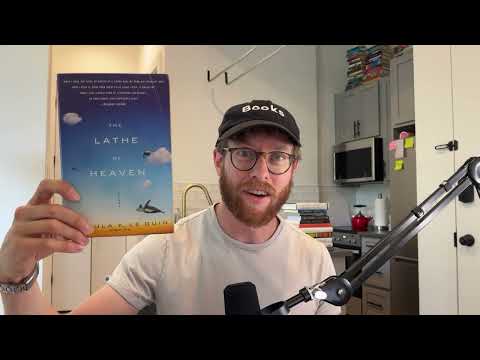
MAXIMIZE Your Reading With ChatGPT's NEW Advanced Voice Mode
A demonstration of using ChatGPT's voice mode as a hands-free reading companion. While reading physical books (e.g., Greek philosophy), the creator keeps the phone nearby and speaks questions aloud whenever curiosity strikes, receiving instant contextual answers without breaking his reading flow. The video covers the setup, benefits (maintaining flow, encouraging curiosity, deeper understanding), and cautions about hallucinations. Several commenters note the version shown is the standard voice mode rather than the newly released Advanced Voice Mode.
# Video Identity Observations
## Intended Audience
- **Readers of challenging books** who encounter confusion, unknown references, or unanswered questions — the video opens by naming this pain point directly: *"books are often like difficult to understand… they make references that you don't get or they make you curious about things that they don't cover."*
- **People interested in using AI tools for learning**, specifically early adopters of ChatGPT features: *"recently I got access to Chachi BT's new advanced voice mode."*
- The creator frames the ideal user as **curious but time-constrained**: questions while reading go unasked *"because it's like too taxing it just takes too much time."*
## Claimed / Demonstrated Scope
- The video's scope is **AI-assisted reading and learning**, demonstrated through repeated worked examples rather than broad claims:
- Philosophy: *The Birth of Tragedy* (Nietzsche), *Protagoras* (Plato), *The Fragility of Goodness* (Martha Nussbaum)
- History: *The Trial of Socrates* (I.F. Stone)
- Science: *The Weirdest People in the World* (Joseph Henrich)
- Demonstrated use cases, each with transcript evidence:
- **Explaining difficult passages** (Nietzsche quote walkthrough)
- **Historical/term context** ("who's crius" example)
- **Fact-checking scientific claims** (brain region question)
- **Pre-reading summaries** (Nussbaum chapter prep)
- **Presenting opposing viewpoints** (critiques of I.F. Stone's argument)
- The creator claims forward-looking scope for the tool itself: *"it'll be a powerful and important tool for anyone to use as you're trying to learn things."*
## Self-Description Evidence
- **Explicit identity statement**: the opening is a direct self-description of reading tastes — *"I love books old books older books books that are better than the movie psychological sci-fi philosophy books that are so thick they could double as workout equipment basically I love reading."*
- The creator positions as an **experiential reporter**, not an expert reviewer: *"I've been using it to read books… here's how I use it."*
## Honest-Limitation Framing (Observable Presentation Pattern)
- The creator explicitly acknowledges tool weaknesses: *"chat PT doesn't have direct access to the books I'm reading… and you have to be careful of hallucinations."*
- Balanced tone continues in framing: *"obviously there are limitations to this."*
## Tone and Presentation Style
- **Conversational, first-person, demonstrative** — describes physical setup: *"I sit on the couch like this and I grab a book… I'll just rest it on the couch right behind me like this."*
- **Repeated "good book" endorsements** as a light evaluative tic across examples.
- **Playful ending** showing casual curiosity as the mode of use: *"okay but why is the sky blue… what about aliens do aliens exist."*
- No curated metadata was supplied, so identity context is limited to title and transcript.
# Delivery Observation: MAXIMIZE Your Reading With ChatGPT's NEW Advanced Voice Mode
## Tone & Overall Style
- **Conversational and enthusiastic**: The speaker uses casual, first-person narration throughout — "I love books," "here's how I use it."
- **Casual filler words** appear naturally: "so then what I do is I just rest it on the couch," "it's it's actually a really complex philosophical argument."
- **Playful, self-deprecating humor**: "books that are so thick they could double as workout equipment."
## Vocabulary & Recurring Phrases
- **"Good book"** is a repeated stamp of approval, used at least three times:
- "I grab a book good book"
- "Plato's pitagoras and Mino good book"
- "Martha nus bomb's the fragility of goodness good book"
- "the trial of Socrates by if Stone good book"
- **"I'm reading" / "I'm currently reading"** is the dominant framing phrase, introducing nearly every example:
- "I'm reading the birth of tragedy"
- "I'm currently reading Plato's pitagoras"
- "I'm also reading the weirdest people in the world"
- "I'm currently reading the trial of Socrates"
- **Process language**: "what I do is," "so for example," "the same thing goes for" — used to sequence examples.
## Teaching Habits & Structure
- **Demo-style structure**: The speaker alternates between narration and reenacted voice-mode dialogue, posing questions aloud and then voicing ChatGPT's answers ("I'm reading protagoras by Plato who's crius").
- **Enumeration of use cases**, each introduced with a pivot phrase:
- "one of the things it's so good for is getting context on historical figures"
- "the same thing goes for science books"
- "it's also good to help prepare the way for what you're about to read"
- "also for presenting opposing viewpoints"
- **Balanced framing**: After enthusiasm, the speaker includes limitations — "you have to be careful of hallucinations but I really think a lot of those issues will be resolved."
## Communication Patterns
- **Ends on a comedic beat**: The video closes with deliberately off-topic questions mimicking childlike curiosity — "okay but why is the sky blue" and "what about aliens do aliens exist" — echoing the earlier line "I feel a little bit like a kid."
## Uncertainty Notes
- Patterns like "good book" and "I'm reading" are well-supported by repetition; the comedic closing is an isolated moment, so it's reported as a single instance rather than a stable pattern.
# Position Record: "MAXIMIZE Your Reading With ChatGPT's NEW Advanced Voice Mode"
## Speaker
- Single, unnamed speaker (video creator); no curated speaker metadata supplied. ChatGPT voice responses are quoted from the transcript as AI output, not a human speaker.
## Central Claim
- The speaker believes ChatGPT's new **advanced voice mode** "is going to change a lot about how we learn and how we read" when used as a companion while reading books.
## Motivating Problem
- Books are "amazing but there's actually a lot that they don't do": they can be confusing, make references the reader doesn't get, provoke questions they don't answer, or spark curiosity about things they don't cover.
## Method Described
- Speaker sits with a physical book, opens ChatGPT, activates advanced voice mode, rests the phone nearby, and asks questions while reading.
## Claimed Use Cases (with transcript examples)
### 1. Clarifying difficult passages
- Reading Nietzsche's *The Birth of Tragedy* ("man is no longer an artist, he has become a work of art..."), the speaker asks what it means; ChatGPT explains it as losing individual self in moments of ecstasy/connection with nature.
### 2. Historical/biographical context
- Reading Plato's *Protagoras* and *Meno*, speaker asks "who's Critias"; ChatGPT identifies him as an Athenian political figure, philosopher, Plato relative, associated with the Thirty Tyrants, with a controversial reputation.
### 3. Checking scientific claims
- Reading *The Weirdest People in the World* (Joseph Henrich), speaker asks whether reading changes the **left ventral occipital temporal region**; ChatGPT affirms this. Speaker notes this use case matters for older books: "does it still represent current science, what might we have discovered since it was written."
### 4. Pre-reading preparation
- Reading Martha Nussbaum's *The Fragility of Goodness*, speaker asks ChatGPT to summarize a chapter's argument beforehand "so I can process it better."
### 5. Presenting opposing viewpoints
- Reading I.F. Stone's *The Trial of Socrates*, speaker describes nodding along and then doubting himself ("wait is this really right"); asks ChatGPT to lay out Stone's argument and "things he missed." ChatGPT supplies Stone's thesis (Socrates as political subversive, not just martyr) plus critic objections that Stone downplays philosophical dimensions.
## Broader Argument
- Using voice mode revealed to the speaker how many reading questions he suppresses because follow-up is "too taxing."
- The tool acts as a "24/7 companion" that **lowers the bar for asking questions**.
- Subjective effect: "I ask so many questions that I feel a little bit like a kid" and gets "way more out of what I read."
## Stated Limitations (preserved as expressed)
- ChatGPT **doesn't have direct access to the book being read** and "may not know exactly what I'm talking about."
- Risk of **hallucinations**; "you have to be careful."
- Speaker predicts these issues "will be resolved or improved over the next couple months" — a speculative forecast, not a settled fact.
## Closing
- Speaker playfully pivots to asking ChatGPT why the sky is blue (answer given: Rayleigh scattering) and whether aliens exist (answer cut off in transcript) — illustrating the childlike questioning dynamic.
# Speaker Attribution Record
## Video Metadata
- **Title:** MAXIMIZE Your Reading With ChatGPT's NEW Advanced Voice Mode
- **Video ID:** `01a0f15b-09b4-70d2-bd9e-88948705a670`
- **Curated metadata:** None supplied (no speaker names, channel identity, or comment availability provided)
## Speakers and Roles
### Primary Speaker — **Creator / Host** (unnamed)
- Delivers the entire video as a first-person monologue about using ChatGPT's **Advanced Voice Mode** while reading books.
- No name is given in the transcript or metadata.
### Secondary Voice — **ChatGPT (AI assistant, voice responses)**
- Identified by context: the creator poses spoken questions and an unnamed voice answers.
- Attributable ChatGPT responses include:
- Explanation of Nietzsche's *The Birth of Tragedy* passage
- Biography of **Critias** ("who's crius" / Criias question) from Plato's *Protagoras*
- Confirmation regarding reading and the **left ventral occipital temporal region**
- Chapter summary of Martha Nussbaum's *The Fragility of Goodness*, chapter one ("Luck and Ethics")
- Summary and critiques of I.F. Stone's argument in *The Trial of Socrates*
- Explanation of why the sky is blue (Rayleigh scattering)
- Cut-off response to "do aliens exist"
## Referenced Sources and Works Cited
- **Friedrich Nietzsche** — *The Birth of Tragedy* (quoted passage)
- **Plato** — *Protagoras* (transcript also mentions "pitagoras"/"Mino," likely garbled titles; recorded as-is from transcript)
- **Joseph Henrich** (transcript: "Joseph Henrik") — *The Weirddest People in the World*
- **Martha Nussbaum** (transcript: "Martha nus bomb") — *The Fragility of Goodness*
- **I.F. Stone** (transcript: "if Stone") — *The Trial of Socrates*
## Third-Party Claims (relayed, not verified)
- ChatGPT's claim that learning to read changes the **left ventral occipital temporal region**
- ChatGPT's characterization of **Critias** and his role in the Thirty Tyrants
- ChatGPT's summaries/critiques of Nussbaum and Stone
- **Note:** These are AI-generated statements quoted in the video, not independently sourced claims by the creator.
## Promotional Segments
- The video as a whole functions as a **demonstration/promotion of ChatGPT's Advanced Voice Mode**; no separate ad-read or sponsor segment is identifiable in the transcript.
## Explicit Limitations Acknowledged (by creator)
- ChatGPT has **no direct access to the books** being read
- Risk of **hallucinations**
- Creator expresses expectation these issues will improve "over the next couple months" (speculative claim, flagged as speaker opinion)
## Unavailability Notes
- **Comment availability:** Not determinable — no metadata supplied
- **Speaker identity:** Unknown; no names provided
- **Timestamps:** Not present in transcript
I love books old books older books books that are better than the movie psychological sci-fi philosophy books that are so thick they could double as workout
equipment basically I love reading but books are often like difficult to understand they can be confusing they make references that you don't get or they make you curious about things that they don't cover they Poe questions that they don't answer books are amazing but there's actually a lot that they don't do recently I got access to Chachi BT's new advanced voice mode and I've been using it to read books and I really think it's going to change a lot about how we learn and how we read here's how I use it so what I do is I sit on the couch like this and I grab a book good book and I'll just uh open up chaty BT and I'll hit the advanced voice mode button so then what I do is I just rest it on the couch right behind me like this and I start reading I'm reading the birth of tragedy and he says man is no longer an artist he has become a work of art the artistic power of the whole of nature reveals itself to the Supreme gratification of the Primal Oneness amidst the paroxysms of intoxication what does that mean n is diving into some deep philosophical Waters here in the birth of tragedy when he says man has become a work of art he's talking about how in moments of ecstasy or deep connection with nature people lose their individual selves and become part of something greater one of the things it's so good for is getting context on historical figures or terms you don't know while you're reading so for example I'm currently reading Plato's pitagoras and Mino good book and as I'm reading if I come across something I don't know I can just ask I'm reading protagoras by Plato who's crius crius is a character in several of Plato's dialogues including protagoras
he was an Athenian political figure philosopher and a relative of Plato known for his role in the oligarchic government of the 30 tyrants his reputation is quite controversial the
same thing goes for science books for example I'm also reading the weirdest people in the world by Joseph Henrik and often with a book like this it makes claims that you just want to understand more about you want to know like does it still represent current science what might we have discovered since it was written and chat PT is actually great for giving context I'm reading the weirdest people in the world and he says that reading changes your brain specifically that it changes your left ventral occipital temporal region is that actually true yes it's true learning to read does change your brain specifically the left ventral occipital temporal region which is involved in visual processing this area becomes specialized for recognizing words and letters reflecting how our brains adapt to new skills and experiences but it's not only good for terms or historical context or scientific facts it's also good to help prepare the way for what you're about to read for example I'm reading Martha nus bomb's the fragility of goodness good book and it's it's actually a really complex philosophical argument and sometimes when I'm starting a book or starting a chapter it can be really helpful to have chat gbt explain to me what I'm about to read so I can process it better I'm about to start Martha nus bomb's fragility of goodness I'm on chapter one luck and ethics can you help me prepare for what I'm about to read like summarize the argument she's going to make certainly in chapter one nus bomb discusses the role of luck in human life drawing from ancient Greek literature and philos ophy she explores how external factors beyond our control can significantly impact our ethical lives and our pursuit of the good nus bomb examines how Greek tragedies and philosophers particularly Sophocles and
Plato grapple with this tension between human vulnerability and the pursuit of ethical understanding I also think it's great not just for summarizing what you're about to read but also for
presenting opposing viewpoints I'm currently reading the trial of Socrates by if Stone good book where Stone argues that the Athenians were sort of right to put Socrates to death and it's one of those books where you find yourself nodding along but but then you're like wait is this really right I'm reading the trial of Socrates by if Stone can you lay out his argument concisely and then tell me some actual things he missed in the trial of Socrates if Stone argues that Socrates was not just a noble martyr for Free Speech but also a subversive figure whose actions and teachings threatened Athenian democracy Stone suggests that socrates's trial was not merely about his philosophical views but also about his perceived antagonism toward the democratic values and institutions of Athens Stone portrays Socrates as a complex figure who despite his contributions was viewed as a political threat critics arue that stone downplays the philosophical dimensions of socrates's trial and the broader historical context of Athenian politics some SU suest that Stone's interpretation May overemphasize socrates's anti-democratic stance potentially neglecting the philosophical nuances of his defense and the complexity of his relationship with Athenian Society in using chbt like this I started to realize how many things I wonder about or how many questions I have as I read that I don't follow up on because it's like too taxing it just takes too much time and using chbt like this in voice mode you have this like 247 companion with you that lowers the bar for asking questions because it's always there to answer I I ask so many questions that I feel a little bit like a kid and I feel like I get way more out of what I read now obviously there are limitations to this chat PT doesn't have direct access to the books I'm reading so it may not know exactly what I'm talking about and you have to be careful of hallucinations but I really think a lot of those issues will be resolved or improved over the next couple months and it'll be a powerful and important tool for anyone to use as you're trying to learn things okay but why is the sky blue the sky appears blue because of a phenomenon called ra scattering when sunlight enters the atmosphere it's scattered in all directions by molecules and tiny particles in the air what about aliens do aliens exist