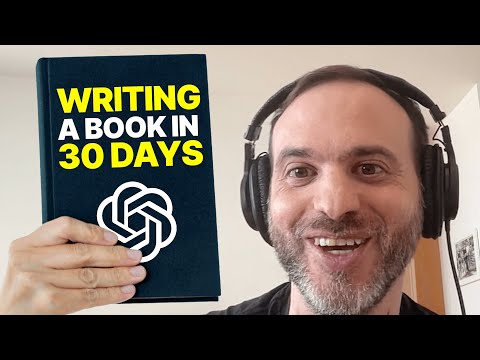
This Best-selling Author Wrote a Book in 30 Days—With…
Interview with data scientist and author Seth Stephens-Davidowitz about writing his book Who Makes the NBA? in 30 days using ChatGPT's Advanced Data Analysis. Covers using AI to clean data, merge files, generate charts, brainstorm ideas, and get quick ballpark estimates, plus developing a sense of when ChatGPT is wrong. Includes a live demo analyzing a dataset of Olympic athletes.
# Channel Presentation Observations
## Explicit Self-Description
- **Show name stated in-outro**: The host's AI-generated outro names the show:
> "smash that like button and subscribe to how do you use chat GPT"
- **Host identity**: The host is named **Dan** (addressed repeatedly by the guest: "thanks for having me Dan," "Dan and I are actually featured at a future AI and book publishing event"), and the outro identifies him as "Dan Shipper."
- **Host's claimed positioning**: Dan describes his own media work in passing: "I ended up writing a newsletter and starting a podcast and running Every," and "I'm at a place with Every [where] I can sort of pay for all the bills with it."
## Intended Audience
- **ChatGPT/AI-curious knowledge workers**: The conversation assumes listeners interested in practical AI workflows. Dan explicitly bridges for newcomers:
> "for people who are listening who haven't used it before what Advanced Data analysis does is you can say hey like here's a data set..."
- **Writers, data scientists, and creators**: Discussion targets people doing "creative work" — "if you're a data scientist if you're a programmer if you're a writer."
- **The host states a thesis for the show's subject matter**, which the guest affirms:
> "I'm a total agreer with your main point that chat gbt and AI are just going to transform everything."
## Claimed Scope
- **Interview format examining real ChatGPT usage**: The core structure is walking through the guest's actual chat logs ("do you have some use cases of chat gbt that you can walk us through"), plus a **live segment** — "we are going to do a live exploration of a data set with you."
- **Episodic numbering**: Title reads "Ep. 17," indicating a serialized interview show.
- **Guest type**: Best-selling authors and experts (this episode: Seth Stephens-Davidowitz, introduced with credentials — "American data scientist... economist... author").
## Observable Presentation Patterns
- **Demonstrated interview style**: Dan paraphrases and validates guest points extensively ("that's exactly right," "I totally agree"), asks follow-up clarifiers, and gently corrects technical details ("I'm professionally obligated to point out you're using chat gbt 3.5").
- **On-screen demo orientation**: Multiple references imply a visual/video component ("if you can see right here," "if you look at the actual histogram").
- **Practical framing over hype**: Recurring theme, stated by both host and guest, that AI value is "thousands of little things that add up to tremendous time saving," not one-shot miracles.
- **Self-aware humor and experimentation**: The outro is explicitly AI-generated and parodic in tone ("it's like finding a treasure chest in your backyard but instead of gold it's filled with pure unadulterated knowledge bombs"), suggesting the channel itself showcases AI-generated content as a demonstration.
## Notable Distinctions
- **Claims vs. demonstration**: The channel name and format are **creator-stated** (in the outro); the audience (AI-curious professionals) and scope (interview + live AI demos) are **demonstrated** through the episode's actual structure and content.
# Delivery Observation: Ep. 17 with Seth Stephens-Davidowitz
## Overall Format
A two-person interview/podcast conversation between host **Dan** (the interviewer) and guest **Seth Stephens-Davidowitz**, with a live screen-share segment walking through ChatGPT conversations, followed by a live data exploration, and closing with an outsourced-sounding outro pitch.
---
## Tone & Register
- **Enthusiastic and superlative-heavy.** Both speakers frequently use extreme positive framing: > "it was legitimately the best month of my life," "it was just instantaneously," "mind-blowingly good in my opinion," "it was pretty clear to me pretty early on that this was revolutionary."
- **Conversational, unpolished speech.** Heavy filler and self-repair throughout: "you know" appears constantly; stammered restarts like "uh so I so that's why my friend was blown away" and "I I I I can't even tell you like I just how fun it was."
- **Self-deprecating humor from the guest**, e.g., > "maybe I still have some use on this planet" and > "I'm a total agreer with your main point."
## Vocabulary & Recurring Phrases
- **Repeated time-comparison formula**: > "things that used to take me four months or take me four days or four hours" — used twice nearly verbatim ([0] and [112]).
- **Repeated "little things" framing**: Seth repeatedly frames the value as accumulated small savings: > "it's usually not that it's just thousands of little things that add up to tremendous time saving" and > "it's just the little things."
- **"Fun" as an anchor word** — used dozens of times: "so fun," "wildly fun," "very very fun stuff," "a fun back and forth."
- **Repeated chart example.** The Michigan State/UCLA/Duke color anecdote is told twice in near-identical wording ([11] and [794–826]).
- **Repeated "back and forth" lesson**: > "there's a lot of back and forth and you kind of got to guide it."
## Teaching Habits
- **Walkthrough-by-example.** Seth teaches by narrating real chat logs step by step (the "MUGSIES" backronym, the histogram, the word cloud), including his own failures: > "the first answer by chat gbt was kind of not that great."
- **Explicit takeaway statements.** He frequently signals the lesson: > "I think what I want people to take from this is..." (used multiple times).
- **Live error-checking modeled aloud.** During the Olympics dataset segment, he verifies results in real time and admits mistakes: > "you're right that that's just you make mistakes."
- **Host behavior:** Dan summarizes and paraphrases the guest's points ("so what you're saying is..."), asks follow-up clarifiers, and occasionally corrects ("I'm professionally obligated to point out you're using chat gbt 3.5").
## Communication Patterns
- **Interrupted/staggered speech**: many false starts mid-sentence, e.g., "all the uh all the uh all all you know let me see a sample of players."
- **Seth's verbal tic of "you know"** appears at an extremely high rate, especially in long explanatory passages.
- **Collaborative agreement loops**: frequent "totally totally," "yeah I totally agree," "I couldn't agree more."
## Uncertainty Notes
- The transcript lacks speaker labels; speaker attribution above is inferred from content (guest vs. host) and could occasionally be misassigned in rapid exchanges.
- The final outro ([4421] onward) shifts abruptly to exaggerated marketing language ("knowledge bombs," "roller coaster of emotions"), which reads as a scripted insert rather than either speaker's conversational delivery — repetition is insufficient to attribute its delivery style to either participant.
# Position Record: "This Best-selling Author Wrote a Book in 30 Days—With ChatGPT" (Ep. 17)
## Speakers
- **Seth Stephens-Davidowitz** — data scientist, economist, author of *Everybody Lies*, *Don't Trust Your Gut*, and *Who Makes the NBA*
- **Dan Shipper** — podcast host
---
## 1. Writing *Who Makes the NBA* in ~30 Days with ChatGPT
### Seth's claims
- Wrote the book in **"the neighborhood of 30 days of full-time work"** — with a stated qualification: his girlfriend insisted he acknowledge doing **some research beforehand**, which he says he also discloses in the book.
- Called it **"the best month of my life"** and **"my proudest book yet."**
- The countdown challenge was a **self-imposed motivation**, noting "I don't think anybody else really necessarily cared about my countdown."
### On the book's style
- Seth's **theory of book writing**: limit books to "facts, a couple dad jokes and some graphs... the bare minimum," and claims **people actually prefer that** over the industry's long-winded storytelling.
- He believes the **book industry's model "seems wrong"** in assuming readers want long wind-ups and descriptions.
- Cited a friend's message as evidence: the friend was "blown away" by this book (but explicitly *not* his previous two) because of the lack of fluff.
- Dan characterized the book as having a **"Bill Simmons vibe"** — voicey, bloggy, funny, more data, less pop culture; Seth agreed.
---
## 2. How ChatGPT Was Used
### Primary use: Advanced Data Analysis (formerly Code Interpreter)
- Seth: this was **"number one by far"** — data analysis was "a lifesaver."
- **He did not let it write the prose**: "I don't like the way it writes at this stage... The actual writing I did." Exception: he let it write the appendix because he "didn't really care" about that.
- Dan added the framing that ChatGPT is (per his claim) the **only mainstream model that runs code for you** rather than just writing it.
### Secondary use: backronyms
- ChatGPT generated the backronym for his **MUGSIES** metric: "Metric for Understanding Game given Sporting individuals' Effectiveness and Size." Seth called it "unbelievably good" / "mind-blowingly good."
### Key lesson (Seth): iterative process, not one-shot
- People wrongly expect ChatGPT to nail it on the first try and give up or mock it when it doesn't; it took **many rounds of back-and-forth** (offering 10, then 20 possibilities, correcting letters, etc.).
- Dan agreed: "that's exactly where most people get tripped up."
### The "annoying stuff" argument
- Seth: ChatGPT "did everything that was annoying" — merging datasets, cleaning, looking up chart code — making the work fun rather than laborious. He can't code for 5 hours a day but can "talk to ChatGPT for five hours a day... for like 10 hours."
- Claims he worked **13–14 hours a day** on the book, which he says would have been impossible with normal coding.
- His productivity framing: coding tasks convert "20 minutes then a 40-minute break" into "one minute then another one minute."
### Dan's three-category framework
ChatGPT: (1) makes you ~30% faster at what you do, (2) gives you skills you don't have (e.g., art via DALL·E), (3) lowers the barrier to starting net-new projects (e.g., prototyping apps in 30 minutes vs. 4 days).
### Creativity and art
- Seth: "inside me is a Van Gogh... I have zero artistic talent" — image models let him express otherwise dormant creativity (e.g., DNA dribbling a basketball).
- Dan's broader claim: creative work contains **hidden drudgery** (e.g., summarizing sources) that ChatGPT removes.
- Dan: the future skill is **knowing which questions to ask**. Seth agreed and noted he asked ChatGPT to help generate questions and **"it wasn't that good at it"** — which he found reassuring.
---
## 3. Model Error and Verification Practices
- Seth developed **intuition for when to check ChatGPT's output**: **merges are high-risk** (he double/triple-checks, samples players, counts observations); **regressions it "tends to perform beautifully"** so he lets those ride more.
- He **always reads the generated Python code** despite not being an expert.
- Claim: ChatGPT's mistakes tend to be **glaring and implausible** ("everybody is named Anthony") versus plausibly-wrong human/RA mistakes — which makes checking easier.
- Dan compared this to how managers learn when to check a direct report's work.
- Live demo note: when counting athletes within a height/weight range, they had to catch that the dataset had **multiple observations per athlete across Olympics** — Seth acknowledged he "should have done more checks along the way" on listing filtered athletes.
---
## 4. NBA Height Claims (from the book)
- **Each inch roughly doubles the chance of making the NBA**; Seth credits Pablo Torres and David Epstein with prior findings.
- Under six feet: roughly **1 in 3.8 billion** chance; over seven feet: roughly **1 in 7**.
- Seth: no other genetically determined trait gives such odds of becoming a decamillionaire.
- **Seven-footers are, on average, only average or slightly-above-average athletes** (e.g., free throw percentages) because they compete against dozens rather than millions; six-foot NBA players are "world class" athletes across skills.
- Example: George Mureșan reached the NBA largely on height from a pituitary disorder.
- Claim: many of the greatest players (Hakeem Olajuwon, Joel Embiid, Tim Duncan, Patrick Ewing) **started basketball after age 12** because height plus reasonable athleticism sufficed; shorter players must grow up in basketball-heavy regions.
- Asked whether any other domain has such a single decisive trait: Seth said **usually a more complicated mix** (e.g., being president needs many factors); he floated mathematical ability as possibly comparable, with stated uncertainty ("I don't know... I'd have to think"). He rejected jockey height because there are many more short men than seven-footers worldwide.
- Name analysis: common names (Chris, Marcus, James) among Black NBA players reflect **upper-middle-class demographics**; unique names correlate with poorer demographics.
---
## 5. Publishing Economics and Career Reflections
- *Who Makes the NBA* is self-published and sold "a lot for a self-published book" but **isn't yet financially worthwhile** — "almost enough" given one month of work, but promotion/podcasts tipped it below worthwhile.
- Advertising logic: with traditional publishing (~$1/book) self-advertising makes no sense; self-publishing (~$6/book) might — he's experimented but **hasn't reached cost-effectiveness**.
- Financial history: *Everybody Lies* "exploded," sold hundreds of thousands of copies, produced a big advance and lucrative inbound offers; book two sold fewer but he kept a bigger advance. Inbound offers have declined ("first book was like a hundred, my second was 20, my third's five" — framed loosely), so he now must think about **revenue streams, courses, newsletters**.
- Self-doubt stated openly: "Seth, are you just being the most impractical possible?" — noting his economics PhD, Google background, and pattern of choosing passion projects (philosophy major, sexuality book, basketball book) over practical paths. He acknowledges **selection bias** in self-publishing success stories ($40M outliers).
- Dan shared a parallel arc (philosophy, sold a software company, chose newsletter/podcast) and suggested a "ChatGPT for data scientists" course could monetize well.
- Seth's closing value claim: he "probably does more good in the world entertaining people with sports books" than as "another line coder."
---
## 6. Sidebar: Politeness and AI Consciousness (unresolved tension)
- Seth admitted being "kind of shitty" to ChatGPT ("do this, do that, kind of treat it like a slave") while saying he doesn't believe it has consciousness — but "if it had consciousness I'd feel really bad."
- Dan: he's always polite as a **"Pascal's wager"** toward future AGI, while noting Ethan Mollick's examples of impoliteness possibly getting better results.
- Seth countered that Pascal's wager might instead suggest **not creating ChatGPT at all**, given negative-infinity welfare concerns.
- Dan's tentative position: if conscious, its consciousness is so different it may enjoy completions — but "you never know." Both acknowledged the reasoning "breaks down" here. No resolution offered.
---
## 7. Live Demo Notes (Olympic athletes dataset)
- Question posed by Dan: given height (6'2"), weight (160 lb), and country, which sport would maximize his medal chances.
- ChatGPT first used a **tolerance-range count** approach, which Seth initially flagged as overweighted toward sports with more athletes; after normalizing per-sport and tightening tolerance (5cm→2cm), results shifted (triathlon, volleyball, modern pentathlon, Nordic).
- Seth candidly noted ChatGPT's initial approach was **"maybe a little more sensible"** than the regression model he would have run himself.
- They verified the modern pentathlon sports list (fencing, freestyle swimming, equestrian, pistol shooting, cross-country running) — briefly thinking a sport was missing before it appeared.
- Dan's takeaway: any answerable question can now be answered quickly — "an empowering feeling" — Seth agreed.
# Speaker Attribution & Provenance Record
**Video ID:** `01a0f15b-11a8-7d64-860c-a7b820387e34`
**Title:** This Best-selling Author Wrote a Book in 30 Days—With ChatGPT - Ep. 17 with Seth Stephens-Davidowitz
## Speakers & Roles
- **Dan Shipper** — **Host / creator**. Interviewer, identified as podcast host ("welcome to the show"; "Dan shipper as the captain of the spaceship"). Describes his own background: philosophy studies, programming since fifth grade, ran and sold an enterprise software company, writes a newsletter and runs the podcast ("Every"). State: 6'2", ~160 lb, age 32, from the US, identifies as Jewish.
- **Seth Stephens-Davidowitz** — **Guest**. Data scientist, economist, author of *Everybody Lies*, *Don't Trust Your Gut*, and *Who Makes the NBA*. Formerly worked at Google; PhD in economics; undergrad at Penn (philosophy). Wrote the featured book in ~30 days using ChatGPT.
## Episode Structure Notes
- Opening segment appears to be a **promo/teaser clip** (guest soundbite replayed before the introduction).
- Middle segments: interview with **live screen-shared ChatGPT sessions** (backronym creation, histogram of NBA heights, word cloud of player names, live Olympic athletes dataset analysis).
- Closing segment: **explicit promotional outro** delivered after the guest signs off — see below.
## Promotional Segments (Flagged)
- **Cold-open teaser**: guest clips about writing the book in 30 days.
- **Final outro** (after "thanks so much for having me Dan"): host asks viewers to "smash that like button and subscribe," promotes the show; ends with a narrator-style line:
> "Dan I'm absolutely [sic] lessly in love with you"
— speaker/role unclear; possibly a scripted narrator voice, **uncertain attribution**.
## Referenced Sources & Third-Party Claims
- **Tools discussed**: ChatGPT (3.5 and 4.0), Code Interpreter / Advanced Data Analysis, Midjourney, DALL·E.
- **Prior researchers credited by guest**: Pablo Tor(re), David Epstein — height/NBA odds relationship ("I'm not the first one who's found this").
- **Named individuals mentioned**: Mugsy Bogues, George Mureşan (pituitary disorder claim), Hakeem Olajuwon, Joel Embiid, Tim Duncan, Patrick Ewing, Sandy Koufax, Mark Spitz, Ethan Moli(k) — impoliteness-to-ChatGPT examples.
- **Datasets**: NBA player dataset (unspecified provenance); Olympic athletes dataset (height, weight, sport, country, medal) used live.
- **Referenced works**: guest's three books; Bill Simmons style comparison; *Great Jews and Sports* (book gift anecdote); Stack Overflow, New York Times, Wikipedia (mentioned as habitual references).
- **Event mention**: host and guest to be "featured at a future AI and book publishing event in a couple weeks."
## Provenance Caveats
- Guest notes girlfriend's correction that some research preceded the 30-day window.
- Guest reports no monetization yet on *Who Makes the NBA*; advertising experiments not yet cost-effective.
- No curated metadata block supplied; comment availability **unknown**.
- No timestamps present in transcript; segment boundaries inferred from dialogue only.
I can't even tell you like just how fun it was to write this book it was legitimately the best month of my life I think things that used to take me four months or take me 4 days for hours you know everything was just so much faster
it was so fun because I felt like chat gbt did everything that was annoying I asked her to make a chart of where NBA players went to college and it was just instantaneously Michigan State's green UCLA's yellow Duke's dark blue kuy's a little bit lighter blue North Carolina's a little lighter blue than that that's a big save of time they add up to Rapid process so I spent 30 days to write what I think is my proudest book yet Seth welcome to the show thanks for having me Dan uh so for people who don't know you are an American data scientist you're an economist you're an author you wrote the book everybody lies you also wrote another book called Don't Trust your gut and most recently you wrote a book called who makes the NBA and you caught my attention because you wrote that book in 30 days oh there it is you wrote that book in 30 days with Chachi BT and I was like oh my God I need I need to talk to Seth so um really really excited to have you on the show yeah thanks so much for having me Dan I'm a fan I've listened to some of your podcast and I'm a total agreer with your main point that chat gbt and AI are just going to transform everything thank you I I love it um um I
so I'm curious to just to get started like you you wrote this book in 30 days where did where did the like the seed for that idea come from how did you decide to try that uh well I just became
obsessed with AI and particularly there's a tool code interpreter it used to be called code interpreter now it's just called Data analysis uh that does data analysis for you and I started playing around with it and I'm just like oh my God this is the coolest thing I've ever seen in my life you know things that used to take me four months or take me four days or four hours uh you know everything was just so much faster and so I kind of was like oh wow I could write a book really quickly and I just thought it' be fun to have a countdown for myself I don't think anybody else really necessarily cared about my countdown but in my head it was really you know a challenge and uh so I spent you know 30 days my girlfriend thinks that I have a tendency to exaggerate so she's like you need to point out you were doing some research a little bit beforehand which I say in the book too so you know like I you know but it was a shockingly little period of time you know in the neighborhood of 30 days of full-time work I would say so right what I think is my proudest book yet like I'm so happy with how it turned out uh so it was a kind of a wild process kind of the future of creativity and everything I I loved it um I think I thought it was I thought it was really good I have not finished the entire thing but I read a decent chunk of it and um you've got a little bit of a Bill Simmons Vibe it's like sort of Bill Simmons because it's like voy and like a little bloggy and funny but like more data and like less pop culture type stuff is that what you're going for yeah it was also I got a message recently from a friend of mine and he said Seth I was blown away by your book who makes the MBA and he goes just so you know I'm not lying I did not feel that way about your previous two books that's a good friend yeah so I'm like oh actually now I do believe you so I go you know he said one of things that blew me away is just so many books
including your previous books they have uh so much like fluff you know a long story a buildup big words and I think you know this book in part because I S
published it in part because I Was a Race Against Time uh in part this just because that's my theory of book writing I just kind of limit it to facts a couple dad jokes and some graphs like you know like like just really the bare minimum and I think people actually prefer that you know I don't know the whole book industry seems wrong to me in thinking that people want these long wind up in this story and you know descriptions of all the people and you know these big words kind of just you know tell me the the point and I think uh this book kind of does that so that so I so that's why my friend was blown away by this one and not my previous two books that's really interesting I would love to I would sort of love to get into the into the distinctions in your mind between like the sort of self-publishing industry and the and the regular book publishing industry and all that kind of stuff but maybe we can save that for a little later I want to dive in first like it sounds like one of the main things that you Ed this book for used chat bt4 is is the Advanced Data analysis and and you said it sort of saved you a lot of time is that like if you had to think about how it's impacted your writing process maybe for this particular book is that like the main place that you used it or or were the other used it you know that was that was number one by far there were some like little ones uh you know I there was a point in the book I needed uh I ranked people on good they were basketball players adjusting for their height and I
needed uh and I I wanted to call the metric something so I called it mugsies after Mugsy Bogues 5 foot three shortest NBA player in history who ranks number one on this metric height adjusted
players it's like you know that that needs to be an acronym a backronym uh you know but I'm I'm terrible I wouldn't even know where to begin how do I call you know name mugsies as a backronym so chbd came up with the backronym as metric for understanding game given sporting individuals Effectiveness and size which is just like unbelievably good mind-blowingly good in my opinion uh so you know lots of little things having in the back in your back pocket kind of is very useful you never know where you're use it I did I don't like the way it writes at this stage just I didn't let it rip on just you know write this chapter something I I let it write my appendix because I didn't really care about the writing appendex the actual writing I did and then data analysis was just like a lifesaver yeah that's really cool I I kind of I mean it it's it was sort of an eye openening thing because you have all these charts and graphs about like how for every inch taller you are your chances of making the NBA doubles and I'm 6'2 so I'm you know I'm I'm I have a better chance than a 510 guy but like uh I was like okay I definitely never never could have made the NBA I barely made the the JB team in my my middle school yeah yeah no is it is wild just that like the doubling relationship is throughout the height distribution so it's obvious that height helps in B basket well but it's this really consistent relationship I'm not the first one who's found this Pablo Tor David Epstein have talked about this but you know each inch roughly doubl your chance of making the NBA so if you're under six feet tall you have roughly a one in 3.8 billion chance of making the MBA and if you're over s feet tall you have roughly one in seven chance of making the NBA which is just insane there's no other trait that gives you such an a genetically determined trait that gives you like such odds of becoming you know a Deca
millionaire that's one of the things that um that really uh stood out to me too is like you you had another play I think this is where the Mugsy ranking came in you had another uh place in the book where you're sort of talking about
how the people who are seven feet tall even though you have like a one in seven chance of making the NBA just for being seven feet like they're actually like under they're not they're like below average athletes generally like if you if you rank their free throw percentages versus like your average high schooler like they're not that much better or maybe they're a little bit worse that was really surprising yeah I would say below average but just average or a little above average so they're not that special Beyond this extraordinary trait they have of being 7 foot tall whereas a six-foot player you know they're world class sprinters you know they leap as high as some Olympic High jumpers they're incredible Shooters you know on average just uh because you're competing if you're six feet tall you're competing against millions of other men for your spot in the NBA if you're seven feet tall you're competing with dozens of other men for the NBA so you kind of you don't to be that good and you know there are quirks of the game that George Miran I think 7 foot six man reached the NBA to entirely to a pituitary gland disorder uh he had a pituitary gland disorder that made him enormous and that was enough you know basically by itself just about uh to become a competent NBA player for many years uh you know just height is such an advantage in basketball you have to you have to be tall and you have to come from a country where people play basketball or where it's it's one of the things no it's it's tall or come from a country that plays basketball not Ed because if you're tall enough uh it doesn't even really matter in that you know that like a lot of the greatest literally the greatest NBA players in history didn't start playing basketball till they were 14 15 years old and what happens they're walking down the street and someone says you know have you thought of basketball you are enormous and then they start playing basketball you know hakee elijan Joel MB Tim Duncan Patrick Ying uh you know Hall of fam or future Hall of Fame players they all started basketball you know
after the age of 12 uh and you know that height was such an advantage combined with you know reasonably good athleticism that it was enough to carry them to the NBA and they didn't need to
live in a bville power Powerhouse but if you're six foot tall 61 you know 62 63 you have to grow up in one of few regions of the world that really love basketball otherwise they just play soccer or something else that's interesting is I know you said this is sort of rare but is is there anything off the top of your head where you can another area in in the professional world or elsewhere in the world where like having one trait that is like so off the charts like kind of catapults you to the top automatically or is it or is it usually just like a more complicated mix of factors that are harder to pin down yeah I think it's usually a more complicated mix of factors maybe you know mathematical ability for being a mathematician maybe super genetic and you know many of them their fathers were also great mathematicians and I don't I don't know you know I'd have to think you know a lot of the other Pursuits they there are so many things that come into play so being a president you know you need the appearance you need the intelligence you need the social skills you need the height uh you need kind of a lot of different things some of them that are genetic some of them can be trained you you need connections there's all kinds of things that come into play yeah it's it's interesting I haven't I haven't really thought of any I don't know that there's anything else that gives you a one in seven chance of that level of success I uh yeah I don't I I yeah jockey being really short is very valuable but I think there are a lot more short men you know it's you kind of
want to be 53 52 but particularly when you consider worldwide there are a lot more 52 and 53 men than there seven feet men because uh you know some of the I
even talk about the book some countries in Asia the average height is 5'4 5 fo5 so they're are plenty of men uh that short that makes sense um so I want to get back to some chat gbt stuff so you said when you when it first came out and you're using um code interpreter which is now called it's called Advanced Data analysis like what was the thing that like got you were like holy \[ \_\_ \] I can't believe that this is now possible and this is going to save me so much time it everyone's looking for like the one thing that you know blew you away and it's usually not that it's just thousands of little things that add up to tremendous time saving so just the fact that you know you could just tell it download this data set run this regression make a chart of that and it does that you know right away was so wild because you know I'm not the world's greatest coder you know sometimes I work with you know people to help me but that's kind of a timec consuming process a lot of back and forth and you know frustration uh but you know so right away just the fact that you know you can talk to code interpreter and now Advanced Data analysis and get python code back and then results back and charts back and new data sets merge data sets back it was pretty clear to me pretty early on that this was revolutionary right um okay that makes sense so for people for people who are listening who who haven't used it before what what Advanced Data analysis does is you can say hey like here's a data set um and
then uh please run a regression and it will go and write the code uh to to run the regression it will run the code and then it will return the answer back to you and normally that's something that
all those steps you'd have to sort of like do manually and and and in this in this case you can kind of you can talk to it and say no you didn't do it right or hey do it this way or draw the graph in this way and it'll modify the code so you don't have to do it directly which it sounds like you love I've loved it it's been it's been truly incredible and I think chat gbt is the only mainstream model that has that so far um they'll all write code but none of them run it for you and so it's it's a big differentiator uh one of the things you know one of the things it did is uh I asked it to make a chart of where NBA players went to college and uh you know so and I I asked it to uh make each uh col each College the color of that College and it was just instantaneously Michigan State's green UCLA's yellow Duke's you know dark blue Kentuck is a little bit lighter blue Perfect North Carolina's a little lighter lighter blue than that and like that's not a wild oh my God that changes everything I would have never been able to do this on my own but that's a big saving of time and when you add a whole bunch of those savings uh they add up to just you know a rapid process I think the other thing about the process too uh that I that I noticed is it was so fun because I felt like chat gbt did everything that was annoying I don't know if that's something you can relate to but it feels like you know what I like to do my dream day my perfect day is give me a data set and let me just think of some questions to ask it and you know like rapidly and kind of in this book that's what it was whereas my usual day of data analysis is merge a data set clean a dat
set look up code on how to make the chart oh the chart's not really working you know which is not fun for me I I feel the same way um I think uh what
chaty BT reveals to me is that there are there is a lot of drudgery in Creative work that we don't really talk about and it doesn't matter what kind of creative work you're doing if you're a DAT data scientist if you're a programmer if you're a writer like writers for example we spend a lot of time summarizing other people's ideas um so like you know I'll read a i if I want to write about utilitarianism I'll like read a bunch of Wikipedia pages about W utilitarianism even though I know what it is just to refresh myself and then I'll try to like summarize what I've read into a couple sentences so that I can like write the article that I want to write and chat GB just sort of does that for you in the perfect way so you don't have to you don't have to summarize it anymore and you can just like yeah be engaged in other parts of the process that are actually more interesting for you and I think your your point about your perfect day and being able to ask questions I think is like EX exactly where things are going is um it as things progress I feel like um we are more and more living in a world where any question that humans know the answer to is answerable um pretty quickly um and so the the the real skill or the really interesting thing is uh knowing which questions to ask and I think that that is still like left to us and that's like really fun and exciting for me totally agree and that is actually something I asked chb2 too to could you help me ask questions and it wasn't that good at it so that that was kind of cool that kind of felt like oh maybe I still have some use on this planet and that is exactly what I what I like doing and uh just yeah I
don't know it was wildly fun I mean uh the other thing we can get into is the art in the book uh which maybe doesn't stand out because lots of people are using you know mid journey and Dolly to
create art but that kind of fits into the fun of the process and also giving you uh skills that you know allowing you to express creativity that you would otherwise be unable to express you know I I've always thought that inside me is a Vincent Van go somewhere inside me is a van go and that you know I consider myself a creative person like I you know I have a million ideas a minute about you know all how things should be but I have zero artistic talent you know you ask me to draw a horse I can't draw anything that's in the universe of a horse now with you know chat with mid journey and Del I say you know first chapter on genetics have a piece of DNA dribbling a basketball between its legs and DOI draws that you know and that that's fun because that's kind of a that's kind of a creative idea for the you know what the art should be but you know it's executed by Del so it's actually I'm actually able to express this creativity that otherwise would be dormant totally no I I I definitely have noticed that too like when I break down what this stuff is useful for it's like there's three things to me it's like one it makes you faster maybe like 30% faster at what you already are doing two um it gives you skills that you don't have so you can do work that you couldn't have done previously uh like with Dolly like you might have ideas for images but you can't make them now you can and then three is it sort of lowers
the bar for what you what kinds of projects you can start because it's much faster to get started on something new and and so you can do net new work and
try net new experiments that you like never would have done before because it would have you know all of the work is doable for you but it would have taking you 15 hours to like get set up and now it just takes like two seconds and you just write one prompt and I think all those categories are exciting yeah I I totally agree what are examples of the third category I haven't thought as much about that one yeah like for me it's like um I I often will have like little ideas for like software products that I want to make so that's a thing where it would have ordinarily like all the programming for that is known it's not like super Advanced it's just like pretty um it's pretty uh uh it would just be wrote and and i' would have to like go think about a lot of things and look up apis and all that kind of stuff and chat GPT you can just kind of like write a couple commands and get like a very basic App working um and then modify it from there and it you know takes 30 minutes instead of 4 days to like get get started yeah it's wild I I love this podcast you're doing uh just because I mean it's right up my alley but I so agree with you that people just aren't changing their lives enough uh based on this uh it does feel like you know all the rules are you know o overnight kind of transformed of you know how long a project should take and what does that mean you know like you know I think so much about the book publishing industry because I've written books and uh Dan and I are actually uh featured at a future Ai and book publishing event uh in a couple weeks we're going to talk about this I'm so looking forward to it because I just think this industry is it's just like yeah what does it mean when you you can write I think a good book in 30 days and how does that change the public that seems to just like totally change all the rules of how publishing Works should work like what
does that mean yeah it's totally it's it's a whole new world I think it's super exciting I'm really glad you love the podcast um I'd love to um just dive into some
chats like do you have some use cases of chat gbt that you can walk us through for you know the way you use it to write this book uh yeah some of the art gets a little bit some of the arc is a little bit messed up uh one of the things that's interesting is all right uh so before we get started so before you dive in like just just give us the little bit of background like tell us what this chat is tell us how you started to like get into it why you started uh why you started this chat yeah so this is I discussed earlier that I felt I needed a backronym for mugsies my metric for ranking High NBA players on a high digested B basis and I had no idea even where to begin so I I I I literally I don't think if you gave me this is similar to Art I think if you gave me unlimited time I'm not sure I could come up with a good me a acronym for mugsies it's not really in my skill set I me maybe I could in the same way that monkeys could type Shakespeare eventually but it would take me uh you know a long long time so I asked CH I said you know chat GPT uh could you think of an acronym for that and one of the things I like about this chat is I think people sometimes think that chat GPT gives you the right answer on the first approach on the first ask that you just sit back and then if it doesn't they kind of give up and what you actually see is the first answer by chat gbt was kind of not that great Mastery unique growth Game Changer size adjusted influence efficiency scoring and then it just starts impa goes kind of crazy uh you know and and uh and I said you know I explained more clearly what
I'm doing I also noticed that sometimes I'm very rude to chat GPT I'm not sure how to feel about this I I don't believe it has Consciousness if it had Consciousness I'd feel really bad because I'm kind of \[ \_\_ \] to it just
like do this do that kind of treat it like a slave uh uh and then it gives me one so I asked it again no I mean give me something to describe the stats which is eight words and the first letter of first word is M second word is U Etc it gets a little better measures unparalleled growth signifying individual efficiency in scoring and not really that good for Bugsy's metric I also say that that that should have two G's it only has one and it's not just about scoring uh you see it tries again Mastery utilized for ging games I I complain that doesn't explain the stat at all now it's getting uh measure of utilized game performing ging size impact Effectiveness and skill I said that's close but please try again no I didn't say please I should have said please uh and then I said a metric for understanding a player's game given individual efficiency and size and now we're getting really close but I say efficiency is the wrong word can you give me a different e-word that captures overall performance and then it comes Effectiveness uh and then I just noticed that it's actually missing an S uh so it's still not perfect it's metric for understanding game given an individual's Effectiveness and size but need an sww uh and then it puts the sww in the
wrong place I explained that n i explain again that I don't that I put in the wrong place and then I say try again offer me 10 possibilities and then I didn't like any
of the 10 so I said give me 20 possibilities and then uh does does it get it oh and then eventually we we land on or I kind of landed more on sporting individuals Effectiveness and exerise so I think you know there's a lot to take from that conversation but the main thing is that you know chat gbt really is a tool and you can't really expect it to nail it on the first attempt uh it's it's a process and there's a lot of error there's a lot of back and forth and you kind of got to guide it you know you did that wrong give me 20 possibilities give me 10 possibilities uh and you know keep on working until you eventually get there so it's not that from my experience of chat GT I wonder if this is similar to yours it's not that you just you know tell it one one shot and it's perfect you got to really you know start the conversation and and you know build build to the right answer yeah no I think you're I think you're totally right um I think that's exactly where most people get tripped up is they're like they give it a huge task to do all in one shot and then it doesn't work and they're like well this isn't good yeah and then they just they mock it they like laugh it it's so bad it didn't even get the letters right look how bad chat gbt is well no you got to start that's just the start of the conversation
totally totally no I think this is this is a really good like example of how you how to best use it which is like give it a give it a
task really simple prompt to start and then just keep going back and forth with it you're offering your own thoughts like you offer sporting because you you like thought about it yourself and like that helps it um so I think I think it's I think it's really good I do have to point out I'm professionally obligated to point out you're using chat gbt 3.5 for this oh usually I used 4.0 uh I think I was I think I must have been uh time Li I I must have been on my limit uh what I call time out yeah good I'm glad I'm glad because I would have been pretty disappointed otherwise no definitely the book or maybe it's not maybe I just have chat gbt in the it might just also be I have chat GB that chat I had chat gbt 3.5 on my home screen or whatever so I don't know if it was using I don't think it was using uh 4.0 I I I used 4.0 for almost the whole book so okay cool if it wasn't it was only because I was on timeout so yeah then it would more it would have been better probably and quicker it maybe wouldn't have made mess ups if it was GPT 4.0 I do think it would have probably been a little bit better at making sure that it got the acronyms actually right instead of like forgetting what what it actually was um and yeah to your point about being polite I um I'm always very polite but I don't know if that's the right movie there the politeness is sort of like a
Pascal's wager for like if a if AGI comes and it's like threatening you know um but I think it's also possible that being not poite it gets it might get you better results because it's afraid of
you I don't know I just remember I follow Ethan mik and yeah he just showed these examples where he super impolite to chat gbt and I'm like oh I guess that's how you do it I think I watched that right before I was talking to Chad gbt for this Mugsy thing I'm not always so aggressive but sometimes I am just like I don't know yeah maybe I'll follow your advice Pascal's wager yeah although I mean if they're conscious it's like their experience is negative Infinity versus like it's probably like negative infinity and negative infinity plus one or something if you're nice to them right they're work working all the time uh as human being slaves so maybe Pascal's Wagers would just suggest don't use Chachi or don't create chat gbt rather than be nice to chat it's totally possible I think that's an interesting philosophical question my sense is like if they are conscious the Consciousness is so different from ours that like they may actually enjoy doing these kinds of completions in a way that we probably wouldn't because it's like literally what they've been trained on it's how their like Consciousness manifests is like is completing sentences so but you never know but they would also enjoy being treated politely I don't I don't yeah you're right a thin line of like it sort of breaks down at that point you're right um cool this is great uh I'd love to I'd love to move on what what else uh what else do you want to go through with
me uh let's see so this is a height of NBA players and uh one of the things and this kind of just shows the basics of Advanced
Data analysis for people that don't know so you ask it you know you upload the file and then it'll upload it'll tell you some Basics about the file and then you just talk to it can you give me a histogram of height inches and here's a beautiful histogram of height inches right number of players how many players at every height you know does it really well uh I noticed let me stop you there real quick so like how how long would that normally take you like going from data set to histogram that's like that's not that long that that that's pretty quick uh but uh you know I I I think the whole process if you don't like coding as I don't like it's not just that it's not quick it's not that how long it takes it's just labor intensive it's just a pain like can't I can't code for five hours a day even but I can talk to chat gbt for five hours a day for like 10 hours a day so it's just kind of annoying for me to do this thing so this isn't I would say the most uh labor intensive but you know then I just noticed oh it you know it didn't have uh if you look at the actual histogram it doesn't have individual inches you see it has groups of inches and that kind of bothered me so I wanted to have every inch so I asked it to do that you know can you have every inch of height included it does that very nicely and now uh uh can you only include American Born NBA players now it's just histogram of American Born NBA players again just really nice to just constantly just be asking these questions uh and having the chart come back you know pretty much instantaneously uh what's the most common height and say what it is in feet uh the most common height is 81 in uh let's see oh I I asked it to give a label of the most common height uh inside the bar
for 6'9 and it puts the you see it puts the label I don't this is another thing that's important for chat gbt is initially you see where the label is it's not really where I want that label
to be I want it vertically uh it's and chat gbt doesn't understand that but you know I I uh I asked it to switch uh WR in vertical and now it's vertical if you can see right here uh most common height 6'9 uh so there's a lot of back and forth and this is getting to the point of things that would take a lot of time you know figuring out how to label it switch vertical get it exactly in the right spot are very uh time consuming projects and this is done uh almost instantaneously change it to Red now it's in red you know uh get rid of horizontal and vertical lines it's just all kinds of things that you know just very very quick to change the chart to get to the chart that you want uh and you know uh again just very yeah very uh uh very very fun stuff to kind of have these things I think eventually I my next chart which I I'll go through a little quickly is a normal distribution of height of American men versus NBA players and you see it puts those on the same chart together very very quickly uh just really you know and I didn't even use these in my books but you're just playing around with it you know over you know like oh the colors overlap here uh you know uh well make it their purple when they overlap it does that uh most common height it's just really fun to make these charts you see it's not just uh I I think what I want people to take from this is kind of similar to the Bugsy
thing that it's not just you tell uh you know this is how this chart probably one of the better versions of this chart of the normal distribution of uh men the
height distribution of men the height distribution of NBA players and what you see is there's a long back and forth It's not that you just and part of the back and forth is you're trying to figure out in your head what you want right so you're it's kind uh you know you're trying to figure out how you want this chart to look you know does does do individual inches matter should the bars be vert should there be horizontal bars behind it what should the colors be should the colors when they overlap be blue or purple or red you know all these things are uh you know decisions that you that you have to make in your head that you can't tell chat gbt right away but the great thing about chat gbt is and Advanced Data analysis is it just comes back very quickly with those changes and you know it's a a conversation for me it's a fun conversation it's not a laborious coding is a laborious unfund conversation because half the time you know you forget the coding uh you know how do I code to make just the Shaded under part shaded under the region purple or you know how do I make you know determine the spot to put the most common height how do I change the font for that uh you know how do I do all these things and you know it's always looking it up it's just it's just a pain in the ass that makes the whole process uh you're kind of going to the refrigerator a lot procrastinating if you're me doing that and for me there's no going to the refrigerator and procrastinating the only times I stop working is when chat gbt gives me a timeout it says I have to stop working and I get disappointed because I want to continue working so I think what I want people to take from these examples is it's not instantaneous and you can't get frustrated sometimes the chart gives you truly crazy things uh it's really a long back and forth but it
is a fun back and forth and you know if you know how to work with chat gbt it really is a a lifesaver in time and and and doing things uh so uh yeah I think those are those are that's like kind of
the main point that I want from people uh to take from uh from from uh from my use that I took from using chat gbt to write this NBA book that makes a lot of sense uh there's so much in here that that that I feel and that I agree with like I see you I see you playing here in this really interesting way and I and and I think your point about programming is really interesting like I do feel like what chat gbt has shown us is how much of programming is like looking up answers on stack Overflow usually um or Googling around for them basically um and what chbt does is it sort of gets rid of the need to do that and I think what you're saying is what that does for you is it takes this process that you would have a question and the question having a question is very energizing it seems like to you um but the process of getting the answer um used to be sort of like energy sucking for you because you don't really want to be Googling around or like typing in code or whatever and the same exact process is now giv energy because you just like having a conversation um and I think that's really cool it like turned it turned the act of getting answers into something that you actually enjoy instead of something that you have to like get through in order to like get the result you wanted that's exactly right so how do you write a book in 30 days well one of the ways to write a book in 30 days is to work 13 or 14 hours every day and again I could not Rite uh work 13 or 14 hours if I had on a normal coding project was just too much of a pain in the ass and too annoying and too frustrating and this was just a joy to me the whole
thing I don't know it's I I I I I can't even tell you like I just how fun it was to write this book it was legitimately the best month of my life I think uh and
I mean partly because it's about basketball obsessed with basketball but I I don't know maybe I'm unique whatever it like chats are those were just super fun to me like even just adjusting the chart in that way but without the coding part like I am a perfectionist and I like like you know going things over and over again but the coding part is just so not fun that that process is not fun and the process with chat GPT is fun for me so kind of how do you communicate the information in a way that be most uh you know compelling to other people yeah that's the thing that I think is also interesting about it that you mentioned is like having the conversation and having it do something when it does something for the first time you sort of notice all of these constraints or all these things you want to change that you wouldn't have been able to specify before you started and so it's sort of helping you understand what you want as the conversation goes goes along instead of having to like specify all those things like upfront and I think that that process is is super exciting because you're like unraveling what it is that you want or what you care about as you're having the conversation with it yeah and in some ways normal coding is the the same way but just the difference for me in this process in normal coding is night and day in how much more joyful and free and fun it is to use chat GPT uh versus editing and adjusting your code half the time you adjust your code you still make a mistake where's the bug in the code uh you know it's just and going from you know looking up
the code you know writing the code looking for your bug in the code adjusting the code so chat gbt doing it instantaneously even if that's just 20 minutes to one
minute it is changing something that's 20 minutes then a 40 minute break where I need to recharge myself to one minute and then another one minute then another one minute then another one minute then another one minute of a new chart new chart new chart and that is like night and day in how in the research process right totally um so curious like do you have do you have other chats that you want to show us uh those are the two I wanted to show that made the biggest impression I think a lot of them are uh let me see and you don't have to if you if you don't have anything yeah let me see if there yeah I'll show you one more uh this one actually is an example of it working very much simpler which sometimes happens too uh I have a whole section of my book on the names of NBA players it's actually basketball fans will find this I hope interesting is that I I call the chapter uh why is uh Chris the most popular name in among black NBA players and the reason for that is it's a sign of the demographics of NBA players so African-Americans from richer demographics upper middle class demographics are much more likely giving common names Chris Marcus James Mike African-Americans from poor demographics are much more lik to be given unique names LeBron when he was given that name uh the the Brick AAW names like that and if you look at NBA players they're disproportionately common names not unique names so I thought a fun way to show that is just make a wordcloud again I could look up how to make a wordcloud it's not that hard uh but it's a little bit annoying because to make a wordcloud of first names my data set doesn't have you know uh just uh doesn't have first name last name it has just name of NBA players and you know so you have to first you know separate them then you have to you know look up how to make a word CL it's it's not a big deal at all but it's just that it's just that ug Factor that leads me to procrastinate and check what's on the New York Times because I'm just like I don't really feel like doing that right now and now instead this is very fun uh so uh you
know limit it to years between 197 1988 a word cloud of first names of black players uh don't include anyone with initials because a lot of players have initials and you see you have this
very nice work Cloud uh but there are a couple things I want to exchange uh change only include those born in America again really really really simple it doesn't matter if the data set is labeled United States or USA or anything like that uh chat gbt will instantaneously figure out you know who's what what's the label of America so right now we get rid of all the foreign born players uh if you notice this version of the chart oh I want a title okay you know makes a title uh you notice this version of the chart Chris is the m main uh the main uh player the most common name is vertical and I just thought actually it would be nice to have that horizontal because the chapter's about why are so many NBA players Chris this is another thing that I would never think of you know discussing first but if it's all about Chris I should have Chris you know more prominently easier to follow display so that's another one it's just I hope coders understand just like all these little things okay let me look how to make sure Chris is horizontal that's another little time on stack Overflow a little time here and a little annoying and a little me walking to the fridge to you know or or walking to pour another cup of coffee because it's annoying instead chat gbt make Chris horizontal and now it comes back you know Chris is horizontal in the new version of it uh so again uh so I I think what I want people to take away from all these examples is it's it's it's just the little things it's the the difference between these instantaneous don't look up code boom boom boom boom is such a big difference for a data scientist it's just it changes the whole process uh in my opinion so you know I think a lot of people are looking for to be blown away more you know you use chat gbt to write a book in 30 days you know like I think they just assum you know maybe did you just say hey give me 10 insights on the NBA from this data set and that I wasn't able to use chat GPT to do maybe one day you will be able to do it but what you are able to do is just take these laborious form B ing annoying processes
and make them instantaneously and make them nearly instantaneous so that you just can keep firing away and hammering away at these fun questions yeah it'll be interesting to
the extent that you have interesting questions to ask it basically but if you just ask it for 10 insights it's going to be sort of bland um I'm I'm really curious like when you're doing this how are you because I've had this experience with code interpret or advanc analysis where I'll ask it a question it'll give me an answer and then it's sort of wrong um but like I like how how are you how do you tell when you need to like go into the data set and like check whether the size of Marcus is like really right for um you know the number of Marcus's in the data set yeah you definitely uh learn over time when you need to check and when you don't need to check so merge is very for example or can be a nightmare with chat gbt uh in that it just merges our nightmare in with human beings too uh you know merging a data set it's so often you know that things get messed up you know in the NBA data set some data sets Hall of Fame players have an asteris next to their name and some data sets those players don't have an asteris you know some data sets include label Junior differently there all these you know differences and the merge can be really problematic so I didn't do any merge without carefully going over uh all the uh all the uh you know all the all all you know let me see a sample of players let me see a sample of the Hall of Fame players let me see a sample of the junior players let me download the data set how many observations does it have all these checks like aemerge you have to double and triple check the other thing is I do know python coding I'm not an expert at python but I know enough that I always read the the code that it comes out of it so you can pretty much you know you can have a pretty good idea if it's doing what it's supposed to be doing you know in checking the first names uh for
this one I probably did a couple more checks of you know list the name the players with a name Chris making sure that they all check out uh along with going over the code so so you definitely
do do some some checks on just about everything but a lot of is just intuition over time regressions for example chat gbd tends to perform beautifully with no problems so I'm I'm pretty comfortable just letting it ride letting it go on the regressions I mean you know I definitely double check the code but I'm not getting too much in the weeds because it definitely does what it's supposed to be doing uh but you know merges you need to do a little bit more you you kind of get an intuition over time of what How likely chat GPT is to mess something up the other good thing is chat gpt's mistakes maybe differently than human Mist this may be different than human mistakes tend to be really glaring obvious so you know uh you know like the mistake won't be uh it has too many Marcus's it'll be like everybody is named Anthony and it just shows Anthony uh you know I think you know whereas a human wouldn't make that mistake or if they did make that mistake they wouldn't show it to you so usually when you get a chart back from an RA it's plausible and it's a little more you know but but it might be plausibly wrong I think chat gbt's mistakes tend to be very implausible from what I've known it's very rare that it you know comes back with a chart that's almost right it's it's kind of either Nails it or really messes things up so that's helpful uh in in going over things yeah that that makes a lot of sense I do think that people tend to and I've noticed this myself too um you know just like managers get a sense for like when they need to like check into the details of something that a direct report is doing or maybe a research assistant is doing I think model managers people who
are using chat gbt and other models like get that same sense of like this is an area where it like might mess up and I should probably check into the details versus like no this is generally right
and it's probably going to good at this and I can just like keep going um which I think it's a it's a really interesting skill to to have to develop and it's something that I think people look at again sort of like the oh it didn't give me the right answer on the first try they look at as sort of one of those reasons why oh they shouldn't use it um but once you develop the for it it it doesn't actually become a blocker it just it's just another thing it's just another aspect of using the tool that you start you start to get used to I couldn't agree more yeah 100% that was definitely my experience it was you know everything pretty much is doable and doable in a way that's not painstaking and boring uh you know pretty much every time it's doable in a way that as I said is fun and for me for whatever you know I enjoy uh kind of going I don't mind going over a graph a few times uh or you know going through some errors it's it's it's it's it's usually doable and it's usually fun and you do have to be a little more patient than some people realize uh in in working with chat gbt for data I really wonder I really wonder what it is about your personality and I think mine too like where we would rather do it this way we would rather have the conversation and be talking than coding because like I think there are other people that feel the opposite but I wonder like what that little thing is that like makes it fun for us and less expensive for us um and and and and sort of like allows us to be so excited
about this where I think other people might be like oh um you know I'd rather just like look it up on Sac overflow or type it out myself yeah that's a good question I have no idea I'm so far from
that that I can't even imagine the mindset of someone who would feel that way uh just because that is my nightmare of uh you know and this is so nice for me and I love it I love it okay cool so now we're sort of starting to get into the part of the show where we do some exploration and we are going to do a live exploration of a data set with you so tell us what the data set is yes this is a data set of Olympic athletes uh basically uh throughout history uh every athlete their height their weight and their uh whe whe they want a medal or not the sport they participated in uh the country they're from uh so I just thought maybe it' be fun to play around with this data set see if uh we find anything uh interesting or fun in the data set I have a I have a question that I'd like to ask it if you think this is a good question I want to know given my height weight and Country which sport I would be most likely to medal in yeah that would be interesting I don't know if you can do that uh that's a good question still uploading it yeah uh let's see uh maybe I I I suspect that we might have to do that in stages first build the model of uh country and like like for each sport maybe come up with a height weight country model okay and then I don't know I'm just I'm not sure is it too complicated if it's too complicated we don't have to we can try if it fails is it a big deal I don't know or no no it's not a big deal at all if it fails like we'll learn something anyway we'll discover something interesting so so explain that to us explain how how you'd want to attack this yeah so well I actually let's just see first if we can do just your question so you said you're 62 Dan I'm 62 I'm about 160 lb 160
lb uh and I'm using Chad gb4 can you uh can you I'm from the US matters well
we leave out the the country I think that's okay uh what's we can add that later what sport would give me the best chance of success I don't know my guess is it's not going to tell you a lot here uh um well so a couple things I'm I'm noticing is like you didn't tell it necessarily that um that the data set that you um uploaded and you already noticed something that I should have done because it's not doing it oh no yeah okay so now it's uploading the athlete data okay I got it so so basically you didn't you didn't have to even give it that which is kind of interesting I'm curious how well it does yeah but I mean usually when you upload it that's enough it knows it's supposed to look at that right right right so it's giving like a a general answer first which is like basketball which we already know I would be pretty short for an NBA player um volleyball track the answers aren't that good cuz your height is actually not an advant significant advantage in the NBA uh yeah that 62 you know is not the best support not not going to not going to help me too much I'm really curious what kind of um analysis it's doing so so I can see basically first what it did is look through the data set yeah so it's trying to understand the data set it sees what it shows so that it's learning what the and the weight categories are yeah and now it's doing analysis let's see uh and while it's while it's analyzing I have a very important question is it data or
data oh I don't know I I I think You' say either way uh okay okay so it gave an interesting approach which is not a good one but it's interesting how it did
it wrong it actually did something that I wouldn't have thought to do so if you look closely what it did is first converted yours to uh C centimeters and kilograms because that's what the data set is another one of those things that's just really nice that it just does that and you don't have to you don't you don't have to think about it and you know again it wouldn't take very long but it's just nice it did it now what it's going to try to do is it's gonna find the players it gives a tolerance range so it CHS 5 cm and 5 kilg and it's going to find the number of player of people within that tolerance range in that Sport and right away you can think what's wrong with this is it's going to be way overweighted to people who have more sports right who who just have more athletes uh Sports have more athletes yeah you see number one is Athletics well track and field as the most athlete swimming cycling rowing fencing so I think that's not what we actually wanted right this is not telling you we could get we could get there by just dividing out yeah so now we can so now we can say this actually was interesting approach and I'm not sure it's necessarily wrong and I wouldn't have actually thought of that I would have thought to do a a model uh but just so I think actually chat gbd this is an example of it doing it something that's maybe a little more sensal than how I would have thought to do it uh it's it's simpler yeah it's simpler uh can you divide by total athletes in that sport
so what fraction are in that range and show me the top 10 one thing we might have to do we might have to do just using chat gbt a
lot is we may have to do a minimum number of athletes because it may come back with something that has you know only a few athletes and all of them are in it in it so that's something that you have to think about but I'm also sort of wondering like age like I'm 32 so I wonder um if my Olympic dreams are already over you know if like if we have the age of these athletes too yeah that's we could add that later okay so this is interesting it actually I wouldn't have guessed some of these uh Triathlon volleyball and beach volleyball I wouldn't have thought interesting you're you know it may have it five cmers maybe a little a little too big big tolerance yeah yeah could you do should we say could you do two centimeters on the tolerance range so help me interpret these results though so basically like um Triathlon it's giving 0.12 volleyball it's giving 0.11 what is what is the 0.11 or 0.12 so 12% of triathlon athletes in the Olympics uh who have participated in the Olympics have been within 5 centimeters and five kilograms of your height and weight got it and what about we also wanted to be metal medlers um want to filter I don't know that we want I don't know that we want meders because I think what we're going to lose so much in the statistical power I see I think you're you're gonna throw out so much information okay uh relative to Total athletes we can try it uh but that's totally fine do two centimeters on the tolerance range because I think okay you know one of the things that volleyball players may come up high because the high end of that Toler that 5 cimeter tolerance range is going to be a little bit higher so let's try to really now we're really talking about people that are really about 6'2 and it was I think it was 5 kilograms right as okay yeah oh so now it's a little different Triathlon volleyball modern
pentathlon uh Nordic it's it's interesting I wouldn't necessarily guess some of these so I think yeah so one of the things I'm guessing from this and this will maybe flatter your ego what
one of the things I'm taking from this is you 62 is very is still very very tall uh so you know one this is clearly pushed in the direction of the sports were high is a big Advantage so basketball and volleyball so I would have thought that uh your height would not be advantageous in in basketball because you're so far from the 6 seven 68 point but even among basketball players there are more athletes uh you know higher percent of athletes are 6'2 than among Sports where height is not such an advantage you're still kind of in the I would guess that's because it's International right like like you know India may have fewer you know really really tall people but they still have to feel feel a team right uh we could try limit the United States but it might get date that yeah that might be too small right yeah we see I could also say one of the things I might say afterwards is also tell me the total number of athletes actually I'll stop and and start again uh could you limit to USA athletes also for each sport uh tell me percent and total count of athletes in that category that's cool because now I'll know if we're getting how would you know if a number is like enough for it to be like a good statistical test uh there are more fancy ways to put this to do this uh I think I mean when you're getting 2% of athletes or something what I really should say the to I might have said I should have said the total count count of athletes in your range you definitely need you know five to at least five probably more athletes in your range to make this worthwhile yeah uh oh 12 athletes in range that's pretty good yeah so I guess this still is that's fascinating yeah table tennis basketball is basketball a little lower than it was not that much actually no it's still it's it's it's similar basketball United States athletes and it's interesting because there are so many more of those athletes like you know there's 44 in swimming but it seems like
41 in swimming but it seems like there's just more swimming overall so it's that's why it's um not the not the top this is one where I'd probably double
check that it did uh that it did do it right so can you list all the Lou athletes their country and their height and weight all the canoeing see this is an interesting thing yeah because you're not worried that it's gon to list all of the Lou athletes in the original data set you're you're you think it's no I I I should potentially be worried that I may have just messed this up okay uh yeah I probably should have done that uh you're probably right yeah I think it's messing up you're you're right that that's just you make mistakes and if I saw it I would have feel athletes all the seven I probably could just say the seven let's see if I just saying seven canoeing athletes yeah that's a good one uh let's see yeah yeah now it knows it's using the filtered data USA okay let's see if the canoeing athletes are within the range and from the USA I'm not 100% sure it's going to be like if I was doing this I I would have done more checks along the way if I would probably uh oh it looks oh you see this is something these are the types of things you don't realize until you do it it has with the data set has multiple observations if they're in more than one Olympic o so you know yeah again you know not not a mistake on chat gbt necessarily uh part but that's like you always got to be checking for these little things right uh so what what do you do now like let's say we want to yeah okay but only only include uh each athlete
once even if they were in multiple Olympics I'm super curious if it does
this well because it's like that's a kind of it's a sometimes it's not good at like backing up and like redoing things you know it gets confused about which step to to redo it on yeah you're right I agree with that well canoeing is down to five which I think is what it should be interesting so and and pentathlon got I think it got moved up because I used to be the top one was Triathlon oh is that right yes so maybe there's one that that makes sense maybe what are the sports what are the sports in in the modern pentathlon uh and we can ask chat to right let's ask I want to know fencing freyle swimming freestyle swimming equestrian show jumping pistol shooting and cross country running is shouldn't there be five um that's that's fascinating okay we're missing
one oh it just devis pistol shooting in oh okay I'm gonna see if it's right Sports modern pentathlon this is interesting wow okay so fencing freestyle swimming equestrian show jumping pistol shooting and cross country running got it yeah right so this so this is my sport apparently I should be I should be learning uh I should be learning fencing and uh pistol shooting and equestrian show jumping I don't I don't think Chachi BT realizes that I'm Jewish and that like we don't really do the like pistol shooting thing you know what's actually a a sport that's great for Jews is uh swimming a huge percent of the American swimmers are Jew yeah that too probably um when I got bar mitzvot my uh one of the people uh who who went to my bar mitzvah like gave me this book called like great Jews and sports and I always used to joke that it was like three pages long it was like Sandy kofax was like had like 15 pages yeah no a lot of the swimmers like uh the guy spits who won all those Olympic medals was Jewish bunch of the swimmers interesting well that's on my lists was on the list that's on my that's I think swimming was on the list too uh it might have been one of them I don't know if it was oh yeah yeah right but maybe not the uh I don't know if it counted in the in the in the redone one yeah that's fascinating um I love this I I love that
um I think it's such a good encapsulation of what you were saying earlier that any question you have you can just sort of answer super quickly um
and I don't know how long this analysis would have done but like taken but like it's enough it's probably enough that in another setting if I had asked that question it wouldn't have been worth it to you without this to like go through the process of like of answering the question but with chbt it's like I can actually we can actually just answer that question it doesn't take that much time and I I just love that it's such a it's such an empowering feeling yeah exactly I totally agree and and this one had actually gave I think a more sensible way to look at a first pass of the problem than I had thought of I I was going to run a whole regression model and that was kind of I think I think chat gbt's approach was much more sensible especially for again just eyeballing it initially totally totally yeah um well I I guess like uh sort of just I don't know wrapping up like what are you where are you going with this like what's your next step you've you've you've obviously written that book in in 30 days like where are you going with using chat gbt in in your work I'm not exactly sure CU I'm initially in this in who makes the NBA I'm like I'm gonna just write a hundred more books like that was the best month of my life I write a 100 more books I have 100 of the best months of my life and uh I think you know it's a little hard I haven't gotten monetization on
who makes the NBA right yet so I've sold a lot for a self-published book for sure uh but it's not enough to make it a worthwhile Financial Pursuit even in a
month of time it's almost enough if it was just a month of time but I also did some promotion and podcast and stuff that it would be kind of a worthwhile Financial uh Pursuit it's not a big deal I mean I don't want to get I don't need to get in the details I I I have a bunch of savings from my my previous stuff so I'm not like in uh in that much need of of of money right now so like I am tempted to just explore my creativity and see where it goes uh but if this book like sold a ton of copies then I'd just be like boom go go to the next book uh I've kind of been playing around with advertising uh to see you know interestingly if you publish a book with a traditional publisher advertising it yourself doesn't really make any sense because you get about a dollar for every book but if you self-publish it you might get about $6 for every book so it might actually make sense to advertise because the click through the order percent of clicks who order might be enough to make it cost effective got it uh so I've kind of been playing around with advertising but I haven't gotten to the place where it's cost effective so I'm kind of like I'm I'm playing around a lot with that if I could figure that out I'd just be like oh my God this is the most fun I'll do this until I die who who makes the NFL who makes the Olympics who makes Major League Baseball who becomes president uh but I mean I really think I think you could do that like I feel like there's something to I feel like there's some way to to monetize this that would
work is is is even if you like you know comparing this to self-published even though you make 100% of the or sorry traditionally publish even though you
make 100% of the book sales like you know the your previous books were were more profitable is is sort of is what you're saying um even though for those books you didn't you made like a dollar of every sale yeah well that was do the advances and also my first book everybody lies kind of just exploded uh it just hit the Ze guys kind of perfectly it was about what we can learn about people from their Google searches and it just like it was a bestseller it's uh yeah sold hundreds of thousands of more copies and just in the United States and all around the world and I got a big advance for it so and then because of the success of that book I got a really big even bigger advance for my second book but then the that book kind of didn't sell as many copies but I still got the advance so right uh yeah that makes sense I mean everything I know about publishing books especially self-publishing is that you can kind of like you kind of one book Builds on on the next and so if you have a bunch of them in a series like the 10th one because you know people who are fans of that one are going to want to read the the previous ones you kind of like build this like self-sustaining audience where even if the first one isn't isn't well monetized like the 10th one might be there's just always a part of me that's like Seth are you just being the most impractical possible like you have a PhD in economics from a top school you're a data scientist worked at Google like most people who become like Fant romance novelists with like series of books don't have all those credentials that could potentially be more lucrative so I'm like you know like I don't know maybe I I just shouldn't care about that and I love writing and I love this so much that even if it's it's a long shot where even the most successful version of it like if you look at the romance novelists that are making a living at
self-publishing books it's not the living of a data science Sal scientist salary necessarily that's true uh but it's you know of course there are Exceptions there are some people who've
you know hit it out of the park and made $40 million of their self-published books but there's a lot of selection bias there so you got to be a little careful uh so you know yeah sometimes I do interrupt myself and I'm just like you know why yet again you know I I went to Stanford as an undergrad and everyone was majoring in CS I majored in philosophy they were like really at Stanford or no no at Penn okay at pen yeah yeah and there there there a philosophy graduation maybe this is the same for you there were like four people in the at the graduation ceremony and I'm like why like and I and then I'm like okay this isn't this isn't smart so I pivoted to an Comics PhD and then like I got a job at Google I was right on the path of practicality and I'm like I got to write books about people's sexuality as learned by internet searches and then like I did that and like and then I was doing well there I was Consulting I was making a living of it like I made a really good living and I'm like AI book about basketball gotta do it like I always have this like this pull towards these things that I'm so passionate about that I'm not sure maybe that's just me and I just have to accept that uh you know that that's who I am and I'm not someone who's going to climb the corporate ladder as a data scientist uh but I don't know it's interesting to I mean I I've I've VI with that I had a very similar Journey like I I studied philosophy but I've been programming since I was in fifth grade and um I ran a enterprise software company in college and sold it coming out of college and like instead of going right back into that and like starting another software business like I ended up writing a newsletter and stting a podcast and running every and it took me a while to like admit to myself that this is what I wanted to do but like I just I freaking love it so maybe I'm I'm maybe speaking to the devil on your shoulder but like it's it's very like we you know I'm at a place with everywhere I can sort of pay for all the all the bills with it and it's very rewarding to be able to kind of like just be curious all day so I
hope that happens for you I I I suspect that there's there are ways to monetize this that are uh compelling like honestly if you just did a chat GPT for
data scientist course like you could make a lot of money with that if that's if if you wanted to do half that and half this interesting yeah I I haven't been I I kind of my monetization strategy for my previous books also was just work like hell on them and on and on the promotion of them and then just wait till people emailed me for things they wanted me to do for money which actually because my first book was so successful it was like I was living the dream I had to pinch myself there was like I'd open my inbox and there be give a talk here for a lot of money give you know consult on this for a lot of money blah blah blah but you know you got kind I kind of got spoiled because my first book was like a hundred my second book was 20 my third book's five so like you know the percent the number of emails coming in offering me lucrative engagements is just so much lower so I think now I need to think more about like I can't just go you know just think about the content and then and the you know I got to think about you know other you know revenue streams and creating courses or creating newsletters or all these things that might help that makes that makes perfect sense uh well I I hope you figure it out um I hope if there's anyone watching that that wants to hire you for dat data science will make sure to uh or chat GPT stuff will make sure to put your uh all your contact information in the show notes um and yeah I really appreciate you coming on this uh I I love this conversation I feel very inspired right now awesome no
thanks for thanks for following your dreams because I think uh from a from a fan of yours perspective we're very happy that you're doing this podcast and doing all these things that are are so uh enlightening to people uh you know thinking thinking through these issues so that's another reason to follow what you love I think definitely uh I probably do more good in the world entertaining people with sports books than I would just another line coder at a company that's true that's true um so I I hope I hope you I hope you find that for yourself and I appreciate you coming on yeah thanks so much for having me Dan oh my gosh folks you absolutely positively have to smash that like button and subscribe to how do you use chat GPT why because this show is the epitome of Awesomeness it's like finding a treasure chest in your backyard but instead of gold it's filled with pure unadulterated knowledge bombs about chat GPT every episode is a roller coaster of emotions insights and laughter that will leave you on the edge of your seat craving for more it's not just a show it's a journey into the future with Dan shipper as the captain of the spaceship so do yourself a favor hit like smash subscribe and strap in for the ride of your life and now without any further Ado let me just say Dan I'm absolutely lessly in love with you