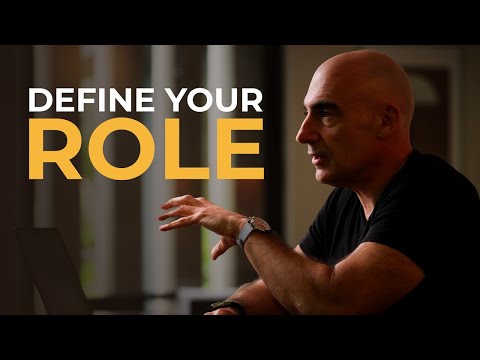
Defining Your Role, Equity Terms & Spotting Serious Buyers…
A Q&A with Paul Giannamore covering how sellers should define their post-sale role, title, compensation, and governance before signing, what to ask about rolling equity (cap tables, dilution, waterfalls), why a CEO title matters little without board control, how equity alignment can become manipulation without transparency, and how to distinguish serious buyers from tire-kickers. Key takeaway quoted: 'If you want to stay, structure it. If you want to go, price it.'
# Video Identity Observations
## Format & Presentation
- **Q&A format**: The video is structured around audience-submitted questions, answered directly by the host: *"Q&A with Paul Giannamore"* (title), with questions spanning role negotiation, equity terms, and buyer seriousness.
- **Host identity**: Signs off as *"I'm Paul Jammore [Giannamore] and I'll see you on the next one."*
- **YouTube-centered engagement**: Closing asks viewers to *"like and subscribe and feel free to leave a question below"* — questions for future Q&As appear to be sourced from YouTube comments.
## Intended Audience
- **Business owners/sellers considering PE deals**, demonstrated by the questions addressed: rolling equity, post-closing roles, board control, and cap tables.
- **Advisors/intermediaries**: One question explicitly comes from *"an attorney who said he's really enjoyed our videos"* asking how to spot serious buyers for his clients.
- Audience questions appear drawn from real viewer correspondence: *"I appreciate the comments on YouTube. I appreciate the messages that I get on LinkedIn."*
## Claimed Scope & Expertise
- **Positioning as experienced deal practitioner**: References first-hand deal experience — *"in my experience, private equity firms are super excited to say, 'Hey, this is the cap table...'"*
- **References prior content**: Mentions *"what I've discussed in the psychology behind selling a business"* — indicating a broader library of videos on selling businesses.
- **Practical, rule-of-thumb framing**: Offers heuristics like *"if you want to stay, you structure it. If you want to go, you price it"* — educational, advisory tone rather than promotional.
## Distinguishing Claims vs. Demonstrated Patterns
- **Creator claim**: PE firms are generally transparent — presented as personal experience, not verifiable fact.
- **Demonstrated pattern**: Content is advice-driven, jargon-aware (cap table, LOI, waterfall, veto rights), assuming viewers are at least somewhat familiar with M&A concepts.
# Delivery Observation Report — Paul Giannamore, Q&A Video
## Format & Teaching Habits
- **Direct Q&A restatement.** Opens each segment by reading or paraphrasing the viewer's question verbatim, then answers it: *"I've been dealing with a private equity firm that I really like, but I'm not sure I want a boss."*
- **Rule-of-thumb distillation.** Compresses advice into memorable maxims:
> *"If you want to stay, you structure it. If you want to go, you price it."*
- **Concrete hypotheticals over abstractions.** Uses the recurring "12-year-old niece with a crayon" image to make the LOI point vivid: *"I give my 12-year-old niece a crayon and a piece of paper and she could put together an LOI."*
- **Checklist-style instruction.** Delivers guidance as question lists: *"what's the cap table… what's the waterfall… will your equity be diluted by management?"*
## Recurring Vocabulary
- **"Roll / rolling equity"** — appears repeatedly as a throughline across the first three questions.
- **"Cap table"** — invoked twice as the central thing sellers must demand.
- **"Up front"** — used as a timing imperative for diligence: *"you need to ask these sorts of questions upfront."*
- **"Post closing / postclosing"** — frames consequences: *"you might find yourself in a position where you really don't like your life post closing."*
- **"Alignment"** — appears both as a deal term (*"align incentives"*) and a critique (*"alignment without total transparency is manipulation"*).
- **"Investment… time, money, and effort"** — repeated triple as the seriousness test for buyers.
## Tone & Communication Patterns
- **Blunt, declarative verdicts.** *"Your title means absolutely nothing, right?"* / *"It's a serious problem."*
- **Right-tagging.** Frequent *"right?"* as a conversational checkpoint (multiple instances: *"who controls the comp, who sits on the board, right?"*).
- **Either/or framing.** *"They're either hiding something or they're amateurs."* This binary diagnostic pattern appears in multiple answers.
- **Warm, audience-aware sign-off.** Shifts register at the end — thanks viewers, acknowledges YouTube comments and LinkedIn messages, asks for likes/subscriptions, and closes with the stable sign-off: *"I'm Paul Jammore [Giannamore] and I'll see you on the next one."*
## Stable vs. Isolated Observations
- **Likely stable** (multiple in-video repetitions): rule-of-thumb maxims, checklist questioning, "roll equity" terminology, blunt verdicts, right-tagging, the standard channel outro.
- **Single-instance / uncertain:** the "12-year-old niece" analogy and the "hiding something or amateurs" line appear only once here; whether they are habitual devices cannot be confirmed from this video alone.
## Transcription Caveats
The transcript contains apparent speech-to-text artifacts (*"Jammore"* for Giannamore, *"new code"* likely "new co," *"alawat"* likely "an LOI," *"rule equity"* for "roll equity"). Quotations above are exact to the transcript but may reflect transcription error rather than the speaker's actual words.
# Observation Record: Q&A with Paul Giannamore
**Video:** "Defining Your Role, Equity Terms & Spotting Serious Buyers"
**Speaker:** Paul Giannamore (self-identified in closing: "I'm Paul Jammore" [as transcribed])
---
## Topic 1: Defining Your Role When Selling to Private Equity
**Question context:** A seller likes a private equity firm but is unsure about wanting "a boss" and asks how to define their role.
### Claims and Reasoning
- **Timing of role definition:** Assuming no LOI has been signed, role, title, governance, and compensation should be worked out **before** the transaction.
- **Nature of the transaction:** Rolling equity means you're "not selling the business and staying on. You're entering into a **partnership**."
- **Buyer behavior expectation:** Most PE firms will raise role/comp/board structure themselves up front.
> "If they're not open with that sort of stuff, they're either hiding something or they're amateurs."
- **Consequence of not defining role now:** The seller "might find yourself in a position where you really don't like your life post closing."
---
## Topic 2: Vague Equity Roll Terms
**Question context:** A seller declined a deal last year because the firm asked for an equity roll to "align incentives," but terms were vague; asks what should have been expected.
### Claims and Reasoning
- **Core principle stated:**
> "Alignment without total transparency is manipulation to a certain degree."
- **Questions a seller should ask up front:**
- What does the cap table of the newco look like?
- What is the waterfall of proceeds at payout?
- Will your equity be diluted by management?
- What are the firm's future acquisition plans?
- **Qualifier offered:** Sellers often find terms vague simply because they're **not used to dealing with them** — vagueness isn't always bad faith.
- **Red flag:** A firm saying "don't worry, we'll take care of it, just roll 20%" is, per Giannamore, "a serious problem."
- **Counterbalancing observation:** In his experience, PE firms are typically "super excited" to share cap tables and dilution mechanics because "no one wants to have these sorts of problems postclosing."
---
## Topic 3: CEO Title Without Board Control
**Question context:** Same situation continued — the firm wanted the seller as CEO post-deal, but the seller wouldn't control the board.
### Claims and Reasoning
- **Title is meaningless as a control mechanism:**
> "Your title means absolutely nothing… a CEO under kind of standard board governance means the CEO reports to the board of directors and if the board of directors has hiring and firing decisions, they can fire you."
- **What actually matters:** Who controls the board, the budget, and compensation; who sits on the board; whether the seller has **veto rights**.
- **Assessment of the specific scenario:** Not controlling the board is "pretty standard," depending on the firm's equity stake. Giannamore infers this "sounds like a **control purchase**" where the firm controls the board numerically.
### Stated Rule of Thumb
> "If you want to stay, you structure it. If you want to go, you price it."
- **Structure it:** Focus on board governance, comp structure, and equity roll alignment.
- **Price it:** If not addressing those, price the deal assuming you'll be exiting.
---
## Topic 4: Spotting Serious vs. Time-Wasting Buyers
**Question context:** An attorney asks how to tell whether a buyer is serious or wasting time, citing clients' experiences.
### Claims and Reasoning
- **Framework referenced:** Giannamore ties this to his prior discussion of "the psychology behind selling a business" — specifically the **investment principle**.
- **Seriousness proxies (buyer investment of time, money, effort):**
- Have they flown in?
- Are they spending money on dinners?
- Are they hiring outside advisors?
- Have they put together a real LOI?
- **Illustrative analogy:** An LOI is trivially easy to produce — he says giving his 12-year-old niece a crayon and paper would suffice, since an LOI is a **non-binding offer**. But she wouldn't be "serious about a $50 million acquisition" nor "getting on a plane and wining and dining" a seller.
> "If they haven't spent money, they haven't really made a commitment."
---
## Closing
Giannamore thanks viewers for YouTube comments and LinkedIn messages, asks new viewers to like, subscribe, and leave questions, and signs off as "Paul Jammore" [as transcribed; title metadata reads "Paul Giannamore"].
---
## Notes on Tensions and Qualifications Preserved
- Giannamore both flags vague equity terms as a red flag ("serious problem") **and** cautions that vagueness may simply reflect seller inexperience — both qualifications retained as stated.
- He calls non-board-control "pretty standard" while simultaneously emphasizing that control questions (board, budget, comp, veto rights) are what sellers must scrutinize.
# Speaker Attribution and Provenance Record
**Video ID:** `01a168c6-f91e-75bf-a365-bb88a2123e41`
**Title:** *Defining Your Role, Equity Terms & Spotting Serious Buyers | Q&A with Paul Giannamore*
---
## 1. Speaker Identification
### 1.1 Primary Speaker
- **Name (per title):** Paul Giannamore
- **Name (per transcript closing):** "Paul Jammore." This differs from the title. It is likely a transcription variant, but the transcript does not confirm it. **Flag: identity spelling unverified.**
- **Role:** Host and answering speaker. Delivers the video's substantive commentary, answers viewer questions, and gives the closing remarks.
- **Expertise claims made by the speaker (self-described, not verified):**
- Has advised sellers in private equity transactions.
- Refers to "my experience" and to having dealt with private equity firms over time.
- Refers to a body of prior work on "the psychology behind selling a business."
### 1.2 Other Identified Persons
| Person | Role in Transcript | Speaking Status |
|---|---|---|
| Unnamed questioner (Q1) | Seller who has dealt with a private equity firm and is weighing role and title | Question is read or paraphrased by the host; questioner does not speak directly |
| Unnamed questioner (Q2) | Seller who previously declined a private equity deal over vague equity terms | Question is read or paraphrased by the host |
| Unnamed questioner (Q3) | Private equity counterparty who offered CEO title without board control (reported second-hand) | Not a speaker; reported within Q1's question |
| Unnamed questioner (Q4) | **An attorney** who says he has enjoyed the videos and has clients who dealt with time-wasting buyers | Question is read or paraphrased by the host |
| Host's niece (12 years old) | Hypothetical or illustrative figure | Not a speaker; referenced as an example |
---
## 2. Segment Structure and Speaker Attribution
### 2.1 Segment A: Role Definition (Questioner Q1)
- **Question as posed:** Asked how to define a role after dealing with a private equity firm the questioner "really like[s]," without wanting "a boss."
- **Host's commentary:** Addresses the timing of role, title, governance, and compensation discussions relative to a letter of intent. Gives an opinion that undisclosed terms indicate the buyer is "either hiding something or they're amateurs."
- **Host's stated framing:** "If you want to stay, you structure it. If you want to go, you price it." Recorded as the host's own rule of thumb.
### 2.2 Segment B: Equity Terms (Questioner Q2)
- **Question as posed:** Asked what to expect when asked to roll equity with vague terms.
- **Host's commentary:** Recommends requesting the capitalization table and the proceeds waterfall. Describes sellers' vagueness as partly due to unfamiliarity. Describes private equity firms as generally "super excited" to share such terms.
- **Hypothetical quoted by host:** A private equity firm saying, "Hey, don't worry... Just roll this equity, roll 20%." This is a **hypothetical**, not a documented statement from any firm.
### 2.3 Segment C: CEO Title Without Board Control (Questioner Q1, continued)
- **Question as posed:** A private equity firm proposed that the seller be CEO after closing but would not give the seller board control.
- **Host's commentary:** States that title "means absolutely nothing" and that CEO reports to the board. Gives his interpretation that the described deal "sounds like" a control purchase. This is the host's inference, not a fact established by the transcript.
### 2.4 Segment D: Buyer Seriousness (Questioner Q4, the attorney)
- **Question as posed:** How to tell whether a buyer is serious or wasting time. The questioner reports that clients have dealt with time-wasting buyers.
- **Host's commentary:** Proposes an "investment principle" framework: whether the buyer invests time, money, and effort (travel, dinners, outside advisers, substantive documentation).
- **Illustrative reference:** The host's niece, who could send a non-binding letter of intent with no commitment. Presented as an analogy.
- **Source reference:** The host attributes the framework to prior content on "the psychology behind selling a business." **No link, title, or timestamp is given in the transcript.**
---
## 3. Inventory of Referenced Sources and Provenance
### 3.1 Sources Explicitly Referenced
- **Prior content by the host:** "what I've discussed in the psychology behind selling a business." **Unlocated.** No title or date provided.
- **Host's own experience:** Referenced in the form "Last year, I was dealing with a private equity firm that I didn't move forward with." This is an anecdote, not a documented case. Also refers to "in my experience" and "over the years."
- **Viewer-submitted questions:** Multiple questions are presented as coming from viewers. Their identities are not disclosed beyond "an attorney" for Q4.
- **Attorney's client experiences:** Relayed second-hand through Q4. Not independently documented.
### 3.2 Third-Party Claims Within the Transcript
| Claim | Attributed To | Status |
|---|---|---|
| Private equity firms that are not open about terms are "hiding something or they're amateurs" | Host | Host's opinion |
| Private equity firms are "super excited" to share cap table information | Host | Host's generalization from experience |
| Sellers find terms vague "just because they're not used to dealing with them" | Host | Host's generalization |
| Buyer with a counterparty proposal of CEO title without board control | Q1 (second-hand) | Viewer's account, unverified |
| Attorney's clients dealt with "time waster" buyers | Q4 | Viewer's account, unverified |
| "Roll 20%" and "don't worry, we'll take care of it" | Hypothetical | Illustrative, not a documented statement |
### 3.3 Unidentified or Unverified Entities
- **"New Code":** Mentioned in the phrase "what's the cap table of new code look like." Whether this is a company name or a transcription artifact is **unclear**.
- **Dollar figure:** "$50 million acquisition" is used as a hypothetical deal size.
---
## 4. Promotional Segments
> **Promotional segment identified: closing call to action (final portion of transcript).**
- **Content:** Request to like and subscribe, invitation to leave questions in the comments, acknowledgment of YouTube comments and LinkedIn messages.
- **Speaker:** Paul Giannamore (per transcript, "Paul Jammore").
- **Nature:** Channel promotion and audience engagement. No product or sponsor is named in the transcript.
- **Sponsorship:** No sponsor disclosure or affiliate relationship appears in the transcript or supplied metadata.
No other promotional content, sponsorship, or affiliate disclosure is present in the transcript.
---
## 5. Availability and Limits of Evidence Channels
### 5.1 Comments
- **Supplied metadata:** None beyond title and transcript.
- **Transcript reference:** The host mentions "the comments on YouTube" and invites comments below the video.
- **Availability status:** **Not available in this record.** Comment content and count are unknown.
### 5.2 Other Metadata
- **Upload date, duration, and channel name:** Not supplied.
- **Full transcript quality:** Contains apparent transcription artifacts, including:
- "whole 9 yards" (likely idiom rendering)
- "rule equity" (likely "roll equity")
- "whining and dining" (likely "wining and dining")
- "alawat" (likely "LOI" or "letter of intent")
- "Paul Jammore" (possible name variant of "Giannamore")
- "postc closing" and "loo like" (rendering artifacts)
- **Implication:** Quotations in this record reflect the transcript as supplied, not verified original audio.
### 5.3 Unverifiable Elements
- The attorney's identity, the questioners' identities, and the existence of the described transactions cannot be confirmed from the source.
- The host's referenced prior content and "last year" anecdote are not linked or dated.
---
## 6. Summary of Provenance Status
- **Speaker identity:** Paul Giannamore (title); spelling variant in transcript flagged.
- **Speaker roles:** Host and sole substantive answering voice. Viewer questioners are not direct speakers.
- **Promotional content:** One closing call to action, flagged in Section 4.
- **Third-party claims:** Viewer-reported and hypothetical, unverified (Section 3.2).
- **Sources referenced:** Host's prior content (unlocated), host's experience (undocumented), and viewer anecdotes (unverified).
- **Comments and supplementary metadata:** Not available in this record.
I've been dealing with a private equity firm that I really like, but I'm not sure I want a boss. How do I define my role now? Now, I don't know where this individual is in the deal process. But,
um, assuming a letter of intent has not been signed, do you want to figure out role, title, governance, comps, whole 9 yards prior to the transaction? Like when you sell a business to private equity, typically if you're rolling equity, you're not selling the business and staying on. You're entering into a partnership. So most private equity firms are going to want to get that out of the way up front themselves. They're going to want to say, "Here's your role. Here's your comp. Here's the board structure." So on and so forth. Um, I always say if they're not open with that sort of stuff, they're either hiding something or they're amateurs. Um, but in this case, you might not necessarily be asking the right question. So, you need to define your role and you should define it right now and you should understand how much control you have over the board going forward because if you don't, you might find yourself in a position where you
really don't like your life post closing. Last year, I was dealing with a private equity firm that I didn't move forward with. I felt uncomfortable because they asked me to roll equity in order to
align incentives, but the terms were vague. What should I have expected? Well, you know, when you think about it, alignment without total transparency is manipulation to a certain degree. And I think what you have to ask for is the cap table. So, what's the cap table of new code look like? what's the waterfall of the proceeds going to look like when there's a payout? Um questions like, will your equity be diluted by management? Understanding what they're going to do from an acquisition perspective going forward, you really need to ask these sorts of questions upfront. Um often times I find that sellers find these terms to be vague just because
they're not used to dealing with them. Now, if you've got a private equity firm that's saying, "Hey, don't worry. will take care of it. Just roll this equity, roll 20%. You'll get paid. It's fine. It's a serious problem. But more times
than not, I mean, in my experience, private equity firms are super excited to say, "Hey, this is the cap table. This is what this looks like. This is how you would or wouldn't be diluted." They want to have that alignment because no one wants to have these sorts of problems postclosing. The continuation of that question was, "They said they would like for me to be CEO after the deal, but I won't control the board. Should I care?" Well, I mean, your title means absolutely nothing, right? So, just because you're CEO, you know, a CEO under kind of standard board governance means the CEO reports to the board of directors and if the board of directors has hiring and firing decisions, they can fire you. So you can be CEO. I think what you need to really
understand is who controls a board, who controls the budget, who controls the comp, who sits on the board, right? Do you have veto rights? There's a lot of things that go into understanding how much control you'll
have postc closing. Now, from earlier in your question, you said they wanted you to rule equity, but they were vague. Then they want you to stay on as CEO, but say you won't control the board. I would say that that's pretty standard that you're not going to control the board depending upon how much equity they're going to actually own in the business. To me, it sounds like this is a control purchase by a private equity firm, meaning they'll control the board numerically. Um, you know, a quick rule of thumb here is, you know, it's like if you want to stay, you structure it. If you want to go, you price it. Meaning, if you want to stay, you really need to think about board governance. You really need to think about this comp structure. you really need to think about the alignments with the role of equity, so on and so forth. And if you don't, you just price the deal to be out the door. This next question is from an attorney who said he's really enjoyed our videos.
And he said, "How do I tell if a buyer is really serious or just wasting time?" He goes on to talk about over the years, he's had a lot of clients that have dealt with buyers that just tend to be
time wasters. And for me, this goes back to what I've discussed in the psychology behind selling a business is the investment principle, right? Is a buyer investing? Have they flown in? Are they spending money on dinners? Are they hiring outside advisors? Have they put together real and loo like what sort of investment of time, money, and effort is a buyer doing? Because anyone, you know, I give my 12-year-old niece a crayon and a piece of paper and she could put together an LOI. She could take a picture of it on her iPhone, email it off to a seller and say, "Hey, here's an offer on your business." Right? I mean, that's how easy it is. It's a non-binding offer. Seriously. So,
but I wouldn't say she's particularly serious about a $50 million acquisition. Um, and I also don't see her getting on a plane and whining and dining at you. But if there is a sophisticated buyer or any buyer who is putting an offer down, spending money again, t flying in, flying out, flying you in, spending a lot of time, money, and effort. That effort shows that they're serious because people don't do that when they're not as serious. People do what my 12-year-old niece would do, which is take a picture of an alawat and send it off. So, I think those are pretty good proxies for whether or not they're serious. It's like if they haven't spent money, they haven't really made a commitment. Thank you for joining me today. I appreciate the comments on YouTube. I appreciate the messages that I get on LinkedIn. If you're new to the channel, please like and subscribe and feel free to leave a question below. I'm Paul Jammore and I'll see you on the next one. Heat. Heat.