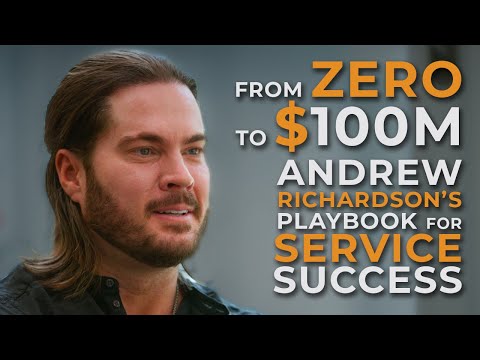
From Scrappy Startup to Industry Leader: Andrew…
Interview episode of "Off The Record" in which host Paul Giannamore talks with Andrew Richardson, founder of Saela Pest Control (formerly Edge Pest Control), about scaling a pest control business toward $100M. Topics include the reasoning and execution behind rebranding Edge to Saela, the meaning of the name, Richardson's start as a technician and path to business ownership, early customer acquisition and team building, the role of door-to-door sales, growth strategy and hiring senior executives, investing in education and personal development, culture and leadership, lessons from building proprietary software, market differentiation, talent assessment, and future growth plans.
# Channel Presentation Observations — Saela / Andrew Richardson Interview
## Video Format & Presentation
- **Interview format**: An extended one-on-one conversation between host **Paul** (who occasionally references "the crew" and traveling content) and guest Andrew Richardson, CEO/co-founder of Saela Pest Control, recorded in Puerto Rico.
> "Andrew it's been a long time... you sitting down here in Puerto Rico... glad you guys were able to share some knowledge with the crew."
- The host explicitly frames the purpose as extracting transferable lessons: "what I'm trying to get out of you today Andrew is... you've made some decisions that I see other folks struggle with."
## Claimed / Observable Scope
- The title frames the video around a **scaling narrative**: "From Scrappy Startup to Industry Leader: Andrew Richardson's Playbook for Scaling Saela to $100M."
- Subject-matter scope demonstrated by the transcript: **pest control / home services entrepreneurship**, covering branding/rebranding, hiring executives, executive education, culture, acquisitions, delegation, and growth strategy.
- Named industry players and companies referenced in discussion (Edge Pest Control, Rollins, Orkin, Aptive-adjacent figures like "David Roy," True Green, PCT Top 100, software vendors PestRoutes/FieldRoutes/Briostack/GorillaDesk) indicate deep **insider home-services industry context**.
## Intended Audience
- The demonstrated audience is **founders, CEOs, and operators of home services / door-to-door businesses**, evidenced by:
- Advice directed at "young CEOs that are growing their businesses."
- Frequent asides assuming audience familiarity: "for those that don't know what that is, [YPO] is a national network..." and "those who follow... markets... you know that was not a great time."
- Questions about what "smaller businesses that can't afford to spend a quarter of a million bucks sending a VP to Wharton" can do — explicitly addressing resource-constrained operators.
- Host's stated public commentary habit: "I talk about this publicly."
## Creator Self-Description Evidence
- **No explicit channel-level self-description** (no tagline, channel name, or mission statement) appears in the transcript itself.
- The host's role is implied rather than stated: he personally knows the guest ("I've got to know you guys over the last 5 years"), travels to film ("glad you guys were able to come down"), and positions himself as a peer interviewer within the door-to-door/home services space.
- No curated metadata was supplied, so identity context is limited to title and transcript.
## Demonstrated Presentation Patterns
- **Long-form, ad hoc conversational style** with digressions, humor, and casual banter (e.g., joking about Greg, "do we love Greg"), rather than a tightly structured script.
- **Recurring content theme observable**: extracting founder lessons via peer interviews; the host repeatedly summarizes guest answers into generalized business principles ("when you're doing something and it's not working out the most mature decision is to quit doing it").
- Tone is informal but substantive — mix of industry gossip, personal history, and operational business advice.
## Claims vs. Demonstrated — Distinction Notes
- **Guest claims** (attributed to Richardson, not the channel): revenue milestones (~$40sM at rebrand, ~$60M now, $100M goal), $12–15M software spend, culture curriculum, sponsoring executive MBAs. These are interviewee statements, not independently verified.
- **Channel-demonstrated facts**: access to high-profile industry operators, willingness to discuss competitor figures by name, and an audience assumed to understand pest-industry jargon ("non door-to-door door-to-door business," "PCT 100").
# Delivery Observation: Andrew Richardson — Saela Interview
## Overview
This is a two-person conversational interview. The interviewee (Andrew Richardson) is the primary subject of observation; the interviewer ("Paul") sets the structure. Delivery is casual, improvisational, and anecdote-driven.
---
## Tone
- **Conversational and warm.** Both speakers use informal fillers and asides: "right on," "brother," "yeah, no," "I mean."
- **Self-deprecating from the interviewee.** Richardson repeatedly downplays himself:
- > "I was an idiot I had a business degree from BYU great great school"
- > "I'm just a little crazy that's why I did that"
- **Playful teasing from the interviewer,** e.g., "is Greg hun clinically insane" — the interviewee plays along: "he might be a little bit insane but he's the good kind of insane."
## Recurring Phrases
### Interviewee (Richardson)
- **"At the end of the day"** — appears extremely frequently, functioning as a verbal pivot before conclusions. Examples:
- > "at the end of the day the reason why we did is because Edge was just used everywhere"
- > "at the end of day you just got to pull the Bandit off"
- > "at the end of the day if your if your colleagues and your employees are happy..."
- **"Honestly / to be honest with you"** — hedging and candor marker:
- > "to be totally honest with you"
- > "I don't think it's a good move for everybody to be honest with you"
- **Repeated intensifiers:** "just," "literally," "definitely," "really" appear throughout ("we were literally the only one to look at a p&l for the first 11 years").
- **Repetition for emphasis:** "constantly constantly constantly," "discipline discipline discipline," "push push push."
### Interviewer
- **"At the end of the day"** — also used by Paul, suggesting conversational mirroring.
- **Narrative framing and signposting:** "so you guys started to build out Denver how long did..." and "so then that leads me to my next question."
## Narrative & Teaching Habits
- **Story-first answering.** Richardson answers abstract questions with concrete anecdotes: the dead-mall story for 2008 fear, the "Bogo" first customer, Blaine pulling over to reschedule customers on his laptop.
- **Backward-chaining structure.** He often steps back before answering forward-looking questions: "I'm going like three steps back... so just humor me for a second."
- **Explicit frameworks/metaphors:**
- Business-as-child: "it's like a child right you've got the stage where they're newborns and they can't do anything for themselves"
- "bro math" vs. financial literacy: "so financial and P langage... versus bro maath"
- **Caveats before criticism.** He prefaces the PestMate failure story: "I want to be be very respectful and cautious with this because a lot of great and amazing people worked on the software."
- **Cliche-flagging.** He acknowledges his own clichés: "this is so cliche but it starts with what motivates them."
## Communication Patterns
- **Interrupting/overlapping speech** occurs frequently, typical of a familiar, rapport-heavy exchange.
- **Frequent qualification and uncertainty markers:** "I think," "probably," "I don't want to overstate here," "I'm probably getting this wrong it's probably more 37 years."
- **Concession loops.** Pattern of conceding tradeoffs rather than absolutes: "I don't think it's for everybody to be honest I think it depends on your your growth plans."
- **Listener check-ins:** "does that make sense" after the empathy/leadership point.
## Uncertainty Notes
- Timestamps exist in the transcript but the delivery features above are distributed across the whole interview; specific time-bound claims (e.g., pace changes) cannot be reliably observed from text alone.
- Tone indicators like laughter, pauses, or emphasis are only inferable from word choice, not directly observable — claims about warmth/playfulness rest on linguistic evidence only.
# Position Extraction: Andrew Richardson — Saela Pest Control Interview
## Speakers
- **Andrew Richardson** — Co-founder/CEO of Saela (formerly Edge Pest Control)
- **Paul** (interviewer, unnamed in transcript but addressed as "Paul") — Host
---
## 1. The Edge → Saela Rebrand
**Richardson's stated reasoning:**
- Wanted to switch the name ~5 years before actually doing it; called it a "big trigger to pull."
- **Core motive: name ownership** — "Edge" was used everywhere (Edge Lawn Care, Edge Motorsports, etc.) while expanding to many locations.
- "Saela" means **happiness in Old Norse**; goal is happiness for customers via world-class service and for colleagues via opportunity.
- Revenue at rebrand: **mid-$40 millions** ("just a little bit less than 50").
- Decision framing: "We can do it at 70 or 80, 100, or we can do it now... rip the Band-Aid off."
**Qualifications preserved:**
- "We didn't realize how good our brand was" from a brand-pull perspective — an admitted learning.
- The name is hard to spell/pronounce ("SE SE... Sally"); he accepts this as an investment.
- **Explicit caveat:** "I don't think it's a good move for everybody... it depends on your growth plans."
---
## 2. Career Origin and Startup Story
- 23 years in pest industry; **started as a technician** in Albuquerque, moved into sales, then ran a marketing program at another company (Preventive, under Kevin and Greg) for 7 years.
- Left with a 30-day notice in **September 2008** (Lehman Brothers era), calling it "a leap of faith."
- Lived in his father-in-law's basement ~6 months; built the first truck in their garage.
- Started in **Denver** with one truck, no funding, bootstrapped.
- First-year acquisition: ~1,400 accounts; second year: ~3,300–3,400.
- Early pricing mistake: **wildly underpriced commercial accounts** (~$75 for three hours).
- Blaine (co-founder, now CFO) joined ~7–8 months in; former Air Force Persian-Farsi airborne linguist. Richardson says Blaine succeeded on doors by being "super nice" — "he would just love people to death."
- Denver-only for two years: **"growing too fast is a mistake"** — then Austin and Kansas City, then moved corporate to Utah.
---
## 3. Hiring Mitch (Former Rollins Division President, 2019)
**Richardson's account:**
- Around 2018, at ~$30M revenue, looking "5 years into the future," he saw missing pieces and concluded **"I needed to uplevel; my team needed to uplevel as well."**
- Went back to school himself — **Wharton MBA** — to learn "the sophistication side of business"; self-deprecating: "I was an idiot" despite a BYU business degree.
- Mitch was planning to retire; Richardson called him. Mitch was "pretty skeptical" at first; Richardson "let him look under the covers" and made a good offer. Mitch came out of retirement; now **COO and President**.
- Emphasized **cultural fit**: "Sometimes people just look for skill... cultural fit, alignment... that is so important."
- Hiring Mitch let Blaine move to CFO and Richardson be "just a CEO."
**Paul's framing (interviewer position):** Other firms "dilly-dallied" while Richardson "went all in" and "scooped him up"; also suggests ego prevents many founders from hiring more experienced executives. Richardson responds that ego "has never really been an issue" — "I love seeing people fill a role and do way better than I did."
---
## 4. Biggest Mistake: PestPilot Software Commercialization
- Built proprietary software ("pest mate" per interviewer's term) — spent **minimum $12M, maybe up to $15M** over time.
- Attempted to sell it to other pest companies; realized "building a software that works well is very different than supporting customers on a software."
- Richardson spent ~1.5 years mostly on software while CEO of Edge; the pest business "started to stagnate," which hadn't happened before.
- **Decision: pulled back within a few months of selling customers** — "very embarrassing," but "in humility is where some of those lessons are found."
- Kept the software in-house ~7 more years; called the commercialization decision "probably one of the biggest failures in my business career," while noting the software itself "wasn't a business failure."
- Credits "good people around me" who were vocal in supporting the pullback decision.
- **Paul's aligned position:** ignore sunk costs; "what is the fastest point to get to here from where we are today."
---
## 5. Differentiation: Culture as Deliberate Process
- Culture is not "just the vibe" — Saela has a **culture curriculum** covering ownership, mentorship, ROI perspective, and a **"love-based mindset."**
- Logic: happy, growing employees "bleed into the customers"; ties back to "Saela means happiness."
- Says Mitch remarked he'd "never seen anything like this."
---
## 6. Executive Education Investment
- Company has sponsored **at least four people** (including Richardson) through executive MBA programs at elite schools — noted by Paul as unprecedented in his pest-industry experience.
- Motivation (2018, pre-Mitch): rapid growth caused people to plateau and "you would have to move on" — "I hate watching good people that you care about move on."
- Claims the investment pays dividends: employees feel cared for, work harder, and bring back **idea diversity** that counters groupthink ("so financial and P&L language versus bro math").
- Says he's doing it again — VP of Corporate Affairs started a 7–8 month Wharton program "literally last week."
- **Qualification:** "as long as they really take it seriously and want to do so."
- **Advice for smaller companies:** local schools, week-long topic trainings, evening executive MBAs — "you don't have to send them across the country... I'm just a little crazy that's why I did that."
- **EQ argument:** high leadership requires high EQ; mixing with people from varied backgrounds builds empathy, which connects leaders to a workforce "from all walks of life."
---
## 7. Talent Assessment and Recruiting
**What he looks for:**
- Motivation and **how candidates treat people** — waiters, flight attendants, receptionists — "most people are really good at selling themselves; watch the little interactions."
- Empathy + kindness **coupled with** success and experience.
- Takes senior candidates **and their spouse to dinner**, watches interactions; gives office tours and observes how they treat non-executive staff. Admits: "I haven't been right all the time."
**Always recruiting:**
- "Wherever I am... I'm always looking" for synergies — met Mitch in 2016, years before hiring him; the prior relationship raised the hire's success rate.
- **Employee referrals** produce the best employees — they stay longer and are happier.
---
## 8. Growth Strategy Going Forward
- Business-as-child metaphor: after ~13–14 years of steep growth (some years 40%; "20% was just hum drum"), Saela has **transitioned to 8–10% annual organic growth** deliberately.
- **"Revenue is not the solution — it's solid revenue growth [and] profitability."**
- Stepped back from day-to-day in September, promoting Mitch to President, because Richardson is "a hard driver" who would otherwise push growth that hurts the core business.
- Goal: **eclipse $100M** — "not just in Revenue growth but in solid foundational Revenue growth."
- **Acquisitions:** only a few very small ones (sub-$500K) historically, because "we didn't know what we were doing enough to pay that kind of money and then have an ROI that was appropriate." Now open to it — Mitch "has done literally hundreds of acquisitions."
- Declines to chase revenue into new verticals prematurely (e.g., delayed entry into mosquito) to protect profitability, customer service, and service efficiencies.
**Interviewer contrast (Paul):** cites Ben Morgan wanting to be fastest onto the PCT 100 without thinking profitability; positions Saela as favoring profitable organic growth over geography/revenue-at-all-costs.
---
## 9. Delegation Journey
- Admits: for the first **11 years, he was the only one who looked at a P&L** — "That's not good."
- Inflection point ~2018: in back-to-back meetings 10–12 hours/day directing everyone; realized it was "absolutely not sustainable" and people couldn't grow.
- Outside advisors (not internal team) suggested delegating; "it took me a while to actually listen."
- Delegation initially caused "a little bit of a dip" — the temptation is to reclaim it, but "you have to let people develop... go the distance... especially if you trust them."
- Result: revenue went from ~$30M to $60M in 4 years; he retains 7 direct reports and is "still trying to figure out" his reduced role — "I like to run hard."
---
## 10. YPO and Focus
- Joined YPO ~a year ago; self-describes as "an introvert by heart" fascinated by people; "learning has to be constant — otherwise you just get dumber."
- Resists shiny objects: "I'm pretty focused... it's so important to focus on where the value building really happens."
**Paul's contributed anecdote:** A YPO dinner friend with 350 employees said the hardest first-10-year challenge was realizing someone could be better than him at every specific thing.
---
## 11. Closing Advice to Young CEOs
1. **Be the visionary — think 5 years out**: "What does your business smell like, look like, taste like, feel like" — org structure, revenue marks, profitability — then base today's decisions on that vision; roll it forward annually.
2. **"Discipline, discipline, discipline"**: once the plan is set, don't deviate day-to-day; reassess only when something big enough warrants it.
- When asked if he struggled with this: "That was not my struggle... I watched people around me all the time struggle with that and I saw the fruits of it."
# Speaker Attribution & Provenance Record
## Video
- **Title:** From Scrappy Startup to Industry Leader: Andrew Richardson's Playbook for Scaling Saela to $100M
- **Video ID:** `01a168c8-9007-7393-aa38-8f607f7da69b`
## Speakers & Roles
### Primary Speakers
| Speaker | Role | Evidence |
|---|---|---|
| **Andrew Richardson** | **Guest / Interviewee** — co-founder & CEO of Saela (formerly Edge Pest Control) | Discusses founding the company, career history, current CEO role; addresses interviewer as "Paul" |
| **Paul** (full surname not stated in transcript) | **Interviewer / Host / Creator-side speaker** — referred to by name by Andrew at close ("absolutely Paul thank you") | Conducts the interview, asks questions, references his own prior conversations and public commentary |
### Speakers Referenced (Not Directly Speaking)
- **Blaine** — Co-founder figure; former Air Force Persian Farsi linguist; moved from operations to **CFO** at Saela (per Andrew's account)
- **Mitch** — **COO and President** of Saela (promoted to president in September, per Andrew); formerly division president at **Rollins/Orkin** and ~17 years at **TrueGreen** (TrueGreen tenure attributed to the interviewer's statement)
- **Daniel**, **Jeff Ward** — Saela leaders mentioned (Jeff Ward runs operations under Mitch, per Andrew)
- **Kevin and Greg** ("preventive" — likely Preventive Pest Control) — Andrew's former employers, praised by name
- **Ben Morgan** — founder of Anthem; quoted secondhand by the interviewer from a conversation "earlier today"
- **David Roy** — mentioned by interviewer as a business builder he regards "publicly" as brilliant; not speaking
## Interview Format & Setting
- Two-person **on-location interview**, conducted in **Puerto Rico** (stated in the opening exchange)
- Host frame: "what Blaine, Mitch and the whole team have done over at Saela" — the host speaks from industry-insider familiarity
## Referenced Sources & Third-Party Claims
- **Saela name origin:** "happiness in Old Norse" (per Andrew)
- **Rebrand timing:** Edge Pest Control → Saela; rebrand occurred at roughly mid-$40M revenue (Andrew's recollection)
- **Company history claims** (all from Andrew): founded summer/September 2008 in Denver; first-year ~1,400 accounts; second-year ~3,300–3,400 accounts; PestMate software investment "minimum $12 million, maybe up to $15 million"
- **Educational credentials:** Andrew holds an undergrad business degree from **BYU** and an **MBA from Wharton (UPenn)**; company sponsored four or more executives through executive MBA programs (interviewer's framing; Andrew confirms the practice)
- **Named third-party organizations:** Rollins/Orkin, TrueGreen, YPO, Wharton/UPenn, BYU, PCT Top 100, software competitors (PestRoutes, FieldRoutes, Briostack, GorillaDesk — some named by interviewer, some by Andrew)
- **Historical events referenced:** 2008 financial crisis, Lehman Brothers bankruptcy, George Bush addresses
## Promotional Segments
- **None identified.** No product promotions, sponsorships, or calls to action appear in the transcript. (Note: the discussion of Saela's own culture, programs, and services is interview content, not flagged promotion.)
## Comment Availability
- **Not stated.** No transcript or metadata information regarding comment availability.
## Uncertainty Notes
- Interviewer's surname is not stated; identified only as "Paul."
- Titles and tenure figures for non-speaking parties (e.g., Mitch's years at TrueGreen, Rollins division size) come from the speakers' recollections and may be approximate; Andrew himself flags "37 years" experience as "probably getting this wrong."
Andrew it's been a long time in the Mak and you sitting down here in Puerto Rico yes it has I'm glad you guys were able to come down glad you guys were able to sh share some knowledge with uh with the crew what you Blain Mitch and the whole team have done over at sa has been fantastic um thank you I watched you get the same questions over and over and the primary question you always get is why not Edge like Andrew I thought
you were ran a called Edge y y and and I've heard you have to explain it to everyone a million times so we might as well start out today's discussion by talking about that you started this
business and it was Edge pest control that's right so about two years ago everyone said oh these guys rebranded they must be selling which was clearly not the case you guys are still tearing it up over there but what was the thought process behind that I mean truth be told I we wanted to switch the name probably 5 years ago but it's always hard to pull the trigger that's a big trigger to pull right bigger than we thought actually in hindsight at the end of the day the reason why we did is because Edge was just used everywhere I mean from Edge Lawn Care to Edge Landscaping to Edge this Motorsports like whatever it was and we wanted to really own the name we were growing a lot of locations across the country and at the end of the day it was about name ownership and so that's why we switched
and salor means it means uh happiness in Old Norse mhm and the goal for us and I think most people in this people business is to bring happiness to customers by world class service
happiness to to colleagues uh by supporting and giving them opportunities so the end of the day that's why we that's why we switched but it was interesting we didn't realize how good our brand was uh we thought we knew it was good we didn't realize how good it was from a brand pole perspective and so there was some learnings there but you know we're glad we did it it's it's been a good it's been a good journey we're back to where we were as far as brand pole and good on and just forward from here we I guess you switch from a very easy to spell word yeah sa's not like sometimes it's hard to I mean I hear CA SE I hear SE SE I heard Sally S I haven't heard yet until today so it's first uh but yeah no we hear various things um it takes time for for a brand to and the name even to stick and and we knew that going in and we accepted that um it's an investment I don't think I don't think it's a good move for everybody to be honest with you I think it depends on your your growth plans how long you're you're planning on um you know running a business but but at the end of the day uh we're glad we did it and you guys were at roughly 50 million or so in Revenue at the time you changed it maybe you guys were even bigger I don't remember yeah no it was it was actually just a little bit less than 50 not much probably in the 40s mid 40s or so um and the question was listen we can do it we can do it at 70 or 80 100 or we can do it now and let's just rip the Band-Aid off and do it now we contemplated like I told you doing it 3 years prior um but at the end of day you just got to pull the Bandit off if it's what you want to do I don't think it's for everybody to be honest I think you need to really think about that before you do it so you guys are somewhat known in the market as like the non Door to Door Door to Door business right cor you do you utilize door door but that's become less and less important to your overall growth story yes so if we take a scroll down memory lane though how you got your start is actually selling on the doors
yeah well actually the first start hadn't pest I've been in the pest industry 23 years a little bit of time not compared to some people but you know yeah um and I started out as a technician
actually so I started out in a truck servicing and then uh I ended up evolving and moving into CES and then I ran uh the marketing program for another company I was with that company for seven years and so I really have my my initial entrance into the industry is in a truck with customers servicing taking care of pests take care of problems and I think I mean you you mentioned we're a non-d door to-door company that does some door to-door I think that frankly was a part of the reason cuz I started in a truck with servicing in operations and that's that's really the meat of any business in my opinion it's really strange for somebody especially who grew up out in Utah M to actually start as a
technician how did that happen I was in Albuquerque okay so I wasn't in Utah I was in Albuquerque and uh one of the guys was I knew him and he said do you
want a job and I said sure what is this you know you don't go up wanting to kill bugs well some people do but very few but got in it and so glad that that he you know offered me that job great great industry but that's that's how I got started in it you did that for seven years Y and then what made you make the jump so the company I worked with was fantastic I mean it's it was prevented Kevin and Greg shout out to those guys those guys are awesome uh at the end of the day uh I just I I wanted to grow expand and do some things and they had buil a great business we're doing really well and uh so it just kind of led to me led to me leaving and and starting a company I never really wanted to start a company but just kind of went there right is Greg hun clinically insane he might be a little bit insane but he's the good kind of insane he's the fun kind of insane do we love Greg I can always tell somebody's mental instability by how close they are to the Mexican and Greg and the Mexican have always been like this and it makes me like Greg you must have problems if you're if you're listening Greg I know he's a fun guy he's a great guy everybody knows him loves him Kevin's like super smart just just great guys okay so you rolling with those guys it was just time for you to do something so would what was your jump off point at you know where did you go from there so a little crazy it was um I decided to move on I think it was the summer or the end of the summer in 2008 and those who follow you know markets in any way or economy you know that that was any anyone who was alive you knew that that was not a great time I think I gave my my 30-day notice in September I think that's when uh Leman Brothers went bankrupt around there George Bush was definitely on doing National dresses in September 2008 talking about saving the financial system and all that it was saying and I remember my what's funny is I remember my father-in-law being like Oh gosh I'm going have to support this guy and and and my daughter and and uh
they were great we we actually lived in a basement for 6 months while we were figuring things out and getting the pest control company started Built My put my first truck together in their garage so um it was a definitely a leap of faith
but it was I'm obviously so glad I did it and this industry is so resistant to downturns that I didn't know that at the time but thank goodness yeah you know ended up that way okay so 2008 where did you where did you started at Colorado okay I went to Denver I went to Denver and um it was I got to tell you this one quick story really quick tell tell me so I remember going to uh we ended up I ended up going to a mall looking for a part right I don't know why it was in a mall but was some electrical part and I walk in this mall and literally half of the stores were gated and closed and I was like like dang I'm screwed because I was like it's going to be a disaster I didn't find out until 5 years ago that mall was already dead and so but I but that was definitely a wakeup moment yeah and I just got into Denver um and I thought what the hell am I doing and starting a business in this climate but were you like a solo operator at that point in time was it just you so it was uh I had one guy um that was there for a little bit at the beginning uh but we it was just one truck no funding um just this bootstrapped just making it happen how'd you get business hit the doors so you that's what I knew but you had never knocked doors you I mean you I had so I had knocked doors for a little bit okay uh you had a little bit of exp I had a little bit of experience yeah knocked doors and um I
remember the first customer's name was BOGO but it's an easy name to remember cuz it's very random but um no just just hit the doors went and uh sold
commercial accounts where we could didn't price them right at all no idea uh I'm guessing that wasn't overpriced it was wildly underpriced we're talking like $75 for three hours of work yeah it was it was wildly Enterprise but didn't know you know and you just you just learn and learn and grow and I think the first year we put on we put on 1,400 accounts just to recruit a little small team mhm and then the next year the second year uh we kind of blew it out on like 3400 accounts I think or 3,300 accounts in the next summer who was recruiting for you I did you so you were doing recruiting you were managing the business we also doing P control services I did a little bit of that uh Blaine took a lot of that on at that point Blaine came on in April so about 7even eight months after it was started and then uh so I was CEO CFO and then recruited the team and and uh yeah it was it was all hands- on debt has bla ever sold on the doors he did okay so he sold for me when I was with the other company preventive One Summer a few years before I left and then we would that summer we would go out and service get the services done and then at night we would go and knock and put on accounts and whoever sold the first one would the other one would come service so he he has definitely some experience there how was old Bland on the doors he's not bad he's he's let's put it this way I believe in being nice and respectful obviously but he's way nice yes like super super nice so he actually did well because he would just love people to death and that's why they would buy from him but they're pinching his cheeks he's cute kid pinch in his cheeks giv him a good game you know but but it was uh no he did well he did well I remember one time he was it was we just started was May he's servicing like crazy he's taking care of customers with his lap he pulled over he didn't do it while he was driving pulled over he's Tak care of customers his laptop rescheduling uh and he comes to me he's like hey man I can't I can't I I can't do this not he didn't want to quit but he's like I've got too much going on and I'm like well figure it out and so he figured it out and uh he he found another three or four levels and just it's amazing what that guy has done and he came on within the first year of you being out on your own what made him jump he was in the Air Force he was a Persian farsy linguist Airborne linguist and um search some time overseas as well and he just I think at the end of the day he just he trusted me and knew that I would do whatever it took to be successful and he was in the
same mind and so he's just like let's do it okay let's do it so you guys started to build out Denver how long did bla and
you work in Denver we were there two years okay so we just had Denver for the first two years uh I I think growing too fast is a bad is a mistake so we didn't grow the second year and then the third year we opened up Austin and we opened up Kansas City and right after that summer the first summer we moved back to Utah and that's where corporate is currently but Denver's Denver is incredible I love that place we enjoy our time there yeah it's a it's a great place you and I can clearly talk for for hours and hours but what I'm trying to get out of you today Andrew is you've built a phenomenal team you've built a great business and I think you've made some decisions that I see other folks struggle with particularly guys who build door to-door businesses and so what I mean by that is you went out in 2019 and you hired a former division president from Rollins who ran rollins' large orin's largest division at the time the Pacific that was a an expensive decision for you to go out and get him Super High Caliber guy could have gone anywhere um but you brought him on board at sa and and I've seen a lot of bigger companies I mean I talk about this publicly I think even know I think David Roy is a brilliant guy I think he's made some he's built some phenomenal businesses y I think even even he has I think if David were sitting here he would say you know historically maybe I should have gone back and gotten some high-powered Executives in the service business to really help grow the business so how' that happened that's a great question uh in 2000 let's go back one year y prior to that um decision so one year prior I think we were doing close to 30 million and we had a great
team uh doing good things great things but I started to see cuz I I try to look 5 years in the future at all times it's not easy but I but I try to do that and I could see that we were missing
some pieces right and and it wasn't just getting people it was I needed to uplevel my team needed to up level as well so I made the decision to go back to school right and when I did that and what do you mean by go back to school so I went I have my undergrad I have my undergrad in business already mhm but I I went back to Wharton at upen want to get my MBA and uh why because at the end of the day I knew how to start a business be Scrappy just figure it out I wanted to understand and learn more about the sophistication side of business I was an idiot I had a business degree from BYU great great school y but there's just so much more to learn I think you have to keep doing that right especially if you want to grow and you want to have a solid Sound business M so made that decision and at the same time like we need to get somebody in here that's been where we're headed right that knows how to avoid some of the roadblocks avoid some of the pitfalls uh and so I had a list of people right mhm um Mitch was at the top and come to find out he had actually and I found this out later he had actually uh asked he was going to retire he was tired of traveling he traveled his whole career all week long he's going to move back to Oregon and just kind of do his thing and uh when I heard that I was like I'm going to give him a call Y right so gave him a call and and had great conversations I think I think at the first Mitch was pretty skeptical right uh but at the end of the day he I I let him look under the covers see everything and you know we definitely made him a good offer uh but at the same time I think he really liked what he saw and he saw opportunity and potential to build and so enough so that it it brought him back from out of retirement mhm and uh it was one of the best decisions I ever made one of the best I mean Mitch is probably not he's one of my best friends without question um just a good salous guy he fit culturally I think that was important yeah sometimes people just look for skill experience cultural fit alignment I can't tell you how important that is it's better on the same pays and the right pays most of the time yeah I I remember the day Mitch left work and I know that he was somewhat frustrated by the fact that he was forced to live in Atlanta but his division was on the west coast so he was living on a plane he loves the mountains and nature really wanted to move to Utah ski and whatever
hunt whatever else you guys do out there um and I think it was a perfect opportunity with you guys a young relatively young growing organization
that wasn't as stodgy in old school as Orin allowed him to live there and I remember when he left Orin you weren't the only one trying to recruit him yeah there were some other firms and I think that they kind of Dilly deled a minute too long you made a quick you know what I appreciate about you is you made the decision to do it and kind of went all in you didn't Dilly Deli you scooped him right up and so since what the middle I guess it was around August September late 2019 he came on and he's been there since and now he's your Chief Operating Officer is that right so he's yeah Co and president okay so he runs the dayto day and uh he's I mean as you said he ran the largest division I think in Rollins at the at the time mhm that he was going to retire and and uh he's just so good what he does he's very he's an operator that's very SSM minded as well mhm uh but not he doesn't let the Tail Wag the Dog right operations is the most important service Ser world class service is the most important but at the same time he definitely believes in sales and so it was I just loved how how Progressive he was and what he did you know what's interesting about um Mitch is he is I mean he has 37 I'm probably getting this wrong it's probably more 37 years of experience yeah you will not find the guy who is more humble and I don't want to say teachable cuz I don't know they taught him a lot but at the end of the day open-minded while still being very confident in what he does and knows what he does so just just an incredible individual and incredible fit I it's been a fantastic decision and it allowed Blaine was running operations did a great job mhm it started to get big enough where it kind of surpassed our expertise as a whole M and it allowed Blaine to move into the CFO role I was able to be just a CEO uh so I allow people also to kind of be in their spots where they should be you know the interesting thing about you and Blaine versus Mitch I mean you know if I remember correctly Mitch was at True Green for like 17 years or something at some point in time right so he he's been with Big Brand big culprits he's moved all over the country he's been in a variety of different roles he's had a lot of mentors that he's worked directly with that have been in the industry far longer than he had you and Blaine were super young and literally had Z you had zero corporate experience you worked for a pest control business that's all you knew but still you guys were able to take the business pretty far I mean I I do think you demonstrate a high degree of maturity when you can say hey I need to level up I'm going to go get an MBA I'm going to associate myself with other folks who are running big businesses I'm going to
I'm going to bet the ranch on a guy like Mitch who's going to be able to take us to the next level I think from an ego perspective sometimes people aren't able to do that they're not able to take a step back and say okay I'm going to put
somebody in here who's far more experien than me and better and better in a lot of ways yeah yeah absolutely I think the that's never really been a an issue for me to be honest with you um I love seeing people fill a roll and do way better than I did I act I genuinely enjoy it my only claim to fame is hopefully I can bring some good people on and I'm fairly disciplined so other than that get good people around you and let them do their thing and uh that's I I find a lot of joy in that to be honest you clearly have a knack for bringing SHP people on board um I've got to know you guys over the last 5 years or so and I love to hear some of your Dees as you guys are traveling around that pest World about you've got a lot of crazy ideas and it seems like your team's always like Andrew there's a little bit of that down brother there's a little bit of that so you really have been much of the the Visionary behind this you're attempting to think five years out in the future and what's this organization going to look like and that's I think a classic part of the entrepreneur which is like okay you've got the vision what's it going to look like but you also need people to help you in the here and now get to that point clearly been able to attract those sorts of folks you know what do you think have been some of your greater mistakes over the years learning experiences I mean they become learning experiences if you actually Lear them yes you left them so so how have you learned uh often times it's through failure obviously um one one big one that comes to mind is and this this was an amazing thing at the same time so and and I want to be be very respectful and cautious with this because a lot of great and amazing people worked on the software that we built proprietary and they did a fantastic job I mean just salt to the Earth people that did just such a good job uh one of the bigger mistakes that we made I think was trying to take that to the market and sell to other pest companies so hold up a p you guys how you developed a software called pest mate correct and you decide I guess when you started working on it you know pest R certainly didn't exist and if it even existed it was not it was not anything like it is today Surf Site let's be honest that sucked pest routes or pest pack was more of a commercial businesses so I I recognize the fact that there you could have said there's a
need for this there there was a need at the time yeah there there definitely was a need I mean there was in fact I think there was a glaring need and you've got companies like uh pest now field routes and Brio stack and others and I think
Grilla desk has done done well um and there's others I'm not probably not naming but there was a need at the time and our product was actually quite good it was really good we built it to how what we wanted and how we wanted to run right and we didn't realize as you get other customers they obviously want to run differently yep and so you start adding on things and it it started to become uh I very quickly realized that building a software that works well is very different than supp reporting customers on a software mhm uh I moved I think I moved I was still CEO of of Edge at the time but I then was most of my time was on the software for like a year year and a half and the uh the pest control company kind of started to stagnate which we hadn't seen before and I had to make a decision I was like okay this is way more complex than I I anticipated it's going to cost us millions and millions probably tens of millions more uh I got to make a decision and So within I think it was within a few months of selling a bunch of customers on pest mate we ended up pulling back and it was very embarrassing to be totally honest with you uh but I think in humility as where where some of those lessons are found and we ended up refocusing on Pest Control best decision ever you know and then we kept pest mate inhouse for another 7 years I think it was what it was we probably SP spent I don't want to overstate here but at the minimum 12 million maybe up to 15 million in building that software that's one of those situations while it was amazing I think we would have been better served by using those resources not just the money yeah time energy Talent y uh in other ways and I think it probably would have served us better so that's that's probably one of the biggest again the softer wasn't a business failure but that decision was probably one of the biggest I would say failures uh in my business career well I mean look at the end of the day when you're doing something and it's not working out the most mature decision is to quit doing it as opposed to just continuing to power through year over year over year and try to force something yes it's all good and well to talk about oh you shouldn't let sunk cost affect your forward decision- making but when you're looking at it and you spent millions in time and energy it's truly saying okay what is the fastest point to get to here from where we are today ignoring all the stuff that's been done cuz that doesn't matter anymore mhm what matters is what's the fastest and most effective way to get from here to here where you are today right and and uh I think you just have to be honest with yourself and not let that get in the way it's it's very very difficult but necessary yeah right thank goodness I had good people around me as well that that very much were in support and were vocal uh in in great ways that that helped with that decision how have you differentiated sa from other competitors in the marketplace first of all there's a ton of good competitors colleagues out there pest industry is incredible that's why I've been here for 23 years I I think some of the ways that we try to differentiate ourselves internally is um cultural piece so for a lot of people culture is
just kind of the vibe of the office and the vibe of your company for me I think it has to be a deliberate process so we have we have a culture curriculum that we've developed where
you know it talks about just how to own ownership mentorship Roi perspective um trying to do things from a love-based mindset place and I think because at the end of the day if your if your colleagues and your employees are happy and they're learning and they're growing that's going to bleed into the customers right uh and and sa means happiness and our goal is to do that and so I think culture is imperative that is one of the things that Mitch really really liked yeah when he came he's like this is I've never seen anything like this this deliberate process uh way of disseminating and growing culture you know one other thing that one thing that struck me as an outsider that I've never ever ever seen in a pest control business before is that including yourself it the company sent at least four people to get an executive NBA yes at like an IB League school yeah i' never seen that I mean I've seen people get executive NBAs but not companies sponsored were taking this serious I understand why you did it for yourself but what was your thought process behind bring getting the the executive team involved in that I understood because growth has been fairly rapid uh I I would see that's a great question Paul um I would see people if the company is going like this I would see people kind of plateau or not grow as quickly and so they wouldn't work right and you would have to move on mhm I hate watching good people that you care about move on like I genuinely hate it and so one of the decisons back in 2018 before I even talked to Mitch was I need to make sure that the people that are here and those that want to that they are not left behind inadvertently because they're not progressing and to me that's worth any investment ever not just because of how it helps the business because you genuinely care for these people and their success and their future and so to me that's an investment that I would do tenfold and I would and I will keep doing it I am doing it right now again so I think helping to develop and and assist your people in developing is an investment that will be well worth uh whatever amount of money that you spend shouldn't say whatever but smart but those as you know those places are not cheap no they're not uh so in terms of money but as well as time time no time and travel etc etc so invest in your people I think is the best thing you can do as long as they really take it seriously and want to do so and these individuals did and so I made the investment uh I haven't even had a second thought about the investment it's been fantastic so you folks will continue to do that as the management team grows absolutely no question in fact literally last week my my uh VP of of corporate Affairs he has he head it to Wharton for for a program that's like
I think seven or eight months I think that's so important to do and they they love it yeah they feel appreciated they feel cared for like okay this guy just
actually cares about my progress My Success my happiness and they work harder they're more bought in it's just good things out of curiosity I mean now that you've had a variety of people go through serious programs at these schools are you noticing differences in their critical thinking motivation the whole nine yards absolutely so a lot of these people they their careers were with me right so grew up together not not literally grew up together but in business yeah grew up together and that can cause a lot of group think and it has been so good for them to go learn things nothing to do with me or anything or our company MH mingle with people that are smarter than we are frankly uh and it is definitely brought back A diversity uh Idea Idea diversity it's been it's been awesome we speak Financial language versus so financial and P langage Bro maath yes versus bro maath I speak exactly right so it's it's been such a good thing overall so again that's that's a good point it's not just about investing in people M the dividends for the business have been fantastic when you have more people really truly understanding a p&l and understanding how a business runs and what the opportunities are MH I mean the ideas that come out of that and the pressure test yeah that comes out of that is is invaluable you know uh it when you think about it you know a business your size doesn't have the same resources as your Rollins or run a kill you can't have all these internal universities and bring all this training Management training and so doing that I think is important but when you start to think about you know the guys that have smaller businesses that can't afford to spend a quarter of a million bucks sending a BP to Wharton for example what are some alternative things younger growing companies can do to further educate managers because the one of the issues that I always had with a lot of Home Services businesses that folks and you and I talk about this all the time folks are always focused on technical skills like identify this bug or kill that bug this way and there's so much thought poured into the entomology of something whereas we're not really grooming managers correct so you know how can smaller guys out there synthetically create what you've created here there I think it's hard to synthetically create it I think but there are there's so many good schools at the local level mhm you you don't have to send them across the country or to a different state to school that's not necessary I'm just a little crazy that's why I did that but there's so many Local Schools wherever you may be that will offer even week-long like topic or subject based trainings and and just on p&l management or marketing or there's so many options out there nowadays there's even executive mbas where you can do it in the evenings and local yeah so there's so many opportunities I don't think and from a cost perspective yes it's not cheap far more reasonable when you stay local and I think that's well worth the time
and the energy one one point I want to make on this is and this is one of my major reasons why I did it is I think high level of leadership requires high
level of EQ emotional uh intelligence right so when you go to these other locations and you're not just with the people you work with you have to deal and work with and understand people from various backgrounds uh sometimes various origins of even country right and it creates empathy and empathy I think is a key to successful leadership at a high level at any level but especially at a high level and especially as you're growing people you're bringing in are going to be from all walks of life Y and they're all amazing and really being empathetic and understanding that helps you to lead those people and helps you to help them follow the vision because you can connect does that make sense perfect sense so then that leads me to my next question when you're assessing talent to bring into your organization what have you learned over 20 years and how to sus out good people how to attract and retain them talk a little bit about that yeah well there's been a lot of mistakes um but I would say for the most part we've been fairly successful at at that piece uh that's one thing I actually do pretty well not many others but that one I do okay I think it starts with and this is so cliche but it starts with what motivates them and you see how they interact with people just in simple like you go to a restaurant you see how they interact with the waitress or the waiter or how they interact with the flight attendant just little things where there's respect for people yeah and genu genuine care there's a lot of people with skills out there or talk the skill game y when there's empathy and there's kindness coupled with success and experience that's really what that's really what I try to look for it's in the little things it's not what they tell you yeah most people are really good at selling themselves watch the little interactions how do they interact with your with the secretary how do they interact with the people in the office when they come in to to chat with you to me I think those are windows where you can see okay what's it really going to be like to work with this this individual and how are they going to work with people that aren't at the same um hierarchy in the business not as human beings but in the business so how do you do that Andrew how do you watch these sorts of interactions depending on the uh I mean not every employee right but when you're bringing somebody in upper management level something like that or someone that is going to have significant impact on your business M um I will invariably take them and their spouse if they have
a spouse to dinner and I I I'm a detail guy so I watch the interactions between those two and then I'll watch the interaction between the weight staff
and them and how that interaction is yeah I'll take him on a tour of the office and I'm definitely I'm introducing them to people and I'm watching the interaction and how that goes uh and there's a difference between Hi how are you and and like you can tell if there's some genuine care you can kind of see it in the eyes a little bit as well so just little things uh that that I do and again I haven't been right all the time but but it's it's definitely helped and it's helping be right more than more than not I think there's also an importance to I'm always looking for people you're always recruiting wherever I am whoever I'm talking to I'm always thinking okay is there a Synergy here is there an opportunity here it doesn't matter and I think having some of those relationships at least started before m is really important in that process it helps your success rate in in those hires actually working go up tremendously so you go to the supermarket and the guy that's helped carrying your bags out to the car he like an awesome genuine dude even that even that I'll go to anywhere I go I'm always I'm always looking and and thinking about synergies and where's there is there potential here is they not and like for example even a guy like Mitch I met him in 2016 and he was just a genuine good-hearted guy but I'm I'm even then I'm always looking did I think in a Million years that would happened not really yeah but at the end of the day that definitely crossed my mind at that point yeah and then the opportunity came and I was like let's yeah let's do it yeah because you had met Mitch years before that developed a relationship with him knew he was an awesome performer knew he was a great guy and so it was very easy for you to make that decision what about do you get your team like your Frontline folks involved in recruiting at all in that level yeah like even your technicians do you give them referral bonuses if they find awesome people those are some of our best employees right uh I think I think that goes without saying if if someone
that works there is the one that invites you to come in and get an interview those are the best employees they stay longer employee that referred stays longer they're happier they're working with people they like MH um we
definitely we definitely do that as you start to think about the next few years and since you're always 5 years out I mean what's your strategy now going forward with sa as you start to think about you know the changing business Dynamic I know that you guys are are continuing to do some door too but you guys have really bolstered your inside sales and your digital where where's Sao going over the next five years great question good places I think uh and pardon this Paul but I when you ask that question I'm going like three steps back back and how it got to that point so just humor me for a second so uh I think every business it's like a it's like a child right you've got the stage where they're newborns and they can't do anything for themselves and you're changing diapers wiping butts you're feeding you're burping everything right and then the business evolves and now they're they're walking around at two and then and there's different levels of how you manage and run that business and if you think about the growth trajectory of a child the growing it's it's pretty steep right so like sa the growth trajectory has been very steep for the last I don't know 13 or 14 years but I think there comes a time where you have to start looking at okay we need to grow still but we need to grow in a foundational place and more of a sustained solid growth trajectory 10% a year 8 to 10% a year I mean we were growing some years we were growing 40% 20% was just hum drum right Y and I think we're in a space now in fact the last year two years uh We've transition to a space where we want to start growing at an 8 to 10% clip steady solid growth and and this year that's that's what we'll we'll do slightly probably more than 10% but that's what we're we're planning on doing MH uh there's just and and part of this this is probably going into another topic I apologize no one of the best ways to do that to to to make sure that happens is I had to step back from dayto day so I'm a driver I'm a hard driver I'm a nice driver I think but I'm a hard driver and so just recently in September uh we promoted Mitch to being president he was already coo but Co and president and I took a little bit of a step back MH um because if I don't take a step back I'll push push push and and sometimes you grow not sometimes I think often times people grow at a rate that actually hurts your core business revenue is not the solution it's it's solid Revenue growth profitability that's how good businesses are built and I mean I'm preaching a choir here and so making the decision to step back and say okay we need to grow at this solid rate good rate but solid rate that's kind of what the future looks like we want to grow at just a steady pace uh over the next five years or so uh I my goal has always been to Eclipse 100 million MH again not just in Revenue growth but in in uh solid foundational Revenue growth I want to talk a little bit about that so I chatted earlier today with Ben Morgan whom you know and one of the things he said during our discussion is when he started Anthem he wanted to be the fastest guy to get on the PCT 100 he was wasn't thinking about
profitability wasn't thinking about he just wanted to get on the PCT top 100 and I think when I look at particularly the guys in the door-to-door space it's growing Revenue at all cost the old
school guys are growing geography at all costs but at the end of the day it it really comes down to the profitable growth and to your point you guys have somewhat seemed to shy away from Acquisitions over the years and and I think that's probably largely due to the fact that you understand that profitable organic growth trumps Acquisitions at at all costs but I'm wondering if there's going to come a point in time particularly because you have Mitch on the team who's done scores and scores of Acquisitions do you suspect that you guys will start to get into the acquisition again definitely I think that's a that's definitely something we we are looking at right uh when I talk about 8 to 10% growth that's more from an organic standpoint um the reason why we haven't done a lot of Acquisitions we've done a few small Acquisitions we're talking really small yeah sub half million uh the reason why we haven't done that is because and I think this is part of as a as a CEO you need to be very or founder you need to be very aware of is I understood that we didn't know what we were doing enough to pay that kind of money and then have an Roi that was that was appropriate so and I'm very key like we we it took us a while to get into mosquito it took us a while to get into various things because what I don't want to do is just get into something to chase revenue and then find that we don't know how to do it so profitability goes out the window customer service goes out the window service efficiencies go out the window that's unacceptable so it's taken us a little bit to get there but to your point Mitch has done literally hundreds of Acquisitions uh and I think I I think that's a good a good route to look at for sure well I mean look you taking you just mentioned you kind of taken a step back promoting Mitch clearly you do push but at the end of the day it seems like you're starting to open up a room now for everyone within your organization to continue to move up right you've got Mitch and then you've got his captain is out on the field running things more potential for them so you're really focused on allowing these guys to have growth in the organization where do you suspect you know even over the next next year so you'll spend the majority of your time at Sao what sort of things will you be focused on great question uh let me comment on this a comment I thought of as you were saying asking that question uh first of all um it is it's especially this latest step back that I just did uh it is so gratifying to see guys like Mitch bla Daniel um Jeff Ward fantastic guy mhm uh runs all of our operations under Mitch seeing them flourish and do what they do and what's super cool is watching them do it so much better yeah than than I remotely could do it uh in fact this is this is a little bit odd and and probably not the best way to run your business but I was literally the only one to look at a p&l for the first 11 years that's not good yeah we were 30 something million and I'm the only one that's ever that ever manages and looks at a p&l and when you allow people to take the Reigns and do what they do so gratifying so cool and the business explodes mhm I mean we were 30 and now 4 years later we're 60 so it's just been it's been great to see that as far as what I'm going to do still try to figure that out I love I I still love what I do I still act daily with Mitch blae with Daniel with a couple of my other teams other other guys I still have seven direct reports MH um but I as I mentioned before I like to run I like to run hard yeah so I'm still trying to figure that out to be totally honest with you but what I do know is the business is in great hands and uh I'm excited for whatever that future brings got to figure it out
maybe I'll come with you work with you Paul right on well you've continued to to focus on your own personal development in addition to Wharton you most recently joined YPO
mhm how how was that I know that it's relatively new for you it's what a year now year year into it it's a year now so it's it's really all about just Expanding Horizons and I love meeting new people I'm an introvert by heart but at the same time I'm fascinated by people and what that makes them tick and learning from them MH so YPO is a for those those that don't know what that is it's a national uh Network basically group of like-minded generally like-minded individuals and just a lot to learn so I I love involving myself in those types of things I think learning has to be constant mhm uh otherwise you just get Dumber as the days go by and that's not good sitting down with guys like you all the time entrepreneurs always have 15 things going right and so I'm just wondering you and your team have been at the hel of sa for 15 years do you struggle with all sorts of other business ideas in your mind are you focused on sa I'm pretty focused okay it's tempting to look at the new shiny object I think a lot of people do that mhm um I I am I definitely look but uh at the end of the day I think it's so important to focus on where the value building really happens Y and just and have that discipline to to really understand what where your time is most valuable I had a YPO dinner a few weeks ago and I was sitting with a buddy and he was
talking about you know he's got 350 employees and he said the hardest thing for him in the first 10 years of his business was to number one and and the
reason why I'm mentioning this is you said something similar to this he said we always think we're the best at everything right you you you were the only one that read a p for 10 years your business but we always think like we're awesome at everything and he said the most challenging thing for him for the first 10 years was slowly over time realizing that there's literally a one person who's going to be better at than him at every specific different thing and he said it was just one of these things where it was very hard for me to give stuff up and then finally somebody would do it and they were actually better than me and I was shocked and I'm like I should have had this why didn't I do this a long time ago what was your experience like that and delegating to people and how did you learn that uh it just by trial and error and and realizing I remember there was this inflection point I think right before 2018 when I told you we needed to do something different I was literally in meetings and I'm talking in meetings 10 12 hours a day back to back to back to back MH giving everybody Direction and uh there were some positives cuz it all it was fairly cohesive right but I just was like this is absolutely not sustainable not even from a tired standpoint yeah but people weren't able to grow progress um fill their own space their own seat and it was just a wake up moment it's like you got to you got to do something different how did you wake up did somebody wake you up or did you wake yourself up uh it it was I would say it was more me but it was also I think other folks definitely um said
things it was less my internal team that things cuz they were they were uh I mean just I don't know why they just maybe they just didn't know at the time y yeah
I definitely I I so I had a couple people on the outside of the company that I would ask things to and and talk through things and and good suggestions of you really need to delegate and spread this weight out uh and it took me a while to actually listen to be honest with you cuz exactly what you you described but I finally was like I just I need to do it I couldn't see as I looked I think the biggest thing was as I looked 5 years into the future I was like this is not sustainable and we're not going to continue to be able to grow at as as I want to grow and build what I want to build if I don't do this MH and that instigated school that instigated sending others to school that instigated and at the first I mean this did happen where you you give responsibility and you see a little bit of a dip yeah and the the Temptation is to go oh see that it didn't work I got to bring it back in but you have to let people develop you have to let people evolve and then to your point it ended up where they did those things way better than I did and it was that's what's awesome to see but you got to go the distance you got to take that leap and you got to just let it unfold especially if you trust them if you trust them you just got to Let It Go the Distance you know in closing here today I'm always curious as to if you look at the guys who now are were you were what sort of advice would you give to these young CEOs that are growing their businesses you really have to it's cliche at the end of the day but you really have to take some time to focus on being the Visionary and thinking 5 years in the future build out what does your business smell like look like taste like feel like what does the organizational structure look like Revenue marks metrics profitability 5 years into the future Y and then you base your decisions today on how you're going to get there because a lot of times in the moment you got stuff flying at you all the time and it's really easy to chase revenue or to cut costs that
you shouldn't cut or to spend money that you shouldn't spend you really have to make sure it aligns with what your five-year vision is and when you get a year in bump it out another year you constantly have to be thinking about the
next 5 years constantly constantly constantly and then the second thing I would say is discipline discipline discipline hold to whatever that is once you've decided what's going to get you there don't vary don't deviate you stick to the plan uh until there's something big enough and then you bring it in and maybe you reassess but at the same time you stick to it on a day-to-day basis without question I think that's the biggest difficulty uh or weakness of entrepreneurs had had you ever struggled with that that was not my struggle but I watched people around me all the time uh struggle with that and and I saw the fruits of it and so it just reaffirmed my crazy thinking I was like okay I'm going to keep doing that right on yeah I love the opportunity sitting down with you today thanks for popping in always great to see you absolutely Paul thank you catch up soon brother appreciate it awesome thanks my yeah you