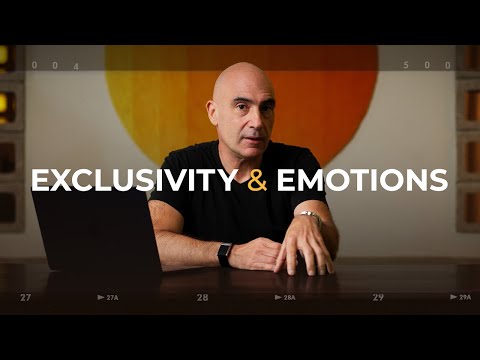
Exclusivity, Emotional Traps & Staying Calm Under Pressure…
Q&A with Paul Giannamore on sell-side deal dynamics: whether to commit to one buyer, why exclusivity should be earned, avoiding falling for a buyer too early, responding to lowball offers without overreacting, staying calm under negotiation pressure, and focusing on process rather than outcome. The advice is the speaker's own framing and is not independently verified.
# Channel Presentation Observations — "Exclusivity, Emotional Traps & Staying Calm Under Pressure | Q&A with Paul Giannamore"
## Format & Content Scope
- The channel presents as a **Q&A/advice format** focused on **sell-side M&A negotiation**, with the host answering audience-submitted questions. Evidence: the video cycles through direct questions ("Paul, should I really talk to multiple buyers...?") answered in a conversational advisory style.
- Topics covered in this episode: **buyer exclusivity, emotional traps for sellers, handling lowball offers, founder ego in negotiation, and outcome attachment** — demonstrating a scope of deal-making psychology and process strategy rather than generic business content.
## Intended Audience
- **Business owners/sellers preparing for an M&A exit**: questions framed from a seller's perspective ("What is the most common emotional traps for sellers?"; "why do I feel the need to win this negotiation").
- **Junior/aspiring dealmakers**: the host explicitly addresses one, "one of our young budding junior dealmakers who has sent me a ton of questions on LinkedIn," and frames advisory duties to that cohort ("It is your job to protect your clients and inoculate them...").
- **Current clients** are also part of the audience: "This next question actually comes from a current client... a guy who I've known for eight years."
## Audience Engagement Model
- Questions are sourced from **LinkedIn messages and YouTube comments**: "I appreciate the messages that I get on LinkedIn"; "I appreciate the comments on YouTube... feel free to leave a question below."
- The host describes using the channel as a **scalable answer mechanism**: "I don't have time to respond individually to all the messages I get in LinkedIn... I think other people would benefit from them."
- Standard **growth call-to-action** is present: "If you're new to the channel, please like and subscribe."
## Self-Description & Credibility Claims
- The host positions himself as an **experienced M&A advisor with clients**: "I always tell all of my clients and folks who aren't my clients"; "I've known for eight years"; "it's my job... to protect your clients."
- He claims **deep pattern experience**: "I had to think about this for a second because there are scores of emotional traps for sellers"; "I see it all the time."
- He **announces future content plans**, signaling a continuing series: "I'm going to film a 2-hour session on all these emotional traps for sellers."
## Observable Presentation Style
- **Opinionated, directive tone** with rhetorical emphasis: "I don't imagine a scenario where anyone should just pick the buyer that they'd like to go exclusive with"; "buyers have to earn exclusivity."
- **Borrows external frameworks**: references James Clear's *Atomic Habits* to explain "detach from the outcome but attach to the process."
- Uses **memorable aphorisms**: "silence is power... and calm is leverage"; "you're not trying to dominate in a negotiation. Really, what you're trying to do is design a future that you really want to live in."
## Note
- No curated metadata was supplied; all observations derive from the title and transcript. Claims of advisory experience are the creator's own statements, not independently verified by this material.
# Delivery Observation: Paul Giannamore — Q&A Session
## Overall Register
Conversational, spoken-word delivery with frequent fillers ("right?", "um", "you know") and a teacher-to-audience framing. He addresses viewers directly and frames the session as a Q&A rather than a lecture.
## Tone
- **Direct and dismissive of weak positions**, sometimes with mild sarcasm:
> "I can't imagine a scenario... I would answer you just yeah just choose the one you like. Give it to them for free. Don't make them compete. Who cares? I don't know what else to say."
- **Calm advisory register**, especially in the emotional-management sections:
> "silence is power in this particular case and calm is leverage"
- **Appreciative and personal** toward questioners:
> "And I do appreciate your questions." / "I think very, very highly of him. He's a brilliant businessman."
## Recurring Vocabulary & Phrases
- **"Right?"** as a tag question throughout — "buyers have to earn exclusivity... You don't give that away for free, right?"
- **"Tight, quiet, confidential processes"** — a composed, motto-like phrase he himself flags as repeated: "I feel like sometimes I'm a broken record."
- **"Earnings/earn it" framing**: "buyers have to earn exclusivity," "you have to make them fight for it."
- **Emotion-control lexicon**: "emotional traps," "inoculate them from feeling that emotional rush," "don't get emotionally involved," "practice calmness," "on tilt."
- **Process-vs-outcome framing**, repeated in the final two answers:
> "detach from the outcome but attach to the process" ... "the outcome will take care of itself."
- Contrast structures as a teaching tool: "silence is power... calm is leverage," "Don't get skewed... don't get attached."
## Teaching Habits
- **Enumerated reasoning**: when asked why buyers lowball, he lists reasons in sequence — "one reason... Another reason... it could be that they're signaling weakness... another one is like they're testing you."
- **Analogies to everyday life**: dieting/fitness via *Atomic Habits* ("if you want to lose weight... I have to get up and go to the gym"), and the "second home... the boat" imagery for sellers fantasizing about a sale.
- **Punchline aphorisms** to close sections:
> "Really, what you're trying to do is design a future that you really want to live in."
- **Rhetorical questions** posed to the audience: "when am I trying to win just for winning's sake?"
- **Quantified hedging**: "Usually... 99 times out of 100 probably more than that."
- **Promising future content**: "one of these days I will go on and on. I'm going to film a 2-hour session on all these emotional traps."
- **Channel sign-off ritual**: thanks for YouTube comments and LinkedIn messages, "please like and subscribe," "I'm Paul Jammore and I'll see you on the next one."
## Communication Patterns
- Q&A scaffolding: each answer opens by labeling the source ("This next question... from one of our young budding junior dealmakers," "comes from a current client... I've known for eight years").
- Perspectival framing — he narrates both sides of the table: "on the other side of the table, the buyer is trying to understand how you're going to react."
- Self-referential role statement: "it's my job and now junior dealmaker here. It is your job to protect your clients."
## Stable vs. Uncertain Observations
- **Stable (repeated within this video)**: "right?" tag questions, process-over-outcome messaging, emotion-suppression as core advice, enumerated causal lists, aphoristic closers.
- **Uncertain (single occurrence, likely but not confirmable as habits)**: the "broken record" self-awareness, the 2-hour session promise, and the gambling metaphor "on tilt" appear only once here; whether they recur across videos cannot be assessed from this transcript alone.
# Observation Record: Q&A with Paul Giannamore — Exclusivity, Emotional Traps & Staying Calm Under Pressure
**Source:** Video transcript (`01a168c6-fa28-7f4e-a845-606a4c5663ee`)
**Speaker identification:** All positions below are attributed to **Paul Giannamore**, the sole identified speaker, speaking in a Q&A format where he reads and answers submitted questions. Question submitters are anonymous except as described by Giannamore (a junior dealmaker, a current client of eight years).
---
## 1. On Going Exclusive with a Single Buyer
**Position:** Sellers should not grant exclusivity to a preferred buyer without the buyer earning it.
- He states he cannot "imagine a scenario where anyone should just pick the buyer that they'd like to go exclusive with."
- Core reasoning:
- He advocates running **"tight, quiet, confidential processes"** (acknowledging he repeats this often, "like a broken record").
- **"Buyers have to earn exclusivity."** Exclusivity is "trading something of value" and should not be given away for free.
- The best way for a buyer to earn it is to **make them compete** for it.
**Qualifications he preserves:**
- Preemptive offers that make skipping a process worthwhile **do exist** — "They happen but they are rare."
- His estimate: "99 times out of 100 probably more than that you have to make them fight for it."
---
## 2. The Most Common Emotional Trap for Sellers
**Position:** The most common trap is **falling in love with the buyer too early**.
- Asked by a junior dealmaker who sends many LinkedIn questions (Giannamore notes he answers publicly because he cannot respond individually).
- His characterization of the trap:
- Sellers "idealize their relationship with one particular buyer at the expense of all other buyers."
- They mentally spend proceeds ("they've bought the second home... the boat") and are won over by a buyer who "dazzles them and dines them."
- **Qualification:** "It might not be the most dangerous emotional trap, but it's certainly a common one."
- **Advisory duty claim:** It is the dealmaker's job "to protect your clients and inoculate them from feeling that emotional rush."
- He notes there are "scores" of such traps and plans a future 2-hour session on the topic.
---
## 3. Handling Lowball Offers
**Position:** Respond to lowball offers with **silence and calm**, not reaction.
### Why buyers lowball (his taxonomy):
1. **Legitimate valuation** — "that's really what they think it's worth... a legitimate business decision."
2. **Lack of information** — the buyer may not understand the industry, fundamentals, dynamics, or comparable acquisition statistics.
3. **Signaling weakness.**
4. **Testing the seller** — determining "if they're the only game in town."
### His epistemic framing:
- "In a vacuum, we don't know what that information is... what I do know is it's one of those sorts of things."
- The seller must **infer** meaning from "a variety of other activities."
- He notes symmetry: the buyer is simultaneously watching the seller's reaction to extract information.
### Prescribed response:
> "Silence is power in this particular case and calm is leverage."
- "Do the opposite. Don't react to it. Be silent. Be very calm, cool, and collected. Make the other side wonder."
- Not reacting prevents being "on tilt"; his advice: "just practice calmness."
---
## 4. The Need to "Win" a Negotiation
**Position:** The compulsion to win every negotiation point stems from **identity attachment**, and it works against the seller's real goal.
- Question from a current client of eight years, whom he describes as "a brilliant businessman."
- His diagnosis:
- Founders' identities are "tied to the business" and they are "used to being in control."
- In an M&A deal, they are "judged... dissected... measured," which he calls "very, very difficult."
- His reframing:
- Getting the most from the transaction matters, **but** "you're not trying to dominate in a negotiation. Really, what you're trying to do is design a future that you really want to live in."
- Sellers should be self-aware and ask: *"When am I trying to win just for winning's sake?"*
---
## 5. Emotional Attachment to the Outcome
**Position:** **"Detach from the outcome but attach to the process."**
- Same client follow-up question.
- His reasoning, illustrated with an *Atomic Habits* (James Clear) analogy:
- Fixating on a goal (e.g., losing weight in 90 days) distracts from the daily process (healthy breakfast, gym).
- A sellside process works the same way: run it correctly and "the outcome will kind of take care of itself."
- Conditions he attaches: a good business, a good market, a tight process, and following "that script" — while avoiding emotional involvement with any single buyer.
---
## Cross-Cutting Themes (as stated by Giannamore)
- **Competition as discipline:** Buyers should earn position through competition, not preference (Sections 1–2).
- **Information asymmetry in negotiation:** Offers and reactions both "send information"; inferring correctly and controlling one's own signals is central (Section 3).
- **Emotional regulation as dealmaker's job:** Inoculating clients from emotional traps recurs in Sections 2, 4, and 5.
## Unresolved / Open Items (per transcript)
- Giannamore explicitly defers exhaustive treatment of seller emotional traps to a promised future session.
- He notes uncertainty about the authenticity of the first question ("if this actually is a real question"), suggesting he suspected it was planted.
# Video Attribution & Provenance Record
**Video:** *Exclusivity, Emotional Traps & Staying Calm Under Pressure | Q&A with Paul Giannamore*
**Video ID:** 01a168c6-fa28-7f4e-a845-606a4c5663ee
---
## Speakers & Roles
| Speaker | Role | Basis |
|---|---|---|
| **Paul Giannamore** | Creator / host, answering audience questions | Title, self-identification at closing ("I'm Paul Jammore" [spelling per transcript, likely "Giannamore"]), Q&A framing throughout |
### Question Submitters (not speakers; paraphrased by Giannamore)
- **Anonymous questioner** — asked about going exclusive with one buyer; Giannamore suspects it may be a joke ("I was pretty certain somebody was messing with me").
- **"Young budding junior dealmaker"** — LinkedIn message sender, unnamed; source of the "emotional traps" question.
- **Unnamed questioner** — asked about handling buyer lowballs.
- **"Current client" of eight years** — unnamed; asked two questions: why founders feel the need to win negotiations, and how to avoid emotional attachment to outcomes.
> No question submitters are independently identified by name; all attributions come solely from Giannamore's descriptions.
---
## Referenced Sources & Third-Party Claims
- **James Clear — *Atomic Habits***: cited by Giannamore for the goal-vs-process idea (weight-loss example: "90 days from now, I'm going to lose like 5 kilos"). Third-party reference, paraphrased.
- **Buyer lowball motives**: Giannamore's own framework (legitimate valuation, lack of information, signaling weakness, testing the seller) — personal opinion, not externally sourced.
- **"Preemptive offers"** described as real but rare ("99 times out of 100") — Giannamore's experience-based claim.
---
## Promotion & Calls to Action
- **YouTube engagement appeal** (closing): likes, subscriptions, and leaving questions in comments.
- **LinkedIn presence**: repeatedly referenced as his question intake channel; not itself promotional but establishes audience contact surface.
- No product, service, or sponsor promotion identified.
---
## Availability & Interaction Notes
- **Comments**: available on YouTube; Giannamore states he reads and appreciates them.
- **Individual replies**: explicitly unavailable — he says he cannot respond to all LinkedIn messages individually.
- Questions answered in batch via Q&A sessions.
---
## Uncertainty Flags
- Speaker name spelled "Jammore" at transcript end vs. "Giannamore" in title — treated as the same person, likely a transcription variance.
- Exclusive-with-one-buyer question's sincerity is uncertain per Giannamore's own remark.
This next question, I was pretty certain somebody was messing with me, and I actually hope that they are because when I read it to you, you will instantly know how I feel about it. Paul, should I
really talk to multiple buyers, or can I just go exclusive with the one that I like the best? Now, I feel like sometimes I'm a broken record when I talk about running tight, quiet, confidential processes. I don't imagine a scenario where anyone should just pick the buyer that they'd like to go exclusive with. And like I just said a few minutes ago, buyers have to earn exclusivity. Giving somebody exclusivity, you're trading something of value. You don't give that away for free, right? They have to earn that. And the best way to earn that is to make them compete for that. Now, there is a world, and I have seen it, where preemptive offers come in that make you say, "It's not worth going to process." These do happen. They happen but they are rare. Usually you have to make them I mean 99 times out of 100 probably more than that you have to
make them fight for it. So I can't imagine a scenario I guess if this actually is a real question where I would answer you just yeah just choose the one you like. Give it to them for free. Don't make them compete. Who
cares? I don't know what else to say. This next question is from one of our young budding junior dealmakers who has sent me a ton of questions on LinkedIn. And I do appreciate your questions. And I told you I would answer as many of those as I can on Q&A sessions because I think other people would benefit from them and I don't have time to respond individually to all the messages I get in LinkedIn. But I do appreciate them. So thank you. What is the most common emotional traps for sellers? Now, I had to think about this for a second because there are scores of emotional traps for sellers. And I can go on and on and as a matter of fact, one of these days I will go on and on. I'm going to film a 2-hour session on all these emotional traps for
for sellers. But I would say probably the one that just hit me right off the bat when I thought about it was the act of falling in love with the buyer too early, right?
They idealize their relationship with one particular buyer at the expense of all other buyers. In their mind, they've bought the second home. They're buying the boat. They just get too deep in in love with one particular buyer who dazzles them and dines them and super sweet to them and they think this is the perfect home for my business and they're going to pay good money for it and I have eyes for no one else. That's probably the most common emotion and trap. It might not be the most dangerous emotion and trap, but it's certainly a common one and I see it all the time. And it's my job and now junior dealmaker here. It is your job to protect your clients and inoculate them
from feeling that emotional rush. This next question is an interesting one and I actually really appreciate it. It says, "Paul, how do you keep your
clients from overreacting when a buyer lowballs them?" Um, and I think buyers lowball for a variety of reasons, right? So, one reason a buyer might lowball is that's really what they think it's worth, right? So, it's not really a low ball, that's a legitimate business decision that that's what this business is worth to us. That's what we're paying. Another reason if it's a legitimate lowball might be that they lack information, right? So if a buyer is in a position to make an offer, um they might they might not understand the industry or the fundamentals or the dynamics or the comparable acquisition statistics in a particular space. And so it might just be that they lack information.
Um it could be that they're signaling weakness, right? That's one option. Um, another one is like they're testing you,
right? They're trying to figure out if they're the only game mental because how you react to a low ball sends information, right? The low ball often in and of itself sends information. Now, in a vacuum, we don't know what that information is, right? I don't know if that's really all the money the buyer has. I don't know if the buyer just doesn't have enough data to make an appropriate offer. I don't know if the buyer's testing the market, but what I do know is it's one of those sorts of things. And so I have to infer from a variety of other activities what that low ball offer is telling me. Now on the other side of the table, the buyer is trying to understand how you're going to react to that and what sort of information you're going to convey. And so I always tell all of my clients and folks who aren't my clients and now I'm telling you that you get a low ball offer, silence is power in this particular case and and calm is leverage. You want to naturally react to a low ball. Do the opposite. Don't react to it. Be silent. Be very calm, cool, and collected. make the other side wonder. If you don't react to a low ball offer, it's not going to throw put you on tilt. It's not going to throw you off. Um, I
would say just practice calmness. This next question actually comes from a current client. It's a guy who I've known for eight years. I think very,
very highly of him. He's a brilliant businessman. He's built a great business. said to me, Paul, why do I feel the need to win this negotiation even though I like the buyer? Like, why do I feel like I have to power through and win at every point? And a lot of this, I think, comes down to the fact that his identity is on the line. You know, a lot of guys, their identity is tied to the business. And, you know, founders are used to being in control. And now in an M&A deal, they're being judged, they're being dissected, they're being just measured. And I think it's very, very difficult. And I always say it's obviously important to get the absolute most you can from a transaction, but you know, you're not trying to dominate in a negotiation. Really, what you're trying to do is design a future that you really want to live in. So you don't have to win every single point. And you need to be very self-aware and ask yourself, when am I trying to win just for winning's sake? And when is this getting in the way of my best interest for the future I'm trying to design for my family and myself? That's what I think it is in a nutshell. You know, in closing, that same client
asked me, and he has a lot of great questions. He said, "How do I protect myself from getting emotionally attached to the outcome?" So he's dealing with like he's got to win at every turn and
always being dissecting the deal and but he's focused on this outcome, right? So he's gets attached to it. Um and usually when clients have this sort of feeling, I'm always like, you know what, detach from the outcome but attach to the process. So James Clear wrote that book Atomic Habits and he talked about, you know, if you want to lose weight, you can say, you know, 90 days from now, I'm going to lose like 5 kilos or make up whatever the number is. And when you're always focused on that particular goal and the outcome, you're actually not focused on the process itself. And the process is like I got to get up and eat a healthy breakfast. I have to get up and go to the gym. I have to do all these sorts of things. And a sellside process is very much like that. You can attach to the process and make sure that you're doing everything correctly or the best way in the process and then the outcome will kind of take care of itself. If you've got a good business and you're in a good market and you run a tight process and if you follow that script being attached to the process, making sure you're doing the process right, don't get skewed or don't get pushed away from don't get attached to somebody else. Don't get emotionally involved with the buyer. Just focus on the process. Let the process do what it's supposed to do. That outcome will take care of itself. Thank you for joining me today. I appreciate the comments on YouTube. I appreciate the messages that I get on LinkedIn. If you're new to the channel, please like and subscribe and feel free to leave a question below. I'm Paul Jammore and I'll see you on the next one.