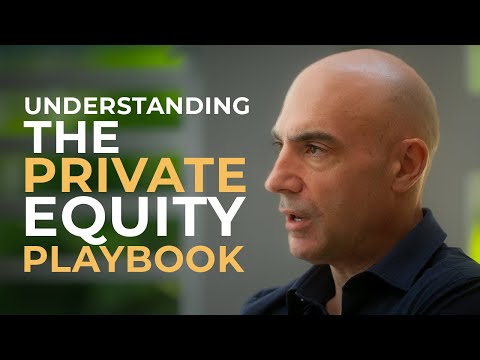
The Private Equity Playbook: What Pest Control Owners Need…
Episode of "The Breakdown" (Ep. 05) in which hosts Paul Giannamore and Nick Bartolo discuss how private equity interacts with the pest control industry. Topics include rolled equity, majority vs. minority investments, growth equity, private equity fund life cycles, exit challenges, due diligence, the emotional aspects of selling a business, and real-world transaction examples, with guidance aimed at pest control business owners considering private equity partnerships.
# Channel Presentation Evidence — "The Private Equity Playbook: What Pest Control Owners Need to Know | The Breakdown on Wealth Ep 05"
## Series Format & Positioning
- **Episode-numbered interview series**: The title's "Ep 05" indicates an episodic format titled *"The Breakdown on Wealth."*
- **Conversational two-person format**: The transcript is a dialogue between a host ("Nick") and a guest expert ("Paul"), recorded in person in Puerto Rico, with casual markers:
> "it's awesome to be in here in Puerto Rico"
> "cheers brother"
> "all right brother... alright stop pull you Stull you pulling"
- **Host-driven guest expertise**: The host explicitly frames the episode as turning the microphone to the guest:
> "I do want to turn the microphone around a bit... I know you've been doing some ask me any things lately"
## Claimed Scope
- **Educational financial topic focus**: The stated subject is **rolled equity in private equity rollups** for business owners who sell a piece of their company:
> "the topic is really rolling Equity into a private Equity rollup after an owner sells a piece of their business"
- **Series scope suggested by title**: Private equity and wealth-related topics for **pest control / home services business owners**.
- **Explicit forward-looking content plan**: Both speakers state an intention to continue the series:
> "I think you and I should revisit this next month because I've got a lot to share on the topic"
> "we could go through some of the scenarios who it makes sense for who it doesn't"
## Intended Audience
- **Pest control and home services business owners** considering a sale, evidenced by:
- Title: "What Pest Control Owners Need to Know"
- Direct address to owners: "all the folks out there who don't necessarily understand it"
- Repeated second-person framing: "for anyone listening to this that owns a business and has owned a business for 20 years"
- > "I can kind of hear the collective groan probably amongst owners out there"
## Demonstrated Presentation Patterns
- **Explanatory, demystifying tone**: Concepts are broken down in plain terms ("plain vanilla way to do it," hypothetical dialogue between investor and owner), with disclaimers on illustrative numbers:
> "these aren't real numbers I'm using round numbers here"
- **Practitioner anecdotes over theory**: The guest cites direct deal experience (a terminated LOI, a "Draconian" 3x liquidation preference, LP agreements with five-year extensions) rather than general commentary.
- **Insider-access signals**: References to a shared network of named figures (e.g., "Tommy Melo... we just had dinner with him... filmed an episode in his house") position the channel as embedded in the industry.
- **Humor and irreverent jargon**: Repeated joking industry terms ("private Equity douchebag dictionary," "second bite of the Apple") signaling a casual, insider register.
- **Guest self-description of services** (channel-adjacent claim, not the channel's own): Paul describes his advisory firm's positioning:
> "if I can't 5x my fee I tell guys I can't create value"
> "we probably do 75% of the advisor-led deals in the space"
## Notes on Claim vs. Demonstration
- **No formal channel self-description** (tagline, mission statement) appears in the title or transcript; identity is demonstrated through format, audience address, and topical scope rather than stated directly.
- Guest claims about deal outcomes (e.g., "guys walk away with six 7x returns") are the speaker's claims relayed in conversation, not independently verified by the material.
# Delivery Observation: "The Private Equity Playbook" — The Breakdown on Wealth Ep 05
## Format & Setting
- **Interview/conversation format** between two speakers (Nick, the host, and Paul, the advisor). Casual, conversational setting — Paul references meeting "in Puerto Rico" and a shared dinner with "Tommy Mello."
- The host **turns the microphone around**, framing the episode as an extension of Paul's "ask me anything" sessions:
> "I want to sort of delve into that on one particular topic"
## Tone
- **Irreverent, insider humor.** Both speakers use a self-aware, edgy vocabulary about private equity:
> "the private Equity douchebag dictionary"
> "I'm the private Equity douchebag I'm the private Equity investor"
- **Collegial banter** bookends the discussion: "cheers brother yeah cheers," and the closing "all right brother all right stop pull you Stull."
- **Empathetic register** when discussing sellers' emotional transitions:
> "selling a business is actually right up there with like death and divorce from an emotional perspective"
## Teaching Habits & Explanatory Devices
- **Role-play walkthrough.** Paul explains concepts by playing the PE investor speaking directly to the owner: "hey Nick um we are control investors we want to own the majority of your business." He does this repeatedly for both transaction types.
- **Binary categorization** as a structural teaching device:
> "you can broadly classify it into two types of transactions... a majority investment or a majority recap and you have a minority investment"
- **Round-number hypotheticals**, explicitly flagged as such:
> "I'm going to give you $100 million for your business to give you 80 million in cash and 20 million will be your rolled equity"
> "these aren't real numbers I'm using round numbers here"
- **Jargon glossing.** He defines terms as he goes: "when I say newco a new entity," "typically referred to as growth Equity," "a plain Vanella way to do it" (plain vanilla).
## Recurring Phrases & Verbal Patterns
- **"Second bite at the Apple" / "bite at the Apple"** — recurring motif for rolled-equity upside (appears multiple times).
- **"So on and so forth" / "etc etc"** — used to trail off lists of examples (appears several times).
- **"At the end of the day"** — recurring summarizing phrase (at least three occurrences).
- **"I'm like..."** as a quotative when recounting client conversations:
> "I tell the clients I'm like listen it's okay for you to say I've never been through this"
- **"You know"** is a very frequent filler throughout, characteristic of unscripted spoken delivery.
## Narrative Anecdotes as Evidence
Paul habitually supports points with **specific client stories**, hedged for privacy:
- The buyer who added liquidation preferences mid-diligence: "we said that's bargaining in bad faith we're out of here"
- The recap owner with a 3X liquidation preference who used an inexperienced attorney
- The LP agreement with an unusual five-year extension: "I got some docs last week and I looked at it and the extension period was no longer two years it was five years"
## Interactive Dynamics
- The host **checks understanding and probes** with short questions: "do you ever see those growth Equity Investments like a 20 $30 million Revenue company"
- Both speakers **complete and affirm each other**: "yeah I agreed," "that's fascinating," "that's a good deal for me."
- The host occasionally **redirects the topic**: "we don't need to get into all of the Welles we're seeing now" (unclear phrase, likely "wiles/ways").
## Uncertainty Notes
- Speaker attribution between the two voices is mostly inferable from context but **not always unambiguous** in the transcript.
- Some transcript artifacts ("Mex," "Mexican," "pomial/patomac/pomac") appear to be transcription errors of names/terms and are quoted as-is where used.
- Single-instance observations (e.g., the "psychologist" quip: "I'm like a psychologist this kind of stuff happens") are isolated moments, not established patterns.
# Observation Document: Rolling Equity into Private Equity Rollups
## Video
**Title:** The Private Equity Playbook: What Pest Control Owners Need to Know | The Breakdown on Wealth Ep 05
**Context:** Recorded conversation in Puerto Rico between two speakers — **Nick** (interviewer/questioner) and **Paul** (respondent, identified as working in M&A advisory, formerly of American Capital, now running Potomac; describes himself as having been "the douchebag on the other side of the table").
## Central Topic
**Rolled equity** — an owner sells part of their business and rolls a portion of the proceeds into a new entity alongside a private equity investor. Nick notes PE outreach emails promising owners can "take some money off the table" and get a "second bite at the Apple" — referencing what he says "the Mexican" calls "the private Equity douchebag dictionary."
## Two Transaction Types (per Paul)
### 1. Majority Investment / Majority Recap
- PE buys e.g. **80%**, founder retains **20%**, rolled into a **"newco"**.
- Owner receives a check for 80% of total value at closing.
- PE pitches ecosystem benefits: digital marketing expertise, peer CEO relationships, cross-selling across home services portfolio companies.
- Exit in **3–7 years** typically; PE targets ~**3x** on its money.
- Paul: "I've seen it across the board... 2x, 3x, 10x" on rolled stakes; in Pest Control specifically he has "seen guys walk away with 6–7x returns on their equity rolls."
- Theory: owner may make more on the 20% than on the 80% cash at closing. Paul later adds: "at some point I will see guys walk away with **zero** on those equity returns."
### 2. Minority Investment / Growth Equity
- PE buys e.g. 40%; founder retains control (60%).
- Benefits claimed: access to debt capital ("debt lenders don't want to talk to you... some redneck who owns some Home Services business"), ecosystem capabilities, borrowing capacity.
- Typically for companies with **$100M+ revenue**; some focused on taking businesses to $1B revenue and public exits. Paul has seen 2–3 Pest Control growth equity deals **under** $100M, and one last year at a ~$20–30M revenue scale.
- **Consent rights caveat:** founder still controls but faces veto rights — acquisitions, capital expenditure caps above a threshold, CEO changes require investor approval. Board structure example: founder appoints 3 members, investor 2.
## Which Deal for Whom
- **Growth equity:** for the owner in it for ~20 years (e.g., "I'm 40... take my $30 million business to $750 million").
- **Majority recap:** for the owner eyeing an exit in 3–7 years who wants some cash now but is unsure.
- Paul: ~**50% of the time** clients enter a sale process agnostic about structure; he advises owners to know specifically what they want before going to market.
- **At least half** of the PE deals Paul's firm has done were with sellers who "never suspected they would do a private equity deal."
## Market Dynamics
- Since ~2003, Paul says that only in the last 3–4 years (citing Residential Commercial Services context) has he seen **PE firms outbidding strategics**.
- Illustrative (round-number, not real) example: strategic offers $75M all-cash for 100%; PE offers $100M total — $80M cash + $20M rolled equity — making the roll effectively "free."
- Nick raises concern: with capital flooding PE, at what point are returns "rung out of the market"?
## Fund Lifecycle Considerations (Paul)
- PE firms are asset managers running ~**10-year closed-end funds**: year one fundraising, year two deploying, then platform and add-on acquisitions, harvest at end.
- Advice: do diligence on **where you sit in the fund lifecycle** — "you want to be the platform on the front end of the fund."
- Nick adds: given challenging exits, PE is using **secondary/continuation funds** and **NAV loans**.
- Paul: saw an LP agreement (from a "real" established firm, not "fly by night") with a **five-year extension period** instead of the typical two — he wants to ask them why.
- Nick on circular dynamics: overallocated endowments/pensions can't reallocate out of PE because exits are challenged, making fundraising harder; PE is "flooding the wealth management channel with marketing" for incremental capital.
- Both emphasize they're not "proclaiming the death of private equity" but owners taking rolled equity must be cognizant of what they're rolling into — "very different than it was 10 years ago."
## Personal/Emotional Dimension
- Nick: sellers who exit 100% can face identity loss ("I used to be the center of this world with 100 employees... what do I do with my life").
- Paul: "selling a business is actually right up there with death and divorce from an emotional perspective." He spends significant time with post-sale sellers flying to meet him — "I'm like a psychologist."
## Cautionary Examples (Paul)
- **Bad-faith renegotiation:** a PE firm, mid-diligence after a signed LOI, added liquidation preferences and preferred structures; Paul terminated the deal as "bargaining in bad faith."
- **Draconian terms:** an owner (different industry) who responded to a PE email got a recap with a **3x liquidation preference** he didn't understand, signed with a generalist M&A attorney lacking PE deal experience. Paul: "the cake was baked at that point."
- **Advisor value claim:** a deal re-marketed after a strategic backed out went from **$45M to $70M** three months later.
- Paul's fee standard: "if I can't 5x my fee... I can't create value."
- **"Protection racket" framing** (attributed to "the Mexican"): Paul's firm does ~70–75% of advisor-led deals in Pest Control; a PE firm that "messed with" them would effectively be blacklisted from the industry.
## Case Mentioned
- **Tommy Mello** (recent dinner guest): took a growth equity (minority) investment, retains control, investor has extensive consent rights; his motivation was reaching a billion dollars / possible IPO; "in his 40s... in this for the long haul."
## Unresolved / Tentative Points Preserved
- Paul explicitly uses round, non-real numbers for the $75M/$100M illustration.
- The 6–7x rollover returns are personal observations ("I've seen"), paired with his prediction of future **zero-return** rollovers.
- The five-year LP extension question is flagged as unasked — Paul wants to inquire why sophisticated investors anticipate needing it.
- Both speakers agree to revisit the topic next month with deeper scenarios (who rolled equity makes sense for and who it doesn't).
# Speaker Attribution & Provenance Record
## Video Metadata
- **Title:** The Private Equity Playbook: What Pest Control Owners Need to Know | The Breakdown on Wealth Ep 05
- **Video ID:** 01a168c8-80db-7462-a6e3-1249705bf86d
- **Location referenced in transcript:** Puerto Rico (both speakers mention being there in person)
## Speaker Roles
### Speaker 1 — "Nick" (Host / Interviewer)
- Addresses the other speaker as **Paul**; identifies him as an expert on the topic.
- Roles the other speaker attributes to him: business owner example persona in PE explanations ("some redneck who owns some Home Services business" — Paul's illustrative framing), and co-host of the discussion.
- Takes the interviewer position: turns "the microphone around," asks Paul to explain private equity rollups.
- **Role:** Host/creator of the episode, interviewer.
### Speaker 2 — "Paul" (Guest / Expert)
- Identified by name in dialogue as **Paul**; the interviewer's stated purpose is to ask him questions ("you've been doing some ask me anythings lately").
- Self-identifies expertise: works with sellers of Home Services/pest control businesses ("the majority of the guys that I deal with"), started doing M&A work in 2003, previously worked at **American Capital**, "the largest publicly traded private equity [firm]," before starting **Patomic** (transcript spelling uncertain; pronounced "pa-tom-ic" / "pomac" appears once).
- Claims firm does "70–75% of the advisor-led deals" in pest control (attributed partly to "the Mexican").
- **Role:** Guest, subject-matter expert on private equity transactions in Home Services.
## Third Parties Referenced (Not Speakers)
- **Tommy Mello** — mentioned as someone both speakers had dinner with and filmed an episode with at his house; described as taking a growth equity investment.
- **"The Mexican"** — referenced figure credited with the phrase "private Equity douchebag dictionary" and the "protection racket" characterization.
- **Residential Commercial Services** ("resian" in transcript) — referenced as a company/context where PE firms outbid strategics.
- Anonymous anecdotes: a pest control client, an owner with a "3X liquidation preference" deal, a PE firm with a five-year LP extension period.
## Promotional Segments ⚠️
- **Paul promotes his own advisory firm** ("Patomic"/"pomac"): discussing his fee value proposition ("if I can't 5x my fee...") and deal outcomes ($45M deal re-marketed at $70M). The interviewer explicitly flags it: "some people and I don't mean to talk your own your own book here" / "I'd rather you talk my book."
- Paul references "the Mexican's" "protection racket" framing, which describes his firm's market position in pest control advisory.
## Referenced Sources & Claims
- First-person anecdotes only; no external documents, studies, or cited third-party sources in the transcript.
- Anecdotes include: PE rollup equity returns of "6–7x" observed in pest control; a terminated LOI after a PE firm added liquidation preferences mid-diligence; an LP agreement with a five-year extension period.
- Example figures given as explicitly illustrative ("these aren't real numbers I'm using round numbers here").
## Comment Availability
- Not indicated in the transcript or supplied metadata.
## Uncertainty Notes
- Firm name transcription is inconsistent within the transcript ("patomic," "Pomatic," "pomac") — exact spelling unverified.
- No timestamps were available in the transcript; no timestamped attributions recorded.
all right let's do this next all right Paul it's uh it's awesome to be in here in Puerto Rico right um but I do want to turn the microphone around a bit Yeah because
often you get this great opportunity to ask people questions and I know you've been doing some ask me any things lately so I want to sort of delve into that on one particular topic okay okay and the way to introduce this topic in my opinion is how private Equity folks typically introduce this topic you know you've you've told me about these emails that Pest Control owners receive where it's like hey we want to look at your business right and you can quote unquote take some money off the table and have another bite at the Apple second bite at the Apple right which is like you know the the very I think Mex calls it the private Equity douchebag dictionary yeah I love it I love it and so uh nothing against all our private
they're doing deals and so um but it does like the concept and the topic is really rolling Equity into a private Equity rollup after you an owner sells a piece of their business so could you
just talk a little bit about what that is for all the folks out there who who don't necessarily understand it or even some of the mechanics around it yeah I think when you think about rolled Equity you have to think about um the sort of transaction and what private private Equity investors ultimately do and so I think you can broadly classify it into two types of transactions cheers brother yeah cheers you've got a majority investment or a majority recap and you have a minority investment typically referred to as growth Equity so on a majority side is you own a a business you're the business owner I'm the private Equity
douchebag I'm the private Equity investor I come in and I say hey Nick um we are control investors we want to own the majority of your business but we're
going to partner with you the founder and we're going to buy 80% of it for example okay you'll own 20% we're going to bring a lot of resources and capabilities to the table you've got a great business but we've got this ecosystem so we've got guys that are like digital marketing experts and we got these other Home Service businesses that have grown and you're going to be hanging out with those CEOs to figure out what they're what what they've done and we've got other Home Services businesses and maybe we can cross sell between your Pest Control business and so on and so forth but at the end of the day we're going to own 80% of it so you're going to get a check at the closing table for 80% of the total value of the business we to write you a check for 80% of it you're going to roll 20% into newco and so there'll be a new entity esta and there's a million ways to do this mechanically but a plain Vanella way to do it is we set up a newco we when I say newco a new entity you're rolling Equity into it um we're capitalizing it we own 80% you own 20% at some point in the future we're going to exit so that's the prial second bite of the Apple so we grow this thing you know we really need to 3x our money and so you should expect you're going to be able to 3x your 20% maybe you're going to do better maybe you're going to do 5x I mean I've seen it across the board I've actually seen xit that 2x 3x 10x so in certain circumstances the theory is like hey Nick in a perfect world you're going to make more money on that 20% that you hold into the business than you did on the 80% check that I'm writing you today okay that's a majority investment the other type of investment which would be a minority interest in the business or it's typically referred to as a growth Equity investment we see that a lot in the technology space for example where I would come in and say Nick you've got a great business um I want to buy 40% of it and I I want to
you'll hold on to 60% you'll still be in control but I'm gonna I'm GNA invest cash to buy Equity um and that's going to do a lot of things for you it's gonna
same sell Point as before you're going to be in this ecosystem and you're going to get all these capabilities from other portfolio companies um because we're your partner you're going to be able to go out and borrow money whereas you weren't able to do that before like yeah debt lenders don't want to talk to you you're just like Nick some redneck who owns some Home Services business but you're partnered with us yeah so now the banks are going to sit down they're going to so we're going to be able to lever that business take on debt Capital which is cheaper than equity and we're going to be able to grow it um the other thing is that you know these growth Equity Investments tend to be for slightly larger firms okay and and so the theory is like by larger what do you what size well like if we talk about like um lawn care or Pest Control we tend to see it in the companies that are doing 100 million in revenue or more okay now I I have seen two or three in Pest Control where there's been growth Equity investment so minority stakes and businesses that are sub 100 million okay um but it's when you start to get to 100 plus million then what the growth Equity investors you know there's certain growth Equity investors that are really focused on taking businesses public yeah they get their kicks by taking a stake in a business helping to grow get to a billion in revenue and then exiting and typically exiting through the you know the broader Capital markets taking public so do you ever see those growth Equity Investments like a 20 $30 million Revenue company M yeah yeah I saw one last year it was a sub 50% investment I mean there's certain there's certain companies out there that focus on growth Equity Investments and they they're on the lower Middle Market right so that would be like the 20 or 30 Million Dollar business you know those growth Equity Investments though do get complicated when you have businesses that are that small because you know that in the shareholder agreement there's going to be a variety of consent rights that I think that um business owners don't really think about and what I mean by that is like if I'm investing in your business and I I write a check for 40% you're the controlling shareholder but that doesn't mean you can do anything that you want so I might come to you and say Nick I'm going to write this check but you and I are going to sign a contract and in that contract um I'm going to have veto power for a lot of things like you're not going to be able to do an acquisition unless you come and and you get approval from me yeah um you're not going to be able to spend more than x dollar and capital expenditures unless you come to me you're not going to be able to make significant you can't go in and change the CEO unless you come and I have the ability to veto that and that protects me because is you being the controlling shareholder you know typically you're able to do whatever you want we we set up a board you appoint three board members I appoint two board members your three board members are going to be able to beat me out so I need to be I can kind of hear the collective groan probably amongst owners out there thinking about this type of setup to where you know you started the business you're running and gunning on your own you're controlling it but the flip side is that you actually took some risk off the table right you put some money in your pocket and I think that's true in both of the scenarios you yeah I mean they're different like and we should spend more time on like the control investment because that's the plain vanilla one for Home Services most common too right most common that's that's the one that typically happens on the minority investment side just to kind of close that out that's for the guy who really wants to stay a part of this business for the long term and it might be for the next 20 years it's not you know when when you're doing a majority recap and you're selling 80% for example you're probably eyeing an exit in the next three to seven years yeah whereas if you're getting growth Equity you're probably the guy who says okay you know I'm 40 I'm going to do this until I'm 60 I want to take my $30 million business to 750 million and I'm going to be able to do that much more effectively and much quicker if I get a sophisticated partner that has banking relationships that has experiened taken business public that's part of an ecosystem that can bring all these intangibles to the table M that's a good deal for me now I know I'm going to be restricted and I can't do a bunch of crazy and I also know that the um the private Equity investor might have certain put rights and there's a variety of different things that go into this but for them that's a good deal because they're in it for a long haul most people look at Tommy Melo we just had dinner with him yeah filmed an episode in his house it did Tommy took on a growth Equity investment Tommy's thought process was like like I want to get to this to a
billion dollarss and maybe take it public or whatever so he got a growth Equity investor to take a minority position in that business he's ultimately control they have a lot of consent rights and all sorts of stuff um
but at the end of the day Tommy's in his 40s he's in this for the long haul it wasn't an exit opportunity um the majority of the guys that I deal with are the guys who are like hey um I kind of want to stick around but I'm not quite sure I do know that valuations are very high what should I do and my thought process by my my my discussions with them are usually this I'm like you're always in a better spot if you actually go into the market and you know specifically what it is that you want to do meaning I know that I want to stick around for five more years I know that I want to take money off the table I know I want to partner and I want to be a co-investor or I know that I've got 20 years and I'm looking for a growth investor or I know that I want to get out completely like I want to be out I want 100% change of control I don't care about rrolling Equity that's a perfect situation but a lot of times guys just don't know what they want because they've never experienced this they've never sat down and talked to investors understand what that looks like so I would say 50% of the time we'll go into a process kind of agnostic as to that we know we're going to do a deal we're just not sure what it looks like yet and I tell the clients I'm like listen it's okay for you to say I've never been through this I was thinking I'm going to sell 100% of the business but I'm not quite sure yeah and so let's meet with strategics let's meet with private Equity firms let's figure out what's out there and we go through a process and um what has happened you know I started doing this in 2003 and at least out on my own and for the first time and since 2003 that I've seen in resian Commercial Services the last 3 or four years has been a situation where private Equity firms are actually outbidding strategics from this you know you're going to meet some guys this week who have gone through this before and you know when we took it out to the market we had Baseline prices from strategics the private Equity firms were so much more aggressive that the role was actually free and I'll give you an example you take a business out to Market and the Strategic acquires come in and for 100% change of control these are the strategics they come in they say I'm going to write you a check for 75 million bucks all cash you're going to hand me the keys to everything and you are gone like enjoy your retirement go do what you want to do well we had private Equity firms come in and these aren't real numbers I'm using round numbers here basically come in and say I'm going to give you $100 million for your business to give you 80 million in cash and 20 million will be your rolled equity in newco and so now owners are looking at this being like well on the one hand I'd love to be out I'd love to take my 75 million and walk away but can I really just take less money up front and on top of that forego that role that might end up being $100 million five years from now yeah no and so we have done at least half of the private Equity deals we've done are with people that never suspected they would do a private equity deal and it really just all comes down interesting that's fascinating I mean not to be too touchy feely here but just from like a personal emotional transition as well like I think I've seen some people they sell 100% And then it's like oh I used to be the center of this world with 100 employees and you know doing you know operating the business etc etc and then they go and they're like what do I do with my life right so that situation you described and I think this is part of the personal Nuance of whether or not you want to roll Equity or whether you want you want to sell 100% that gives them this offer amp of okay I have another five to seven
years of doing this I got the same amount of money and you know up front in the situation you described but yet I still have upside um in order to create more value and wealth over time you know
I think that you raised a really good point and I've actually been thinking about it a lot in the last couple of minutes is that selling a business is actually right up there with like death and divorce from an emotional perspective and if you think about a lot of these guys maybe started a business from scratch have owned it for 30 years and so they get up in the morning they go to the office they a lot of people's work family is closer to them than their actual own flesh and blood those family members don't always stick around postale no they don't and so it is a extremely I think a lot of people underestimate the I can't tell you over the last couple of decades how much time I spend with sellers who have sold they come down to Puerto Rico when I was in France they would fly over to France or Switzerland wherever I was like literally at it's like the deal gets done and then they're ready to lose their mind and I'm just like dude come down let's have some drinks let's talk about I'm like a psychologist this kind of stuff happens and so I I think you're right from the standpoint of if you if you do a majority recap yeah and you're focused on growing that but you're also kind of taking a fiveyear transition plan I think it actually can be very help healthy yeah I I I really truly believe that now this is all new to Home Services you know about years ago I you know prior to starting patomic I used to work for American Capital which was the largest publicly traded private Equity Apartment and so I was the douchebag on the other side of the table right going in and it's funny you write those emails did you take a second bite at you didn't have to back in those days because it wasn't very competitive open playing field it didn't have to like back 20 years ago and I think anyone listening to this that owns a business and has owned a business for 20 years we recall that I mean maybe occasionally they got a letter or whatever but they never got it like they got it they get it today we didn't have to do that it wasn't that competitive that's before the wave of capital Flo into private Equity yeah you know when I sit down I like you know one of the things I really think about is like with all of the capital that's flowed into these markets and valuations where they are it's like at what point to all the returns just get rung out of the market where there's nowhere else to go and that's a discussion for another day but for now I I do think the I think the big takeaways for people and roles is I have literally seen if I think about you know look in Pest Control I've seen guys walk away with six 7x Returns on their Equity roles I think at some point I will see guys walk away with zero on those Equity return right that's what I was thinking in light of your you know Capital comment as as private Equity Capital has flooded the industry that clearly changes the calculus on whether or not someone should take World Equity right yeah and who they should should take it from it's very different if you take if you're going to be the platform versus if you're the 30th add-on acquisition whether or not you should take World Equity would you agree with that I agreed yeah I had I mean thinking about like the Vintage of the fund that thinking about where you are in the capital structure thinking about where you are the duration of the asset right I think is a very very important thing and I talk to this about with clients about this all the time like if you know you have a PE a private Equity Firm is really just an asset manager and then underneath the private Equity Firm they have these you know uh close end funds that they effectively start that last typically for what 10 years give or take um and so you know you have private Equity Firm a that has fund One Fund two and they might be ra raising fund three and so and when you think about a 10-year time Horizon you know they spend like you know the first year's Capital raising and still getting LPS involved and all that the second year they're deploying capital and then you know the first half of it they you know they're do they're buying platforms they're doing add-on Acquisitions add-on Acquisitions improving the business and by the time you get to the end of the fund that's time to harvest and so I always tell clients you really need to do DD and understand where you are in that fun life cycle but you want to be on the front end of the fun right you want to be the guy who you want to be the platform on the front end of the fund where they can do a lot of add-on Acquisitions I would even add that now since private Equity exits have been so challenging meaning private Equity rollups trying to find another buyer for the rolled up company since those exits have been so challenging now they're
just doing secondary funds yes and rolling that into a new enti those continuation funds it's like we can't it doesn't make sense to you know and nav loans but we won't we don't need to get into all of the Welles we're seeing now
in a lot of the private Equity docs where they're actually the boot at the end of it you know usually there's a you know there's a two-year option you got a finite 10year period right this Limited partnership established for 10 years for this purpose we buy these companies we sell them yeah and then usually in the documents they allow for maybe an additional two years so if the market environment is challenging at the end of two years I they can turn around and you know it's like hey guys we're not selling it now we're going to wait another year whatever I saw an LP agreement I had a private Equity Firm an actual real one not like one of these small Fly by Night ones real private Equity Firm all these guys always try to get me to co-invest and and I don't do that because I don't want to create conflicts of interest but like all of them are constantly trying to track me down and I got some docs last week and I looked at it and the extension period was no longer two years it was five years so they can roll for another five years in order to find an appropriate exit and I I have not had the opportunity to ask them yet but I want to have a conversation like why do you sophisticated investors think you might potten potentially need five years it's an interesting yeah it says something right like it's oh yeah it's it's sort of fascinating that that they are going in that direction particularly since you know as I mentioned earlier exits have been challenging and then a lot of you know non- taxable investors like endowments pensions Etc have been overallocated to private Equity but then exits are challenging so they can't reallocate out of private equity which then has made raising for private Equity more challenging yeah it's it's all circular right and then what private Equity is also doing and I see this given my business is that they're flooding the wealth management Channel with marketing now as well because in order to keep it all going you need incremental Capital to grow the machine and to get exits so we'll see where it all ends up like not not proclaiming the death of private Equity by any means we both have a lot of friends in private equity and I hope they do great right but it's just we just need to be cognizant in the industry especially folks that are taking R Equity need to be cognizant of what they're actually rolling into which is very different than it was 10 years ago you know on the buzz I talk a lot about the Mexican blackballing acquires or blacklisting I should say and like we had this um you know he would do that that's the best they can hope for promo you know we had this situation where you know every time we go out to the market we we deal with like like I don't know 50 60 70 private Equity firms and um we had one that we signed a letter of intent with okay locked up a client we were doing due diligence and in the middle of DD they came and they added on all these kind of liquidation preferences and preferred structures and the capital structure and of course the client really had no idea what they were talking about but we saw that and we said that's bargaining in bad faith we're out of here we terminated we moved go about a month ago there was a guy who came down here and said hey Paul I um it's not even in the home service space it was a different a different industry and and I and I had met this guy randomly and he's coming out to Puerto Rico and he wanted to shout with me and he's he did a recap and he partnered with private equity and his he came down to talk to me like how do I do deals I want to go out there I want to grow this I own 25% of this business and I was like okay and so he
brought down the docks and I started looking through it and he he was a guy who responded to an email he kind of built a relationship with a private Equity Firm next thing
you know he got into a deal he signed the deal and I looked at these things and the terms were just Draconian meaning and so for when you think about like I'll give you it was like like a 3X liquidation preference so basically like the private Equity Firm if things go wrong in the wrong direction the private Equity Firm makes sure they get their 3x return before this guy gets anything and he didn't understand what that was and of course I said didn't you use an attorney for this and he's like you know my attorney has done like three or four deals but he's he's good at m&a but he usually deals with like strategic acquires they never really did much of a private Equity thing but I didn't realize it was going to be a big issue and I I felt bad because I didn't want to be like dude if things go wrong you're screwed yeah cuz the cake was baked at that point already baked so I don't want to like and I know if he's watching this now I I told him like Hey you probably should have had somebody else take a look at it but what's done is done it's not like you want to but yeah this is what happen people lose side of the big picture this is what happens right some people and I don't mean to talk your own your own book here because that sounds very self I'd rather you talk my book than you talk my book but it's true it's like people look they're like wait I'm going to pay what percentage of the deal to pomac but like they're paying nothing they're actually like getting more and getting multiples of value on top of that just in that's a small example I right it can be way worse 100% if I can't 5x my fee I tell guys I can't create value for if I can't legitimately look at and say I'm going to make you 5x my fee yeah plus I'm going to you know the Mexican likes to say you know what we're we're a protection racket because he's like we we're he he's like we're like the mob we're a protection racket because protection racket yeah if we do 70% of the deals in a particular space no one can really mess with us because if they do then they're out exactly could you imagine if there if a private Equity Firm messes with us in pest control and we probably do 75% of the advisor Le deals in the space if they get blacklisted by the Mexican like why even invest in the industry because you're not going to be able to get any deals done we're just going to shut so it's it's a protection racket so yeah I mean the stories that I know of you know that where it's like oh we we had an initial deal we had an initial deal done at 45 million and the Strategic backed out and then three months later we put it back to Market and because the Strategic backed out and there were terms issues etc etc and so the deal fell apart because of the diligence process really of what you all are doing next thing you know three months later it's a $70 million deal I mean value creation stories like that like it's almost double that's that's insane so well Nick I I I I love the r equities question I think there's a lot of there's a lot
dude I've got a ton of questions on and I think like after after our weekend here in PR I think you and I should revisit this next month because I've got a lot to share on the topic it's a huge question and I think you and I will douve a little bit deeper here as we get more into private Equity yeah that's a great idea we could go through some of the scenarios who it makes sense for who it doesn't you know all that so great all right brother all right stop pull you Stull you pulling