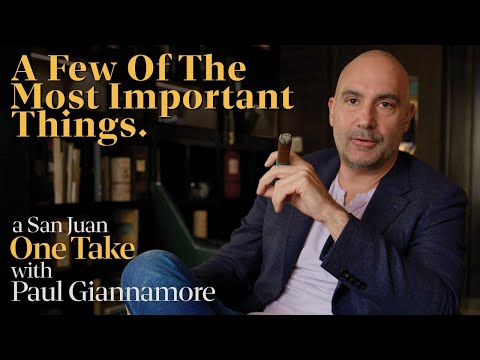
The Counterintuitive Nature of Mergers and Acquisitions | A…
Paul Giannamore reflects on key lessons from two decades of advising mergers and acquisitions transactions in a casual conversation filmed at a cigar lounge in Old San Juan. Topics include running a competitive sell process, using time to your advantage, acquirers, market conditions and market cycles, private equity, business valuation, and seller behavior, illustrated with examples of sophisticated sellers and advice against overreaching on price.
# Channel Identity Observations: "A One Take with Paul Giannamore"
## Creator Identity & Self-Description
### Explicit Self-Description
- **Paul Giannamore** identifies himself as an **M&A advisor / investment banker** with over 22 years of experience:
> "one of the most important lessons that i've learned over the last you know 22 years being in investment banking and m a advisory"
- He is affiliated with **Potomac International** ("potomac"), where he claims:
> "we do more than 70 of the global transactions in the industry"
- Prior background cited:
> "i spent years on the buy side working for the largest private publicly traded private equity firm in the united states"
> "when i started in this business i worked for a man named frank watron at the credit suisse tech group"
- Education claim:
> "when i graduated from cornell i graduated from the school of industrial labor relations"
### Related Channel Properties Referenced
- **Potomac TV** (YouTube) with a section called **"The Potomac Experience"**
- A podcast or show called **"The Boardroom Buzz"** ("the buzz"), plus presentations: **"Bubble Trouble," "Aftermath," "Supernova"** and "PCT M&A seminars"
## Claimed Scope
- **Exclusive sell-side advisory**:
> "we typically advi actually not typically exclusively advise sellers"
- Industry focus on **residential and home services**: pest control, lawn care, HVAC, plumbing:
> "whether it's in pest control or lawn or solar or alarms"
> "a pest control business or an hvac business or plumbing business"
- Geographic reach framed as global: Puerto Rico meetings, Milan meetings, cross-border US/Europe transactions, a "70% of global transactions" claim.
## Intended Audience
- **Owners of residential/home-services businesses considering selling**, especially mid-life entrepreneurs:
> "if you're a man or a woman in your 40s 50s or even 60s i think you have a lot of runway to be able to dispose of an asset"
- Directly addresses business owners facing private equity and strategic acquirers:
> "i protect the husband and wife that own a business... i protect people like you when you face off against the sophisticated private equity firms"
- Potential clients invited to in-person meetings:
> "if you want to come and meet me in puerto rico come to meet me in puerto rico... or if you want to come meet me in milan italy"
## Observable Presentation Patterns (Demonstrated, Not Claimed)
- **Advisor positioning / advocacy for sellers**: The video is structured as lessons for sellers ("be likable be humble and don't be greedy"; "never feel like you're in a position where you need to negotiate").
- **Market commentary as recurring content**: Extensive macro views on rates, private equity, and market timing, tied to other channel offerings (presentations, podcast).
- **Promotional calls to action**: Invitations to visit Potomac TV and "The Potomac Experience" section, and to meet the host in person — demonstrating the channel functions partly as a **client-acquisition vehicle**.
- **Lifestyle/personal branding**: Opens at a cigar bar in Old San Juan; closes inviting viewers to visit — a casual, personality-driven presentation format ("One Take" in the title).
- **Explicit disclaimer of a sales pitch** (a claim, not verifiable):
> "this isn't a sales pitch for potomac"
## Evidence Limits
- No curated metadata was supplied; all observations derive from title and transcript.
- Claims such as "70% of global transactions," prior private equity employment, and client outcomes (e.g., the Australian seller anecdote) are **creator claims** with no independent verification in the source material.
# Delivery Observations: Paul Giannamore — "The Counterintuitive Nature of Mergers and Acquisitions"
## Overall Format and Setting
- **One-take conversational monologue** delivered from an informal setting: > "this afternoon we're at casa monte cristo here in old san juan and puerto rico... not only are the cigars fantastic but the bar's outstanding great scenery"
- Opens with a **personal welcome** and ends with a **direct invitation**: > "come down and visit me in puerto rico... if you want to come meet me in Milan italy i'm happy to meet you milan"
- The talk is framed as **impromptu reflection**: > "some of the things that i've thought about over the years" and > "couple of things that i want to talk about today"
## Tone
- **Confident, first-person, advisory** throughout; heavy reliance on personal experience as authority: > "i've done it for decades so i expect your accuracy level to be far lower than mine"
- **Blunt, colloquial, occasionally profane** language: > "wondering what the hell we're doing", > "scaring the [ __ ] out of the acquires"
- **Colorful comparisons and idioms**, e.g. "bird in the hand is worth two in the bush", "blood on the street", "catching a falling knife", "long strange trip to nowhere"
## Recurring Phrases and Verbal Habits
- **"you know"** appears extremely frequently as a filler/connective, e.g. > "you know when i started in this business" — clearly a stable tic across the whole transcript.
- **"at the end of the day"** recurs as a summarizing pivot: > "at the end of the day these these transactions are between people"; > "because at the end of day you're focused on forward cash flow"
- **"i mean"** used frequently mid-sentence: > "i mean there's a really good chance we lose leverage"
- **"let me explain / let me be precise"** framing: > "let me explain you what i mean by that"; > "so let me be precise with my words and define greedy"
- **Self-referencing repeated themes**: > "i've said this on the buzz countless times"; > "as i've talked about incessantly on the buzz"; > "as the mexican likes to say" (repeated attribution to a known personality)
## Teaching Habits and Structure
- **Lesson-listing structure**: the talk is built around numbered-feeling "lessons": > "one of the most important lessons i've learned over the years"; > "another really important lesson that i've learned over the years"; > "a very important lesson that many of you never learn until it's too late"
- **Extended worked example / anecdote teaching**: the Australian seller story is told step by step with reconstructed dialogue: > "he said paul these guys got on a plane they came over here in person and i i'm ready to go to battle"
- **Analogy teaching**: the union bargaining analogy — > "the concessions take place within minutes of the strike deadline... the collective bargaining agreement is often negotiated at 10 minutes to midnight"
- **Frame-by-frame hypotheticals**: > "let's say you and i are partners in a business we go out and we start haphazardly to talk to acquirers" — walking through a failure scenario
- **Real-time current events** woven in as evidence: > "july 27 2022 and we had a... the fomc came out with another interest rate decision this afternoon"
## Communication Patterns
- **Imperative advice to sellers**, often in second person: > "never make an assumption"; > "always attempt to be as agnostic as you can as to who the acquirer is"; > "be likable be humble and don't be greedy"
- **Credibility signaling via self-disclosure of positioning**: > "i'm actually putting my money where my mouth is... i am very heavily short european and u.s equities"
- **Anti-sales-pitch framing** near the close: > "this isn't a sales pitch for potomac... i have stood up and said when it's the right time to sell and when it's not"
- **Cross-promotion of other content** is a repeated pattern: references to "the buzz", "potomac tv", "the potomac experience", "bubble trouble", "supernova" presentations.
## Pattern vs. Isolated Moments
- **Stable patterns** (strongly repeated): "you know" filler, "at the end of the day", lesson framing, anecdote-driven teaching, second-person imperatives.
- **Isolated moments**: the profane street-fight analogy, the anonymous check anecdote, and the Fed/Walmart/Rollins market recap — these appear once and should not be treated as recurring features.
## Uncertainty Notes
- The transcript lacks reliable sentence punctuation; some quoted fragments span filler boundaries. Filler-frequency claims ("you know" as dominant tic) rest on visible repetition, but exact counts are not asserted here.
- No timestamps or visual delivery cues (gesture, pace, editing) are available from this source; observations are limited to the linguistic transcript.
# Observation Record: "The Counterintuitive Nature of Mergers and Acquisitions | A One Take with Paul Giannamore"
**Speaker:** Paul Giannamore (identified via video title), recorded at Casa Monte Cristo, Old San Juan, Puerto Rico, dated in-transcript as **July 27, 2022** (FOMC rate-decision day).
---
## 1. Career Background & Framing
- Giannamore states he began his career under **Frank Watron at Credit Suisse's tech group** in California, describing it as apprenticing under a master.
- He characterizes much of M&A as **counterintuitive** and says he works "seven days a week, literally 12 plus hours a day" in the business.
- He says he originally spent years on the buy side "working for the largest publicly traded private equity firm in the United States."
## 2. Run a Competitive Process — Always
- **Core claim:** "Every time I have gone against my better judgment and not run a competitive process, I have lived to regret that decision."
- He claims that even he cannot predict the ultimate buyer — he is wrong "at least 50 percent of the time" — because acquirer motivations are never fully visible.
- Sellers' beliefs about the "most likely acquirer" (Company A, B, or C) are, "more times than not... incorrect."
- Goal: cast a net **wide enough for full price discovery** but not so wide that confidentiality is blown.
- Advice on buyer identification: **"Never make an assumption... or put a 'no' in a buyer's mouth."** He says he has seen acquirers spend "$100 or 200 million" to plug a quarterly earnings hole.
### Anecdote: Cross-border deal
- A current transaction (European target, US acquirer) exists, in his telling, solely because the acquirer has "eight tens of millions of dollars in trapped cash outside the United States" that would be taxed heavily if repatriated. He qualifies: the acquirer is probably not thrilled about the deal or the price, but the return beats repatriating.
## 3. Leverage, Negotiation, and Deadlines
- **Don't negotiate from need:** Sellers in process often say "I'm not compelled to sell" — he advises sellers never to feel they need to negotiate; "the facts should speak for themselves." If you feel you *must* negotiate, you're giving up strength.
- Acquirers benefit from exclusive dialogue and from sellers believing price is objective rather than subjective.
- **Be the process setter:** Control (a) competition, (b) information flow, (c) use of time.
### Unilateral deadlines
- Drawing on his Cornell School of Industrial and Labor Relations training in collective bargaining: union concessions happen near the strike deadline, which binds *both* parties.
- In M&A, the ideal deadline binds **only the buyers**: an arbitrary bid deadline forces them to act or be removed from the process, without compelling the seller.
- **Failure mode:** Taking offers without a set deadline — offers arrive on Monday, Friday, etc., destroying comparability ("apples to apples"), signaling desperation, and letting buyers impose exploding offers ("our offer explodes at 5 pm Friday"). This "effectively hand[s] control of our process to an acquirer."
## 4. Invest for the Future, Not the Present
- Context: Fed expected to hike 75bps; Walmart and Sherwin-Williams cut guidance; Rollins missed earnings and traded down 5–6% on an up day.
- Business owners focus on trailing performance (calls yesterday, last 30 days); he argues they should allocate capital for **6–24 months ahead**.
- He states there is "very little doubt" the US is entering a recession with the Fed "hiking into" it.
- A business is "a bundle of resources that generates cash flow into the future."
## 5. Private Equity Outlook (stated as opinion/prediction)
- PE is "a very illiquid levered equity play" — borrowing 3–7x EBITDA.
- He likens recent PE-to-PE resales at rising valuations to "almost a ponzi scheme," driven by liquidity and negative real rates.
- **Predictions (explicitly his view):** PE firms will rapidly exit residential/commercial services; robust PE slowdown into 2023; platform acquisitions in pest control and lawn will be done by year-end 2022; thereafter firms focus on add-ons to blend down entry multiples.
- He recalls parallels to 2001–02 and 2007–09.
## 6. Market Cycle & Personal Positioning
- Best outcomes go to entrepreneurs who understand cycles: "sell when the markets are very hot and... buy when there's effectively blood on the street."
- Markets cited: Russell 2000 down 17–18%, Nasdaq down ~30% from peak. He believes "valuations will be dramatically lower 12 months from now."
- **Personal disclosure:** "I am very heavily short European and US equities."
- He expects not a quick recovery but a long period like the 1970s/early 80s of "dismal returns."
### P and E framework
- Sellers hoping for "six more months" of earnings may see earnings rise but multiples contract: he reports pest-control high-end valuations contracted **20% from November 2021 to July 2022**, even while still historically elevated (4.5x revenue / 15x EBITDA vs. ~6x EBITDA / ~1.1x revenue a decade ago).
- Debt cost example: Rentokil's ~$2B debt at a blended ~70bps (priced 2015–17) refinanced near ~4%.
- Warning about "catching a falling knife"; 2008–09 was the worst deal environment he'd seen — deals under LOI collapsed days before closing.
- He allows uncertainty: "there's a chance" it resembles the 1930s, 40s, or 70s — a decade of equity valuations "taking a long strange trip to nowhere."
## 7. Anecdote: The Australian Seller
- A small Australian business owner (~2013–14, when Giannamore lived in Paris) was too small for Potomac to take on; Giannamore informally advised him.
- Advice given: stay **agnostic about the acquirer** until final-round bidding; let dollars and terms speak; only then choose to leave money on the table.
- When the seller planned to personally "go to battle" and negotiate with the two finalists, Giannamore told him this was "the absolute worst thing" to do.
- **Counterintuitive counsel:** Play ignorant; remind acquirers how little you know and that you're trusting them — the "street fight" analogy: people root for the humble underdog, not the aggressive one.
- The seller announced he would hire Potomac; within 24 hours the preferred acquirer raised the price by **over a million Australian dollars** (for a small business). Giannamore attributes the increase to humility plus the threat of an auction/Potomac's brand.
- Postscript: the seller mailed a check with no return address; Giannamore says the real value was Potomac's brand ("we do more than 70% of the global transactions in the industry").
## 8. Be Likable, Humble, and Don't Be Greedy
- Hire a greedy advisor — the banker should "drag every single penny out" — but **the seller personally should not be greedy**.
- Concrete examples of seller greed at the $50M-deal stage: insisting on a $600/month fuel allowance or sticking the buyer with the AC bill on a leased building.
- Acquirers in residential services are often "blue-collar guys" who do business with people they like; a likable seller gets executives to fight for the deal at the investment committee; a greedy or disliked seller gets walked away from — he says he has seen both.
- **You're negotiating with people, not corporations:** counterparty executives have kids and personal problems, and — in his telling — may look down on a seller who "started spraying lawns out of high school" despite the seller's entrepreneurial success.
## 9. Closing Appeal
- If considering an exit within 4–5 years, seriously weigh the market cycle.
- He denies this is a sales pitch, cites past willingness to tell clients when *not* to sell, and invites listeners to visit him in Puerto Rico or Milan.
- Final lesson: "Be likable, be humble, and don't be greedy."
---
## Qualifications & Unresolved Tensions (preserved)
- Market predictions are repeatedly framed as **his opinion** ("that's my opinion"), with acknowledged uncertainty about the consumer impact and recession shape.
- He claims both strong conviction ("very little doubt" of recession) and openness ("I'm very open-minded as to maybe it's not going to dramatically impact the consumer") — stated without resolution.
- The Australian seller anecdote is a single, self-reported, unverifiable example.
- Self-promotional claims (e.g., ">70% of global transactions in the industry") come from the speaker himself within the same promotional-adjacent monologue.
# Speaker Attribution & Provenance Record
**Video:** The Counterintuitive Nature of Mergers and Acquisitions | A One Take with Paul Giannamore
**Video ID:** `01a168c8-c352-7831-8e2b-307322174676`
## Speakers
- **Paul Giannamore** — sole speaker throughout; identified as creator/host. Self-described roles and credentials stated in the transcript:
- Investment banker / M&A advisor; exclusively advises sellers; claims Potomac does "more than 70% of the global transactions" in its industry.
- Former apprentice to **Frank Watron** at the **Credit Suisse tech group** (California).
- Cornell graduate, School of Industrial Labor Relations.
- Former buy-side employee at "the largest publicly traded private equity firm in the United States" (firm not named).
- ~22 years in investment banking / M&A advisory.
- **No guests, co-hosts, or other on-screen speakers.** Referenced third parties (e.g., "the Mexican," the Australian seller, Jason Pananos, Jay Davis) are discussed but do not speak.
## Referenced Sources & Third-Party Claims
- **Federal Reserve / FOMC** — interest rate decision, July 27, 2022; market expectation of 75 bps hike.
- **Walmart** — revised down forward guidance on deteriorating U.S. consumer.
- **Sherwin Williams** — revised forward guidance; stock declined (per speaker).
- **Rollins / Orkin** — missed earnings; stock traded down 5–6% (per speaker).
- **Rentokil** — cited as carrying ~$2B debt; refinance moved blended interest rate from ~0.70% to ~4% (speaker's figures, unverifiable).
- **Fairway Lawns** — "just acquired last month" (pest/lawn industry, per speaker).
- **Jason Pananos & Jay Davis** — Harvard MBAs; buy-and-build example sold to Rentokil; said to be Harvard and Stanford case studies; featured on **Potomac TV / "The Potomac Experience"** YouTube section.
- An unnamed **Australian seller** anecdote (deal over A$1M), placed ~2013–2014.
- An unnamed active **cross-border U.S./European transaction** the speaker was working on "this very morning."
- Market data cited: Russell 2000 down 17–18%; Nasdaq down ~30% from peak (speaker's approximations, July 2022).
## Promotional Segments (Flagged)
- **Opening segment** — promotion of Casa Monte Cristo, Old San Juan, Puerto Rico (cigar bar/venue endorsement).
- **Closing segment** — explicit promotion of **Potomac**: invitations to meet in Puerto Rico or Milan; referral to Potomac TV YouTube channel, "The Potomac Experience," and "Boardroom Buzz" podcast; claims of client care and market-share leadership. Speaker states "this isn't a sales pitch for potomac" while making these referrals.
- Recurring self-references to prior Potomac presentations: **Aftermath, Supernova, Bubble Trouble** (May), and PCT M&A seminars.
## Provenance Notes
- All market data, transaction figures, and anecdotes are **unverified speaker claims**; no external sources cited.
- Timestamps absent from transcript.
- **No curated metadata supplied**; comment availability, upload date, and channel details unknown.
- Speaker discloses personal financial position: "very heavily short European and U.S. equities" — relevant potential conflict of interest given his market-decline predictions.
do
this afternoon we're at casa monte cristo here in old san juan and puerto rico this is one of my favorite places to come to relax not only are the cigars fantastic but the bar's outstanding great scenery so if you ever make it down to the caribbean i encourage you to pop by here and uh and join us you know when i started in this business i worked for a man named frank watron at the credit suisse tech group out in california and he was a master and i was very very fortunate to be able to i guess for lack of a better term apprentice under a master because it dramatically cuts down the learning curve you know a lot of what we do in mergers and acquisitions i think is is counterintuitive for people and we're going to talk a little bit today about some of the aspects that i think are counter-intuitive but i think you know one of the main overarching themes and things that i've learned over the years is that every time i have gone against my better judgment
and not run a competitive process i have lived to regret that decision you know when you know this is a business that i spend you know
seven days a week literally 12 plus hours a day in and whenever we take a client out to market even i don't know who the ultimate buyer will be you know i might have some good feelings i might have some gut feelings but i would say at least 50 percent of the time i am wrong and the reason that i'm wrong is i really never can truly understand all of the motivations of all the different acquirers involved in that process and you know when i talk about taking a business out to market i'm talking about taking a business out to a competitive process so you've got the target company we typically advi actually not typically exclusively advise sellers um you know but my goal is always to try to cast a wide enough net to get full price discovery without casting a net that's too wide and we blow confidentiality and as we prepare to take a business out to market often hear sellers tell me that you know company a is the most likely acquirer for the business or company b or company c and you know more times than not that turns out to be incorrect as well you know when you own a business you own a scarce asset and if everything goes right for you you have multiple acquirers vying to purchase that one scarce asset and when you think about it the acquirers are oftentimes going to want to talk to us independently you know there's nothing better for an acquirer than a situation where the seller thinks price is objective it's not subjective and that they have a exclusive dialogue with a seller you know whenever i think about going out to market i think about the various aspects and what actually creates leverage and one of the most important aspects of leverage is the ability to run a competitive process i've said this on the buzz countless times and on pct m a seminars and some presentations we've given here at potomac you know at the end of the day as a seller you've got a scarce asset you've got a variety of acquires buying to buy that scarce asset and you really don't need to do a lot of negotiation you know one of the things that i said is counterintuitive is when sellers find themselves in process with a bunch of buyers we often hear things like you know i'm not compelled to sell in any way or i'm not going to give the business away they feel like they need to actually negotiate with buyers and you know my advice to sellers always in process is to never feel like you're in a position where you need to negotiate because if you come from a position of strength the facts should in fact speak for themselves right if you have a scarce asset that multiple acquirers are vying to purchase you don't need to be the one to negotiate you're going to let them negotiate do the negotiation for you on the other side of the table it's when you feel like you actually need to sell and to negotiate i think that you're actually giving up strength in a process and the acquirers often as i mentioned earlier want to find themselves in a position where hey mr smith um we love your company we want to buy it we're going to be extremely competitive with any other acquirers you don't need to talk to anyone else just talk to us it puts them in a real significant position of strength so one of the most important lessons i've learned over the years is if you have an asset to sell you need to be the process setter you need to take control of the sale process from the standpoint of controlling competition as well as controlling information flow as well as controlling the use of time what i mean by that is
you know if you're selling an asset you can use time to your advantage you can use deadlines you know i often think about you know i
went just when i when i graduated from cornell i graduated from the school of industrial labor relations and we spent a lot of our time focused on collective bargaining and negotiations and you know inevitably in any sort of union negotiation as we all know the concessions take place within minutes of the strike deadline right so the strike deadlines at midnight and the collective bargaining agreement is often negotiated at 10 minutes to midnight because that is a deadline and it impacts both parties and when i think about the use of time in a transaction i think about the use of a deadline but a deadline that impacts the negotiation unilaterally and let me explain you what i mean by that if i'm running a process and i have an asset that i'm selling and i've got 10 buyers out there i'm going to establish an initial deadline for a proposal that's arbitrary it's one that i've come up with i'm not under any compulsion to sell i want to get a variety of acquirers interested but now i impose the deadline and it impacts the process unilaterally which means that it only impacts the buyers it doesn't impact me i mean i'm in i'm in control of it it's not a strike deadline that both the union and management need to make mad concessions immediately prior to midnight otherwise everyone goes out and strike and we both know that neither the union nor management wants a strike because it negatively impacts both sides but if you can cause a party to act under the pressure of a deadline that impacts them and does not impact you that creates a profound amount of leverage and strength in a process so let me walk you through how i think that that should work
when you take a business out to market and you have the initial proposals due from all the acquirers on a certain timeline they've got that deadline they've got to deliver the offers of the bid letters
and as you move through a competitive process it's important again that any time you're whittling down the playing field and and negotiating with less and less buyers you always on the sell side want to control that deadline so the next round of bids are due at friday at 5 00 pm in in and if you run the process right and you don't give the acquirers a tremendous amount of wiggle room around the deadline it forces them to act otherwise they are removed from the process the wrong way for this to work is let's say you and i are partners in a business we go out and we start haphazardly to talk to acquirers they all want to deal with us but we're smart enough to know hey we got to bring competition into the next so we we talked to three acquirers they request some information from us and we say look we're interested in doing business with you put together a proposal so the acquirers start to drop their proposals but we haven't established a deadline now we find ourselves in a position where we get one offer on monday we're waiting we get another offer on friday we're now we're looking for that third offer and if we start calling that acquirer up i mean there's a really good chance we lose leverage because now we're actually looking for that offer we didn't impose the deadline on the front end we're not looking for that offer and then the other two acquirers that have already tendered their their offers or bid letters to buy the business are now wondering what the hell we're doing why are we sitting on the offer are we not interested are we playing hard to get what is it that we're doing
furthermore we end up in a position where we're not comparing apples to apples so to speak we are in a position where
we're receiving offers intertemporally over time and we're not able to lay them out on the table and compare them directly and so we always find ourselves i think in positions like that where someone of the bird in the hand is worth two in the bush right because we're still waiting for the third acquire but now the first two acquirers that have tended the offers guess what they're gonna do they're gonna start to get antsy and within a matter of a few days or a few weeks they're gonna begin to impose deadlines on us now they're going to say hey paul our offer explodes at 5 pm on friday you either accept it or we walk away and we've effectively handed control of our process to an acquire and now they can push us around so we never ever want to find ourselves in that sort of a position as i was saying earlier in the discussion we never know who the ultimate buyer of the business is going to be like i said i you know you put a gun to my head on on on our processes more than 50 of the
time i'm wrong as to who the ultimate buyer is going to be and again i do this every single day of the week and i've done it for decades so i expect your accuracy level to be far lower than mine
um so we want to cast a wide enough net we want to think about strategic or industrial buyers those folks that are in the industry that are going to buy the business as well as we want to think about private equity the financial sponsors out there as well as non-industrial buyers and i've learned a valuable lesson over the years which is never never make an assumption in in your mind or put a no in a buyer's mouth you certainly don't want to have a pest control business or an hvac business or plumbing business and go to a master dairy queen franchise and say are you interested in buying this business that makes scant sense but if you look out at the industry acquirers as well as those on the periphery as well as the financial sponsors you never want to make the assumption that a particular buyer won't be interested in it because again you never know what's going on behind the scenes i can sit here today and talk about countless transactions that i've been directly responsible for leading over the years where acquirers have stepped in and bought businesses for reasons none other than the fact that they were going to miss earnings one quarter and needed to plug a hole in their p l and went out and spent 100 or 200 million bucks to do so i mean at the end of the day these these transactions are between people they're between executives at publicly traded companies and private equity professionals and sellers and motivations are often not extremely abundant or evident to us if you've got a you know i can give you a transaction i'm working on this very morning is a cross-border transaction between a u.s and a european company that targets in europe the acquires in the united states the only reason why this deal is taking place and the only reason why it's taking place at the price at which it's being transacted at is because this particular acquirer has eight tens of millions of dollars in trapped cash outside the united states and if they were to repatriate that that that cash they'd have to pay a large tax on it so is it a deal that i think they're entirely thrilled about doing probably not is it a price that they really want to be paying no but the return on buying that business and their mind is greater than taking that cash repatriating it to the united states paying that tax and then using it for corporate purposes in the u.s so again my main point in all of this is never assume you know who the acquirer is going to be keep a very very open mind always take control of the process and again i'm not going to go into extreme detail on this today because i've talked about it um in in a ton of detail on the buzz um
you know another thing that i was actually thinking about today is july 27 2022 and we had a um you know the federal reserve the fomc came out with another interest rate
decision this afternoon as a matter of fact we're we're giving this you know we're having this chat now during the interest rate decision and the market fully expects the fed to increase policy rate by 75 basis points over the last 48 hours we've heard from walmart that revised down forward guidance basically on earnings talking about the deteriorating u.s consumer we saw companies like sherwin williams um revise forward guidance their stock tanked i mean as i was preparing to sit down and like this cigar rollins owner of orchid in the pest control industry missed earnings and their stock traded down five or six percent on it and a very very up day in the market and makes me think about something i often think about which is investing don't invest for the present meaning when you're thinking about allocating resources and capital in your business you have to constantly be thinking about 6 12 24 months ahead the things that you do today oftentimes and i hear it and i know this because i hear from our clients every single day folks are always looking at trailing performance they're always looking at the number of calls that come into their office today yesterday 30 days from now but you know when we find ourselves in an environment like the summer of 2022 where we've got a fed relentlessly hiking into a downturn right so i i think at this point there's very little doubts that the us is going into a recession there's very little doubts that we're experiencing a downturn of course we've got a fed hiking into that um that has yet to really hit the consumer that has yet to really hit the business environment so now is it time to really invest for what things will be like in a year from now or two years from now as opposed to where they are right now because at the end of the day you're focused on forward cash flow right i mean your business your business is a bundle of resources that generates cash flow into the future and as we start to enter into downturns like this i think you really need to invest as if we're already in a downturn don't invest for the president best for the future and this is one of the i think most important personal investing decisions that i've made over the years is just kind of understanding when it's raining today and where things are going to be 12 it's impossible to predict the future but if we understand where we are today in the market cycle i think we can make very very important decisions about where we're going to be a couple of years from
now couple of things that i want to talk about today really include the impact of private equity and in a variety of the residential and home
services space you know over the last 24 months of course we've all been locked up with covid there's been a lot of institutional money has that has chased residential services um more so than commercial services but still we see on the commercial service side any route-based recurring revenue business that sends a puts a person in the truck and sends them out to a home or business has experienced a lot of asset price inflation over the last 24 months and in lawn we've seen a lot of a lot of transactions with private equity fairway lawns was just acquired last month in the pest control industry you know i fully expect to see you know seven or eight private equity firms in the industry by the end of the year we've got a lot of these financial sponsors that are looking to do platform acquisitions but you know i uh i look at private equity an industry that i come from originally i spent years on the buy side working for the largest private publicly traded private equity firm in the united states and i'm starting to see a lot of things that remind me of what it was like in 2001 and 2002. a recessionary period in the united states as well as you know things that remind me of 2007 2008 and 2009 private equity is a very illiquid levered equity play and what i mean by that is private equity firms use equity and then they lever it they go out they borrow three four five six sometimes seven times ebitda to make transit you know to contemplate and consummate transactions in times of extreme liquidity we see a lot of private equity transactions and in the last few years we've seen a lot of private equity transactions that i i view quite frankly as almost a ponzi scheme where you have one private equity firm selling a portfolio company or one of its assets to another private equity firm that turns around and sells it to another private equity firm as valuations continue to go up and that's largely been driven by a tremendous amount of liquidity and real interest rates that are negative i think what we're likely to see over the next 12 to 24 months is private equity firms that have entered into these residential and commercial services businesses rapidly sell them and get out and i think we're going to ultimately see a very robust slowdown in private equity activity as we start to get into 2023. i really think that from my perspective particularly in london pest i think the platform acquis acquisitions and pest control will be done this year and i think in lawn care as well and quite frankly when i look across plumbing hvac those other services businesses i think we literally have six to nine months those private equity firms will pay to play now they'll spend a lot of money to get platforms but i think by the time 2023 rolls around they're just going to focus on adding add-on acquisitions to blend down their multiples or entry multiples into these spaces so one of the most important lessons that i've learned over the last you know 22 years being in investment banking and m a advisory is the guys who have really knocked it out
of the park are the entrepreneurs that really truly understand the market cycle the people that are able to look at what strategic acquirers are doing and what
private equity firms are doing sell when the markets are very hot and turn around and buy when there's effectively blood on the street as the old saying goes i think there's going to be a lot of value opportunities here in the coming years i think that here in july of 2022 we see the russell 2000 down 17 18 we see the nasdaq down i don't know from its peak probably about 30 percent i truly believe that these markets have a long way to go and i think those business owners who listen to our presentations aftermath supernova bubble trouble who took advantage of being able to sell at the very very height of the market in the coming months they're going to be able to reap substantial rewards by taking that cash and deploying it into relatively undervalued assets so if you're a man or a woman in your 40s 50s or even 60s i think you have a lot of runway to be able to dispose of an asset that's extremely overvalued still yet today and turn around and redeploy that cash effectively double downing doubling down on that because as i've talked about incessantly on the buzz and i know some of my colleagues here at potomac are tired of hearing me talk about it i think valuations will be dramatically lower 12 months from now when they are today and and i'm actually putting my money where my mouth is as the old saying goes don't don't tell me what you think show me what's in your portfolio and i am very heavily short european and u.s equities so i think understanding the market cycle and understanding that you know i don't for i don't believe for a second that this market goes down for six to twelve months and all of a sudden turns back up i think that we are likely in for you know a period like 1974 or the late 70s or the early 80s where it's going to be a long drawn-out period of dismal returns so again that's my opinion but i i really spend a lot of time myself thinking about the market cycle and if you're truly an investor thinking about risk in return i challenge you to do the same in your own business you know some of the things that i've thought about
over the years with regard to sophisticated sellers um i once wrote an article about an
australian fella who called me up and i can't remember what year this was i was living in paris at the time it may have been 2013 or 2014. and he had a business that was just too small for me to deal with in australia and i talked to him a half dozen times over the years i actually really liked the guy and you know we ended up i don't wanna i don't wanna say we became friends but we did i think enjoy the conversations that we had over the years and he tried to engage potoma to sell his business and i said look you're quite small i'm not going to be able to provide you the type of service that you deserve but i'm going to help you any way i can because at the end of the day i view my most important role in the industries that we cover as somebody who ruthlessly protects the business owner against the sophisticated private equity firms and the large publicly traded acquirers i mean at the end of the day as as the mexican likes to call them these are trust fund babies playing with somebody else's money so i really view my role as if i do nothing else i protect the husband and wife that own a business i protect the small private equity firms that own businesses i protect the search funds that own businesses i protect people like you when you face off against the sophisticated private equity firms and strategic acquirers out there and so
i told this fellow i'm willing to i'm willing to help them and as he began to talk to a choirs i got a kick out of being in the background telling him some things to
say but he began to negotiate and he did a great job he went out to a variety of acquirers he set an appropriate deadline to receive a bid he determined what sort of information he was going to share and when he started to get the bids there was one party that he really liked and he actually hoped to do a deal with him and i advised him i said you know what always attempt to be as agnostic as you can as to who the acquirer is until you get to that final round of bidding let the dollars in cents let the terms talk to you and then at the end of the day when you get to the very end of the process and you've got full price discovery and you know how much you know you're within pennies where you know where the final purchase price will be you know then you can make the mature decision to say you know what i'm going to leave some money on the table because i want to do business with these guys but try really hard to save that sort of decision making until the very end so he went through this process and he finally got himself exactly where i wanted him to be which was in a runoff between two acquirers and he called me up it was night time my time super early his time he was having a cup of coffee i was actually smoking a cigar at the time i remember this i remember exactly where i was sitting and he said paul these guys got on a plane they came over here in person and i i'm ready to go to battle i'ma sit down and negotiate with these last two parties and he had his he knew his numbers he had everything figured out he knew exactly the arguments he was going to make and i said to him this is the absolute worst thing that you could possibly do one of the worst things that a seller could do is it's it's it's very natural to want to be a killer negotiator to be
sophisticated to know your numbers to you know drive a hard bargain but i tell sellers the best thing that you
can be is be ignorant of the process and constantly remind those acquirers of that every at every point in the process remind them how much you do not know and how much you're trusting them because you know if you think about a if you think about a street fight you know you see a guy walking down the street and another guy's a real \[ \_\_ \] well like everyone in their uncle actually cheers when that \[ \_\_ \] gets his head cracked right and then you want the bully to beat up be beat up but you know if you see a guy who's a nice guy who finds himself in a fight but doesn't look like he should be there like you kind of root for that guy you don't want him he's a nice guy and so i told this fella i said listen you're not going to go in there and negotiate you're going to let the process that you've established negotiate for you you're not going to seem like you know more than you do you're not even going to seem like you know as much as you do you're going to constantly show them how little you know and you're going to remind them of that that you're putting their trust and faith in them and it makes it very difficult for choirs to beat you up if you if you come into this humble but i said the most important thing you're going to do is they know that you're not running a formal process with a sell-side advisor you're going to go in there and say you know what i am an idiot
i don't know what i'm doing i have no idea you guys could be paying me far more than you should be you could be totally taking me advantage of me i have zero idea but one thing i do know at this stage of
the process i'm doing myself a disservice and i need to hire a sophisticated advisor so i'm going to bring in potomac and they're going to take it from here and i anticipated that the second the threat of the auction came out that these acquirers were going to change their tune and sure enough the acquire that he really wanted to do business with increased the purchase price again this is a small business over a million australian dollars within a 24-hour period um i fully believe him being humble him being courteous him being very respectful and thankful of their time and him saying you know what i don't know what i'm doing so i'm going to hire somebody to help me that's what ultimately got him the extra money the threat of bringing in an advisor to advise him i don't think he would have ever been able to do that had he taken a hard approach so i always i always advise our clients to be friendly and humble you know don't be desperate as as a mexican likes to say you don't want to be you know the 48 year old single mom of four sitting at the bar right that's not you don't want to be the desperate loser and you certainly don't want to be the and if you time these sorts of discussions right and you use the threat of the auction you don't even have to negotiate again like i always say let the facts speak from themselves if you're in a position of strength you don't have to tell anyone that it's usually the people that are not in positions of strength have to tell you how strong they are so after that transaction was done this particular seller actually offered he said i'm going to pay you for your time and i said you know what i i get great joy in doing this sort of stuff i
didn't spend a lot of time on it and it's going to make for a good story one day and you know he ended up actually sending a check over to our office and it was a
check that had no return address on it um we couldn't even figure out who it was from and and ultimately it popped up that it was him and um i was very grateful that he paid me for my time and effort quite frankly he didn't pay me for that what he paid me for is the powerful brand that we've established in this industry that as soon as he mentioned our name considering you know we do more than 70 of the global transactions in the industry the fact that he was able to actually mention the potomac name scaring the \[ \_\_ \] out of the acquires to me that was that was recompense enough
you know recently i've we did a bubble trouble presentation in may and i've i've gotten a lot of questions from folks about kind of
predicting where the market's going to be six to 12 months from now and you know as valuations have gone up across all industries over the last 10 years but more acutely in the last five sellers were rewarded for doing certain things they were rewarded for going out and making acquisitions going out and buying smaller companies at lower multiples and turning around on the arbitrage play selling a larger business to um to an acquire and you know if you want to hear a quick little two-minute tale of two individuals who've done this just in spectacular fashion is jason pinanos and jay davis you know on our youtube site potomac tv we've got a section called the potomac experience when you look for jason pananos these are two harvard mbas that got together bought a small business i think it was doing five or six million at the time did 14 acquisitions and turned around and sold it to run a kill it was just a text it is actually i say it's a tech book example it is a textbook example harvard business school i think stanford both did a case study on these guys so it is a business school textbook example of two guys who went out and bought a small business did acquisitions at very very low valuations and turned around and printed money when they sold to an international publicly traded acquire but people had been rewarded you know as valuations go up you're rewarded for that sort of activity you're rewarded for dumping a lot of money into marketing you're rewarded for doing door-to-door sales whether it's in pest control or lawn or solar or alarms you're rewarded for these sorts of things when the cost of money is is basically less than free and asset prices are going up when clients in it and folks in the industry call up and say you know where are we going to be six to 12 months from now i i just need a little bit more time i've got a great thing growing going right now business has been robust if i get six more months i'll get all of those financial results on my p l and i know my business will be worth more and they might very well be correct but i guess when i look at it and if it were me i would say you've got two components to valuation the p in the e right the price and the
earnings in that particular equation if the multiple stays constant and the e goes up the earnings well the price goes
up if the e goes up or down or i'm sorry if the e remains the same the earnings and the multiple goes up or down of course the price goes down so you have to think about things in in terms of the the p and the e and that's a multiple where are you going to be able to take earnings well in this environment like the tremendous amount of fiscal and monetary impulse is now behind us so we're in an economy with a weakening consumer now where that ultimately goes well that remains to be seen i have my opinion on that but i'm very open-minded as to maybe it's not going to dramatically impact the consumer i think there's going to be a nasty earnings recession but it might not but i'll give you that let's say earnings stays the same the other question is as we are in a increasingly an environment of increasing interest rates um and just to give you some real-time examples of that you know you know when you look at a company like renikill that constantly has two billion dollars of debt on its books i mean the debt that was priced in 2015 2016 and 2017 has a blended interest rate of about 70 basis points at the beginning of last month they went out and recapitalized that and and and raised almost 2 billion in debt and that now that blended interest rate is is pretty damn close to 4 so it is a dramatic increase over the last five years of just the cost of debt so even if earnings stays constant you're living in an environment where we are now watching multiples contract so if in an industry like pest control we've seen the high end of the valuation spectrum contract 20 from november 2021 until july of 2022 and multiples quite by the way are still dramatically higher than they have been but you know literally over the last 40 years in that industry i mean when you're able to sell a business at four and a half times revenue and you know 15 times ebitda that's a far cry from where it was 10 years ago at you know six times ebitda and one or 1.1 times revenue so if the multiple contracts you really find yourself in a position where you're trying to catch a falling knife and i think you need to spend a lot of time you know don't get cute with that because you know when you think about 2002 2007 2000 million i mean there were a lot of times when you know i can think of the fall of 2008 which was probably one of the worst 2008 2009 from a deal maker's perspective was the worst environment i'd ever seen it was worse quite frankly than the dot-com bus of the early 2000s because it was in that era where you saw it was in the 2008 era where you saw just scores of transactions under loi guys a week or a day away from getting a massive check and just companies pulling out left and right just because the environment was bad and there was really there were no bright skies on the horizon in the summer 2022 we're just going into this so where it goes who knows but there's a chance that we find ourselves in a position where this turns into turns into the 1930s it turns into the 1940s it could turn into the 1970s late 60s again late 70s early 80s where you have periods of five to ten years a whole decade of basically equity evaluations taking a long strange trip to nowhere right you're living in a decade of dismal returns
you know another really important lesson that i've learned over the years and we've all heard this saying probably our mom told us this maybe your sunday school teacher told it to you but don't be greedy
and you know if you do your job right as a selling shareholder you've gone out and you've hired the right right advisor the right investment banker and that investment banker is greedy right you want to hire an investment banker that literally wants to clobber everyone in the head and just drag every single penny out but if you've hired the right guy or right team you've set up the right incentive structures you should let your advisor be the one who's greedy because as we start to get in the environment that we're in right now it becomes increasingly important you know if i think back to the early 2000s and i think back to 2008 there were some transactions that never closed that should have closed because sellers got a little bit too greedy or sellers found themselves in positions where buyers didn't like them and i you know i'm going back to this because in residential and services the acquirers tend to be blue-collar guys i mean even some of the big publicly traded firms i mean they're not bringing in you know harvard mbas to run these businesses and execute these transactions for the most part i i know they wish they had the ability to do that but unfortunately sometimes it's hard to get talent into the industries in which we work in it i mean i i like so
in a lot of ways these acquirers really do business with people that they like and if you can run an m a deal you as a
seller i'm not talking about your advisor i'm talking about you as a seller if you can constantly be humble if you can constantly be likable if you could try to build a relationship with the people on the other side of the table that you're working with and then you can you can resist all urges of being greedy at the very end as the market finds itself in a very weak position as other investment committees are saying hey uh m a guys operators president we're tightening down the hatches we're not doing deals kill the deals on the table you're going to find yourself in a position where those executives are going to fight for you and they're going to go to the board they're going to go to the executive committee in the investment committee and they're going to say look we made a commitment to this guy we're closing this deal if they don't like you or if you're getting greedy they walk away and i've seen it and so let me be precise with my words and define greedy i've seen instances where owners are are doing a 50 million dollar transaction right a seller's getting 50 million dollars and immediately prior to the closing he takes a firm stand on hey i'm i'm doing a consulting gig for you buyer for a year i want you to pay my 600 a month
fuel allowance or i want you to be responsible for the air conditioning unit on my building which i'm only leasing to
you because you're actually willing to lease it quite frankly you shouldn't be leasing it at all you should shut that office down but you're trying to do me a favor but i'm going to stick to you with an ac bill or i'm going to stick you with a meaningless fuel stipend you know it's my job as a buyer advisor to say hey listen we're going to be nasty and greedy on purchase price but at some point you've really got to give it up and you can't focus on your monthly fuel allowance and it's very hard and i know business owners always want to win and i know that business owners view these negotiations as not negotiating with people but with the big corporate entity but i i i remind all of you before you ever go into an m a process do not for a single second think that you're negotiating with a big nameless corporation because you are not you're negotiating with people that have a job they've got kids at home their wives are bitching at them they're they've got all of the same problems that you have and then on top of that they're dealing with somebody that they actually are looking down on because you know a lot of these guys go to the great schools they did what their parents said they said listen i'm gonna go out there and get a good job and go to yale and go and get an mba and go and do this and go and do that and here you are somebody who started spraying lawns out of high school and you've done a phenomenal job you're a classic entrepreneur but you've built this business but they look at you as somebody who does not deserve to get what you're getting because of where evaluations are and then on top of that you're going to moan about things and i've seen it so i wanted to talk today about important lessons i learned over the years and yeah as i sat here today kind of thinking through it a very important lesson that many of you never learn until it's too late is to be likable be hung be humble and don't be greedy the last thing i'll leave you with today
is if you are seriously considering exiting and selling your business here in the next four or five years i think you really have to give consideration to where we are in this market cycle this isn't a sales pitch for potomac i think for those of you who've known me i have stood up and said when it's the right time to sell and when it's not the right time to sell i actually really do care deeply for our clients and i think if you don't know me personally go to the potomac tv and look at the potomac experience section of our youtube channel and i think that you'll see the relationships that we've built listen to the interviews that i've done on the boardroom buzz and some of the other recordings that we've done i mean i really care for these people come down and visit me in puerto rico every single week we have clients we have a choirs we're doing a choir meetings next week the following week we're doing due diligence down here and i have potential clients just last week we had folks that said hey paul i want to thinking about hiring potomac can we come down and speak with you they came down and there's been dozens here over the last few months that have done that so if you want to come and meet me in puerto rico come to meet me in puerto rico i typically give meetings down here or if you want to come meet me in milan italy i'm happy to meet you milan thank you for joining me today in san juan puerto rico i hope to actually see you in person down here sometime you