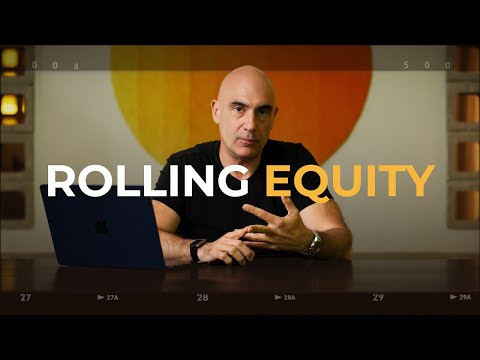
Equity Rolls, Exclusivity Extensions & Talking to Other…
Q&A with Paul Giannamore addressing three common deal situations for business sellers: rolling equity into preferred shares without disclosed terms (including key questions about liquidation preferences, ratchets, and control), handling buyers requesting repeated exclusivity extensions (using milestones, drop-dead dates, and mutual walkaway provisions), and the legal risks of talking to other buyers after signing an LOI with a no-shop clause. Timestamps cover equity rolls (00:00), key questions on preferred share terms (01:00), exclusivity validity (01:30), preventing foot-dragging (02:00), granting exclusivity to earned buyers (03:00), post-LOI buyer contact (04:00), and no-shop clause risks (05:00).
# Video Identity Observations
## Observable Presentation
- **Format: direct Q&A advice series.** The video answers three viewer-submitted M&A questions sequentially ("Next question"), suggesting an audience-submission-driven format: *"We agreed on an LOI and now they want an additional 90 days of exclusivity..."*
- **Host identity.** The creator names himself at the close and in the title: *"I'm Paul Jammore and I'll see you on the next one"* (transcript spelling; title reads "Paul Giannamore").
- **Subject-matter scope: sell-side M&A negotiation tactics.** All three questions concern deal mechanics — equity rollover terms, exclusivity extensions, and no-shop provisions. Demonstrated topics include:
- Preferred vs. common rollover, liquidation preferences, ratchets, control structures
- HSR/Hart-Scott-Rodino antitrust review, walk-away provisions, drop-dead dates, go-shop provisions
- Buyer diligence costs and seller liability for breaching exclusivity
## Intended Audience
- **Sellers/founders navigating a live transaction.** Every question is framed from the seller's perspective: *"Can I talk to them?"*, *"What do I do?"*, and advice like *"never enter into an LOI unless you understand those things."* The audience appears to be business owners (not finance professionals) — the host explains basics such as what a no-shop provision is and why buyers want exclusivity.
## Self-Description Evidence (Creator Claims)
- **Cross-platform presence claim:** *"Thank you for joining me today. I appreciate the comments on YouTube. I appreciate the messages that I get on LinkedIn."*
- **Explicit channel growth call:** *"If you're new to the channel, please like and subscribe and feel free to leave a question below."*
- **Personal rule framing:** He presents advice as his own practice — *"The rule that I follow personally is don't give exclusivity to buyers who haven't earned it"* — indicating a persona of experienced practitioner rather than neutral educator.
- **Implied repeat engagement with transactions:** *"And I see it happen multiple times per year."* (Claim about his experience level, as stated.)
## Distinguishing Notes
- The video **demonstrates** an advice/Q&A format with practitioner authority framing; it does not state the channel's name, history, upload cadence, or broader topic scope beyond M&A deal questions covered here.
- No curated metadata was supplied beyond the title.
# Delivery Observation: Q&A with Paul Giannamore
## Format & Structure
- **Rapid-fire Q&A format.** Each segment opens with the question (read in a slightly different register), followed by a direct verdict:
> "Nope. It's not normal."
> "Nope. You can talk to them if your LOI does not have a no shop provision."
- **Hard lead, then nuance.** He opens with a blunt one-word or short answer, then unpacks conditions and caveats afterward.
- **Explicit segment boundaries.** "Next question." appears twice ([45], [191]) to close each answer cleanly.
- **Bracketed transitions for context:** "Now, it's hard to answer this question without understanding the full context of the transaction."
## Tone
- **Blunt and cautionary**, especially toward sellers facing aggressive buyers:
> "they're either hiding something or they're amateurs"
> "That's not a partnership. That's blind trust."
- **Conversational asides:** "you're not rolling equity here. You're rolling the dice." Wordplay used to make warnings memorable.
- **Enthusiasm markers** when discussing his own rules: "Oo, this is always an interesting one." "in fact excited to talk to you about it."
## Recurring Vocabulary & Phrases
- **"Exclusivity" / "no shop provision" / "LOI"** — dominant terms, repeated throughout every answer.
- **"Dragged their feet" / "dragging their feet"** — repeated across segments ([79], [113], [134], [180]) as a refrain within a single answer.
- **"Earned it"** — a repeated principle framing:
> "don't give exclusivity to buyers who haven't earned it"
> "the buyer has to have earned that extension"
- **"So again,"** — used to restate the takeaway before moving on: "So again, buyers get exclusivity, but only give exclusivity to buyers who've earned it."
- **Rule-stating habit:** "The rule that I follow personally is…" and "keep in mind the LOI is a power document. It is not a placeholder."
## Teaching Habits
- **Rule + rationale + concrete mechanics.** After stating a principle, he lists actionable levers: mutual walkaways, milestone-tied exclusivity, drop-dead dates.
- **Enumerated checklists:** "am I rolling into common or preferred? Is there a liquidation preference? Are they any ratchets that kick in?"
- **Dollar-figure hypotheticals** to make abstract risk concrete:
> "if if I'm a buyer and I just spent $500,000 on diligencing your business"
- **Technical terms immediately decoded:** "HSR review or Hartscott Rodino antitrust review."
- **Personal-practice framing** as authority: "The rule that I follow personally…"
## Closing Routine
- **Consistent outro:** thanks for YouTube comments and LinkedIn messages, "please like and subscribe," invitation to "leave a question below," then sign-off: "I'm Paul Jammore and I'll see you on the next one."
## Uncertainty / Isolated Moments
- The wordplay ("rolling the dice," "power document, not a placeholder") appears once each here; whether it's a signature style would require more videos.
- Disfluencies ("you can you can negotiate," "if if I'm a buyer," "a a a funding source") suggest unscripted, off-the-cuff delivery rather than read copy — consistent across segments but a soft inference from delivery texture.
- Trailing "Heat" utterances at the end are unexplained by the transcript.
# Equity Rolls, Exclusivity Extensions & Talking to Other Buyers — Observation Record
**Video:** "Equity Rolls, Exclusivity Extensions & Talking to Other Buyers | Q&A with Paul Giannamore"
**Speaker:** Paul Giannamore (per title; he identifies himself at the close: "I'm Paul Jammore" [transcript spelling] "and I'll see you on the next one.")
**Format:** Q&A — three seller questions answered, followed by sign-off.
---
## Topic 1: Rolling 20% Equity Into Preferred Shares Without Disclosed Terms
### Question Posed
A seller has been asked to roll 20% into preferred shares, but the buyer won't share details until later. Is this normal?
### Giannamore's Position
**Not normal — and not acceptable.**
> "Nope. It's not normal. You're not rolling equity here. You're rolling the dice."
### Stated Reasoning
- A seller must know **upfront**:
- Rolling into **common or preferred**?
- Is there a **liquidation preference**?
- Are there **ratchets** that kick in?
- What is the **post-transaction control structure**?
- A private equity firm "should be very willing, in fact excited" to discuss these terms.
- **Diagnosis if they refuse:** "they're either hiding something or they're amateurs."
- **Rule:** Never enter an LOI without understanding these terms — otherwise "that's not a partnership. That's blind trust."
---
## Topic 2: Buyer Requests 90-Day Exclusivity Extension Post-LOI
### Question Posed
The parties agreed on an LOI; the buyer now wants an additional 90 days of exclusivity and appears to be dragging its feet. What should the seller do?
### Giannamore's Position
Context-dependent, but the situation underscores the importance of a well-constructed LOI. He offers both a charitable reading and protective tactics.
### Stated Reasoning — Legitimate Reasons for Extensions
- The buyer may be working diligently and just need more time.
- Examples he cites (noting he sees extensions "multiple times per year"):
- Regulatory approvals, e.g., **HSR / Hart-Scott-Rodino antitrust review**
- Lender / funding-source issues
- He notes typical requests are shorter: "another week or two weeks or we need 30 days" — implicitly flagging that **90 days is atypical**.
### Recommended Tactics
- **Negotiate mutual walk-away provisions** if the buyer is dragging its feet.
- **Tie exclusivity to specific milestones / drop-dead dates**: the buyer must do X, Y, Z by a date, or exclusivity terminates and the seller is free to walk away.
### His Personal Rule
> "Don't give exclusivity to buyers who haven't earned it."
- Exclusivity is **earned upfront** through the offer: right offer on the table, trust built, buyer vetted.
- Any **extension** must also be earned — the buyer must be moving in demonstrable good faith.
---
## Topic 3: Can a Seller Talk to a New Buyer After Signing an LOI?
### Question Posed
Another buyer has surfaced after LOI signing. Can the seller talk to them?
### Giannamore's Position
**Generally no — with one explicit qualification.**
> "You can talk to them **if your LOI does not have a no shop provision**. Although almost all LOIs will have a no shop provision."
### Stated Reasoning
- Buyers incur substantial deal costs — due diligence, advisors, lenders, travel — so serious buyers demand **exclusivity**, which by definition bars other buyer discussions.
- It is "likely prohibited directly and explicitly in the LOI."
### Liability Warning
He constructs an example: a buyer spends **$500,000** on diligence (accountants, lawyers, environmental consultants), then the seller entertains a higher bid from a new buyer during exclusivity.
- The seller has **breached exclusivity**; the buyer has sustained losses.
- The seller is "potentially liable for that **depending upon the jurisdiction** in which you reside" — a jurisdiction-qualified claim, as stated.
### Key Takeaway Quoted
> "The LOI is a power document. It is not a placeholder."
- If a seller wants the ability to shop the deal post-LOI, they need a **go-shop provision** — or at minimum the **absence of a no-shop provision**.
---
## Sign-Off
Giannamore closes by thanking viewers for YouTube comments and LinkedIn messages, asks new viewers to like, subscribe, and leave questions, and signs off for the next video.
---
## Traceability Notes
- All positions above are attributable to **Paul Giannamore as expressed in this transcript**; no private beliefs are inferred.
- His Topic 2 answer is explicitly **context-limited** ("hard to answer this question without understanding the full context of the transaction") and he explicitly disclaims knowledge of the buyer's motives ("I don't really know what's going on behind the scenes").
- His Topic 3 answer contains a built-in **contradiction with the literal question**: his initial "Nope" is immediately qualified by the no-shop-condition caveat. Both the blunt answer and the qualification are preserved as expressed.
# Video Attribution & Provenance Record
**Video ID:** 01a168c6-f9ab-756a-a372-2ef2c7c1e0e7
**Title:** Equity Rolls, Exclusivity Extensions & Talking to Other Buyers | Q&A with Paul Giannamore
## Speakers & Roles
| Speaker | Role | Evidence |
|---|---|---|
| **Paul Giannamore** | Creator / host, sole speaker | Title metadata; self-identification in outro: > "I'm Paul Jammore and I'll see you on the next one." (transcript spelling varies from title spelling "Giannamore") |
- No guests, narrators, or other identified speakers appear.
- Questions addressed are submitted audience questions (read by the host); the questioners are not identified.
## Referenced Sources & Third-Party Claims
Claims are the host's professional opinions/advice; no documents, data sets, or external sources are cited. Notable referenced third parties:
- **Private equity firms** — parties in equity-roll scenarios.
- **Regulatory processes** — **HSR review / Hart-Scott-Rodino antitrust review** named as a cause for exclusivity extensions.
- **Lenders / funding sources** — cited as potential reasons for delays.
- **Advisors mentioned in hypotheticals** — "EMY accounting guys" (likely EY; transcript spelling uncertain), lawyers, environmental consultants.
All examples (e.g., a buyer spending **$500,000 on due diligence**) are illustrative hypotheticals, not sourced facts.
## Promotional Segments
- **Channel promotion (outro):** Requests to like, subscribe, and leave questions below; acknowledges YouTube comments and LinkedIn messages.
- No product, service, or sponsor promotion is present.
## Availability & Interaction Limits
- Comments are **available on YouTube** (host explicitly thanks commenters and invites questions).
- **LinkedIn messages** referenced as an audience contact channel.
- No paywall, membership, or content availability restrictions stated.
## Uncertainty Notes
- Speaker's surname appears as "Giannamore" in the title but "Jammore" in the transcript; treated as the same person per self-identification context.
- No curated metadata beyond the title was supplied; no timestamps available.
They want me to roll 20% into preferred shares, but they won't share the details until later. Is this normal? Nope. It's not normal. You're not rolling equity
here. You're rolling the dice. Um, you need to clearly understand from the upfront, am I rolling into common or preferred? Is there a liquidation preference? Are they any ratchets that kick in? What's the control structure look like post? These questions should be very clear and the private equity firm should be very willing, in fact excited to talk to you about it. And if they're not, they're either hiding something or they're amateurs. Never enter into an LOI unless you understand those things because that's not a partnership. That's blind trust. Next question. We agreed on an LOI and now they want an additional 90 days of exclusivity and are dragging their feet. What do I do? Now, it's hard to answer this question without understanding the full context of the transaction, but it goes to show you how important a letter of intent is. The letter of intent lays out the exclusivity terms. Now, it could
be that the buyer is diligently working towards getting a transaction done and they just need more time. They might need some approvals from a regulatory agency or there's a variety of things
which would require the extension of exclusivity. And I see it happen multiple times per year. It's typically not 90 days. It's typically like, hey, we need another week or two weeks or we
need 30 days because something's not going right with HSR review or Hartscott Rodino antitrust review. There's a variety of reasons why a buyer would want exclusivity to be extended. Maybe
dealing with a a a funding source, right? a lender. There's a lot of reasons when you add dragging their feet in there. Um, yeah, I I I don't really know what's going on behind the scenes, but some ways to handle that is you can you can negotiate mutual walkways, right? So, if you're not happy, if they dragging their feet, you're an
exclusivity, there might be a walk away provision in there. Um, you can tie exclusivity to specific milestones. So, it puts them in a position where they're
not dragging their feet. You would have drop dead dates like you need to do X, Y, and Z by such and such a date. If you don't do that, we're free to walk away. My exclusivity is terminated. The rule that I follow personally is don't give exclusivity to buyers who haven't earned it. They need to earn it on the upfront with their offer. Right? That's they've earned the opportunity to get the exclusivity. They've built trust. They've done all the right things. They put the right offer on the table. We vetted them. They've earned that exclusivity. Now, as the diligence period progresses or as the exclusivity period progresses and there's a need for an extension, the buyer has to have earned that extension. They have to be moving in good faith in
being able to demonstrate to you that they're moving in good faith in order for you to extend exclusivity. That puts you in a position where they're not dragging their feet. So again, buyers
get exclusivity, but only give exclusivity to buyers who've earned it. Next question. Oo, this is always an interesting one. Another buyer has surfaced after I signed an LOI. Can I talk to them? Nope. You can talk to them if your LOI does not have a no shop provision. Although almost all LOIs will have a no shop provision. There's an exclusivity period. So in a letter of intent, a buyer is going to spend a lot of money on due diligence, hiring advisors, dealing with lenders, flying around. There's a lot of there's a lot of costs in terms of time and resources and money that go into doing a deal. So any buyer who's really going to dig in is going to want exclusivity. And by definition, exclusivity means you cannot talk to
other buyers. In fact, it's likely prohibited directly and explicitly in the LOI. And if you start talking to other buyers during an exclusivity
period, it can really open you up for liability. I mean, like, for example, if if I'm a buyer and I just spent $500,000 on diligencing your business. I've got my EMY accounting guys. I've got my lawyers. I've got environmental consultants. I've got all these people. I'm spending money left and right. And I'm driving towards transaction. And another buyer comes out of the blue. You get an email or a phone call and you start wheeling and dealing with another buyer who says, "I'm going to pay you a little bit more money than the money you have on the table." Now that might be enticing to you, but now I have sustained losses. You have agreed with me to be exclusive. You've violated that. I have sustained losses. Now you, the seller, potentially liable for that depending upon the jurisdiction in which
you reside. So keep in mind the LOI is a power document. It is not a placeholder. And if you want the ability to shop a deal post signing an LOI, you need to
really make sure that there is a go shop provision in there or at least a the absence of a no shop provision. Thank you for joining me today. I appreciate the comments on YouTube. I appreciate the messages that I get on LinkedIn. If you're new to the channel, please like and subscribe and feel free to leave a question below. I'm Paul Jammore and I'll see you on the next one. Heat. Heat.