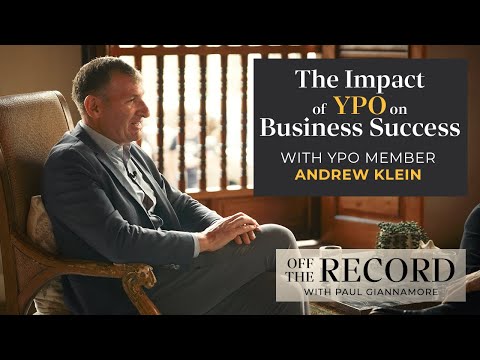
The Impact of YPO on Business Success: An Interview with…
Interview with Andrew Klein, CEO of Douglas Products, covering his career path from a family pest control business to leading a company specializing in agricultural and industrial fumigants. Topics include the role of the Young Presidents' Organization (YPO) in his leadership development, navigating family businesses, his transition from consulting at Rentokil to CEO of Douglas Products, growth strategy including market expansion and new product introduction, stewardship and safety in chemical manufacturing, implementing an Employee Stock Ownership Plan (ESOP), working with private equity, and continuous professional development. Topic inferred mainly from title and description; no tags or comments supplied.
# Video Identity Observations: "The Impact of YPO on Business Success: An Interview with Andrew Klein, CEO of Douglas Products"
## Format & Presentation
- **Interview format**: Long-form, conversational one-on-one interview between the host ("Paul") and guest Andrew Klein, CEO of Douglas Products. The host opens with a personal framing: > "Andrew welcome to PR… it's spent a long time in the making" — indicating the show records in **Puerto Rico** and that guests are personally recruited by the host.
- **Casual, peer-to-peer tone**: The host and guest know each other personally and through shared networks (YPO, the pest control industry), evidenced by exchanges like > "you and Emily Thomas actually before I joined YPO… you guys kind of push me over the edge."
- **Personal rapport over scripted structure**: The interview meanders across the guest's career history, family business background, ESOP strategy, and current role, with the host asking follow-up questions throughout rather than following a rigid list.
## Observable Audience
- The material demonstrates an audience of **pest control and business-industry insiders**: the host and guest discuss industry figures (Terminix, Rentokil, Orkin, Bright Star Capital, Altimont Capital), products (Vikane, ProGuard/ProFume fumigants), and events (Pest World) without explanation, assuming listener familiarity.
- **Business owners and executives** appear to be an intended audience, given heavy discussion of ESOPs, M&A strategy, private equity timelines, and family business succession.
## Scope the Video Claims to Cover
- The title frames the video around **YPO (Young Presidents' Organization) and its impact on business success**. The transcript substantially supports this scope: the guest repeatedly attributes career decisions to YPO, e.g., > "YPO was Central to every large decision I made in the business throughout my entire business career."
- In practice the content spans broader territory: career biography (family pest control business, sale to Terminix, Rentokil consulting), current CEO role at Douglas Products, private equity ownership, and growth strategy.
## Self-Description Evidence
- No explicit channel-level self-description (e.g., "this channel is about…") appears in the title or transcript; no curated metadata was supplied.
- Implicit presentation evidence: the host describes himself as operating in an **advisory capacity**: > "in my advisory capacity there's sometimes…" and references > "I haven't held a real job for many many moons," suggesting the host presents as an advisor/investor rather than operator.
## Demonstrated Content Patterns
- **Guest sourcing via host's personal network**: The guest was a long-invited acquaintance: > "you've wanted me here for quite some time."
- **Recurring theme — YPO advocacy**: Both host and guest describe YPO as career-defining; the host notes others (Glenn Rollins, Emily Thomas) convinced him to join, and the guest credits YPO for his ESOP idea, M&A education, and sale of his business.
- **Industry-focused executive interviews**: The conversation centers on the structural pest control and fumigation manufacturing sector, market share ("85% market share of the structural pest control termite fumigation Market"), and private equity dynamics.
## Claims vs. Demonstrated Evidence
- **Creator claims**: None explicitly made about the channel itself in the supplied material.
- **Demonstrated**: The channel/program demonstrably produces in-depth, personality-driven executive interviews with industry leaders, recorded on location (Puerto Rico), oriented toward the pest control/business community.
## Source Limitations
- Curated metadata was not present, so observations rest solely on the title and transcript. No channel-wide conclusions (upload cadence, series naming, subscriber base) can be drawn from this single video.
# Delivery Observation: Interview with Andrew Klein (CEO, Douglas Products)
## Overall Format
- **Conversational interview format** with two participants: a host/interviewer (Paul) and a guest (Andrew Klein). The host drives with questions; the guest delivers extended narrative answers.
- The tone is **casual and familiar** — the two clearly know each other well, evidenced by banter:
> "a lot of threats and a lot of uh now finally finally some follow through follow through on my part"
> "you do suck at golf... so I get that everyone knows I suck at golf"
## Tone
- **Warm, informal, and joking.** The host uses humor and pop-culture references:
> "you made me think of like the hair club you remember the old Hair Club for Men commercials... I'm also a client"
- The guest answers in a **candid, storytelling tone**, often self-deprecating:
> "I wasn't that smart"
> "I said to myself I'm 57 years old I'm not a good golfer"
## Vocabulary & Recurring Language
- **Business/M&A vocabulary** dominates: "market share," "due diligence," "sponsor owner," "organic growth," "acquire/acquisition," "m&a," "exit," "skin in the game."
> "I've got to leave my imprint here I've got to bring diversity to this company"
- **"Skin in the game"** appears as a recurring motif:
> "they had skin in the game and the business grew considerably faster"
> "I'm an owner and I put skin in the game"
- Industry-specific terms repeated throughout: **"fumigant," "molecule," "viane/Viking gas," "profume," "termite," "Pest Control."**
## Guest's Storytelling Habits
- **Anchors stories in specific, vivid details** — names, dates, places, dollar figures:
> "an old school Italian restaurant in New York City uh a restaurant called petro"
> "I needed $6 million in 2006 and I didn't have $6 million sitting around anywhere"
- **Frequently cites YPO as a causal factor** in decisions:
> "YPO was Central to every large decision I made in the business throughout my entire business career"
> "it has been a part of every large business decision in my career"
- **Uses short emphatic repetitions** for emphasis:
> "very very active I every day with my team I lived and breathed the business"
> "he's he's going to die of this of this cancer uh he's he's he's going strong"
## Filler & Disfluency Patterns
- **Heavy use of "uh" and "um"** throughout the transcript, especially mid-story:
> "and um they love the work that I did and they suggested I go on to the board I said yes to that and um about a month five weeks after"
- **Word-level repetition/self-correction** is a stable pattern for both speakers:
> "it's a completely different sales cycle completely different sales uh measurement"
> "a a a a an intense time of change"
## Host's Interviewing Habits
- **Confirms and summarizes guest answers** before moving on:
> "so back 97 a your father and a buddy of his said you got to do this"
> "so he has to Tender those shares back to the company"
- **Asks probing follow-up questions** that push past polished answers:
> "what made you come to that conclusion it wasn't to save him at your dad die what was it"
- **Uses hypothetical scenarios** to draw out detail:
> "would you sit down with somebody like me and say Paul I know that piece of paper doesn't mean much to you but right now it's worth $5,000"
## Structural Patterns
- The interview follows a **chronological then thematic arc**: current role → origin story (family business) → sale of business → Terminix/Rentokil → YPO → future plans.
- **Closes with a forward-looking wrap-up question** and personal sign-off:
> "what what's kind of the next stop on your train"
> "Andrew well brother as always thank you man"
## Uncertainty Notes
- Timestamps were not quoted precisely since the transcript's bracketed markers appear to be subtitle cues, not verified timestamps; all quotations above are taken verbatim from the transcript text.
- Whether the repeated "uh/um" disfluencies reflect the speakers' natural delivery or transcription artifacts cannot be determined from this source alone.
# Position Record: Interview with Andrew Klein, CEO of Douglas Products
## Participants
- **Andrew Klein** — CEO, Douglas Products (guest)
- **Paul** — interviewer, host in Puerto Rico (identified by name within the transcript)
---
## 1. YPO's Central Role in Klein's Career
- Klein states YPO (**Young Presidents' Organization**) was **"Central to every large decision"** he made in business, up to and including joining Douglas Products.
- He joined **in 1997 in his early 20s**, reluctantly:
- He did not want to join — he felt too young and lacked confidence as the true leader of Assured Environments.
- His father's best friend, **Tom Schulhoff**, persuaded him: "you need YPO to teach you how to navigate a family business."
- Paul corroborates his own experience: Klein and **Emily Thomas** encouraged him to join YPO, which he calls "phenomenal."
### YPO-derived decisions cited
- **ESOP strategy (2006):** At a YPO breakfast on ESOPs, Klein conceived gifting ~20% of Assured Environments to employees over ~7 years to fund the $6M buyout of the 75-year-old partner, reduce tax burden, and give employees "skin in the game." He credits this with accelerating organic growth: "100%" difference.
- **Sale of Assured Environments (2019):** Watching YPO friends grow their businesses convinced him he couldn't achieve geographic/international expansion while solely owning the New York business.
- **Education:** YPO seminars on M&A and a Harvard program filled gaps from his French history background; he's considering Oxford and INSEAD programs (uncertain whether a program is May or fall — unresolved in transcript).
### Forum
- Klein has been in **three forums over ~30 years**; each forummate served as a sounding board, "like having a board of directors… there to protect me and my interest."
---
## 2. Path to Douglas Products CEO
- Summer prior: consulting for **Rentokil (Terminix)** under John Meyers, liaising with 17 franchises.
- **Eric Epstein** (YPO friend) connected him to **Bright Star Capital** for due diligence consulting; no conflict since Rentokil isn't in chemical manufacturing.
- Bright Star acquired **Douglas Products in September**; Klein joined the board; CEO **Wes Long** resigned ~5 weeks later; Klein became CEO by **end of November**.
---
## 3. Douglas Products: Business Facts and Growth Strategy
- Core products: **Vikane** (structural termite fumigation — FL, CA, Gulf Coast) and **Proume** (post-agricultural; same molecule, different label; majority sold in US — California, Midwest grain silos, nut industry; timber in EU). Headquartered in **Liberty, Missouri**; manufacturing in **Pittsburgh, California**.
- History: Altimont Capital acquired Douglas (~$6M heating/coolant chemicals business) and the labels from Dow (DCA) around 2012; Bright Star is the new sponsor.
- **85% US market share** in structural termite fumigation — limited growth headroom there.
### Growth strategy (three strands: organic, M&A, international)
- Organic growth in post-agricultural: US, Mexico, EU, entering **Malaysia and Pakistan**.
- Hired **Eric Schroer** (ex-Terminix, ex-Copan) as Chief Revenue Officer — domestic and international sales.
- M&A: "yes to all of that" — larger mature revenue-generating acquisitions "move the needle," but he's hiring an M&A leader for smaller/younger ideas to diversify beyond the single molecule.
- Praise for Bright Star: "believers in building and investing in businesses rather than… financially engineering them"; many original Dow/Altimont-era leaders remain.
### Safety/stewardship position
- The molecule requires continuous training; Douglas has emphasized **stewardship since the 1960s**. If users cut corners (vetted via complaints/violations), "that user is done… no ifs, ands, or buts."
### Playing offense
- Historically "the molecule sold itself"; his priority is proactive growth rather than passivity — tied partly to a challenge he notes: **higher interest rates → fewer home inspections → fewer termites found → less fumigation demand**.
---
## 4. Personal History and Reasoning
- Third-generation family business (Assured Environments); at 16 ran a NYC route in the 1980s "spray and pray" era — had a negative view of the industry then.
- **European history major at Dartmouth**; began MA/PhD in French history.
- In **1992**, his father doubled the business by bringing in a 75-year-old partner who recruited Klein at restaurant Pietro — motivated partly by fear of being partnered with Klein's widowed mother. Klein joined, he says, out of obligation to family (his mother especially), and the realization he'd become "the most educated exterminator in the world." **He never looked back.**
- Father's **blood cancer (amyloidosis)**: treated with chemo and stem cell transplants; now 83, "not going to die of this cancer." Klein says the illness influenced the sale timing — liquidity concerns for his mother.
- On selling: "I was seduced and I don't regret it at all"; at 57, he feared regretting never challenging himself.
- **Terminex learning:** "a culture of measuring is absolutely important" — something he did not learn in the family business.
## 5. ESOP Outcomes and Qualifications
- Example: manager **Teresa Seabold** paid off/bought a home — Klein calls the ESOP **"the most important thing I've done in business."**
- Early skepticism: old-timers called the shares meaningless; one employee retired ~a year too soon and "left a lot of money on the table."
- Klein admits he **did not** tie share value conversations to metrics — "I wasn't that mercenary… in retrospect it would have made a whole lot of sense… I wasn't that smart." Paul counters that such outcomes are unknowable in advance.
## 6. Current Commitments and Motivations
- Committed to Bright Star **through the turn to the next sponsor owner — "at least seven or eight more years."**
- He **co-invested** with Bright Star: "I'm an owner and I put skin in the game."
- Motivation at 57: showing his four children "you got to give it your all"; he jokes he's a poor golfer.
- Learning curve: consulting heavily with regulatory, operations, and CFO heads — manufacturing sales cycles (pounds/cylinders sold) differ fundamentally from service pipelines.
- Advantage noted: every major customer is a friend of 30 years — "a great thing… also a challenge" (favor requests).
- Upcoming: presenting growth strategy at a Bright Star investor conference at The Breakers (Bright Star described as a "four plus billion dollar" fund; Douglas is the first Fund III acquisition).
# Speaker Attribution & Provenance Record
## Video
**Title:** The Impact of YPO on Business Success: An Interview with Andrew Klein, CEO of Douglas Products
**Video ID:** `01a168c8-a011-7e64-bc0b-0c83379724c9`
## Speakers & Roles
- **Paul (interviewer/host)** — Creator/host of the "PR" (Puerto Rico) interview series. Self-identifies as an advisory professional, YPO member, and long-time acquaintance of the guest. He introduces and closes the interview and poses questions throughout.
- **Andrew Klein (interviewee)** — Guest; **CEO of Douglas Products**, a fumigant (Vikane gas, ProFume) chemical manufacturer owned by Bright Star Capital. Former owner of Assured Environments; former Terminix and Rentokil (Renile) executive; YPO member since 1997.
## Referenced Third Parties (named, not speaking)
- **Tom Schulhoff** — Andrew's father's best friend; persuaded Andrew to join YPO.
- **Eric Epstein** — YPO friend who introduced Andrew to Bright Star Capital.
- **Wes Long** — Prior CEO of Douglas Products; resigned after Bright Star acquisition.
- **Eric Schroeder (also "Schroer")** — New Chief Revenue Officer at Douglas; ex-Terminex and Copan.
- **Bob Klein** — Andrew's father; co-founder of the family business; cancer survivor.
- **Ted Baron** — Andrew's father's 75-year-old business partner (bought out in 2006).
- **Teresa Seabold** — Former manager who benefited from the ESOP.
- **John Meyers** — Andrew's reporting manager during Rentokil consulting.
- **Nick, Dion, Brett, Kim, Glen Rollins, Emily Thomas, Jason Pananos, Jay Davis** — Industry/YPO contacts mentioned.
- Firms: **Bright Star Capital** (current PE owner), **Altimont Capital** (prior owner), **Dow (DCA)** (original Vikane/ProFume owner), **Terminex, Rentokil, ServiceMaster, Douglas Products, Assured Environments, BDCI**.
## Promotional Segments
- **None identified.** No product promotion, sponsorship reads, or calls-to-action appear in the transcript. Discussion of Vikane/ProFume and Bright Star Capital is descriptive/interview content, not flagged promotion.
## Availability & Metadata Notes
- **No curated metadata supplied** beyond title; speaker identities inferred from conversational context within the transcript.
- **Comment availability:** Not stated.
- **Timestamps:** None present in transcript.
- Interview appears to take place in **Puerto Rico** at the host's location.
Andrew welcome to PR hello Paul thank you for having me it's spent a long time in the making we've over the co period we talked a lot about you coming down and I'm stoked that you finally were
able to do it a lot of threats and a lot of uh now finally finally some follow through follow through on my part not on your part you you've wanted me here for quite some time so you're coming down though in a very different position than you were last time we talked about you coming down here the fall you are now CEO of Douglas products correct so Pest Control effectively um corporate development I mean you've done all sorts of things now you're the CEO of a manufacturing business how the hell did this happen it's an interesting story um and it has everything to do with some business development opportunities that were sort of thrust upon me early on in my career early on in my career my dad and and a very close friend of his arm Twisted me into joining an organization called YPO young president organization and um really they were the ones that yeah I you didn't want to do it I did not want to join YPO okay uh in 19 uh 97 was when I actually joined I didn't want to join because I was very young in the business I didn't feel confident I didn't feel that I was truly the leader of assured environments at the time and um my father's best friend a guy by the name of Tom Schulhoff came to me and said this is exactly the reason why you need YPO you need YPO to teach you how to navigate a family business and um doesn't matter how rich everybody else is in YPO you need YPO for for that sort of training and and you were in your 20s my early 20s okay
so back 97 a your father and a buddy of his said you got to do this yeah I got to do this and um YPO was Central to
every large decision I made in the business throughout my entire business career even up until joining Douglas products as a CEO um but so let's start in the present um last summer I was uh Consulting for rill and I was reporting to John Meyers and I was leading uh the franchise uh the 17 franchises and helping him um be the intermediary between rent tokill Terminex and the franchises yep having a lot of fun doing that um but uh it wasn't you know it was it was it was challenging but it wasn't everything and um uh I was approached by a YPO friend of mine um a guy by the name of Eric Epstein and he said listen I've got a friend uh who is the founder of bright star capital in New York and they're in the hot and heavy due diligence stages of buying Douglas products and would you be interested in uh doing some Consulting work for them and there was no conflict with rill because rill is not in the chemical manufacturing business and um I said yes and um I started uh helping them with due diligence We All Bright Star ultimately acquired Douglas products in September of uh last year yep and um they love the work that I did
and they suggested I go on to the board I said yes to that and um about a month five weeks after uh acquisition
the CEO decided that he wanted West Long a lovely guy decided he wanted to do something different he'd done this for quite some time MH and um offered his resignation and um four weeks after that by the end of November or five or even longer um I found myself with the opportunity to be the CEO of a manufacturing uh a manufacturing chemical maker in this industry so Douglas if I remember correctly the core products of the company are agricultural industrial fumigant right correct and that's viane gas viane and and profume so viane is the uh label which is used for structural pest uh primarily for termites okay in Florida California even parts of the Gulf Coast and then profume is the post agricultural label same exact molecule just a different label uh used um all over the all over the world um to fumigate uh agricultural products that are on the label so I'm now in the agricultural space and also in the uh uh structural pass control space is the majority of the profume sold overseas no actually the majority is uh pretty much here in the US in California and uh and in the midwest so grain silos that sort of thing the nut industry in California um timber in the EU yeah Douglas products is based in Missouri Liberty Missouri you guys manufacture out in California in Pittsburgh California so the history of Douglas is
uh it's really a private Equity you know dream story in a way okay um uh Douglas was actually started by an individual in Liberty Missouri um and then Altimont
Capital the previous sponsor owner of uh prior to Bright Star Capital Altimont acquired Douglas products and also the viane and and uh profume labels from DCA and I believe it was 200 12 and um yeah so they they acquired it they put everything together they brought in a new CEO Wes long and uh they built it for for a period of time and how do you you know now that Douglas has a new Financial sponsor but how do you grow a business like that um you know because there's only I I I would imagine you guys already have a massive market share in your partic product lines already right yeah so is it adding additional products so there's two or three prongs to the strategy on growth in uh for me right now and the interesting thing for me is that it brings all different sorts of strands of my career together uh how to build an a business organically how to build a business through m&a because of my m experience at Terminex and um and international so all those three strands together pulled together are what are going to grow this thing so presently Douglas has 85% market share of the structural pest control termite fumigation Market here in the US so there's not a whole lot more that we can grow that um but we have less market share in the post-agricultural side of things so we really want to try and grow the business organically focusing on a
and uh both a here in the US and a outside of the US in Mexico in the EU we're about to enter Malaysia
Pakistan and um yeah so that is the organic side of things and we actually just um I was very very lucky to have the opportunity to um uh bring Eric schroer on board who was uh a sales leader both at Terminex and also at opan and um he's leading our commercial sales effort now so what will he focus on domestic sales so he's the chief Revenue officer he will focus on domestic and also International sales and we have historic sales leaders in the organization um who are still here the beauty of bright star Capital actually is that they've um they are they are believers in building and investing in businesses rather than take them taking them apart and financially engineering them so much of the original Dow CA team that um was on site during the Altimont acquisition have continued to stay and be leaders here uh at Douglas um today too I don't one thing I don't understand about that is Douglas products did they exist prior to owning vican and profume were they the manufacturer of that no or so Douglas products uh was started by an individual in Liberty Missouri and it was primarily an agricultural an
amalgamation of of of of agricultural products and heating and coolants uh you know chemicals Heating and coolant chemicals um about six different
different chemicals and it was about a $6 million business uh at the time that um uh Altimont bought the SF molecule and combined it together with this uh with this Douglas products and use Douglas as the corporate entity to um to be the parent of everything I see so for Bright Star this is brand new these guys are digging right in right now you guys are forging strategy here for the future you're bringing on some talented folks that you've known from from years past um as you start to think about about what you're going to be doing at this business how do you feel like you're going to put your unique Andrew Klein fingerprints on this based upon I mean you've been in the pest control industry really since you graduated school yeah for the most part right yeah I came from a third generation family business I didn't originally envision myself in this industry and um when even though when I was 16 years old I went to go work for my dad I ran a route in New York City and um that was during during a period of the 1980s when uh people were spraying and praying and I was given a B&G sprayer as a 16-year-old and a stack of work tickets and I was told go complete these these these these work tickets in a day and come back at the end of the day and you know hand them in and I remember walking into my first account as as a teenager and you know sort of not knowing what to do and I went into an apartment building and the
super came to me and said said you know I know where you need to treat I'm going to show you what you need to do you need to spray here spray there and you know that's what I want you to do I'll sign your ticket leave and I was like this is
this business and uh I had a really sort of negative feeling about the business in the 1980s and as I was in college and when I was thinking about what I wanted to do I was like this is not how I Envision this is not the a precise business this is not a business that it feels really positively about itself and I wasn't wild about going into it and um weren't you studying Humanities at Dartmouth at the time I was I was a history major European history major and I had a girlfriend at the time that uh convinced me to go into a go get a ma PhD in French history and that's what I started okay and um I remember graduating college and my my dad said before you start your Masters I just want you to take one more look at the business before before you know you decide that you don't ever want to do this ever again and I did and the business was about a $3 million business at that period of time and it was a commercially focused business and all of the largest customers in the business were my dad's friends and I remember shadowing my dad as a 21 or 22 year old um going to visit his his biggest customers and saying to myself gosh how in the world do I carve out my own identity in this business with my dad being so Central to it and my dad at that time was very young you know he was in his early 50s and um so I just said listen I'm going to listen to that girlfriend I'm going to go get a PhD I'll go become a teacher I'll go do something different and not thinking about you know how I was going to support myself or or anything like that um overnight my Dad decided to double the size of the business by bringing a uh a partner into the business and I remember it was 19 uh9 2 and uh I was in graduate school and this partner was 75 years old at the time and he invited me out to an old school Italian restaurant in New York City uh a restaurant called petro and I remember vividly going to this restaurant ordering you know the specialty uh Chicken Pietro over uh uh
it was during a period of time where you like it was a one or two Martini lunch and uh and this 75-year-old was trying trying to convince me that I needed to
give the business another shot because now the business was not a $3 million business it was a $6 million business and he needed me he needed me particularly because he was worried if my dad got hit by a bus he was going to be partners with my mom a widow and he didn't want that and he was too old to to sort of like try and run the business all on his own and uh overnight I went back home I thought about it I said you want to know something I'm going to do this I'm going to try it and I never look back what made you come to that conclusion it wasn't to save him at your dad die what was it I felt that it was important for my family to do it because my brother wasn't going to go into the business it's a whole other story my brother is a is a wildly successful Hotel guy in California and New York um and I felt that I owed it to my mom to be quite honest and even my dad to to really seriously consider it and overnight I realized that I was going to become the most educated uh exterminator in the world by doing this y so that's how it happened that's how it happened yeah and and you were there non-stop basically until ultimately the ultimate sale of the business to so we sold the business in 2019 and uh part of the reason that we sold it again had to do with YPO and various opportunities that um that uh that YPO sort of like put into my head and um I really belied that there was more for me to do in the industry and the world watching what my YPO uh friends were doing with their family businesses and I realized that if I wanted to grow my business um in a
certain way both geographically possibly internationally um and possibly into other lines of of of uh of business I
couldn't do it by just owning assured environments in New York I needed I needed to sell it and um it was a moment in time actually when my dad was also uh getting treated for um for uh blood cancer I remember that I think everyone thought your father might not make it that right knockwood yeah he um he's he's in terrific shape today he completely beat beat the cancer there's a very rare uh form of cancer called amalo dois MH and uh he had chemo uh he had stem cell transplants his own stem cells and um he's now 83 years old and um he's he's uh he's not going to die of this of this cancer uh he's he's he's going strong that's great yeah and so do you think that had an influence on the decision that at the time well I had a big influence on my dad because my dad was very worried about my mom and the liquidity that my mom might or might not have if he didn't make it through uh the cancer it was a moment in time where he was in a mind frame that he was okay to sell the business my mom was in a mind frame where she was totally okay for us to sell the business and um and I wanted to you know do more and at the time we had just sold Copan to Terminex and Terminex came knocking on my door wanting me to help more and more with them with their International strategy Y and I realized that you know no matter how many years I stayed in assured environments in New York City at my desk I was never going to have an opportunity to help build a business in China help build a business in Europe and uh I was seduced and I sold and I don't regret it at all it's opened up so many other opportunities for my career to be challenged to be to to be pushed and um
while I'm 57 years old and I'm not necessarily a young kid any longer I realized at the time when I sold in 2019 that if I didn't do it then I might regret for the rest of my life that I
never really challenged myself business-wise and I just sat there in my business waiting for my dad to die if you think back to when you sold that business I mean how active were you at that time in the day-to-day operations very very active I every day with my team I lived and breathed the business the challenge at the time you know after we sold was how do you become a corporate guy at Terminex uh or service master and still you know have the same um the same drive when it's not your own business and uh I was I was able to translate my experience as a as an entrepreneur as a business owner and and Slot myself into that new world it was different it was a challenge but you know it was a challenge that I that I openly accepted and loved and relished and uh it's helped me today figure out and navigate you know what it's because working for a private Equity Firm is very different from working for a company but there are certain um certain thing certain learnings that that that I acquired at Terminex that have really served me very well whatever you want to say about Terminex Terminex taught me that a culture of measuring is absolutely important and it was not exactly something that I learned in my family business um because I had to report whether I was on the m&a team or whether I was you know an the the op the Vice President of Operations of the commercial Northeast which I was for about a year and a half there was a culture of measurement at Terminex that was you know was was Perfection and really really taught me how to think of my business uh in or whatever business I was in in a different in a different set of terms you know you sold that business in 17 if I 2019 2019 well it was the first part of the
year right marchish is that right March uh at the end of uh at the end of uh 20 2018 early January 2019 because then fast forward you know you you spent a
lot of time with Nick and with Dion yes those guys had huge plans Acquisitions in Asia doubling down on Europe it was they were already kind of looking at no more at that time they had plans to really just blow that thing out and you sell your business then all of a sudden Stephenson quits or gets can I don't even remember what happened back then but the president of terminus is gone Nick departs shortly thereafter Dion steps into focusing on something different within the organization so everything changed Brett in and yeah then Brett came well Brett came on then we had Kim and then you go another year or so and then there's the announcement that rill's coming into a b ter and next so now you have that integration so you went through a a a a an intense time of change at Terminex onto renil I think renil was a was a a great experience for you overall 100% at what point though were you starting to think about your next steps meaning you ended up coming to Douglas for because of a YPO buddy right somebody who you've known for a long time and it was a perfect opportunity um but I don't really recall you out there being trying to figure out like you weren't out there applying for things you were just focused on I envision myself um and my career at Terminex for you know that's that's I
knew that there was always the the possibility that I would have to recreate a career that there was an there was a possibility that I would get fired that I would that I would fail
miserably and um it was a CH it was a and uh that I was willing to take um but I never really thought of myself like wow I'm going to sell this business and then once my non compete non-solicit is over I'm going to go back into becoming an operator I'm going to go back into you know I'll go create assured environments all over again or or maybe I'll go now into the residential market and do something like that no I never thought of that um because that's one of the reasons why you actually sold is you wanted to you'd run that for a while you wanted to have something entirely new and I got something entirely new and when um the rent tokill oper when the rill deal uh came through to acquire Terminex I organically knew this was the absolute correct uh deal for both of these two companies but I also organically knew that I was going to be out of an opportunity to um to to to continue working in the same way that I had been working um at Terminex because rill had people you know wonderful people doing what I was doing already at at Terminex for Terminex and um you know I spent uh the opportunity that renil gave me was to stay on as a consultant uh as long as I wanted and I
had a great a great year there working for John and I think the world of John um and um yeah so but I never envisioned myself going back and becoming the
entrepreneurial operator that uh I had been and joh I'll go back to what we're what you were talking about a minute ago we talked about Douglas products and they have got 85% of the fum market share structural P Market sh y I mean that's obviously massive and so it it's really hard to grow a business that's already got 85% of the market share right I you can get to 100% so clear clearly you guys will be adding on additional products correct sometimes companies will go out and you know be in like traps and Termite baiting and you you've got to mix of different sorts of things and my impression that's probably not the path you're going to go down to right but as you start to formulate strategy and think about how do you grow this business would you guys go out and would you think about acquiring relatively mature businesses would you think about you know there I I get calls all the time from these guys that are tinkerers and a lot of stuff has been invented by Tinkers right you got all these small little companies you know all these guys right right you're at pest World they run up to you and say hey look at this I mean would you consider going out and buying ideas so to speak I mean what's your thoughts on all this so my thoughts on are yes to all of that the reality is what's going to move the needle is uh not necessarily buying an idea and buying something relatively young but buying something that has quite a bit of IA quite a bit of Revenue and has a lot of maturity so that's going to move the needle but at the same time I'm also in the process of bringing on an m&a leader that's going to help me go out and find those younger ideas those younger businesses that will also add diversity to um this this single molecule the m&a strategy that I have right now is I've
got to leave my imprint here I've got to bring diversity to this company I've got to do it in a big way and an in an opportunistic way um and with smaller
opportunities big opportunities small opportunities and that's what bright star wants wants me to do to add value to the business you know Viking gas is a fumigant and it's odorless colorless right correct is that why this is potentially so dangerous you know this is a molecule that if it's not if it's not used in uh a a safe and trained manner you need to continually train technicians and companies on the use of the molecule Douglas from the beginning of the 1960s when Da brought this to Market M focused on stewardship so training and safety and you know and if people you know have a semblance of cutting Corners we don't sell them so um it is it's it's and how do you know that like how do you know well if there's ever a violation or an infraction and a complaint um it trickles up to the company and we vet it and that user is done and you know over time there have been many people who have bought the product used it abused it you're done out
yeah and there's no ifans or butts about it because it's that important to uh this company so you're down here in Puerto Rico you're going to be seeing
some old YPO buddies here I guess in my chapter down here huh I know you personally and you and Emily Thomas actually before I joined YPO I remember both of you said something very similar things to me which was like it's singly one of the most important professional decisions that I've made my life Glen Rollins too was in YPO that's right and so it was you and Emily actually were driving for and and Jason pananos and Jay Davis at bdci which are outp R kill they were in it and and but you guys kind of push me over the edge and finally joining and I agree wholeheartedly with you like for me it's been pH phal but I mean what aspects of YPO do you take advantage of because we've got you know everything from Forum to chapter meetings to educational events to I'm very as you well know I use I tap into our overseas net work because I travel overseas all the time and like if I'm popping into turkey or wherever I'm going into I'll reach out to the chapter see who's around um I'm a member actually of the Philippines Chapter as well um it's this country I do a lot of business in so what has YPO meant to you YPO to me is something a little bit more domestic and maybe a little bit more mundane but it has been a part of every large business decision in my career um so when I I referenced you know my father's 75-year-old business partner in 2006 um my dad and I decided that it was time thank you it was time to to uh buy him out and the
strategy was that uh my father already had 50% of the business I had a much smaller percentage and U the idea was for me to go and buy um the partner
shares I didn't have the money to do it uh I needed $6 million in 2006 and I didn't have $6 million sitting around anywhere for me to go to go buy the shares and um I remember going to a YPO meeting a breakfast meeting on esops and I started thinking wow this is a brilliant strategy ESOP is an employee stock ownership plan and essentially what it is it's uh gifting shares of the business potentially to your employees to get a tax advantage and my problem with not having $6 million was that if I borrowed $6 million I'd have to pay full boo tax on that $6 million and what I realized with an ESOP was that by getting my employees ownership of the business I could reduce my tax burden but I could also enlist my employees to become my partners in making sure that I paid all that money back MH uh and then some and they were now owners of the business so that was an idea that that came to me through YPO we sold 20% of the business uh or gifted 20% of the business to the employee so over what time period uh it was over about a 7year
time period okay and after I did that my employees became so focused on growth so focused on um the business in a way that
they hadn't been before this because before this it was Andrew and Bob and Ted Baron the partner were owners and we have great jobs and they're nice guys and we get nice bonuses but now they had skin in the game and the business grew considerably faster and and larger because of that organic growth separate from whatever we were whatever Acquisitions we made think you made that big of a difference yeah oh 100% 100% And you know when you think about even like a working for a company like Terminex or renil or or even working for a private Equity Firm where you can be gifted B shares or you know a private a private family business never does that right I mean I mean you could gift Phantom stock but this would was actually gifting ownership and it was I changed lives by doing that in fact I remember talking to one of um my managers about a year after we sold the business uh a G by the name of Teresa seabold and she called me to thank me because um she was able to pay off her first home she was able to buy a home in Florida and she said to me I changed her life and her family's life by just by by that that's the most important thing I've done in business that I that you said to me Andrew what is the most important thing you've done in your life in business that was it that decision was the most important decision but you know I it's easy to see that in retrospect after you have an exit where these folks monetize that and they get a bush of cash but in those early years when you did that ESOP they're getting
relatively meaningless certificates I would imagine employees looking at this and be like okay how does this what does this mean to me so how did how did that work got to create a culture of inclusion and a culture of sharing of
exactly what's happening in the business and what exactly those shares could theoretically mean and you're right in those first few years there were many Old-Timers that said ah this is oldtimers from my from my dad's day that said you know this is meaningless uh or I don't see the I don't see the payoff in this and I know one guy in particular that retired about a year too soon and left a lot of money on the table by doing that and my dad begged him don't do this you're and he retired and uh he he walked away from so he has to Tender those shares back to the company yeah if you had you had well no you whatever whatever he had earned up until that point was his uh but the reality was until we actually had um the the the the exit that we had uh those shares were valued consider at a considerably lower market value versus like an investment value of a transaction yes right right all of that gotcha and he also left shares on the table that that that uh he walked away from so over that course of time were you would you sit down with somebody like me and say Paul I know that piece of paper doesn't mean much to you but right now it's worth $5,000 and if we keep growing like this it's going to be worth 10 and that's going to be worth 50 is that the sort of conversations you had those were the conversations that I was having and you tied them did you tie them to metrics saying like hey guys if we hit these
numbers they're likely to be worth you know I didn't um and that's because I didn't truly believe that I was going to sell the business
until uh it dawned on me that I should sell the business I didn't do that um I wasn't that mercenary but in retrospect it would have it would have made a whole lot of sense to do that um but I didn't do it I wasn't that smart well you just you can't know these things you can't know these things until you don't know them right so you you were at a YPO breakfast you heard somebody talk about esops you needed $6 million about the part the party the partner I should say and all of a sudden you're like okay let's do an ESOP what else have you taken out of YPO how to negotiate how to do m YPO has got has actual seminars on mergers and Acquisitions and over the years when I knew that I needed to uh school myself on m&a I went to YPO and uh YPO also has uh um seminars and and programs at Harvard I did that so whatever I needed to learn in business that I didn't get from my own education I made sure to grab from YP are you going to do any events this year um you know there is a wonderful program that I'm looking at at Oxford Oxford University in uh the UK which program it's a it's a business program there's also another business program at anad in Paris also that I may very well do in May I think that's in the fall oh it's in May maybe it's in the fall I thought it was in the fall the fall go yeah so YPO for me is really about rounding out all the sort of like blind spots that I've had in my business life because I really I didn't go to business school I you know got this degree in French history yeah I need to learn I I need to learn learn somewhere somebody need to teach me yes um and I would imagine like every major business decision you've made you've probably talked about it with your Forum so my Forum 100% my Forum has been and I've been in three different forums over the almost 30 years that uh
I've been in YPO and everybody each for mate has been um as an important sounding board as I
could have ever asked for and you know mostly everyone comes from a different Walk of Life and a different business experience whether in finance or manufacturing or other service Industries um and just to be able to you know pose pose them with a problem or an opportunity whether to acquire a new business to sell my assured environments you know what does that mean how do I go about doing that what are the professionals that I need to to go and uh tap into they were with me every step of the way and it was it was like having having a board of directors if you will yeah that are just there for you and not to like not to get not they don't have an ax to grind and they're they're just there to protect me and my interest yeah my family interest that's great so Andrew bright star bu this thing the end of last year how long I mean did you make any commitments to them as to how long you're going to stay sure uh I did and I made a commitment to stay with them through the turn of the business to the next sponsor owner and that's at least seven or eight more years okay so you've committed to them um what about you you've only been at this a few months and so this is different for you because you own the family business then you work for a huge corporate and now this is one of those Pure Play Standalone businesses that's owned by a private Equity Firm you appear to have a great relationship with the bright star guys what's you know your first six months on the job as a CEO look like you spend your time doing I would I mean you know the business you know the fumigant you know the players but I'd imagine you've had a lot of homework to do sure a lot of homework to do because I've never been in the manufacturing space um
so I've spent a lot of time uh with my head of regulatory I spent a lot of time with my uh head of operations and my CFO to understand the Dynamics of this
business it's it's not a service business right you know we're we're measuring how many pounds of fumigant we're selling how many cylinders of fumigant we're selling into which markets you know and and you know we have to be able to to uh predict you know how we hit certain targets and so it's a completely different sales cycle completely different sales uh measurement if you will than when I was at assured or even when I was at Terminex you'd think about you know salespeople have got a pipeline and you know they've got so and so many opportunities in the pipeline and you know they've got a conversion rate and that's you can therefore predict how much organic growth you're going to drive into the business through that it's completely different here because this business is really tied to um you know how successful um fumigators are specifically on the structural side how how successful fumigators are in getting opportunities to fumigate homes right so when interest rates go high fewer Home Inspections get done and therefore fewer termites are found because you know termites are unusual creatures they they they don't always present themselves uh unless somebody pays for an inspection because they're selling their house so as interest rates have gone a little bit higher um you know it's been we've had to figure out ways how to drive growth one of the interesting things that that that I've been challenged to do and I've spent a lot of time and that's why I brought Eric uh into the company Eric Schroeder in the past the molecule sold itself right so my first priority here was how do we take control of our business and become more proactive in everything that we do and drive growth rather than wait for the opportunity to come play offense rather than be passive and that has been a an unbelievable uh
opportunity but it's also been a challenge and we've been doing that both on the on the organic sales side and everything in the business we're playing offense continuously makes me wonder you
know I've never been in the position where I've come in as you know I haven't held a real job for many many moons but like I've never been brought in as the CEO of something but I do know you know in my advisory capacity there's sometimes you have a personal I don't even know how to say this but like you're you're new CEO you show up to the job you probably everyone probably has a natural inclination to want to do something to prove their value right you're the new guy on the Block you're the new CEO so like I gotta change this or make this work or do you find yourself fighting that uh that's a great question and and it goes to the heart of working for a private Equity Firm because private Equity is all about or at least this wonderful private Equity Firm that I'm working for is all about investment and growth and um it is really it's it's interesting because there's no time to waste here they they've got a timeline you know they're five to seven years at the max that that they that they want me to have my effect on the business and so I've got to hit the ground running my
team's got to hit the ground running and there's you know I started in at the end of November there's I mean there was there's not
let's let's go see if we can learn about the business in a year uh the greatest part about this business for me is that every one of the largest customers of Douglas products that we sell through um uh through distribution every single one of our largest customers are friends and acquaintances of mine for the last 30 years in the industry so I've never been in a position until now where the people that I'm selling to and that I'm selling with are friends and they partners so it's it's a it I mean that's a great thing it's also it's a challenge right because you know if you you if you're friends with everybody you know you're everybody comes to ask you for a favor right you know it's like why are you doing this why are you doing that but but it it's a really interesting opportunity that's great I'm glad you're doing this actually I was shocked when you took the role I was just like like manufacturing now but it seems like it would be you know at the end of the day when you've been successful in life you always need to find a new challenge I think this is going to actually be a challenge for you I this not going to be easy streight yeah it's interesting it's not just a job I actually BrightStar uh asked me to co-invest with them so it is I'm an owner and I put skin in the game and it's not just it's not just you know me trying to check a box I really do believe in what I'm doing you made me think of like the hair club you remember the old Hair Club for Men commercials like I still have I still have hair I'm also a client I'm not a but you do I know it's mine maybe I'm the one that paid attention to those commercials you ever had to right no but that's great though so you're you're you co-invested in this you got some skin in the game yeah yeah yeah yeah and I'm having a ton of fun at it it's um and you know I was
too young to I mean even at the end of when I heard the news uh you know that renil wanted me to consult and you know sort of take it more easy I could have
retired but I've got four kids uh there're two of them are two of my kids are grown two of them are younger one's just graduating high school this year the other one is a 15-year-old freshman in high school and I said to myself I'm 57 years old I'm not a good golfer what what is it going to show my children for me just to go sort of like knocking about the world and just you know having fun and I I really felt it was important to uh to to show my kids that you got to give it your all no matter what no matter how much money you've made in whatever part of life you've got to give it your all and you just don't hang up your completes until it's time I mean how do you really have fun if there's no challenge right like right right and you do suck at golf so that would so I get that everyone knows I suck at gol but you know like Bob Klein what how old's that dude that is uh going to be 83 yeah and he's still working yeah he's still Consulting yeah he went he was at a meeting in New York a couple months ago Mexican showed up you dad's Consulting and yep if anyone should wind it down it's him that's right but I guess he's not do that no Andrew thanks so much for coming down it's great to finally see you here in Puerto Rico um my final question for you as you head out of here in Puerto Rico what what's kind of the next stop on your train what are you doing what's so it's interesting that you asked that question uh headed back to New York but I'm actually headed down to an investor conference for Bright Star Capital At The Breakers uh
on Thursday and Friday and I am being showcased as this new CEO uh of this first investment of their fund three bright star is actually it's a uh four plus billion dollar um private Equity Fund and um yeah so Douglas was the first uh company that they acquired in their fund three and I've never done that before I've never been at an investor conference so all these new opportunities uh are are are before me and who knows where this leaves are you gonna have to speak at that oh yeah I'm presenting presenting my ideas for growth and what is my strategy what is my how did I get here we warming you up then this is this is my warmup for that that's great well you know next time I get up to New York which will be the next month or two I'm going to I'll have to every time I go up to my new office I was going to say I'm going to I want the tour of the office cuz every time I I go there I meet you at a diner I meet you at a dinner place like never in an office this time we do in the office yeah we're in the old CBS building 51 West 52nd Street Black Rock building right there in Midtown right there in Midtown West right near uh the Museum of Modern Art where you and I have spent uh we had a drink or two we've yes we've definitely been there that's a great what's that what's that bar there the modern the modern the modern it's funny I made a mistake the last time I'd been at that uh bar I was there with you and I had this great dinner and we sat at the bar and had drinks that's right and one of my new Douglas attorneys actually International attorney was coming into to New York from the UK and uh since my office is across the street I decided to make a reservation there I didn't realize that um and this attorney was going to take me out to lunch right but I didn't realize by making a reservation in the fancy restaurant it's a set menu It's like a 200 plus dollar set menu per person and when we walked in and we saw this I felt absolutely guilty this poor guy was not expecting to spend $500 on lunch mhm so
yeah that's fantastic Andrew well brother as always thank you man great scene thank you perfect I loved it yeah I loved it you